How a CNC Machine for Precision Machining Prevents Tolerance Drift
Tolerance drift is a critical challenge in precision manufacturing, leading to inconsistent part quality, increased scrap rates, and costly rework. When a professional cnc machining center solution produces the first part within specifications, but subsequent parts in the same batch begin to show dimensional variations, it indicates a underlying process instability. Addressing this requires a deep understanding of the factors that cause accuracy degradation over time and implementing robust preventative measures.
Process engineers and quality teams often face the complex task of diagnosing why a seemingly stable machining process begins to deviate. This article outlines the root causes of tolerance drift in precision CNC machining and details how advanced machine design and operational strategies are employed to maintain consistent accuracy from the first part to the last.
Understanding Tolerance Drift in Precision Machining
Tolerance drift refers to the gradual deviation of manufactured part dimensions from their specified tolerances during a production run. While a CNC machine can achieve exceptional accuracy for individual parts, maintaining that precision across an entire batch—especially during extended operations—is a different challenge. This phenomenon is particularly critical in industries like mold manufacturing, where even microscopic deviations can compromise the functionality and lifespan of the final product.
The impact of tolerance drift extends beyond simple dimensional errors. It can manifest as poor surface finish, increased tool wear, and ultimately, a higher cost per part due to waste and the need for post-machining corrections. Recognizing the early signs of drift and understanding its potential causes are the first steps toward a stable, high-precision manufacturing environment. Common symptoms include inconsistent part features, difficulty in achieving tight fits, or a noticeable degradation in part quality over a shift.
Mitigating Thermal Variation and Mechanical Stress for Consistent Accuracy
Maintaining consistent precision across extended machining operations requires active management of thermal and mechanical factors within the machine. These elements are often the primary drivers of tolerance drift. A well-designed vertical and horizontal cnc machine center integrates several strategies to ensure dimensional stability.
Here’s a breakdown of how critical routines and design features address these challenges:
| Factor | Mechanism of Drift | Preventative Action / Design Feature | Impact on Precision |
|---|---|---|---|
| Warm-Up Routines | Machine components expand unevenly from cold start to operating temperature, changing geometric relationships. | Automated or manual spindle/axis movement sequence run before production. Purposefully brings machine to thermal equilibrium. | Stabilizes machine geometry, preventing initial part deviations due to thermal shock. |
| Spindle Heat Management | Heat generated by the spindle motor and bearings causes thermal expansion, primarily affecting the Z-axis position. | Built-in chiller units, active cooling systems, and thermal compensation algorithms in the CNC control. | Maintains consistent tool tip position relative to the workpiece, crucial for depth accuracy and surface finish. |
| Ballscrew Thermal Growth | Friction and motor heat cause ballscrews to expand, altering the precise positioning of linear axes. | Pre-tensioned ballscrews from reputable brands (e.g., Taiwan or Germany), and advanced thermal compensation tables in the control system. | Ensures accurate linear movement and positioning over long machining cycles, preventing cumulative errors. |
| In-Process Probing Routines | Accumulated errors from thermal drift, tool wear, or fixture shifts can lead to part dimensional inaccuracies. | Automated measurement of workpiece features or tool dimensions during the machining cycle, with immediate feedback to the CNC control for offset adjustments. | Actively monitors and corrects for deviations, ensuring each part meets tolerance regardless of minor process variations. |
The foundation of consistent precision also lies in the machine's inherent rigidity. Our machines, for instance, utilize high-strength cast iron, often resin sand castings, which undergo rigorous aging treatment. This process stabilizes the material microstructure, ensuring long-term accuracy and resistance to deformation under dynamic loads. Combined with core transmission components like ballscrews and guideways sourced from high-precision Taiwanese or German brands, the entire system is designed for optimal performance synergy.
Advanced Technologies for Superior Precision and Surface Finish
Beyond fundamental thermal and mechanical stability, modern CNC machines incorporate sophisticated technologies to address specific precision challenges, particularly those encountered in demanding applications like mold making. These integrations are crucial for achieving not just accuracy, but also superior surface finishes free from common machining defects.
- Intelligent Feedforward Control: This technology anticipates and compensates for machine dynamics and axis errors before they occur. Unlike traditional feedback systems that react to detected errors, intelligent feedforward proactively adjusts motor commands based on a predictive model of the machine's behavior. This results in smoother, more accurate tool paths, particularly during high-speed contouring.
- Over-Quadrant Jump Compensation: A frequent issue in contour machining is the appearance of "quadrant marks" or "overshoot marks" at points where the tool path changes direction abruptly (e.g., at the intersection of two axes). This compensation technology analyzes the tool path and machine dynamics at these critical junctures, adjusting acceleration and deceleration to prevent the tool from deviating or "jumping." This effectively eliminates unsightly marks and improves the overall surface quality.
- Vibration and Chatter Prevention: "Chatter marks" are a common problem that degrades surface finish and can lead to premature tool wear. Our systems are engineered with a focus on structural rigidity and advanced control algorithms that actively damp vibrations. This includes the use of robust machine bases and optimized spindle designs, ensuring smooth cutting operations even under aggressive machining conditions.
- Multi-Face Machining in One Clamping: For industries dealing with diverse, small-batch production, the ability to complete multiple operations on different faces of a workpiece in a single setup is invaluable. This capability minimizes repositioning errors, reduces setup times, and improves overall part accuracy by eliminating the cumulative errors associated with multiple clamping operations. This feature makes a cnc lathing machine or machining center more efficient for complex parts.
Through the integration of these advanced systems, our CNC machines are specifically designed to address and overcome challenges such as overshoot marks, quadrant marks, and chatter marks, delivering high-precision results consistently. The meticulous design, from high-strength cast iron bodies to precision-engineered core components, emphasizes system synergy to unlock optimal whole-machine performance.
Ensuring Long-Term Performance: Maintenance and Support Strategies
The longevity and consistent precision of a CNC machine are heavily reliant on a well-structured maintenance program and reliable after-sales support. Even the most advanced machine will experience performance degradation without proper care. Implementing a proactive strategy is essential to prevent tolerance drift and maximize machine uptime.
Key strategies for long-term performance include:
- Regular Preventive Maintenance: Adhering to manufacturer-recommended maintenance schedules for lubrication, axis alignment checks, and component inspection is crucial. This proactive approach helps identify potential issues before they cause significant tolerance drift or machine breakdown.
- Calibration and Verification: Periodic calibration of machine axes, spindle run-out, and thermal compensation systems ensures that the machine's inherent accuracy is maintained. Using precision measurement tools and laser interferometers can verify geometric accuracy and identify any deviations requiring adjustment.
- Operator Training and Skill Development: Well-trained operators who understand the machine's capabilities, limitations, and proper operating procedures are fundamental. Knowledge of warm-up routines, tool setting, and basic troubleshooting can significantly impact part quality and reduce instances of drift.
- Leveraging Manufacturer Support: Partnering with a manufacturer that offers robust after-sales support is a significant advantage. Our commitment to machine reliability is underscored by our standard 12-month warranty following machine acceptance. For projects with more stringent requirements, such as certain bidding projects, we can offer extended coverage, including three-year free warranty options. Furthermore, our mature after-sales network ensures prompt assistance, typically committing to an 8-hour response time and on-site resolution within 48 hours for critical issues. Our ISO9001:2015-certified facility and processes further reinforce our dedication to quality and service excellence. For long-term peace of mind, we also provide lifetime paid service.
Selecting Your Precision CNC Machine Partner
Choosing the right CNC machine and supplier is a strategic decision that directly impacts your manufacturing capabilities and profitability. For businesses prioritizing precision and reliability, understanding a supplier's commitment to quality, flexibility, and support is paramount. MAKCNC, established in 2016, has grown to operate multiple production lines and maintains a stock of prototype machines, enabling us to meet diverse manufacturing demands efficiently.
We understand that every production requirement is unique. While there is no rigid minimum order quantity, and single units can be purchased, clients opting for bulk purchases—such as multiple machines—can benefit from more favorable commercial terms regarding pricing, delivery schedules, and after-sales support. This flexibility ensures that whether you need a single specialized unit or a fleet of machines for large-scale production, your investment aligns with your operational goals. Our dedication to providing high-quality, durable cnc lathing machine and machining center solutions makes us a reliable partner for your precision manufacturing needs.
If you are seeking a reliable partner for a customized cnc machines and machining centers from makcnc or a standard CNC machine for precision machining, please feel free to contact us to discuss your requirements and obtain the latest product quotation.

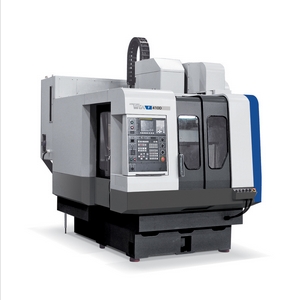
A MAKCNC vertical machining center in operation, demonstrating precision and stability.
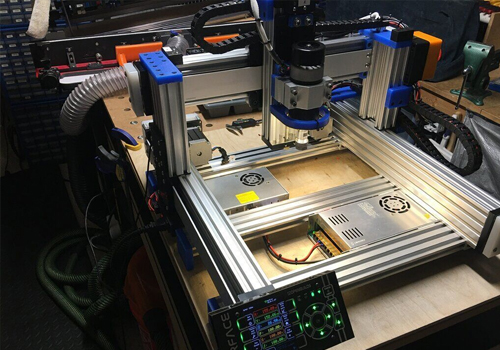
An inclined bed CNC lathe from MAKCNC, designed for high-accuracy turning.