
CNC Turning Machine for Hardware Processing Makes Common Parts Efficiently
What Is a CNC Turning Machine for Hardware Processing
CNC Turning Machine for Hardware Processing is a machine tool used to manufacture rotational hardware parts by rotating a workpiece while fixed cutting tools remove material. It is commonly selected for parts with round, stepped, threaded, bored, tapered, or grooved features. Typical examples include screws, pins, shafts, bushings, threaded fittings, collars, sleeves, and connectors. During the CNC turning process, the machine follows programmed tool paths to control outside diameter turning, internal boring, face machining, drilling, threading, grooving, and cut-off operations. The main suitability question is geometry. If most features share the same centerline, turning is usually a practical first process to evaluate. A CNC Turning Machine for Hardware Processing may not be the first choice when a part has many off-center holes, deep side pockets, or complex prismatic faces that require several milling orientations.
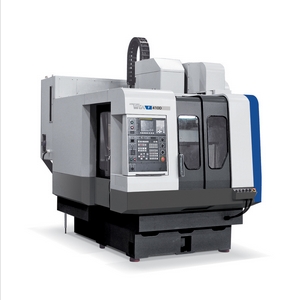
Types of CNC Turning Machines for Hardware Parts
Buyers should separate hardware turning machines by workholding method, machine layout, and the number of operations required before selecting a CNC Turning Machine for Hardware Processing. A chuck-type lathe holds individual blanks and suits forgings, castings, short cut pieces, and larger-diameter workpieces. A bar-fed machine starts with continuous bar stock and is often evaluated for repeating screws, pins, fittings, and bushings. An inclined-bed design supports chip discharge and can provide convenient access to the machining area; MAKCNC offers a cnc inclined bed lathe option for buyers comparing turning-machine layouts. Some parts need only two-axis outside and inside turning. Others require live tooling, driven tools, or a secondary operation because they include flats, cross holes, or off-center holes. The best type is therefore determined by the part drawing and production route, not by part name alone.
| Machine Approach | Best-Fit Hardware Geometry | Why It Fits | When It Does Not Fit |
|---|---|---|---|
| Chuck-type turning | Short blanks, forgings, castings, larger individual parts | Allows flexible clamping of pre-cut material | Less suitable when long runs require repeated manual blank loading |
| Bar-fed turning | Screws, pins, bushings, sleeves, fittings | Feeds stock through the spindle for repeated cycle production | Not suitable if the raw material cannot be supplied as bar stock |
| Turning with secondary milling | Round parts with flats, cross holes, or side features | Retains turning for concentric features while adding other operations | May be inefficient for parts dominated by prismatic milling features |
Features That Affect the Hardware Turning Result
A CNC Turning Machine for Hardware Processing should be assessed by the features that affect the finished part, rather than by a broad machine label. The machine structure affects stability during cutting, especially when hardware parts require long threads, narrow grooves, or thin walls. MAKCNC machine bodies commonly use high-strength cast iron, including resin-sand castings, with aging treatment intended to support long-term rigidity and accuracy. Core transmission components such as ball screws and guideways commonly use high-precision components from Taiwan or Germany. These details matter because tool movement, workholding, material condition, and program settings must work together. A buyer should not assume that a rigid base alone solves dimensional variation. Incorrect tool offsets, unsuitable inserts, weak clamping, or poor bar straightness can still produce taper, chatter marks, burrs, and inconsistent thread quality on a CNC Turning Machine for Hardware Processing.
- Machine rigidity: Helps resist vibration during interrupted cuts, grooving, and threading. It does not replace correct tooling or secure clamping.
- Guideway and ball screw quality: Influences repeatable axis movement. It does not compensate for worn tools or incorrect coordinate offsets.
- Control functions: Intelligent feedforward and quadrant-jump compensation can help address issues such as overcut marks, quadrant marks, and vibration patterns when the process is properly set.
- Workholding: Determines whether the part remains concentric during turning. A poorly selected chuck or collet can defeat an otherwise suitable machine.
How Bar Feeding Turning Drilling Threading and Parting Off Work in One Setup
For repetitive rotational hardware, a CNC Turning Machine for Hardware Processing can reduce handling by sequencing bar feeding, turning, drilling, threading, and parting-off while the workpiece remains in one primary clamping position. “One setup” means the bar is fed, machined, and separated through a programmed cycle without transferring every individual part between separate machines. This approach fits screws, fittings, pins, and bushings that are mainly concentric. It does not eliminate all secondary work: a part with side holes, milled flats, heat-treatment distortion, or plating requirements may still need later operations. The process engineer should map every drawing feature to an operation before deciding whether a one-setup route is realistic.
| Sequence Step | What It Produces | Parameter That Matters in Practice | What Happens if It Is Wrong |
|---|---|---|---|
| Bar feeding | Positions new material for each part cycle | Feed length must include finished part length, facing allowance, and cut-off allowance | Short feeding can leave insufficient material; excessive feeding increases scrap and may cause clamping issues |
| Facing and turning | Creates a flat reference face, outside diameters, steps, tapers, and grooves | Tool offset and cutting-tool selection affect diameter and surface condition | Incorrect offsets can produce oversized or undersized diameters; unsuitable cutting conditions can leave chatter marks |
| Drilling or boring | Creates pilot holes, through holes, internal diameters, and recesses | Drill alignment and chip evacuation affect straightness and finish | Poor chip control can mark the bore, cause tool damage, or interrupt stable production |
| Threading | Forms external or internal threads for screws and fittings | Thread program, tool geometry, and synchronization must match the drawing requirement | An incorrect pitch or tool offset can make the part fail mating checks even when the outside diameter appears acceptable |
| Parting-off | Separates the finished part from bar stock | Parting tool position and remaining material allowance affect the end face | Incorrect settings can leave an excessive nub, create burrs, or cause instability near separation |
For example, a threaded fitting can begin as bar stock, receive facing and outside turning, then a drilled internal passage, an external thread, and final parting-off. A pin may need facing, stepped-diameter turning, chamfering, and separation. A bushing may need outside diameter turning, internal drilling or boring, chamfers, and cut-off. The correct process order reduces unnecessary re-clamping, which is especially useful when concentricity between outside diameters, bores, and threads matters. A CNC Turning Machine for Hardware Processing is less appropriate as the sole solution when the drawing includes several unrelated faces that cannot be reached from the turning axis.
Hardware Parts and Applications That Fit Turning
A CNC Turning Machine for Hardware Processing is generally suitable for hardware parts whose primary shape comes from diameters along a central axis. Common applications include fasteners, threaded inserts, adapter fittings, bushings, spacers, dowel pins, sleeves, collars, connector bodies, and small shafts. The process can also support mixed-product, small-batch work where one clamping setup completes multiple concentric features. MAKCNC notes that its equipment can support multi-face machining in one clamping for suitable multi-variety, small-batch production requirements. That capability should be reviewed against the actual drawing because “multi-face” does not mean every complex part can be completed on a turning machine. When the design has extensive pockets, multiple side faces, or drilled patterns around a housing, a professional cnc machining center solution may be a better process option.
What Affects CNC Turning Machine Price
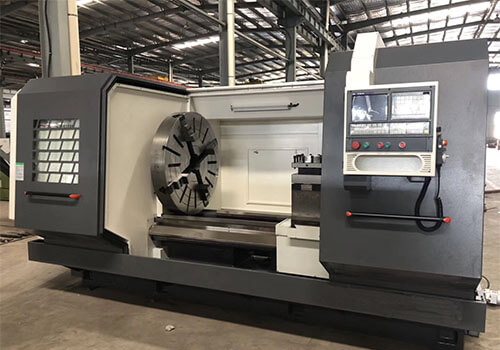
The price of a CNC Turning Machine for Hardware Processing varies because the required configuration changes with the part family and production method. A basic machine for simple chuck-held shafts is not specified in the same way as a bar-fed machine producing threaded fittings with drilling and repeated cut-off cycles. Buyers should request a quotation based on drawing review, raw material form, largest and smallest part dimensions, required operations, expected production volume, tooling needs, workholding, automation requirements, control preference, packing, and destination service needs. The most useful purchasing approach is to compare quoted configurations line by line instead of comparing only a single total price. A lower initial machine price may not fit the process if it excludes the bar feeder, collet arrangement, tooling, or control functions needed for the proposed part. Conversely, advanced options should not be added when the part requires only basic turning and drilling.
User Guide for Early Process Evaluation
Before specifying a CNC Turning Machine for Hardware Processing, prepare a process-review package that allows the supplier to assess the actual work. Start with a current part drawing showing all diameters, threads, bores, surface requirements, and tolerances. Next, identify the starting material as bar stock, casting, forging, or pre-cut blank. Then list the operations in their expected order and mark which features must remain concentric. Add expected batch size, product mix, and any later work such as heat treatment, coating, inspection, or milling. Finally, ask whether the complete cycle can be completed in one setup or whether a second operation is required. This method is suitable for early-stage machine selection because it exposes process gaps before an RFQ is finalized. It does not replace sample machining, tooling confirmation, or acceptance criteria when the part has demanding quality requirements.
- Classify the part as rotational, mixed rotational, or mainly prismatic.
- Confirm whether the material can be supplied in stable bar form.
- List turning, drilling, boring, threading, grooving, and cut-off requirements.
- Identify off-center features that may require milling or a second setup.
- Define the inspection points that affect part acceptance.
- Submit drawings and material information for machine configuration review.
CNC Turning Machine for Hardware Processing Supplier Considerations
When selecting a CNC Turning Machine for Hardware Processing supplier, assess machine configuration support, manufacturing background, delivery planning, and service terms together. MAKCNC was established in 2016 and operates multiple production lines with sample-machine inventory. The stated machine delivery period is 1 to 6 months, depending on the project arrangement. There is no fixed minimum order quantity, so a single machine can be purchased; multi-machine purchases may receive improved commercial terms related to price, delivery, or after-sales service. Standard warranty coverage is generally 12 months after complete-machine acceptance, followed by lifetime paid service. Certain tender projects may require three years of free warranty. The after-sales network commonly commits to an 8-hour response and on-site fault handling within 48 hours. Learn more about makcnc when comparing a professional cnc lathing machine manufacturer for your hardware production plan.
FAQ of CNC Turning Machine for Hardware Processing
Can one turning machine make screws fittings pins and bushings
Yes, a CNC Turning Machine for Hardware Processing can make these hardware categories when their main features are concentric and can be accessed from the turning axis. Screws commonly need outside diameter turning, threading, chamfering, and parting-off. Fittings may add drilling, boring, internal threading, or grooves. Pins often require stepped diameters and chamfers. Bushings typically require outside turning plus an internal bore. The deciding factor is not the product name but the drawing geometry. If the part also has cross holes, flats, radial threads, or complex side details, the machine may need driven tooling, a secondary operation, or support from a machining center. The process should be confirmed from the drawing before selecting the final machine configuration.
When should a buyer choose machining center instead
A buyer should consider a machining center when the part is dominated by flat surfaces, pockets, hole patterns, or off-axis features rather than turned diameters. A CNC Turning Machine for Hardware Processing remains the better starting point for parts such as sleeves, pins, fittings, and threaded connectors whose main dimensions are round. However, a prismatic bracket, valve block, or housing with multiple machined faces will usually require milling capability. For production plans that include both part types, it can be practical to evaluate turning and milling equipment as separate but connected processes. MAKCNC also supplies customized cnc machines and machining centers from makcnc for projects that need configuration review based on a specific workpiece and process route.
If you are looking for a CNC Turning Machine for Hardware Processing supplier, contact MAKCNC with your drawings and material details to request the latest quotation.