How to Source a Complete CNC Machining Solution Without Costly Integration Gaps
A Complete CNC Machining Solution is what separates an RFQ that closes on schedule from one that drags into month five because the lathe arrived without matching chuck jaws, or the machining center's probe wasn't configured for the fixture the buyer already built. Most procurement teams discover this gap only after signing a purchase order — when the machine tool, tooling, automation, and installation scope sit with three different vendors who each blame the other for the delay. That is the sourcing risk this article addresses before you issue your next RFQ.
What Is a Complete CNC Machining Solution?
A Complete CNC Machining Solution refers to a single-scope package that bundles the machine tool itself (lathe or machining center), the cutting tools and workholding needed to run production parts, automation such as bar feeders or pallet changers, on-site installation and leveling, and a documented acceptance test before final payment. The term matters because buyers who purchase these elements piecemeal — a machine from one factory, tooling from a local distributor, automation retrofitted later — often absorb the integration cost themselves, in schedule slippage and in warranty disputes over whose component caused a tolerance failure. CNC machining, as a manufacturing method, depends on tight coordination between the controller, the drive components, and the tooling; a single supplier scope removes one layer of coordination risk from that chain.
Types of CNC Machines Inside an Integrated Solution
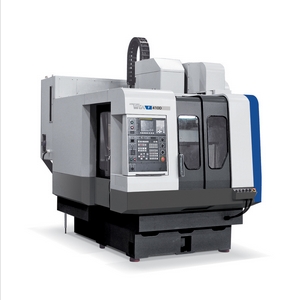
An integrated machining cell typically draws from two equipment families. The first is turning equipment — a high quality and durable CNC lathe, including inclined-bed configurations such as the CNC Inclined Bed Lathe, which sheds chips by gravity and suits higher-volume shaft and flange work. The second is milling equipment — a vertical and horizontal CNC machine center, covering model lines from compact footprints like the MV970 up through larger work envelopes such as the MV1160, MV1270, and MV1380, plus a Horizontal CNC Machining Center for multi-face production where fixture changes need to be minimized. Choosing between these is a function of part geometry, not brand preference — a shop producing shafts and bushings needs a lathe-first cell, while a mold or bracket producer needs a milling-first cell, often with both machine types feeding the same line.
Features That Separate Reliable Machines from Risky Ones
Three structural choices determine whether a machine holds tolerance after year two, not just at first inspection. First, the base casting — high-strength cast iron, often resin-sand cast, aged before final machining so the structure does not creep under cutting load. Second, the core drive components: ballscrews and linear guideways sourced from Taiwanese or German brands, which hold backlash and positioning accuracy longer than unbranded alternatives. Third, the control system's compensation logic — intelligent feedforward and over-quadrant jump compensation, which directly reduce the overcut marks, quadrant marks, and chatter lines that mold makers see as rejects. These features matter specifically for mold and die work, where surface finish is inspected visually and a single quadrant mark can fail a cavity. For simple bracket drilling at low tolerance, this level of compensation is less critical, and a buyer paying for it there is paying for capability the job doesn't need.
Where a Complete CNC Machining Solution Gets Used
Mold and die shops are the clearest use case — one-setup, multi-face machining lets a cavity insert go from rough to finish without re-fixturing, which protects the datum accuracy that a second setup would risk. Multi-variety, low-volume producers — contract shops running 20 different part numbers a month — benefit the same way, since fixture changeover time, not spindle speed, is usually their real bottleneck. High-mix automotive and hydraulic component suppliers use the turning side for shafts and flanges, pairing it with milling centers for housings and manifolds in the same cell. Pure high-volume, single-part production is the scenario where a fully automated dedicated line, rather than a general-purpose machining center, is often the better economic fit — that's a different sourcing conversation.
A Sourcing Checklist That Verifies Machine Tools, Tooling, Automation, Installation, and Acceptance Testing Under One Supplier Scope
This is the section most RFQs skip, and it's the one that prevents the disputes mentioned earlier. Each item below carries a specific risk if left unverified.
- Machine tool specification sign-off — verify spindle taper, travel, and controller brand in writing before deposit. Risk if skipped: the delivered machine meets a generic spec sheet but not the part geometry you actually quoted.
- Tooling package scope — confirm whether cutting tools, collets, and workholding are included or quoted separately. Risk if skipped: the "machine price" looks competitive but tooling costs appear as a change order after PO signing.
- Automation interface compatibility — check that bar feeders, robot arms, or pallet systems are confirmed compatible with the specific controller version, not just the machine model. Risk if skipped: automation arrives but requires a second integration visit to make it talk to the control.
- Installation and leveling responsibility — define who performs foundation prep, leveling, and power hookup, and under which party's liability. Risk if skipped: a leveling error gets blamed on the machine's accuracy, wasting weeks in finger-pointing.
- Acceptance test protocol — agree in advance on the test part, tolerance, and measurement method used before final payment releases. Risk if skipped: "acceptance" becomes a verbal handshake with no documented baseline if a dispute arises six months later.
- Warranty and service terms — confirm response time commitments in writing, not just stated verbally during sales calls.
Buyers who verify all six items under one supplier's written scope typically avoid the multi-vendor blame cycle entirely, because one company is accountable for the whole cell, not just the spindle.
Price Factors Behind a Complete CNC Machining Solution
Price is not one number — it is a stack of decisions. The table below breaks down where cost typically concentrates and what drives it up or down.
| Cost Component | What Drives It Higher | What Drives It Lower |
|---|---|---|
| Base machine | Larger work envelope, horizontal configuration, higher-grade ballscrew/guideway brand | Compact vertical models, standard spindle taper |
| Tooling package | Custom fixtures, specialized cutting tool sets for hardened mold steel | Standard toolholders, generic workholding |
| Automation | Robotic loading, pallet changers, bar feeders | Manual loading, no automation add-on |
| Installation | Overseas on-site commissioning, custom foundation work | Buyer's own technicians handle setup under remote guidance |
| Warranty tier | Extended terms such as three-year free warranty required in some tender projects | Standard 12-month acceptance-based warranty |
Order volume also affects commercial terms. There is no fixed minimum order — a single unit can be purchased — but buyers placing multi-unit orders typically secure better pricing, faster lead time, or stronger after-sales terms than single-unit buyers, simply because batch production smooths the supplier's own line scheduling.
Step-by-Step User Guide for Specifying and Commissioning Your Cell
- Send the supplier your part drawing and target cycle time, not just a machine model number — this lets them confirm the machine actually fits your part, not just your budget.
- Request a written scope document covering the six checklist items above before deposit.
- Confirm lead time in writing — typical production windows run one to six months depending on configuration and automation scope.
- Schedule a factory acceptance test (FAT) using your own test part where possible, not a generic sample.
- Arrange on-site installation and request a site acceptance test (SAT) repeating the same tolerance check post-installation.
- Confirm the warranty start date is tied to SAT sign-off, not to the shipping date.
Common Mistakes Buyers Make When Sourcing an Integrated Line
- Treating tooling and automation as "add later" items instead of pricing them into the original RFQ.
- Accepting verbal lead-time promises instead of a written delivery schedule tied to payment milestones.
- Skipping a documented acceptance test, then having no baseline when a tolerance dispute surfaces months later.
- Assuming all machining centers handle mold-grade finish work — compensation features like feedforward control are not universal across every control system.
- Choosing solely on machine price while ignoring after-sales response time, which matters more once the machine is running production.
MAKCNC as Your CNC Machining Solution Supplier
MAKCNC has operated multiple production lines since 2016 under an ISO9001:2015-certified quality system, with demo machines kept in stock so buyers can inspect build quality before committing to a build slot. Machine frames use high-strength cast iron, resin-sand cast and aging-treated for long-term rigidity, paired with Taiwanese or German-brand ballscrews and guideways for sustained positioning accuracy. For mold-grade work, our systems integrate feedforward and over-quadrant compensation to reduce overcut marks, quadrant marks, and chatter lines, and support one-setup multi-face machining for multi-variety, small-batch production. Standard warranty runs 12 months from acceptance, with lifetime paid service afterward; select tender projects can be arranged with extended terms such as a three-year free warranty. Our service network targets an 8-hour response and 48-hour on-site arrival for fault handling. You can review our professional CNC lathing machine manufacturer background, or browse global CNC machinery cases for reference on completed projects.
FAQ of Complete CNC Machining Solution
Is there a minimum order quantity? No hard minimum — a single machine can be purchased, though multi-unit orders often receive better commercial terms.
How long is typical lead time? Generally one to six months, depending on configuration, automation scope, and whether the unit is a stock demo model.
What warranty is standard? Twelve months from acceptance, with lifetime paid service after that period; extended terms are available for qualifying tender projects.
Can one supplier really cover machine tool, tooling, automation, installation, and acceptance testing together? Yes, when the scope is written into the RFQ and contract upfront — that is the entire point of sourcing a Complete CNC Machining Solution rather than assembling it from separate vendors after the fact.
If you are preparing an RFQ for a lathe, a machining center, or a full machining cell, submit your part drawings and target specifications and our technical team will respond with a scoped quote covering machine, tooling, and acceptance terms together.