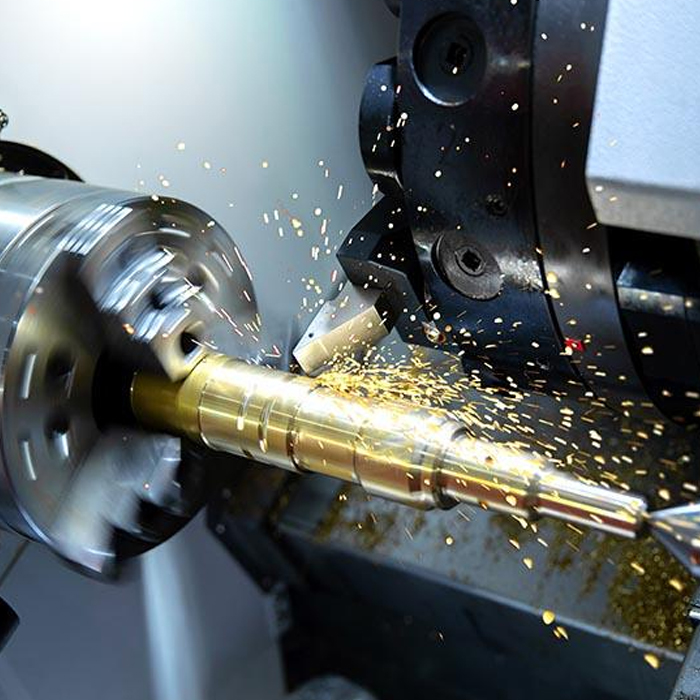
Specify a Custom Special Purpose CNC Machine for Your Part
What Is a Custom Special Purpose CNC Machine?
Custom Special Purpose CNC Machine refers to a CNC machine configured around a defined part family, manufacturing sequence, production target, and handling method rather than selected only from a standard catalog. It may be based on a turning platform, a vertical machining platform, a horizontal configuration, or a combined process arrangement. The buyer’s objective is not simply to purchase a machine with a certain axis count. The objective is to obtain a repeatable manufacturing system that produces the required features within the agreed process window.
For an OEM procurement team, the specification must state what the machine is expected to make, how the workpiece will be located, what operations are included, and how output will be verified. A supplier cannot responsibly compare quotations if one RFQ says “machine aluminum housing” while another includes a finished drawing, cycle-time target, loading method, tool list, and acceptance samples. The first request invites assumptions. The second request creates a defined commercial scope.
A special-purpose configuration fits best when part geometry is stable enough to justify dedicated fixtures, programmed operation sequences, and defined automation. It does not fit every situation. For low-volume engineering trials, parts with frequent redesigns, or highly mixed production with no shared datum scheme, a standard-purpose CNC machine with flexible workholding may be the better purchase. The right choice depends on repeatability of demand and process, not on the word “custom” alone.
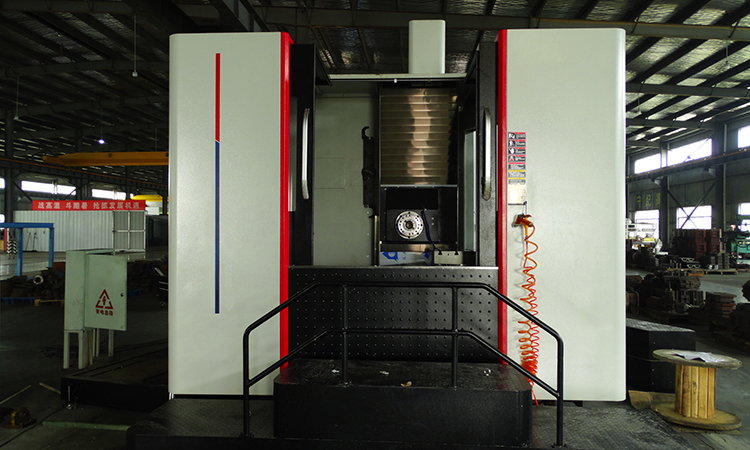
Types of Dedicated CNC Machine Configurations
Buyers should first identify the process family before asking suppliers to propose a machine. The practical choice is usually between a dedicated turning arrangement, a machining-center-based cell, a horizontal machining solution, or a multi-operation system. Each option changes fixture design, chip control, operator loading, floor layout, and the achievable process sequence.
| Configuration | Best-Fit Part Situation | Why It May Fit | When It Does Not Fit |
|---|---|---|---|
| Dedicated CNC turning platform | Rotational parts with repeated diameters, bores, threads, or facing operations | Turning concentrates common rotational features in one controlled setup. | It is a poor primary choice when the part’s value is mainly in prismatic faces, deep pockets, or complex side features. |
| Vertical machining configuration | Plate, block, housing, and fixture-type components loaded from above | It supports accessible top-face machining and can use purpose-built fixtures for repeat production. | It may be less suitable if several side faces require frequent indexing or palletized flow. |
| Horizontal machining configuration | Multi-face parts where chip evacuation and side access affect process stability | Horizontal orientation can support multi-face operations with suitable fixture planning. | It should not be selected only because it appears more automated; part access and batch demand must justify it. |
| Combined dedicated cell | Stable part families requiring machining, inspection, handling, or marking within one defined sequence | It can reduce manual transfers when the scope is clearly frozen. | It carries more scope risk when the buyer has not defined ownership of handling, inspection, and interface equipment. |
For parts dominated by rotational work, a cnc lathing machine can be the starting platform. For prismatic work, a professional cnc machining center solution may be more appropriate. These are starting points, not final answers. The fixture concept, tool access, datum plan, and production volume still determine whether a dedicated machine is justified.
Turn Drawings and Takt Time Into a Builder-Ready Specification
The most effective RFQ turns engineering intent into inputs a machine builder can quote without filling gaps through assumptions. Provide the released part drawing, but do not stop there. A drawing defines geometry; it rarely defines the loading sequence, machining allowance, clamping method, rejected-part handling, or the cycle-time calculation. A builder-ready specification should separate what is mandatory from what remains open for proposal.
| RFQ Input | What the Buyer Must State | Why It Prevents a Scope Gap | Limit or Decision Needed |
|---|---|---|---|
| Part drawing and revision | Released drawing revision, material designation, critical characteristics, and annual revision forecast if known | It prevents quotations based on obsolete geometry or unstated quality requirements. | Do not use preliminary drawings as final acceptance documents unless revision control is agreed. |
| Takt time and output | Required good-part output, planned shifts, planned uptime assumption, and allowable manual time | It lets suppliers calculate whether cutting, loading, probing, and unloading are inside the target. | A takt target alone is not enough when planned availability and scrap assumptions are missing. |
| Datum strategy | Primary, secondary, and tertiary locating surfaces; clamp zones; prohibited clamp areas; and re-clamp restrictions | It links fixture design to functional dimensions and reduces conflict between inspection and production datums. | If engineering datums cannot be used for clamping, define the allowable transfer method. |
| Automation need | Manual loading, operator-assisted loading, robot interface, pallet handling, or future automation reservation | It prevents a machine quote from excluding guarding, handshakes, part presentation, or buffer logic. | Do not request “automation ready” without defining the mechanical and control interface expected. |
| Tooling and consumables | Buyer-supplied or supplier-supplied cutters, holders, jaws, fixtures, gauges, and spare parts | It makes pricing comparable and identifies items that affect commissioning. | Tool life cannot be accepted as a fixed result unless workpiece material and cutting conditions are agreed. |
Use geometric dimensioning and tolerancing consistently between the drawing, inspection plan, and fixture concept. A practical rule is simple: if a feature is functionally controlled from a datum, explain whether that datum must be established in the machine fixture, verified by probing, or checked only after machining. This is especially relevant where a buyer expects one clamping cycle to complete several faces.
Features That Should Be Defined Before Comparing Proposals
Two quotations can list similar CNC hardware while covering very different responsibilities. Compare the proposed process, not only the machine model. The buyer should request a documented operation sequence showing each setup, workholding position, tool group, in-process measurement action, and handoff between operations. This makes it possible to see whether the quoted solution actually meets the intended takt time.
- Workholding scope: State whether the quotation must include hydraulic, pneumatic, manual, or custom fixtures. The conclusion is that fixture responsibility must be named because it controls repeatability. This matters for stable repeat parts; it is less useful when the buyer will supply all existing fixtures.
- Process completion: Identify which features must be finished in one clamping cycle and which may be transferred. This matters when datum retention drives quality. It does not apply as strictly if intermediate operations are intentionally performed on separate equipment.
- Measurement method: Define which dimensions require in-machine probing, offline gauging, or first-off inspection. Specify the gauge owner and calibration responsibility. Do not assume a probe replaces all final inspection.
- Chip and coolant management: Describe material form, expected chip type, coolant restriction, and recovery requirements. These details matter for materials that create long chips or when cleanliness affects downstream assembly.
- Control and data interfaces: List required language, program format, production reporting, barcode input, alarm output, and factory network limitations. These requirements should be excluded when no integration is needed, rather than left vague.
MAKCNC states that its machine structures commonly use high-strength cast iron, including resin-sand castings, with aging treatment intended to support long-term rigidity and accuracy. Its core transmission components commonly use high-precision components from Taiwan or Germany. For mold-related precision work, the supplied company information also identifies intelligent feedforward and quadrant-transition compensation functions intended to address overcut marks, quadrant marks, and chatter patterns. Buyers should still define the actual part acceptance standard; these machine attributes do not replace a part-specific capability study.
Set FAT and SAT Criteria That Can Be Signed Off
A factory acceptance test and site acceptance test should be written as measurable checks rather than a general statement that the machine “runs correctly.” The buyer should define what is tested at the supplier location, what must be repeated after installation, who supplies material and gauges, and how deviations are handled. This protects both sides because a failed acceptance can then be traced to an agreed requirement rather than interpretation.
- Approve the acceptance part. Identify the drawing revision, material condition, blank condition, and quantity of trial parts. Select features that represent the production risk, not only easy dimensions.
- Freeze the process conditions. Record the fixture, tools, program revision, measurement method, and operator intervention permitted during the test.
- Define acceptance outputs. Request dimensional inspection records, demonstrated operation sequence, cycle-time record with the stated loading assumption, alarm review, and safety-function checks.
- Separate FAT from SAT. Use FAT to confirm the agreed machine scope before shipment. Use SAT to confirm installation-dependent items such as utilities, site interfaces, and the agreed production trial after commissioning.
- Agree the correction route. State what happens if an item fails, including retest responsibility, timing, and the boundary between machine performance and unsuitable incoming material or site conditions.
The practical limit is that acceptance criteria must be realistic for the supplied data. A supplier cannot be held to a cycle target when the buyer has not defined whether loading time, manual deburring, inspection, or material changes are included. Likewise, a measurement requirement needs a named gauge and method. Without these details, proposals remain difficult to compare.
Price Factors and Commercial Boundaries for a Dedicated CNC Project
There is no responsible fixed price for a dedicated CNC project without a defined scope. The total commercial value can change with machine base selection, axis and spindle requirements, workholding, tools, automation, guarding, measurement, electrical interfaces, commissioning, packing, transport, and acceptance support. Ask each bidder to separate these items so that a lower initial number does not hide exclusions that appear later as change orders.
| Cost Area | Questions for the RFQ | Comparison Risk if Omitted |
|---|---|---|
| Machine base and options | Which platform, control, axes, spindle arrangement, and standard accessories are included? | Different base configurations may be presented as equivalent when they are not. |
| Fixtures and automation | Who designs, builds, proves, and maintains fixtures, grippers, guarding, and part buffers? | Automation may be quoted without the interfaces needed for working production flow. |
| Tooling and gauges | Are cutters, holders, presetting, gauges, and spare wear items included or buyer supplied? | Commissioning can be delayed by unbudgeted production tooling. |
| Validation and service | What FAT, SAT, training, installation, and response obligations are included? | A quote may cover delivery only, leaving site startup and corrective work unclear. |
MAKCNC indicates that a single machine can be purchased without a hard minimum order quantity, while multi-machine purchases may receive better commercial terms related to price, lead time, or after-sales service. The stated lead-time range is one to six months, so the buyer should ask which point starts the lead-time count and what approvals or supplied materials could affect it. The usual stated warranty is 12 months after whole-machine acceptance, with lifetime paid service. Some tender projects may require three years of free warranty, which should be treated as a negotiated project requirement rather than a default term.
User Guide for Installation and Production Start
Installation planning should begin before the machine ships. The buyer should provide the supplier with the intended site layout, access route, power conditions, compressed-air availability where applicable, coolant policy, drainage constraints, and any local safety requirements. The conclusion is direct: site readiness must be checked against the confirmed machine documentation. It is not enough to reserve floor space based on an early concept drawing.
- Confirm the foundation, floor loading, utility points, door widths, lifting route, and installation space using the approved machine layout.
- Prepare approved blanks, cutting tools, gauges, fixtures, coolant, and operators before the site trial. A machine cannot prove a production part with missing production inputs.
- Use one controlled program revision during startup. Record every parameter change, tool offset decision, and fixture adjustment.
- Train operators on normal loading, tool-change checks, alarm reporting, safe recovery, and daily condition checks. Training scope should be stated in the purchase agreement.
- Run a controlled first production batch only after SAT criteria have been met. Do not treat a single successful demonstration part as evidence of stable production.
MAKCNC states that its after-sales network normally commits to responding within eight hours and arriving on site to address faults within 48 hours. Buyers should confirm whether these terms apply to their project location, service scope, and contract conditions. They should not assume site attendance terms cover consumables, third-party automation, or issues caused by unapproved modifications.
FAQ of Dedicated CNC Machine Sourcing
Should an RFQ include only the part drawing?
No. Include the part drawing, annual demand, takt target, datum strategy, material condition, operation sequence, tooling boundary, automation requirement, acceptance criteria, and site constraints. A drawing-only RFQ may be suitable for an initial feasibility discussion, but it is not sufficient for comparable turnkey proposals.
When is a standard machine a better option?
A standard machine is usually better when part revisions are frequent, annual volume is uncertain, or the company needs broad flexibility across unrelated workpieces. A dedicated solution becomes more appropriate when geometry, demand, loading method, and quality requirements are stable enough to support purpose-built fixtures and defined process flow.
Can one setup machine several faces of a part?
It can be considered when the fixture can establish the required datums, the tool can reach all specified features, and clamping does not distort critical surfaces. It should not be assumed merely because a machine has multiple axes or an indexing device. The drawing, fixture concept, and inspection plan must support the claim.
MAKCNC Supplier Fit and RFQ Next Step
MAKCNC was established in 2016 and lists multiple production lines and sample-machine inventory. Its offering includes CNC lathing machines, CNC machining centers, and CNC machines, making it relevant for buyers who need to evaluate a standard platform, a configured solution, or a dedicated equipment discussion. For multi-face work, buyers can also review the available horizontal cnc machining center information when preparing their platform shortlist.
The best inquiry package includes released drawings, target output, datum requirements, preferred loading method, expected automation boundary, acceptance-part details, and requested commercial terms. This gives MAKCNC the information needed to determine whether the proposed scope fits the requirement and what remains to be agreed. If you are sourcing a dedicated CNC machine for a defined part, submit your drawings to makcnc for a quotation discussion.