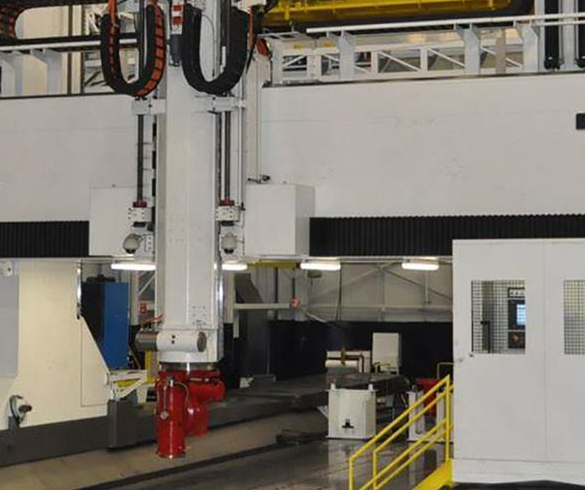
When Does a Horizontal CNC Machine Center Beat a VMC?
What Is a Horizontal CNC Machine Center?
Horizontal CNC Machine Center refers to a machining center with a horizontally oriented spindle that machines a workpiece mounted on a table, tombstone fixture, or pallet. The practical buying question is not whether one spindle direction is generally better. It is whether the part family can use multiple-face access, fewer manual interventions, and improved chip evacuation well enough to justify the machine configuration. A horizontal machine usually becomes the stronger choice when one part requires machining on several side faces, when repeated re-clamping creates inspection risk, or when production planning depends on longer unattended cycles. A VMC remains a sound choice for plate-like work, top-face operations, short production runs, and shops with limited floor space. Buyers should compare the complete process route, not only spindle orientation. That means reviewing the number of operations, fixture changes, chip behavior, operator attendance, part handling, and expected production mix before requesting a quotation.
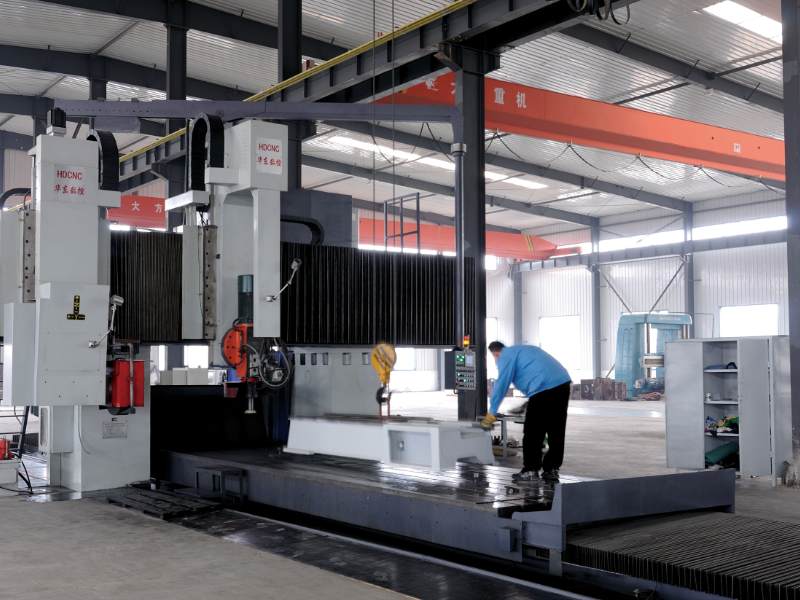
Types of Machine Center Architecture
Manufacturing teams usually compare a horizontal machining center, a vertical machining center, and a multi-axis configuration built around either platform. A standard VMC places the spindle above the workpiece, making top-face drilling, milling, pocketing, and contouring easy to see and set up. It often suits flat components, molds, fixtures, brackets, plates, and prototypes. A horizontal configuration positions the spindle toward the side of the work zone and commonly works with an indexing table, tombstone, or pallet arrangement. This can expose several sides of a prismatic part without removing it from the fixture. A five-axis VMC may also reduce re-clamping, but it should not be treated as an automatic replacement for a horizontal platform. The correct choice depends on access, chip volume, fixture strategy, and the need to keep one machine producing while another pallet is being prepared. For buyers comparing vertical options, MAKCNC also offers the vertical cnc machining center mv1380 for applications where top-down accessibility is the priority.
Part-Family Decision Matrix for HMC and VMC Selection
The most reliable selection rule is based on the recurring part family rather than a single sample part. Choose the horizontal route when the same production family has several machinable faces, repeated fixture changes, deep pockets that create chip accumulation, or a schedule that benefits from pallet-based loading. Choose the vertical route when the primary work remains on one upper face and the expense or complexity of a multi-face fixture would not be recovered through cycle reduction. This matrix should be reviewed with process engineering, production supervision, and purchasing together. It does not replace a cycle-time study. It gives the team a practical starting point for deciding which machine quotation should be requested first.
| Decision Factor | Horizontal Configuration Tends to Fit | VMC Tends to Fit | Decision Rule and Limit |
|---|---|---|---|
| Number of machinable faces | Prismatic parts requiring top, side, and end-face work in one process plan. | Flat parts with most features located on the upper face. | Select horizontal when multi-face access can reduce handling. A VMC may still fit if a rotary table provides adequate access. |
| Fixture changes | Parts that would otherwise require repeated re-clamping between operations. | Parts that can be completed with one simple vise, plate fixture, or top clamp arrangement. | Count every clamp and inspection step. Horizontal value rises when each change creates alignment risk or operator delay. |
| Chip load and evacuation | Operations producing substantial chips in cavities, bores, or side features where gravity-assisted removal can help. | Light finishing, shallow pockets, and work where chips can be cleared easily during attended operation. | Do not choose solely on chip behavior. Coolant method, tool path, material, and enclosure design must also be checked. |
| Floor space | Plants able to allocate space for machine access, pallets, fixtures, and material flow. | Shops where a compact layout and direct operator access matter most. | A horizontal system may need more surrounding workflow space. Confirm the actual installation drawing before making a layout decision. |
| Unattended-run potential | Repeat parts with stable tooling, verified fixtures, predictable chip control, and planned pallet loading. | Short lots, frequent setup changes, or work requiring close visual checks. | Automation potential depends on the selected machine options and process stability. It is not guaranteed by spindle orientation alone. |
Features That Change the Production Result
Three features usually decide whether the horizontal concept produces a measurable advantage. First, multi-face indexing can reduce part handling when a component needs side drilling, end milling, and face machining. Fewer fixture changes can improve process consistency because the datum is maintained through more of the routing. Second, chip evacuation can be favorable for chip-heavy work, especially when cutting produces material that could collect in pockets or around tools on a top-mounted setup. Third, pallet or fixture preparation can separate loading work from spindle work when the machine configuration supports that workflow. These benefits have limits. A complex tombstone fixture can add engineering time, inspection work, and setup expense. A low-volume part with only one machined face may gain little from the added fixture effort. Buyers should ask the supplier to review a drawing, process sheet, material type, and expected lot pattern before treating any feature as a productivity claim.
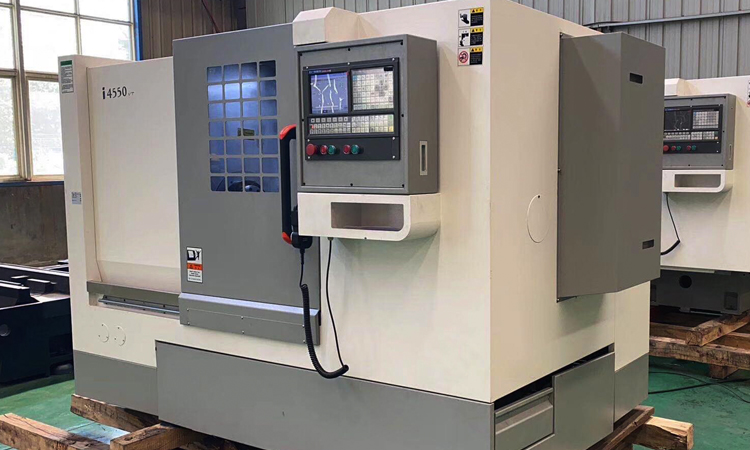
Applications Where Each Configuration Makes Commercial Sense
A horizontal machine is usually easier to justify for recurring prismatic components that need machining from several directions, such as valve bodies, pump housings, gearbox-related components, manifold-style parts, and structural components with side bores. The key condition is repetition. If the same setup can serve a continuing part family, fixture development has a clearer payback path. A VMC commonly makes more commercial sense for plates, covers, mold components, flat housings, prototype work, and mixed jobs that change often. For example, consider a part that needs upper-face pockets, side holes, and end-face threads. If a VMC process requires multiple manual re-clamps, each transfer introduces setup time and a possible datum-control issue. A horizontal setup with indexing may combine those faces under one clamping plan. However, if the order is a one-time small lot, a simple VMC setup can still be the lower-risk commercial decision because the fixture and programming burden may outweigh handling savings.
Price Factors and the Cost of Choosing the Wrong Architecture
A machine price should be evaluated as a process cost, not as an isolated purchase figure. Horizontal configurations may involve additional spending on fixtures, tombstones, pallets, tooling storage, workholding design, material handling, and operator training. A VMC can have a lower entry burden when standard vises and simple fixtures are sufficient. Yet the lower purchase cost does not automatically produce the lower part cost. If a VMC requires repeated transfers, manual loading between operations, or extra inspection after each re-clamp, the total routing cost can increase over time. The opposite is also true. Buying a horizontal platform for simple top-face machining can leave expensive capability underused. Request comparable quotations with the same scope: machine configuration, required workholding, tooling interface, installation needs, commissioning support, and after-sales terms. Without matching scope, a price comparison does not show which option has the better commercial result.
| Cost Area | Questions to Ask Before Comparing Quotes | Why It Matters |
|---|---|---|
| Machine configuration | Which axis arrangement, table type, and automation-ready features are included? | Two machines with similar names may support very different process routes. |
| Workholding | Is a vise enough, or is a dedicated tombstone or multi-face fixture required? | Fixture cost can determine whether a low-volume project should remain vertical. |
| Labor and handling | How many manual re-clamps, inspections, and transfers are in the current route? | Repeated handling can consume capacity even when spindle time is acceptable. |
| Service support | What are the acceptance warranty terms and the response arrangement? | Support conditions affect commissioning risk and long-term ownership planning. |
User Guide for Verifying the Better Choice Before an RFQ
Use a structured review rather than selecting from a brochure. Start by grouping parts into families according to shape, number of faces, material behavior, batch pattern, and inspection requirements. Then map each operation in order and mark every time the part leaves a fixture. Identify whether each re-clamp is necessary for access or simply a limitation of the current setup. Next, review the chip-producing operations and note where chips collect, where tools must reach, and where coolant clearance may become a concern. Prepare a sample package containing drawings, annual or expected order pattern, material details, target quality requirements, and current routing. Finally, ask the supplier to state what remains unverified. A supplier should distinguish between a machine capability, an optional feature, and a process result that depends on the customer’s fixture, tool, and program. This procedure prevents a horizontal quotation from being judged only by machine price and prevents a VMC from being selected without checking hidden handling costs.
- Choose a horizontal configuration when: multi-face machining is repeated, fixture changes are a bottleneck, and the part family can support dedicated workholding.
- Choose a VMC when: upper-face access covers most operations, lot sizes change frequently, or available floor space and fixture budget are limited.
- Pause the decision when: the drawing does not show datum strategy, the expected order pattern is unknown, or tooling and fixture scope have not been defined.
- Confirm before ordering: installation layout, power requirements, workholding responsibility, training scope, acceptance process, and service terms.
Common Selection Mistakes That Reduce Expected Savings
The first common mistake is selecting a machine based on a single difficult feature instead of the full recurring part mix. A side hole alone does not justify a horizontal system if most work remains simple top-face machining. The second is ignoring fixture engineering. A multi-face fixture can save handling, but it must provide access, datum control, clamping security, and chip clearance. The third is calling a process unattended before proving tool life, chip control, probing strategy, and recovery procedures. The fourth is comparing quotations that include different service boundaries. Buyers should confirm whether commissioning, training, warranty, and field response are described in the same terms. The fifth is assuming that more axes always mean a better investment. Added capability helps only when the process plan uses it. The correct machine is the one that removes a repeated production constraint while keeping setup, staffing, and maintenance requirements appropriate for the plant.
MAKCNC Supplier Support for Machine Configuration Reviews
MAKCNC has manufactured CNC equipment since 2016 and operates multiple production lines with sample machines in stock. Buyers can purchase a single machine because there is no hard minimum order quantity, while multi-machine purchases may receive better commercial terms for price, delivery, or after-sales support. Typical lead time is stated as one to six months, subject to the selected configuration and order requirements. Machine structures commonly use high-strength cast iron, including resin-sand castings, with aging treatment intended to support long-term rigidity and accuracy. Core transmission components commonly use high-precision components from Taiwan or Germany. MAKCNC also integrates advanced control functions for demanding mold machining, including intelligent feedforward and quadrant-jump compensation, to address issues such as overcut marks, quadrant marks, and vibration-related tool marks where applicable to the selected system and process.
For after-sales planning, the usual warranty is twelve months after complete-machine acceptance, followed by lifetime paid service. Some tender projects may require a longer free warranty period. A mature after-sales network typically commits to an eight-hour response and on-site fault handling within forty-eight hours, subject to service conditions and location. If a standard layout does not match your process, review customized cnc machines and machining centers from makcnc alongside the fixture and automation plan. The best request for quotation includes part drawings, workpiece material, expected production quantity, required machined faces, current setup count, and floor-layout limits. Contact MAKCNC for a configuration review and the latest quotation for your horizontal or vertical machining requirement.
FAQ of Horizontal and Vertical Machine Selection
Can a VMC machine multiple faces?
Yes. A VMC can machine multiple faces when the part is manually re-clamped or when the machine uses a suitable rotary or tilting device. The question is whether that process remains economical for the production requirement. For a low-volume job, manual repositioning may be practical because it avoids designing a dedicated multi-face fixture. For a repeating part family, each re-clamp adds handling, setup verification, and potential datum variation. Review the actual routing and count the transfers before assuming a VMC is slower or less accurate. A VMC remains a strong option when access is simple, the operator can manage the setup efficiently, and the workpiece mainly needs top-face machining. Horizontal equipment becomes more attractive when re-clamps repeatedly consume labor or limit throughput.
Does a horizontal machine always support unattended production?
No. A horizontal machine can support longer attended or unattended operating periods only when the process itself is stable. The machine configuration must be matched with dependable workholding, sufficient tooling, controlled chip behavior, verified offsets, tool-life management, and a planned response if an alarm occurs. Pallet capability can help keep the spindle working while another setup is prepared, but it does not remove the need for process validation. Parts with unstable material, difficult burr control, inconsistent incoming castings, or frequent engineering changes may still need regular operator attention. Treat unattended-run potential as a verification item during process planning. Ask for a clear statement of which machine options are included and which production conditions must be met before scheduling an extended run.