Investing in a Horizontal Machining Center with Pallet Changer Requires a Clear Payback Model
The biggest risk in sourcing a new CNC machine isn't just price or quality—it's miscalculating its long-term value. Choosing a standard machine might save capital upfront but can lead to significant production bottlenecks and lost revenue from excessive downtime. Conversely, investing in a Horizontal Machining Center with Pallet Changer without a clear financial model can make it difficult to justify the expense. The key is to quantify the gains from automation before you issue a purchase order.
This article provides a framework for calculating the real-world return on investment (ROI) from an automatic pallet changer (APC). We will break down how to convert seconds of saved setup time and improved operator efficiency into measurable annual capacity gains and a concrete payback period. We will also cover the foundational machine quality required to ensure that automation delivers on its promise of precision and reliability.
Core Machine Quality: The Foundation for Automated Performance
An automatic pallet changer is only as effective as the machine it's attached to. Before analyzing the benefits of automation, you must verify the underlying structural integrity and component quality of the horizontal machining center itself. Without a rigid, stable, and precise machine, any gains from faster pallet swaps will be lost to rework, scrap, and unplanned maintenance. Here are the critical factors to inspect.
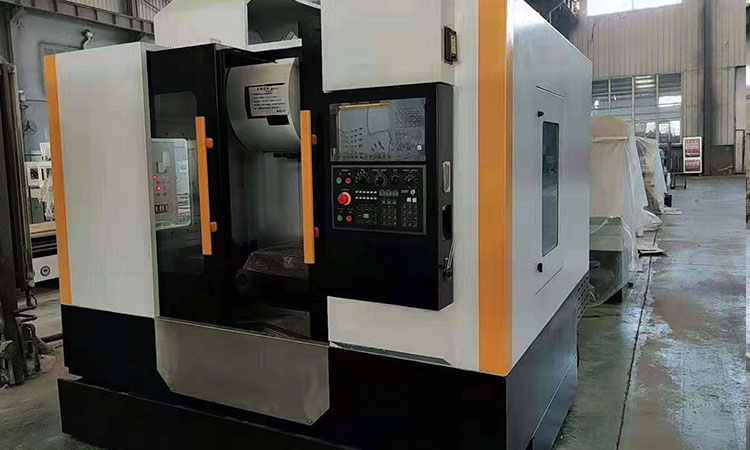
- Structural Rigidity and Stability: The machine body is the bedrock of accuracy. We construct our machine frames using high-strength cast iron, such as resin sand castings. This material provides excellent vibration damping. More importantly, each casting undergoes a proper aging treatment to relieve internal stresses, ensuring the machine maintains its geometric accuracy and rigidity over years of heavy use.
- High-Precision Drive Components: Performance is dictated by the quality of core transmission parts. We integrate high-precision components, such as ball screws and linear guideways, from established brands in Taiwan and Germany. This focus on system synergy ensures the entire machine performs optimally, delivering the precision required for demanding applications.
- Advanced System Integration for Complex Work: For industries like mold making, surface finish and accuracy are non-negotiable. Our systems incorporate technologies like intelligent feed-forward control and quadrant glitch compensation. These features directly address common machining defects such as corner over-cutting, quadrant marks, and tool chatter, resulting in a superior final product without manual polishing.
- Multi-Face Machining Capability: A key advantage of horizontal machining centers is the ability to machine multiple faces of a part in a single clamping. This capability is essential for high-mix, low-volume production, as it drastically reduces setup time and improves feature-to-feature accuracy compared to moving a part across multiple machines.
Calculating the True ROI of an Automatic Pallet Changer (APC)
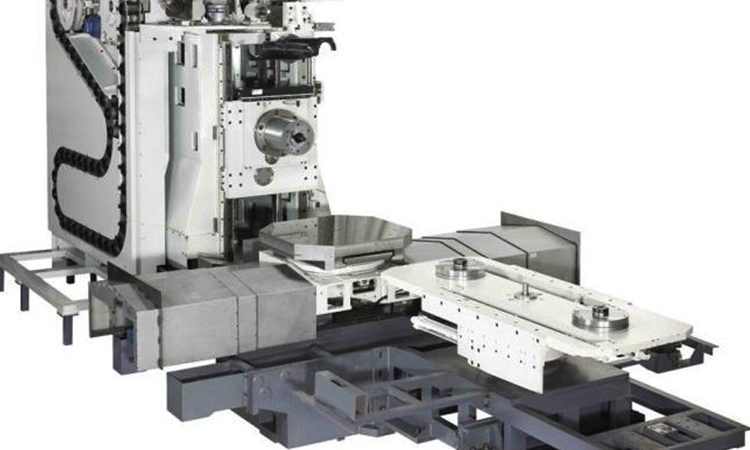
The primary value of a pallet changer is its ability to maximize spindle uptime. While the spindle is cutting on Pallet A, the operator can be safely setting up the next job on Pallet B. This "lights-out" or "unmanned" potential is where the investment pays for itself. To calculate this, you must move beyond the machine's sticker price and analyze the operational gains in concrete financial terms.
Use the following cost model to estimate your annual capacity increase and payback period. We have separated confirmed costs (which you know) from estimated variables (which you can project).
| Metric | Calculation / Data Point | Example Value | Notes |
|---|---|---|---|
| Part 1: Quantifying Time Savings | |||
| (A) Manual Setup Time per Part | Confirmed Cost (from your current process) | 20 minutes | Time to load, clamp, and probe a new part on a standard machine. |
| (B) Pallet Swap Time | Confirmed Spec (from machine quote) | 15 seconds (0.25 min) | The time the machine takes to exchange the finished pallet with the new one. |
| (C) Time Saved per Cycle | (A) - (B) | 19.75 minutes | This is "free" setup time, as it happens while the spindle is running. |
| (D) Parts per Shift (Current) | Confirmed Data (from your production log) | 12 parts | Your current output on a machine without a pallet changer. |
| Part 2: Calculating Financial Gain | |||
| (E) Total Time Saved per Shift | (C) * (D) | 237 minutes (3.95 hrs) | The total "found" production time per shift. |
| (F) Shop Hourly Rate | Confirmed Cost (your internal rate) | $100 / hour | Your blended rate including machine, labor, and overhead. |
| (G) Daily Revenue Gain | (E) * (F) | $395 | The value of the additional production capacity per shift. |
| (H) Annual Revenue Gain | (G) * Shifts per Day * Workdays per Year | $197,500 | Assuming 2 shifts/day, 250 workdays/year. |
| Part 3: Final Payback Analysis | |||
| (I) Incremental Machine Cost | Confirmed Cost (from machine quote) | $50,000 | The price difference between the HMC with an APC and one without. |
| Payback Period | (I) / (H) | 0.25 years (3 months) | The time it takes for the automation investment to pay for itself. |
This model simplifies the calculation but clearly demonstrates the financial logic. The payback period is often surprisingly short, especially for shops with high part diversity or frequent setups. Your specific numbers will vary, but the framework remains the same: convert saved minutes into increased capacity and revenue.
Common Mistakes to Avoid When Specifying an HMC
Investing in a professional cnc machining center solution requires careful planning. A mistake during the specification phase can lead to a machine that is either underutilized or incapable of meeting future demands. Here are common errors to avoid:
- Underestimating Tool Capacity: For high-mix environments, a small tool magazine can become a major bottleneck, forcing operators to frequently stop production to swap tools. Always plan for the most complex part you anticipate running and add a buffer of 20-30% to the tool capacity.
- Ignoring Chip Management: Horizontal machining generates a high volume of chips. An inadequate chip conveyor system can cause frequent machine stoppages for manual cleanout, negating the uptime gains from the pallet changer. Ensure the conveyor is appropriately sized and robust for your materials.
- Neglecting Workholding and Fixturing Strategy: The pallet changer is only one part of the equation. You need a clear strategy for tombstone fixtures and workholding to maximize the number of parts per pallet. Factoring in the cost and design of fixtures from the beginning is essential for a successful implementation.
- Overlooking After-Sales Support: A complex machine requires reliable support. Clarify the terms of service before purchase. Our standard warranty is 12 months after machine acceptance, with lifetime paid service available. We have an established after-sales network that typically responds within 8 hours and can have a technician on-site within 48 hours to address any issues.
MAKCNC: Your Supplier for High-Performance Machining Centers
Since our establishment in 2016, MAKCNC has been dedicated to providing reliable and precise CNC machinery. Our operations are managed within an ISO9001:2015 certified framework, ensuring consistent quality across our multiple production lines. We understand that every production environment is unique, which is why we offer flexible business terms. We have no rigid minimum order quantity—you can purchase a single machine. However, bulk orders for multiple units may qualify for improved pricing, delivery, or service terms.
With a lead time of 1 to 6 months and a ready inventory of sample machines, we can accommodate both urgent needs and planned capital expenditures. Our commitment extends beyond the sale, with a mature service network designed to keep your production running. For more details on our company and capabilities, you can learn more about makcnc, professional cnc lathing machine manufacturer.
Frequently Asked Questions
What is the typical lead time for a horizontal machining center?
Our standard lead time ranges from 1 to 6 months, depending on the specific machine configuration and current production schedules. We also maintain an inventory of sample machines for evaluation or faster deployment.
Is there a minimum order quantity (MOQ)?
No, we do not have a strict MOQ. You can procure a single machine. However, we offer more favorable commercial terms for batch purchases, which can include benefits in price, delivery priority, or extended after-sales service.
What does the standard warranty cover?
The standard warranty period is 12 months from the date of final machine acceptance at your facility. This covers defects in materials and workmanship. We also offer lifetime paid service and can provide extended warranty terms, such as a three-year free warranty, for specific tender projects.
If you are evaluating the business case for a horizontal machining center with a pallet changer, contact our technical team. We can help you analyze your production data and provide a detailed quote to complete your ROI calculation.