How a General Purpose CNC Lathe Fits Mixed-Part Work
What is a General Purpose CNC Lathe?
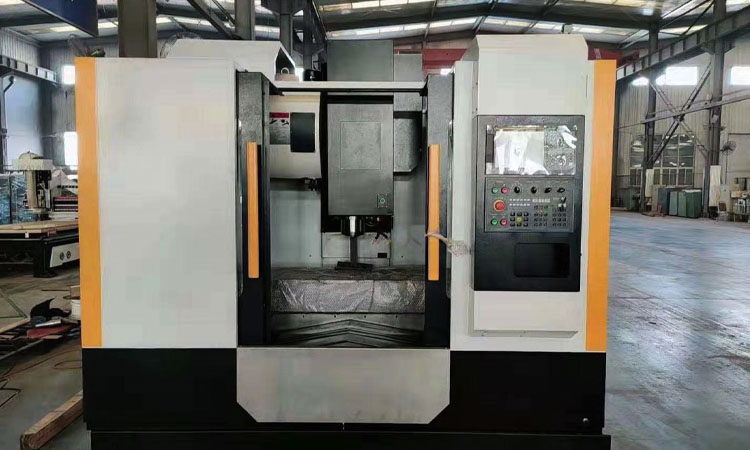
General Purpose CNC Lathe refers to a flexible turning machine designed to produce a range of rotational parts without being dedicated to one product alone. It normally uses two controlled axes: the X-axis controls tool movement toward and away from the workpiece centerline, while the Z-axis controls movement along the workpiece length. Through numerical control, the machine follows programmed tool paths for turning diameters, facing ends, boring holes, threading, grooving, chamfering, and similar operations. For a workshop manager, the main question is not whether CNC turning is accurate in theory. The question is whether one machine can change efficiently between sleeves, shafts, flanges, bushings, threaded parts, and small repeat orders. A General Purpose CNC Lathe is usually a sensible fit when part families share turning-based features, batch quantities change often, and the business needs more repeatability than manual work can provide. It is not the right choice for parts dominated by milled faces, deep cross-drilling, or complex angled features that require more axes.
Types of General Purpose CNC Lathes
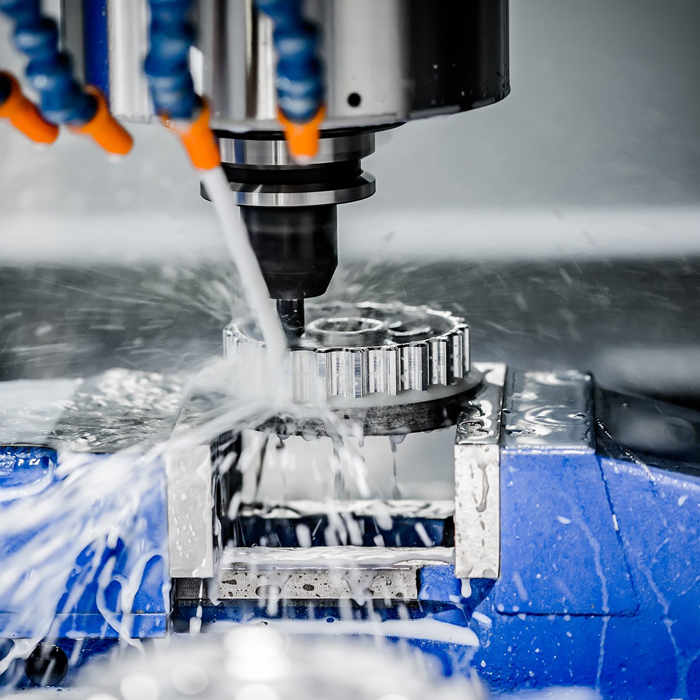
A General Purpose CNC Lathe can be supplied in several machine-layout categories, and the layout affects operator access, chip flow, workholding options, and the practical mix of parts the workshop can accept. A flat-bed or conventional-bed arrangement is often considered when a buyer values familiar loading access and workpieces that may need manual assistance during setup. An inclined-bed arrangement generally places the tooling and chip path differently, which can suit production-oriented turning where chip evacuation and automation planning matter. Buyers may also compare basic two-axis machines with models that add driven tools, a sub-spindle, or extra axes. The correct choice depends on the operation sequence, not on the longest feature list. If most work involves outside diameters, bores, threads, grooves, and end faces, a two-axis machine often keeps programming and setup more direct. If a single part repeatedly requires cross holes, flats, or work on both ends without refixturing, added-axis equipment may reduce handling. However, extra capability also adds cost, setup demands, and maintenance considerations.
| Machine type | Best-fit work | Operational advantage | Where it may not fit |
|---|---|---|---|
| Two-axis standard lathe | Shafts, bushings, sleeves, threaded fittings, flanges | Direct programming for common turning cycles and repeat batches | Parts needing extensive off-center milling or drilling |
| Inclined-bed CNC lathe | Production turning with frequent chip-producing operations | Layout may support chip handling and tool access priorities | Not automatically necessary for every low-volume turning task |
| Multi-axis turning machine | Parts needing turning plus driven-tool or second-end operations | Can reduce transfers between machines | Higher investment and programming complexity for simple turned parts |
| Manual lathe | One-off repair work and operator-led adjustment | Immediate hand control for simple tasks | Repeatability depends heavily on operator method and inspection |
Features That Matter for Mixed-Part Production
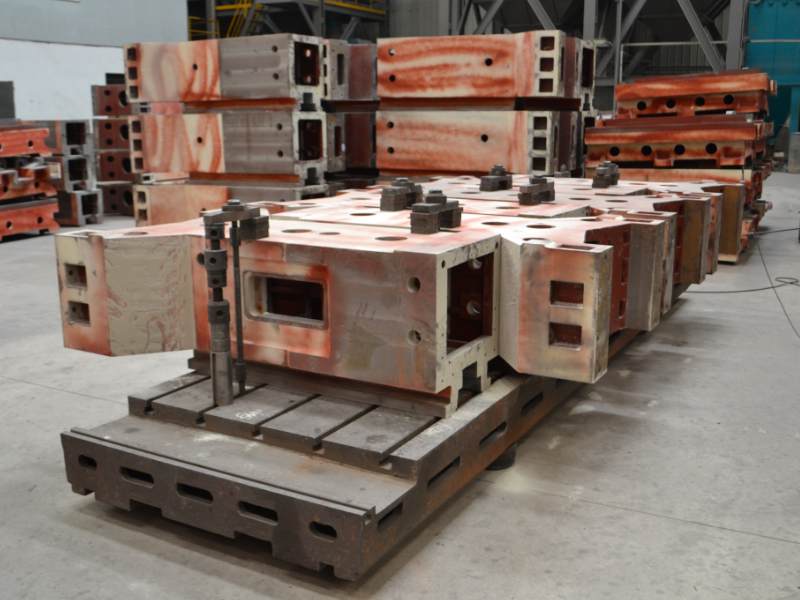
The useful features of a General Purpose CNC Lathe are the ones that shorten the change from one proven part program to the next while keeping machining behavior stable. Buyers should start with the bed, transmission components, control functions, tool arrangement, and workholding compatibility. MAKCNC machine bodies commonly use high-strength cast iron, including resin-sand castings, with aging treatment intended to support long-term rigidity and accuracy retention. Core transmission components such as ball screws and guideways commonly use high-precision components from Taiwan or Germany, depending on machine configuration. These details matter because a mixed-part workshop repeatedly changes chuck jaws, tools, cutting loads, and programs. If the machine structure and motion system are poorly matched, a program that worked for one batch may require more correction after another setup. For mold-related precision work, advanced system integration can include intelligent feedforward and quadrant-jump compensation to address issues such as overcut marks, quadrant marks, and vibration patterns. That capability should be assessed against the buyer’s actual part and process requirements rather than treated as a substitute for sound tooling, workholding, and cutting parameters.
- Bed and casting quality: Choose a rigid machine structure when parts include long overhangs, larger cutting loads, or frequent interrupted cuts. Do not assume structure alone solves problems caused by unsupported workpieces.
- Guideways and ball screws: Prioritize stable motion components when repeat programs must hold consistent tool paths. This does not remove the need for alignment checks and periodic maintenance.
- Control compensation functions: Consider them for precision-sensitive contours and mold-related work. They are less relevant when the part tolerance requirement is broad and setup speed is the main concern.
- Tooling capacity and change method: Confirm that the turret or tool arrangement can hold the turning, boring, grooving, threading, and cutoff tools used by your recurring part family.
- Chuck and tailstock compatibility: Match workholding to the longest, shortest, and most irregular workpieces expected. A standard chuck alone may not be enough for slender shafts or non-round blanks.
Comparison of General-Purpose 2-Axis CNC Lathes With Manual and Multi-Axis Lathes for Mixed-Part Repeat-Batch Production
For mixed-part, repeat-batch production, a General Purpose CNC Lathe with two axes is often the middle option between manual flexibility and multi-axis process consolidation. The practical decision comes down to what happens between batches. A manual lathe can be quick for a single repair part when a skilled operator can adjust dimensions by hand. Yet each repeat batch relies on the same operator method, manual measurement, and repeated setup decisions. A two-axis CNC machine stores the proven sequence, allowing the team to repeat diameter changes, thread cycles, bores, and grooves through a program. A multi-axis machine can combine operations that would otherwise move to a machining center or second lathe. That is valuable when those secondary features occur on most parts. It is not automatically better when only a small share of the work requires them, because the buyer may pay for capability that sits unused and adds programming burden.
| Parameter | Manual lathe | General-purpose 2-axis CNC lathe | Multi-axis lathe | What getting it wrong affects |
|---|---|---|---|---|
| Program repeatability | Operator-led | Stored programs repeat turning sequences | Stored programs can cover more operations | Choosing manual work for recurring batches can increase variation between operators and shifts. |
| Part changeover | Manual setting and measurement | Program recall plus tooling and workholding setup | More tools, axes, and process checks may be involved | Buying excess machine complexity can make simple part changes slower than expected. |
| Turning capability | Basic turning operations | Facing, OD and ID turning, boring, threading, grooving, and profiles | Turning plus more complex secondary operations, depending on configuration | Buying too little capability can create extra handling; buying too much can leave capacity underused. |
| Operator dependence | High during machining | High during setup, lower during programmed cutting | High during process planning and setup | Underestimating training needs can delay stable production after installation. |
| Best production pattern | Repairs and isolated one-offs | Mixed turned parts with repeat orders | Repeated complex parts needing consolidated operations | Matching the machine to the actual mix prevents unnecessary transfers or unnecessary capital cost. |
The clear recommendation is to select a two-axis General Purpose CNC Lathe when the majority of scheduled work can be completed by turning operations in one or two clamping stages and when repeat orders justify storing programs. This fits workshops producing varied part numbers in modest repeat batches, especially where shafts, fittings, sleeves, and threaded components recur over time. It does not fit a shop whose profitable work consistently requires milling, drilling on radial faces, or multiple angled operations within the same cycle. In that situation, compare the turning route with a professional machining center solution or a more capable turning configuration before committing to a machine category.
General Purpose CNC Lathe Applications in Workshops
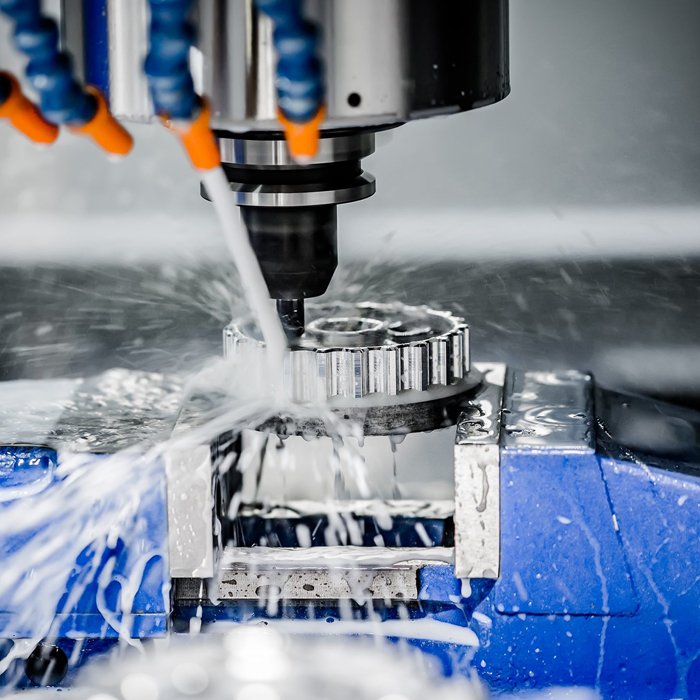
A General Purpose CNC Lathe is commonly considered for parts that start from bar, tube, casting, or forged blanks and are primarily defined by concentric diameters and axial features. Typical examples include threaded connectors, hydraulic-style sleeves, spacers, bushings, shafts, collars, pulleys, flanges, and bored housings. The decision should be based on the percentage of operations that can remain on the lathe. If a part needs facing, outer-diameter turning, internal boring, a thread, and a groove, it is a natural turning candidate. If the same part then needs several radial holes or milled flats, the shop must decide whether to transfer it to another machine, use an added-axis lathe, or redesign the process route. For mold-industry precision processing, control functions designed to address overcut marks, quadrant marks, and vibration patterns can be relevant where contour quality is a direct inspection concern. They do not replace balanced tooling, stable clamping, appropriate cutting conditions, or a suitable workpiece support method.
General Purpose CNC Lathe Price Factors
The price of a General Purpose CNC Lathe varies because the base machine is only one part of the purchase scope. Buyers should compare quotations by confirming the control system, bed configuration, tool arrangement, chuck and workholding scope, tailstock requirements, chip handling needs, optional functions, commissioning support, and spare-part expectations. A lower initial quotation may omit items that the production plan requires on day one. Conversely, a higher specification may include functions that do not improve the output of simple turned parts. The best approach is to prepare a part-family list before requesting prices. Include the material form, largest and smallest part size, longest workpiece, key operations, thread types, expected repeat quantity, and inspection concerns. MAKCNC states a production lead time of 1 to 6 months, so buyers should also align the sourcing schedule with machine acceptance, site preparation, operator training, and tool procurement. This stated range is a planning reference, not a promise for every configuration or order condition.
| Quotation factor | Why it changes price | Buyer action |
|---|---|---|
| Machine configuration | Bed design, control, tooling arrangement, and optional functions differ | Request a line-by-line specification rather than comparing only total price. |
| Workholding and tooling | Different parts may require jaws, fixtures, holders, boring tools, and support equipment | List recurring part diameters and clamping needs before the quotation stage. |
| Automation requirements | Loading and chip-handling requirements can add equipment scope | Buy automation only when batch volume and labor planning support it. |
| Service terms | Installation, training, response arrangements, and warranty scope affect commercial terms | Ask for written service boundaries and acceptance conditions. |
| Order quantity | Single-machine purchasing is available, while multiple-machine purchases may receive better commercial terms | Request both single-unit and multi-unit commercial options if expansion is planned. |
General Purpose CNC Lathe User Guide for Setup and Operation
A General Purpose CNC Lathe delivers useful flexibility only when the workshop controls setup discipline. Start by grouping parts into families based on blank type, chucking method, tool requirements, and operation sequence. Then build and protect proven programs rather than rewriting them for every repeat order. The practical rule is simple: standardize everything that does not need to change. Use consistent tool numbering, document jaw positions, record tool offsets, and keep a setup sheet with inspection points. This approach suits mixed-part production because it reduces the number of decisions an operator must remake each time a part returns. It does not mean every job can use the same fixture or cutting conditions. A thin-walled sleeve, a long shaft, and a heavy flange may all need different clamping methods and support. Before production, verify the actual workholding grip, tool clearance, first-off dimensions, thread form, and safe tool path using the selected blank and setup.
- Classify the part: Identify whether the work is mainly external turning, internal boring, threading, grooving, or a combination.
- Select the clamping method: Confirm chuck jaws, soft jaws, collets, tailstock support, or other support requirements before programming.
- Prepare the tool list: Assign tools for facing, roughing, finishing, boring, threading, grooving, and cutoff as needed.
- Create a setup sheet: Record tool numbers, offsets, work offset, jaw setup, inspection dimensions, and any special notes.
- Run a controlled first-off part: Inspect the dimensions and surface condition before releasing a repeat batch.
- Save proven conditions: Store the approved program and setup record with the part number for future orders.
Common Selection Mistakes for Mixed-Part Turning Capacity
The most frequent error is selecting a General Purpose CNC Lathe from a catalog headline instead of from real part data. A buyer may focus on a preferred machine layout but fail to check the longest shaft, required bore depth, thread range, tool count, or clamping challenge in the actual production mix. Another mistake is assuming a CNC machine removes all process risk. It improves repeatability through programmed motion, but unsuitable tools, unstable blanks, incorrect jaw pressure, and poor program control can still create rejected parts. A third error is buying multi-axis capability because a few drawings have secondary features, even though most revenue comes from straightforward turned components. The better decision is to count how often those extra operations occur and compare the cost of transfer against the cost and operating demands of added axes. This is particularly relevant for early-stage buyers whose future part mix is still being defined.
- Mistake: Selecting only by initial machine price. Better action: Compare the complete operating scope, including workholding, tooling, service, and commissioning needs.
- Mistake: Using one part drawing as the entire selection basis. Better action: Review a representative group of current and expected parts.
- Mistake: Ignoring setup time. Better action: Ask how each recurring part will be clamped, tooled, inspected, and recalled.
- Mistake: Treating advanced control functions as a cure for unstable setups. Better action: First confirm rigidity, support, tool condition, and cutting method.
- Mistake: Planning machine delivery without site readiness. Better action: Coordinate power, foundation requirements, handling access, tooling, and trained personnel before acceptance.
FAQ of General Purpose CNC Lathes
Is a General Purpose CNC Lathe suitable for small repeat batches?
Yes, a General Purpose CNC Lathe can suit small repeat batches when the same part returns often enough to benefit from stored programs and documented setup conditions. The benefit is not limited to large production quantities. A repeat order of a previously approved turned component can be prepared more consistently when the program, tool list, work offset method, jaw arrangement, and inspection points are recorded. This makes the machine suitable for suppliers handling many part numbers with intermittent demand. Its limit is the amount of setup work required for each part family. If every job is a one-off repair with changing dimensions, unrepeatable blanks, and no likely reorder, manual turning may remain more practical. Buyers should therefore separate genuine repeat work from isolated jobs before estimating the value of CNC capacity.
Can a standard two-axis lathe replace a machining center?
No, a standard two-axis General Purpose CNC Lathe should not be treated as a replacement for a machining center when the part requires substantial milling, drilling on several faces, or multi-sided work in one clamping. A lathe is designed around rotational workpieces and axial turning operations. It can be highly productive for concentric diameters, bores, grooves, threads, and faces. A machining center is better suited to prismatic work, multiple faces, pockets, slots, and drilled patterns. Some production routes need both machine types. A buyer should map every operation in sequence and identify which machine performs each feature without unnecessary handling. Where a part needs turning plus secondary milling, evaluate the transfer process or consider whether an added-axis machine is justified by the recurring workload.
What should be included in a CNC lathe RFQ?
An effective RFQ for a General Purpose CNC Lathe should include part drawings, material information, blank form, annual or expected repeat quantities, key turning operations, thread details, longest and smallest part sizes, inspection requirements, preferred workholding, available site utilities, and the destination country. It should also state whether the buyer needs installation support, operator training, spare parts, or service response arrangements. This information allows the supplier to assess the machine configuration against the real process rather than supply a generic quotation. MAKCNC was established in 2016 and operates multiple production lines with sample-machine inventory. The company states that standard warranty coverage is generally 12 months after whole-machine acceptance, followed by lifetime paid service. Its mature after-sales network commonly states an 8-hour response commitment and on-site fault handling within 48 hours. These service statements should be confirmed against the specific order, location, and commercial agreement.
General Purpose CNC Lathe Supplier for Flexible Production Plans
MAKCNC supplies CNC lathing machines, CNC machining centers, and CNC machines for buyers planning flexible production capacity. For mixed-part turning, the useful supplier discussion starts with the drawings and process route, not with a generic model name. Our team can review whether a standard two-axis General Purpose CNC Lathe matches the operations that dominate your part mix, or whether the plan calls for an inclined-bed configuration, added capability, or a separate machining-center process. Buyers can also review MAKCNC’s CNC inclined bed lathe range when layout and production requirements point in that direction. Single-machine procurement is available without a mandatory minimum order quantity, while multi-machine purchases may qualify for improved commercial terms related to price, delivery, or after-sales service. If you are looking for a General Purpose CNC Lathe supplier, please contact MAKCNC for the latest quotation and selection advice based on your drawings.