
Selecting CNC Machine Tools for Mechanical Parts
What are CNC Machine Tools for Mechanical Parts?
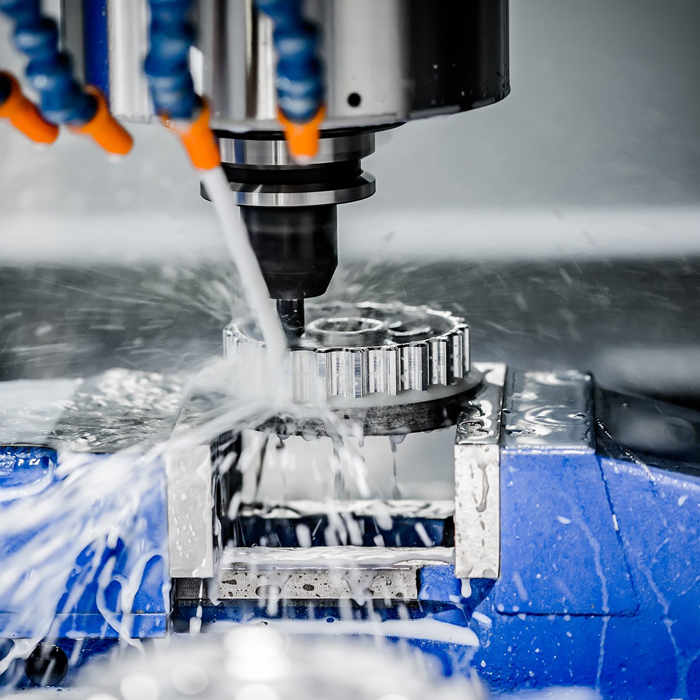
CNC Machine Tools for Mechanical Parts are precision machines that use computer numeric control (CNC) to automate the manufacturing of components. These tools are indispensable in modern manufacturing for their ability to produce parts with high accuracy, repeatability, and efficiency. They are designed to process various materials, from metals like steel, aluminum, and titanium to plastics and composites, shaping them into complex mechanical parts. This technology significantly reduces manual labor, minimizes errors, and allows for the production of intricate geometries that would be difficult or impossible to achieve with conventional machining methods. The primary role of these machines is to transform raw material into finished mechanical components that meet exact design specifications, often used in industries ranging from automotive and aerospace to medical devices and industrial machinery.
Types of CNC Machine Tools for Mechanical Parts
The world of CNC machine tools encompasses various types, each optimized for specific operations and part geometries. Understanding these types is fundamental to selecting the right equipment for your mechanical part production needs.
- CNC Machining Centers: These versatile machines, often categorized as vertical or horizontal CNC machining centers, are primarily used for milling operations. They can perform drilling, boring, tapping, and contouring on multiple faces of a workpiece. Vertical machining centers (VMCs) typically have a vertical spindle and are excellent for flat parts, molds, and general machining. Horizontal machining centers (HMCs) have a horizontal spindle and are highly efficient for multi-sided machining of complex parts in high-volume production, often featuring pallet changers for continuous operation.
- CNC Lathing Machines: Also known as CNC lathes or turning centers, these machines are designed for operations that involve rotating the workpiece against a stationary or rotating cutting tool. They are ideal for producing cylindrical or conical parts such as shafts, bushings, and bolts. Modern CNC lathes can feature multiple turrets, live tooling for milling and drilling, and even secondary spindles, allowing for complete part manufacturing in a single setup.
- CNC Drilling Machines: While drilling is often integrated into machining centers, dedicated CNC drilling machines offer specialized capabilities for high-volume hole production or very deep hole drilling. They provide precise control over depth, speed, and feed rates, crucial for maintaining hole integrity and reducing tool wear.
- CNC Grinding Machines: These machines are used for high-precision finishing operations, removing very small amounts of material to achieve extremely tight tolerances and superior surface finishes. They are essential for parts requiring exceptional accuracy, such as bearing races, gears, and precision shafts.
Comparison: Matching CNC Tools to Mechanical Part Features
Selecting the correct CNC tool for each specific mechanical part feature is critical for achieving desired precision, surface finish, and production efficiency. Using the wrong tool can lead to poor quality, excessive tool wear, longer cycle times, and even part rejection. Below is a guide to matching common part features with appropriate CNC tool types, along with the practical implications of incorrect selection.
| Mechanical Part Feature | Recommended CNC Tool Types | Impact of Incorrect Tool Selection | When the Tool Does NOT Apply |
|---|---|---|---|
| Flat Faces / Planar Surfaces | Face mills, shell mills, large diameter end mills |
|
When intricate details or small pockets are required on the same surface, requiring smaller diameter tools. |
| Pockets / Cavities | End mills (flat, ball nose, bull nose), high feed mills |
|
For very deep and narrow slots where specialized slotting cutters or wire EDM might be more suitable. |
| Holes / Through-holes / Blind Holes | Twist drills, spot drills, reamers, boring bars |
|
For extremely small holes (<0.5mm) where micro-drills or laser drilling may be necessary. |
| Threads (Internal / External) | Thread mills, taps, dies, single point threading tools (lathe) |
|
For very large or specialized threads that may require custom-ground form tools or thread grinding. |
| Bores / Internal Diameters (Precision) | Boring bars, reamers |
|
For holes that are primarily for clearance and do not require high precision, where simple drilling is sufficient. |
| Grooves / Slots | Slotting end mills, T-slot cutters, form cutters |
|
For very thin, deep slots that may require wire EDM, or very wide, shallow slots that can be milled with standard end mills. |
| External Diameters (Turning) | Turning inserts (roughing, finishing), grooving tools |
|
When the part geometry is non-cylindrical, requiring milling or grinding. |
Key Features of High-Performance CNC Machine Tools
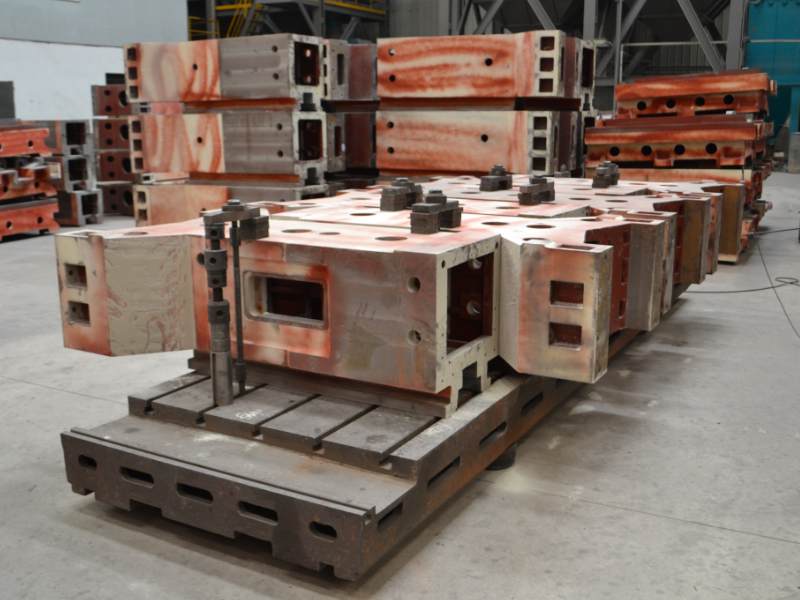
The performance of CNC machine tools for mechanical parts is directly tied to their construction and integrated technologies. MAKCNC prioritizes foundational quality to ensure long-term precision and rigidity. Our machine bodies, for instance, are typically constructed from high-strength cast iron, often utilizing resin sand castings. This material choice is critical because cast iron naturally possesses excellent vibration damping characteristics, which is essential for maintaining tool life and achieving superior surface finishes, especially during demanding cuts. Furthermore, these castings undergo a meticulous aging treatment process. This thermal treatment relieves internal stresses in the material, ensuring the machine's geometric accuracy remains stable over its entire operational lifespan, preventing deformation and maintaining precision.
Beyond the robust frame, the core transmission components are equally vital. We frequently select high-precision components from reputable Taiwanese or German brands for elements such as ball screws and linear guideways. These components are known for their exceptional accuracy, minimal backlash, and long service life, directly contributing to the machine's ability to execute precise movements. In terms of process, we emphasize system synergy. This means integrating these high-quality components so they work together seamlessly, allowing the entire machine to perform at its optimal level, rather than individual parts operating in isolation.
For specialized applications, particularly in the mold industry where high-precision machining is paramount, our machines integrate advanced system intelligence. Technologies such as intelligent feedforward and quadrant jump compensation are crucial. These features effectively address common challenges like "overcut marks," "quadrant marks," and "chatter patterns," which are often visible on machined surfaces and indicate imperfections. By utilizing these technologies, our machines can produce smoother, more accurate mold surfaces, reducing the need for extensive post-machining finishing. Additionally, for manufacturers dealing with multi-variety, small-batch production, our machines offer the capability to complete multi-face machining in a single clamping. This significantly reduces setup times, minimizes potential errors from re-clamping, and enhances overall production efficiency.
Optimizing CNC Tool Selection for Mechanical Part Applications
Effective CNC tool selection goes beyond just matching a feature to a tool. It involves a holistic approach considering various factors to ensure optimal machining outcomes and cost-efficiency. Incorrect choices here can lead to increased cycle times, higher tooling costs, and compromised part quality.
Key Considerations for Tool Selection:
- Workpiece Material: The material's hardness, abrasiveness, and heat conductivity dictate the tool material (e.g., carbide, HSS), coating (e.g., TiAlN, AlCrN), and geometry (e.g., helix angle, chip breaker). Machining tough alloys like Inconel requires different tools than softer aluminum.
- Required Tolerance and Surface Finish: Tighter tolerances and finer surface finishes demand more rigid tools, specific geometries, and often multi-stage processes (roughing, semi-finishing, finishing). For example, a reamer is used after drilling for precise hole diameters and finishes.
- Part Geometry and Complexity: Deep cavities, thin walls, or complex contours may require extended length tools, specialized form cutters, or multi-axis machining capabilities.
- Production Volume: For high-volume production, tool life and rapid material removal rates are paramount, often justifying more expensive, high-performance tools. For low-volume or prototyping, general-purpose tools might suffice.
- Machine Rigidity and Power: The capabilities of your vertical CNC machining center MV1380 or other machine must match the demands of the cutting tool. A powerful tool requires a robust machine to prevent chatter and maintain accuracy.
Buyer's Decision Checklist for CNC Tools:
- Identify Part Features: List all geometric features (holes, pockets, threads, faces, external diameters) on the mechanical part drawing.
- Determine Material: Note the exact material and its properties (hardness, alloy type).
- Specify Requirements: Document required tolerances, surface finishes, and critical dimensions for each feature.
- Select Tool Type: Based on feature and material, choose the general tool category (end mill, drill, turning insert).
- Define Tool Material & Coating: Match tool material (HSS, Carbide, Ceramic) and coating to workpiece material and cutting conditions.
- Choose Geometry: Select helix angle, flute count, chip breaker, and corner radius appropriate for the application.
- Consider Tool Holder: Ensure rigidity, runout, and balance for the chosen tool.
- Evaluate Cost vs. Performance: Balance initial tool cost with expected tool life, material removal rates, and part quality.
- Verify Machine Compatibility: Confirm the tool fits the machine's spindle, holders, and power capabilities.
Understanding CNC Machine Tool Investment and Value
The investment in CNC machine tools for mechanical parts is a strategic decision influenced by several factors, directly impacting the machine's capabilities and long-term value. Understanding these elements helps buyers make informed choices that align with their production goals and budget.
Factors Influencing Machine Tool Price:
- Machine Type and Size: A large horizontal CNC machining center will naturally cost more than a compact vertical model due to material, complexity, and capacity. Similarly, multi-axis machines (5-axis) are more expensive than 3-axis variants.
- Features and Options: Integrated tool changers, pallet systems, high-pressure coolant, through-spindle coolant, probing systems, and advanced automation features all add to the base price.
- Control System: The brand and sophistication of the CNC control (e.g., Fanuc, Siemens, Heidenhain) significantly impact cost, offering varying levels of functionality, user interface, and programming capabilities.
- Component Quality: As discussed, the quality of core components like spindles, guideways, and ball screws from reputable brands contributes to higher initial investment but ensures greater precision and longevity.
- Brand Reputation and Origin: Established brands with a track record of innovation and reliability often command higher prices, reflecting their engineering excellence and support infrastructure.
- Customization: Machines built to specific requirements, such as extended travel or specialized fixtures, will incur additional costs.
While initial price is a consideration, the true value of a CNC machine tool lies in its total cost of ownership and its ability to deliver consistent performance. A machine that offers greater precision reduces scrap rates and post-processing work, saving costs over time. Its durability ensures fewer breakdowns and longer operational life. Efficiency, measured in faster cycle times and multi-tasking capabilities, directly translates to higher output. MAKCNC understands these dynamics. While we have no rigid minimum order quantity, allowing single unit purchases, buyers pursuing bulk procurement (e.g., multiple units) can benefit from more favorable business terms. This includes enhanced pricing, optimized delivery schedules (typically 1 to 6 months), and superior after-sales service arrangements, ensuring a better return on investment for larger projects.
Your Trusted Partner for CNC Machine Tools for Mechanical Parts
For manufacturers seeking high-precision CNC machine tools for mechanical parts, MAKCNC stands as a reliable partner. Established in 2016, we have rapidly grown to operate multiple production lines, supported by a ready stock of sample machines for various applications. Our commitment to quality is underscored by our ISO9001:2015 certification, ensuring that every machine leaving our facility adheres to international standards for quality management.
We specialize in providing robust and accurate CNC Lathing Machines and CNC Machining Centers, engineered to meet the demanding requirements of industries that rely on precision mechanical parts. Our machines are built for durability, featuring high-strength cast iron bodies that undergo aging treatment for long-term accuracy and rigidity. Core transmission components are sourced from leading Taiwanese or German brands, ensuring exceptional performance where it matters most.
Beyond the machines themselves, MAKCNC offers comprehensive support. Our standard warranty covers 12 months post-acceptance for the entire machine, with lifetime paid service available. For projects with specific requirements, such as certain tender projects, we can accommodate requests for extended coverage, like a three-year free warranty. Our mature after-sales network is designed for rapid response, typically promising a response within 8 hours and on-site technical support within 48 hours to minimize downtime for our clients globally. This dedication to service, combined with our technical expertise and flexible procurement options, makes MAKCNC a strategic choice for your CNC machine tool needs. Learn more about MAKCNC.
Frequently Asked Questions about CNC Machine Tools for Mechanical Parts
Which CNC tool is best for holes and slots?
For holes, twist drills are the most common initial tool, followed by reamers for precision sizing and improved surface finish. For slots, slotting end mills are specifically designed for efficient chip evacuation and accurate width control. T-slot cutters are used for creating T-shaped slots. The best choice depends on the material, depth, width, and required precision of the feature.
What CNC tools machine threads and bores?
Threads can be machined using thread mills (for milling machines), taps and dies (for internal and external threads respectively), or single-point threading tools on a CNC lathe. For precision bores, boring bars are utilized on both milling and turning centers to achieve exact diameters and concentricity, often after initial drilling. Reamers can also be used for finishing bores to tight tolerances.
How to select tools for complex mechanical part features?
Selecting tools for complex features requires a detailed analysis of the part geometry, material, and desired outcome. Often, a combination of tools is necessary. For multi-sided complex parts, a vertical CNC machining center MV1270 or a horizontal machining center with 4- or 5-axis capabilities is ideal. Tools like ball nose end mills are perfect for contoured surfaces, while form cutters can create specific profiles in a single pass. The strategy typically involves roughing with large, aggressive tools, followed by semi-finishing and finishing passes with smaller, more precise tools to achieve the final shape and surface quality.
If you are looking for a reliable supplier of CNC machine tools for mechanical parts, please feel free to contact us for the latest product quotation.