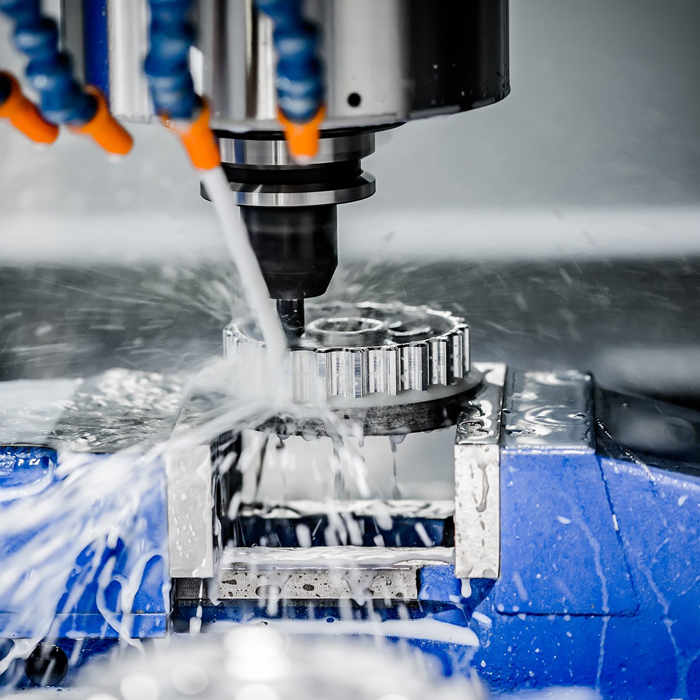
How a Vertical Machining Center for Mold Making Keeps Cavity Dimensions Stable Under Heat
A Vertical Machining Center for Mold Making is a three-or-more-axis machine tool built specifically to hold tight tolerances on cavity and core surfaces while cutting hardened tool steel for hours at a time. The question mold shops keep asking is simple: why does a cavity measure within spec at 9am and drift out of tolerance by 2pm on the same setup? The answer almost always traces back to heat — spindle heat, ball-screw growth, and coolant temperature swings that shift the machine's geometry mid-cycle. This article breaks down exactly what causes that drift, what happens if you ignore it, and how machine design choices address it.
What Causes Thermal Drift in Cavity Finishing
Thermal drift is the dimensional change that occurs when machine components expand or contract due to heat generated during cutting. In mold work, finishing passes on a cavity often run for 6-10 hours unattended. Small growth in the spindle housing or ball screw translates directly into surface error — often invisible until the part is measured off the machine and the mold no longer closes flush. Shops chasing "over-cut marks," inconsistent parting-line fit, or wall thickness that varies by 0.01-0.02mm across a single cavity are usually looking at a thermal problem, not a programming one.
How Spindle Heat, Ball-Screw Growth, and Coolant Control Affect Cavity Dimensional Stability During Finishing
Three heat sources dominate cavity finishing accuracy. Each behaves differently, and each requires a different countermeasure. Getting any one of them wrong shows up as a specific, recognizable defect on the finished cavity.
- Spindle heat — High-speed spindle bearings generate heat that expands the spindle shaft axially and radially. Left uncompensated, this pushes the tool tip deeper into the cavity as the shift lengthens, producing a cavity that is deeper at the end of a long finishing pass than at the start. Symptom: depth variation between the first and last cut areas on the same program.
- Ball-screw growth — Ball screws heat up from friction during rapid repositioning and heavy cutting loads, elongating along their axis. Without compensation, this causes position error that accumulates over the X/Y/Z travel range — worse on larger cavities that use more of the machine's stroke. Symptom: dimensional error that grows toward the edges of a large mold base, not the center.
- Coolant temperature control — Coolant that is not temperature-stabilized absorbs heat unevenly across a shift, changing the thermal state of the workpiece and machine structure at different times of day. Symptom: parts machined in the morning measure differently from parts machined in the afternoon, even with identical programs and tooling.
| Heat Source | What It Affects | Typical Error Pattern | Common Fix |
|---|---|---|---|
| Spindle heat | Z-axis depth, tool tip position | Depth drift over long cycles | Thermal growth compensation, spindle chillers |
| Ball-screw growth | X/Y positioning accuracy | Error increasing toward travel limits | Screw core cooling, real-time pitch compensation |
| Coolant instability | Overall machine and part temperature | Shift-to-shift measurement variance | Chilled coolant units, consistent flow rate |
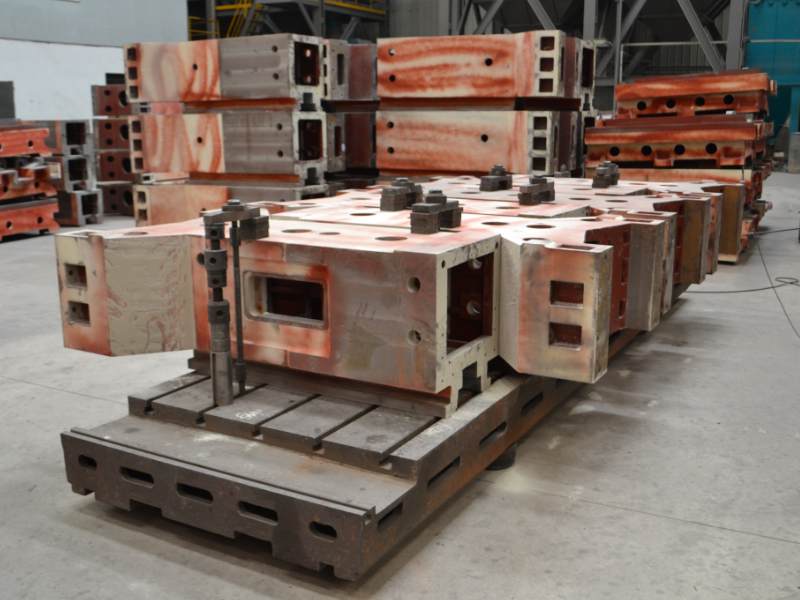
Machines built with high-strength cast iron structures — often resin-sand castings that undergo aging treatment — hold their geometry better under these thermal loads because the base structure itself moves less. Pairing that structure with high-precision ball screws and linear guides, commonly sourced from Taiwan or Germany, keeps the mechanical chain tight enough that compensation systems have less error to correct in the first place.
Common Mistakes Mold Shops Make With Thermal Management
- Running finishing passes immediately after a cold start, before the spindle and screws reach a stable operating temperature.
- Ignoring coolant temperature and treating it as a lubrication issue only, not a dimensional control factor.
- Measuring cavities immediately after machining, before the part and machine return to room temperature — this hides real thermal error.
- Assuming a machine's static accuracy spec (measured cold) will hold true after 8 hours of continuous cutting.
- Skipping quadrant-change compensation settings, which leads to visible "quadrant marks" at direction reversals — a classic sign of uncompensated backlash and thermal shift combined.
Step-by-Step Approach to Controlling Heat During a Finishing Job
- Warm up the machine with a dry-run cycle matching the planned finishing path for 20-30 minutes before starting the actual cavity cut.
- Confirm coolant temperature is stabilized (chiller reaching set point) before loading the finishing program.
- Enable thermal growth compensation in the control if the machine supports it, and verify offsets against a known reference block.
- Use intelligent feed-forward control and quadrant-glitch compensation where available — these reduce overcut marks, quadrant marks, and chatter lines specifically tied to direction changes under thermal load.
- Schedule long finishing passes to avoid mid-cycle machine restarts, which reintroduce a cold-to-warm thermal cycle mid-job.
- Measure the cavity after it returns to ambient temperature, not immediately off the machine.
Machine Types Suited to Cavity Finishing Work
Not every VMC configuration handles thermal-sensitive mold work the same way. Smaller travel machines, such as the vertical CNC machining center MV970, tend to show less ball-screw elongation simply because the travel distance is shorter. Larger mold bases benefit from machines like the vertical CNC machining center MV1380, provided the screw cooling and compensation systems are matched to the larger stroke. For shops running multi-face mold components in one setup, a horizontal CNC machining center can reduce repositioning error entirely by finishing several faces without re-fixturing — this doesn't eliminate thermal growth, but it removes one source of accumulated error from re-clamping.
When Thermal Compensation Matters Less
Not every job needs this level of thermal attention. Roughing operations, where 0.1-0.3mm of stock remains for a finishing pass, tolerate normal thermal drift because the finishing operation corrects it anyway. Prototype molds with looser tolerance requirements, or single-cavity low-volume tooling where the mold will be hand-fitted, also don't justify the setup time for full thermal compensation. The investment in warm-up cycles and coolant stabilization pays off specifically on precision cavity and core work — multi-cavity production molds, class-A surface finishes, and tight parting-line fits where 0.005-0.01mm matters to mold function.
Buyer's Checklist Before Selecting a Machine for Cavity Work
- Does the machine offer real-time thermal growth compensation, or only static offset tables?
- Is the coolant system temperature-controlled, or just a standard flood system?
- What is the ball-screw brand and cooling method — core-cooled screws hold accuracy longer under continuous cutting.
- Does the control include feed-forward and quadrant-glitch compensation for finishing paths with frequent direction changes?
- Can the machine complete multi-face work in one clamping, reducing setup-related error on complex cavities?
- What warranty and service response terms apply — a 12-month acceptance-based warranty with defined 8-hour response and 48-hour on-site resolution is a reasonable benchmark to request from any supplier.
Choosing a Supplier for Precision Mold Machining Equipment
MAKCNC has been manufacturing CNC lathes and machining centers since 2016, running multiple production lines with demo machines in stock for evaluation. Machine bases use high-strength cast iron, aged to maintain long-term rigidity, paired with high-precision ball screws and linear guides typically sourced from Taiwan or Germany. For mold-specific finishing work, the control systems integrate intelligent feed-forward and quadrant-glitch compensation to address overcut marks, quadrant lines, and chatter — the same defects discussed above. Shops running multi-variety, small-batch mold production also get one-setup, multi-face machining capability to cut fixturing time. There's no fixed minimum order — a single unit can be purchased, though volume orders typically receive better pricing, lead times, or after-sales terms. Standard warranty runs 12 months after acceptance, with lifetime paid service available; select tender projects can qualify for extended three-year free warranty terms. Service response targets 8 hours, with on-site resolution within 48 hours. Our facility operates under ISO9001:2015 certification. If you're evaluating a vertical CNC machining center MV1270 or need a machine configuration built around your mold geometry, our customized CNC machines and machining centers from MAKCNC team can walk through spindle, screw, and coolant specifications relevant to your tolerance targets.
FAQ About Vertical Machining Centers for Mold Making
How much dimensional error can spindle heat cause on a long finishing job?
It depends on spindle design and ambient conditions, but uncompensated spindle growth is a known source of the depth drift mold makers report between the start and end of multi-hour finishing cycles. Machines with thermal compensation and chilled spindle systems are designed specifically to reduce this variable.
Is a Vertical Machining Center for Mold Making different from a standard VMC?
The core mechanics are similar, but machines positioned for mold work typically add thermal compensation features, finer feed-forward control, and quadrant-glitch correction — features aimed directly at the surface finish and dimensional issues common to cavity and core work.
What is quadrant-glitch compensation and why does it matter for mold cavities?
It's a control-level correction for the brief servo lag that occurs when an axis reverses direction, which otherwise shows up as visible witness marks — sometimes called quadrant marks — on curved cavity surfaces. It matters most on class-A finishes where surface marks are visually unacceptable.
Do I need a horizontal or vertical machining center for mold work?
Vertical machines suit most single-face cavity and core work. A horizontal CNC machining center is worth considering when a mold component needs several faces machined without re-fixturing, since it reduces setup-related positioning error.
What warranty terms should I expect from a mold-machine supplier?
A reasonable baseline is 12 months from acceptance with paid lifetime service afterward, 8-hour response time, and 48-hour on-site resolution. Some tender-based projects negotiate extended terms, such as three-year free warranty coverage.
If you're comparing machine options for cavity finishing work or need help matching spindle, screw, and coolant specifications to your tolerance targets, feel free to contact us for the latest quote and technical guidance. You can also review our global CNC machinery cases or learn more about MAKCNC as a manufacturer.