How to Choose a Horizontal CNC Machine Tool or Boring Mill for Deep Bores
What is a Horizontal CNC Machine Tool?
Horizontal CNC machine tool is the term for a computer-controlled machine whose spindle axis runs parallel to the floor. The most common version is the horizontal machining center (HMC), which usually pairs that spindle with a pallet changer and an automatic tool magazine. The horizontal spindle lets chips fall away from the cut, and a rotary table presents several faces of a part in one clamping. That makes it a strong choice for housings, valve bodies and similar prismatic parts.
The sourcing risk sits at the edge of this definition. If you send an RFQ for deep-bore parts and only write "horizontal machine", you may receive quotes for an HMC that cannot hold the bore straightness you need, or for a boring mill you did not need. A boring operation enlarges and finishes an existing hole. Its limits are set by how far the tool must reach, how slender the tool becomes, and how heavy the workpiece is. These three factors decide the machine class, so define them before you shortlist suppliers.
Types of Horizontal Machining Equipment
Buyers usually compare three layouts. Each solves a different problem, and the boundary between them is not a brand question. It is a question of geometry and mass.
| Type | Typical configuration | Best fit | Limit |
|---|---|---|---|
| Horizontal machining center (HMC) | Column and spindle head, pallet changer, tool magazine, indexing table | Repeat batches of housings, valve bodies and pump casings with multi-face machining | Spindle stroke and tool rigidity limit very deep bores |
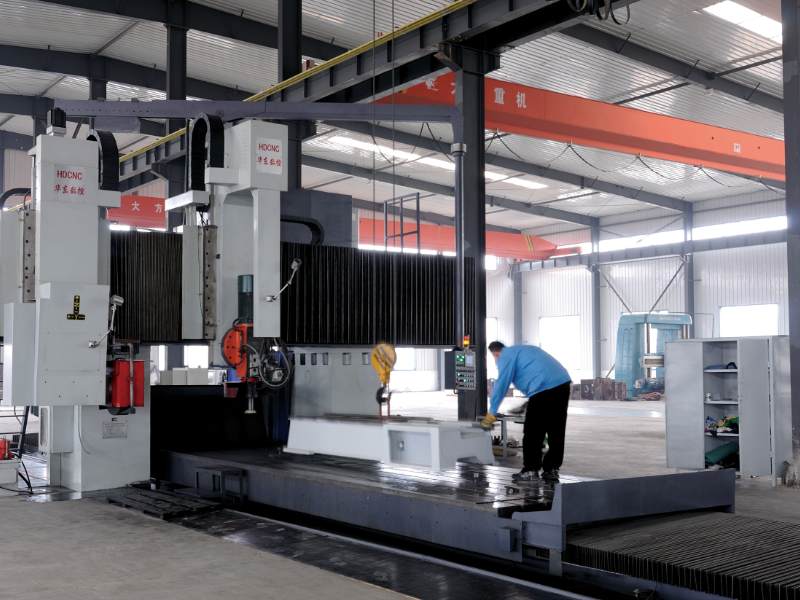
| Table-type horizontal boring mill | Headstock with extendable quill or ram, large rotary table | Heavy parts with deep or large-diameter bores, mixed milling and boring | Slower cycle, fewer automation options, larger footprint |
| Floor-type boring mill | Column travels along a floor plate, workpiece stays fixed | Very large fabrications or castings that cannot sit on a table | Heavy foundation work, long setup, specialist operation |
MAKCNC's listed range covers machining centers and lathes. Our vertical and horizontal cnc machine center lines belong in the first row of this table. If your drawings point to the second or third row, say so in the RFQ so fit can be judged before any quotation work begins.
Features That Matter for Deep-Bore Work
Not every HMC feature helps a deep bore. Judge the features below against the actual part, not against a catalog headline.
- Horizontal spindle and chip fall. Chips drop out of the bore instead of recutting. This helps most when the bore is cut from a side that opens downward or toward the chip conveyor. It does not fix tool deflection.
- Pallet changer and indexing table. You machine several faces in one setup, which protects the positional relation between bore and face. It fits multi-variety, small-batch work. The pallet's rated load becomes the limit for heavy parts.
- Structural rigidity. MAKCNC builds its machine bodies mostly from high-strength cast iron (resin sand castings) with aging treatment, which helps hold accuracy and stiffness over time. Rigidity helps the cut, but it cannot shorten a long, slender boring bar.
- Screws and guideways. Key transmission parts are mostly Taiwanese or German high-precision brands. Ask for the exact brand and grade of each axis when comparing quotes.
- Control compensation. The control systems we integrate offer intelligent feedforward and quadrant-jump compensation. These target overcut marks, quadrant marks and chatter marks, which matter on contouring and mold-type work. They do not replace correct tooling for a deep bore.
When Quill Reach, Bore Depth, and Table Load Point to a Boring Mill
This is the screening step most RFQs skip. Fill in the three values for your worst-case part. If any single row lands in the right-hand column, request a boring mill quote alongside the HMC quote. This avoids accepting an HMC proposal that fails at trial cutting.
| Criterion | An HMC usually fits when | A horizontal boring mill is indicated when | What to put in the RFQ |
|---|---|---|---|
| Quill or ram reach | The deepest bore bottom is reachable within the spindle's Z travel, using a standard holder and a tool of normal projection | The bar must project well beyond the headstock, or the quill or ram must extend to reach the bottom or the far wall of the part | Distance from the spindle-side face to the bore bottom, plus any far-side features |
| Bore depth-to-diameter ratio | The ratio is moderate, so a single rigid bar finishes the bore without visible deflection | The ratio is high enough that bar deflection controls straightness and taper, so you need a supported bar or an outboard support for through-bores | Depth, diameter, tolerance class, cylindricity or straightness requirement, surface finish |
| Table load | Part plus fixture sits comfortably inside the pallet's rated load, with margin for off-center mass | The casting or fabrication approaches or exceeds the pallet rating, or its center of gravity sits far from the table center | Gross mass including fixture, overall dimensions, center of gravity location |
Reasoning. Deflection of a boring bar grows quickly as projection increases. Beyond a certain length, extra machine rigidity does little, and the tool becomes the weak link. A boring mill's quill or ram, or a supported bar, addresses that directly. Table load works the same way: an overloaded pallet or table loses indexing accuracy and shortens component life.
Limit. This table is a screening tool, not a verdict. The exact thresholds depend on the machine model, tool system and tolerance, so ask each supplier to confirm them against its own spindle and tooling data. We have not published a universal ratio, and you should be wary of any supplier that quotes one without seeing your drawing.
Horizontal Machine Applications
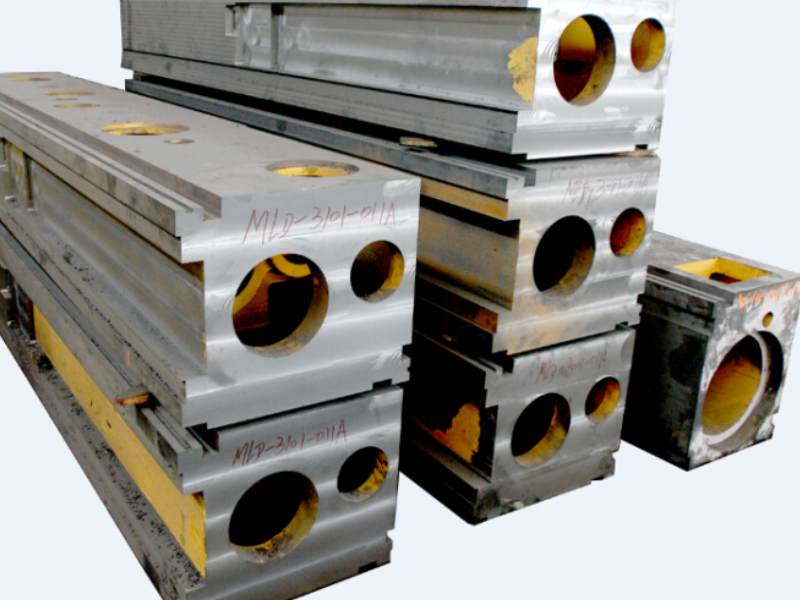
HMCs earn their place where repeatability across faces matters more than extreme reach. Typical parts include valve bodies, gearbox and pump housings, hydraulic manifolds, and mid-size precision structural components. They work best on batches where you can reuse fixtures and run pallets in sequence. Boring mills fit one-off or low-volume heavy parts where the bore itself dominates the cost.
Illustrative example (not a customer case). A valve-body RFQ lists four flange faces and two cross bores of modest depth. All features are reachable in one setup, the part weighs well under the pallet rating, and the batch repeats monthly. This is an HMC job. Now change the drawing: a long through-bore on a single axis with tight straightness, and a casting that nearly fills the table. Two of the three rows in the boundary table now point to a boring mill. Same part family, different machine.
For real installations across different industries, see the global cnc machiery cases of makcnc page.
Price Factors for HMC and Boring Mill Quotes
Price differences between two quotes for the same part rarely come from the machine alone. Break each quote into the lines below so you can compare them fairly. We do not list price figures here because they depend on configuration.
- Machine size and travels. Larger axis strokes and heavier pallets raise structure and drive cost.
- Spindle and drive. Torque, speed range and cooling affect both price and deep-bore performance.
- Screws, guideways and control. Brand and grade choices, such as Taiwanese or German components, change the quote.
- Pallet system and automation. Pallet count, changer type and tool magazine capacity.
- Tooling and fixtures. Extended or supported boring bars, boring heads, and workholding are often quoted separately.
- Delivery and service terms. Lead time (our range is 1 to 6 months, depending on configuration), warranty length, and installation scope.
There is no hard minimum order quantity at MAKCNC, so a single machine can be purchased. Orders of several machines may qualify for better terms on price, delivery or after-sales service.
User Guide for Writing the RFQ and Acceptance Plan
- Measure the worst-case part. Record bore depth, diameter, tolerance, mass with fixture and overall dimensions.
- Run the boundary table. Mark each row as HMC or boring mill. One right-hand answer is enough to request both quotes.
- Specify the cutting test. Ask the supplier to state which tool, bar length and cutting data it expects to reach your bore tolerance.
- Define acceptance. Agree on what is measured (straightness, taper, positional accuracy), with which instrument, and whether it is checked at the supplier's site, yours, or both.
- Confirm commercial terms. Lead time, warranty start point, service response, and who handles installation and training.
Common mistakes
- Buying on pallet size alone and ignoring pallet load rating.
- Leaving bore straightness out of the RFQ, then arguing about it at acceptance.
- Assuming a stiffer machine fixes a slender-bar problem.
- Comparing quotes that differ in tooling, fixtures or automation scope.
- Skipping the center-of-gravity check on heavy, uneven castings.
FAQ of Horizontal CNC Machine Tool Selection
Can an HMC machine a deep bore?
Yes, within limits. If the bottom of the bore sits inside the spindle's Z travel and the bar can stay short and rigid enough for your tolerance, an HMC can do the job. When bar projection or a supported bar is required, a boring mill is the safer choice.
Which spec do I check first?
Start with the bore itself: depth, diameter and straightness tolerance. Then compare mass with fixture against the pallet rating. Travels and spindle data come after these two.
Can one machine do both milling and deep boring?
A horizontal boring mill can, which is why heavy mixed parts often go there. An HMC does it for moderate bore depths. Ask the supplier to show the tool setup for your part, rather than accepting a general statement.
What warranty applies to MAKCNC machines?
Standard warranty is 12 months after machine acceptance, with lifetime paid service available. Some tender projects require longer terms, such as three years of free warranty, and these are agreed per project.
MAKCNC as a Horizontal Machining Center Supplier
MAKCNC has operated since 2016, with multiple production lines and sample machines kept in inventory. Our quality system is certified to ISO 9001:2015. The listed range includes CNC lathes, vertical machining centers and a horizontal cnc machining center, and you can read more about makcnc on our company page.
For buyers of precision parts, three facts bear directly on this decision. Machine bodies use aged, high-strength cast iron. Transmission components are mostly Taiwanese or German brands. Setups are built around multi-face machining in one clamping, which suits small-batch, multi-variety work. After delivery, the service network typically commits to a response within 8 hours and on-site arrival within 48 hours for fault handling. If your requirement needs a specific configuration, our customized cnc machines and machining centers from makcnc page describes the options.
We have not published a deep-bore benchmark for your part, and we will not claim one without your drawing. If you are looking for a horizontal machining center supplier, send us your bore depth, diameter, tolerance and part weight, and contact us for the latest quote.