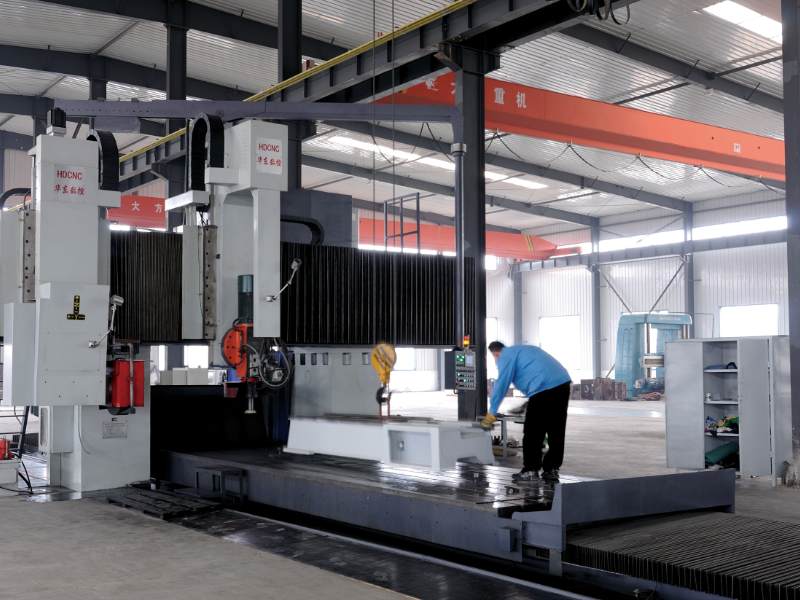
How to Specify Customized CNC Equipment for an RFQ
What is Customized CNC Equipment?
Customized CNC Equipment is a CNC machine or production-oriented configuration specified around a buyer’s part geometry, material, process sequence, output target, automation connection, and site conditions. CNC, or computer numerical control, uses programmed commands to control machine motions and machining operations. For an RFQ, the term should not mean “a machine with optional accessories.” It should mean a documented manufacturing requirement that a supplier can evaluate, price, and support. This distinction matters because a quotation based only on a part photo, a broad machine category, or a target budget may omit fixtures, chip removal, tooling interfaces, measurement needs, loading methods, or utility preparation. A buyer may receive several low initial quotes that cannot be compared fairly. The practical answer is to define the work first, then ask suppliers to state what is included, excluded, and assumed. This approach suits manufacturing engineers and purchasing teams shortlisting machine builders before technical proposals are compared. It does not replace detailed process validation for unusually difficult parts, regulated production, or projects requiring acceptance standards beyond the RFQ scope.
Types of Customized CNC Equipment
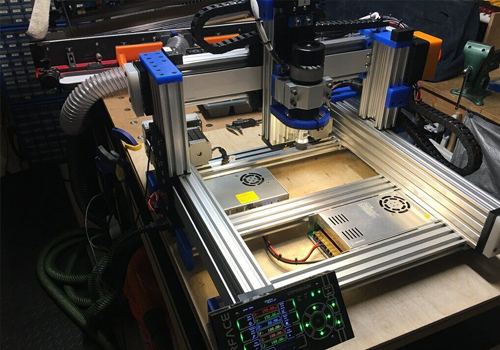
Customized CNC Equipment usually begins with a machine platform selected for the dominant machining process. A CNC lathing machine is generally considered when the part rotates and the primary features are external diameters, bores, threads, faces, or grooves. A machining center is generally considered when the workpiece remains clamped while rotating tools produce holes, pockets, contours, and multiple faces. A vertical configuration can suit many prismatic parts and accessible top-face operations, while a horizontal configuration can be assessed where the workpiece and process plan benefit from a different spindle orientation. For buyers comparing possible platforms, MAKCNC lists a CNC lathing machine range and a professional CNC machining center solution. The right category depends on the actual part, not on the machine a factory already owns. A lathe may not fit a mainly prismatic component, and a machining center may not be the economical answer for a fundamentally turned part. Some parts also require more than one process, which should be declared rather than hidden in the RFQ.
- CNC lathe configuration: Fits rotational parts where turning operations dominate. Specify chucking, bar feeding, workholding, chip handling, and any secondary milling requirements.
- Vertical machining center configuration: Fits many plates, blocks, housings, and mold components. State the largest workpiece envelope, fixture height, tool access, and required faces per setup.
- Horizontal machining center configuration: Can be considered for work involving multiple faces, fixture access requirements, or planned automation. It is not automatically better for every prismatic part.
- Dedicated or integrated configuration: Fits a repeatable part family when special fixtures, loading equipment, process controls, or inspection interfaces are justified by the production plan.
Features That Belong in a Useful Specification
A useful Customized CNC Equipment specification converts preferences into checkable supplier deliverables. Start with the part drawing, 3D model where available, material, rough stock condition, and annual or monthly volume assumptions. Then separate mandatory requirements from preferred options. This prevents a supplier from treating a required feature as an extra-cost item or assuming that a preference is mandatory. MAKCNC states that machine bodies commonly use high-strength cast iron, including resin-sand castings, with aging treatment intended to support long-term rigidity and accuracy. Core transmission components such as ballscrews and guideways commonly use precision components from Taiwan or Germany. For mold-related high-accuracy machining, advanced control integration can include intelligent feedforward and quadrant-jump compensation to address issues such as overcut marks, quadrant marks, and chatter patterns. These are relevant topics to discuss when a part’s surface and contour requirements make them relevant; they are not a substitute for providing drawings, materials, tool plans, and acceptance criteria.
| Specification item | What to state in the RFQ | Why it affects the quotation |
|---|---|---|
| Part data | Drawings, 3D files, material, blank condition, critical features | It defines machine size, workholding, tool access, and process risk. |
| Production intent | Prototype, small batch, repeat production, or mixed-part work | It affects fixture investment, automation suitability, and changeover planning. |
| Quality requirements | Critical dimensions, surfaces, inspection method, and acceptance evidence | It determines whether process proving and measurement provisions must be included. |
| Machine scope | Machine, tooling, fixtures, chip management, training, installation support | It prevents major scope gaps between proposals. |
Customized CNC Equipment Applications and Process Fit
Customized CNC Equipment can support mold-related precision work, diversified small-batch production, and parts requiring multiple faces to be machined in one clamping arrangement where the selected process permits it. The application section of an RFQ should explain the operational purpose, not merely list an industry. For example, “machine housing components” is too broad to support a technical proposal. A better statement identifies whether the component is a plate, housing, shaft, mold insert, or another defined workpiece; which faces require machining; whether one setup is expected; and whether the buyer must preserve datums between operations. The supplier can then assess workholding and machine access. For a buyer evaluating vertical machine options, product-level information such as the vertical CNC machining center MV1380 can help frame questions, but the final selection should remain tied to the submitted part package. A catalog model does not prove a process will meet a specific cycle target or fixture requirement without supplier review.
- Identify the component family and separate rotational parts from prismatic parts.
- Mark the functional datums and the features that must remain related after machining.
- List roughing, finishing, drilling, tapping, boring, or turning operations in their expected order.
- State whether one clamping is required for multiple faces and explain why datum retention matters.
- Ask the supplier to identify operations that remain outside the proposed machine scope.
A Requirements to RFQ Matrix for Supplier Deliverables
The most useful Customized CNC Equipment RFQ includes a matrix that ties every production requirement to a supplier response. Without it, two suppliers may both claim compliance while offering very different boundaries of supply. The risk is not only a higher final cost. It is also a delayed project caused by unresolved responsibility for fixtures, robot signals, electrical preparation, compressed air, coolant management, operator access, or cycle-time assumptions. Ask each shortlisted supplier to complete the same table and identify exceptions in writing. This method fits projects with a defined part family, target output, or planned automation connection. It is less useful when the buyer has only a broad idea and no part information; in that case, the first step is to develop a preliminary process brief before requesting a firm proposal.
| Buyer input | Why the check matters | Required supplier deliverable | Risk if omitted |
|---|---|---|---|
| Part drawing, model, material, blank form, and weight | These inputs determine work envelope, workholding approach, cutting load assumptions, and tool reach. | Proposed machine configuration, workholding concept, stated part assumptions, and exclusions. | A machine may be quoted without practical fixture access or sufficient process capacity. |
| Cycle-time target and shift plan | A target only has meaning when setup time, loading, unloading, tool changes, and inspection allowances are identified. | Cycle-time basis, assumed tooling conditions, manual handling assumptions, and any operations excluded from the estimate. | Output planning may rely on a machining-only estimate that ignores handling time. |
| Automation interfaces | Robot, bar feeder, pallet, conveyor, or loading equipment needs physical, electrical, and control coordination. | Interface boundary, required signals, safety responsibilities, layout assumptions, and who supplies each interface item. | Separate equipment may arrive with incompatible handoff responsibilities. |
| Factory utilities | Power, air, coolant, drainage, foundation, access route, and lifting conditions affect installation readiness. | Utility list, site preparation requirements, machine footprint information, and installation assumptions. | Commissioning can be delayed by unprepared utilities or unsuitable site access. |
| Acceptance requirements | Buyers need a common basis for deciding whether the machine meets the order scope. | Proposed acceptance process, required test part information, documents, and buyer-supplied items. | Disputes can arise because “successful trial” was never defined. |
Customized CNC Equipment Price Factors
Customized CNC Equipment pricing changes with the machine platform, configuration scope, tooling and fixtures, automation interface work, documentation needs, site service scope, and acceptance requirements. The lowest machine-only price is not necessarily the lowest project cost if the buyer must later source omitted hardware, interface engineering, or commissioning support. For a clearer comparison, request an itemized commercial scope rather than asking suppliers to disclose unsupported internal cost details. MAKCNC states that a single machine can be purchased without a hard minimum order quantity, while multi-machine purchases may receive better commercial terms on price, delivery, or after-sales service. This does not mean that every multi-machine order receives the same terms. Ask for the written terms applying to your volume, configuration, and requested delivery plan. The stated production lead time is 1 to 6 months, so an RFQ should also ask what event starts the timing, such as technical confirmation, deposit, drawing approval, or another agreed milestone.
- Base machine: Ask which machine platform and standard equipment are included.
- Process equipment: Ask whether fixtures, holders, probes, special tooling, and setup aids are included or buyer-supplied.
- Automation: Ask whether equipment is included, merely interface-ready, or outside the quotation.
- Site work: Ask who is responsible for power connection, air supply, lifting, foundations, and coolant preparation.
- Service: Ask for warranty start point, remote response process, on-site conditions, travel scope, and paid service rates after warranty.
Customized CNC Equipment User Guide for RFQ Preparation
Prepare Customized CNC Equipment RFQs in a controlled sequence. First, issue revision-controlled drawings and identify the contact person authorized to answer technical questions. Second, state the expected production condition rather than only the best-case sample condition. If parts vary by size, material, or blank quality, disclose the range. Third, require each supplier to submit a completed compliance list with “accepted,” “exception,” or “buyer clarification needed” against each requirement. Fourth, compare quotations using total scope rather than headline price. Fifth, hold a technical clarification meeting before issuing a purchase order and record every agreed change. This process is appropriate for buyers who need comparable proposals from several machine builders. It does not eliminate the need for legal, safety, import, and local electrical reviews that may apply in the buyer’s country. Keep those responsibilities visible rather than assuming they are included.
Common RFQ Mistakes That Create Proposal Gaps
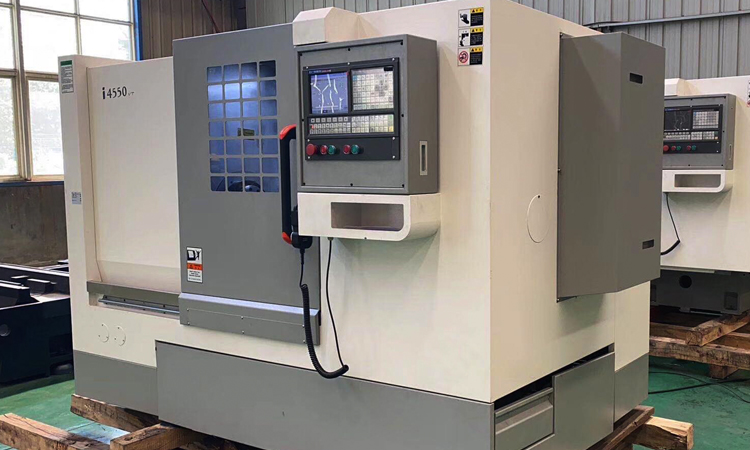
- Sending only a photograph: A photograph cannot define tolerances, datum relationships, internal features, or material condition.
- Stating an output target without a time basis: Suppliers need to know whether the target is per shift, per day, or another defined period.
- Calling automation “future-ready” without interfaces: State the planned equipment type and ask for documented connection boundaries.
- Leaving utilities to the last stage: Site conditions can affect installation timing and cost.
- Comparing prices before scope: Compare included items, exclusions, delivery basis, warranty terms, and acceptance process first.
Customized CNC Equipment Supplier Selection and FAQ
Customized CNC Equipment supplier selection should focus on technical response quality, scope discipline, manufacturing fit, and service clarity. MAKCNC was established in 2016 and has multiple production lines and sample-machine inventory. The company’s stated warranty is commonly 12 months after complete-machine acceptance, with lifetime paid service available afterward. Some tender projects may require a higher level, such as a three-year free warranty, which should be confirmed in the specific commercial offer rather than assumed. Its mature after-sales network generally states an 8-hour response and on-site fault handling within 48 hours; local conditions, access, and contractual scope should be clarified for each order. Buyers can review the company background through about MAKCNC and use the RFQ discussion to confirm the machine, technical documents, acceptance approach, and after-sales boundaries relevant to the project.
FAQ of Customized CNC Equipment
What should be included before asking for a quotation? Include drawings, material, output expectations, process sequence, required machine functions, automation plans, factory utility information, delivery preference, and acceptance criteria. Can one machine be ordered? Yes. MAKCNC states that there is no hard minimum order quantity and a single machine can be purchased. Should a buyer request a fixed cycle time? Request a documented estimate and require the supplier to state its assumptions. A fixed target without part data, tool details, handling assumptions, and process confirmation can be misleading. How should warranty be compared? Compare the start date, duration, included labor, travel conditions, excluded consumables, response pathway, and post-warranty service terms. What is the next sourcing step? Send a controlled technical package to shortlisted suppliers and require each one to return the same completed requirements matrix.
If you are looking for a Customized CNC Equipment supplier, contact MAKCNC for a current quotation based on your drawings and RFQ requirements.