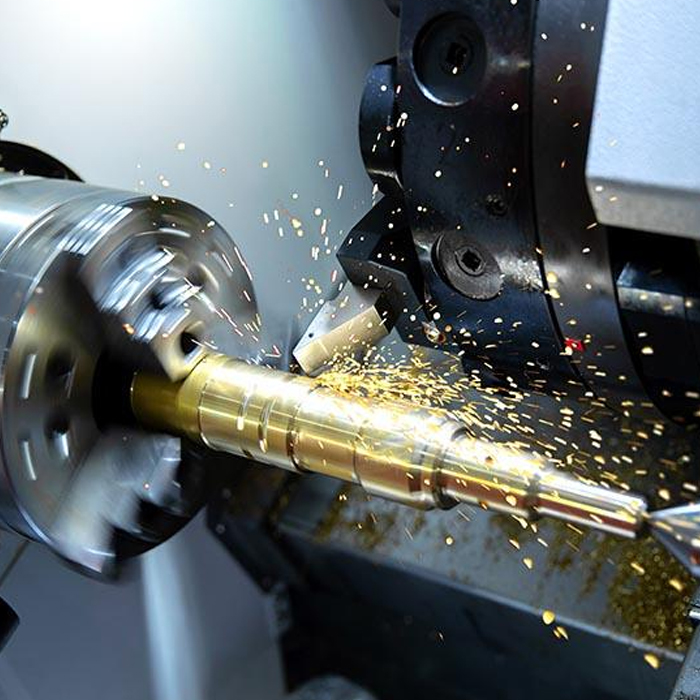
Choosing the Right Vertical Machining Center VMC for Your Parts
What Is a Vertical Machining Center?
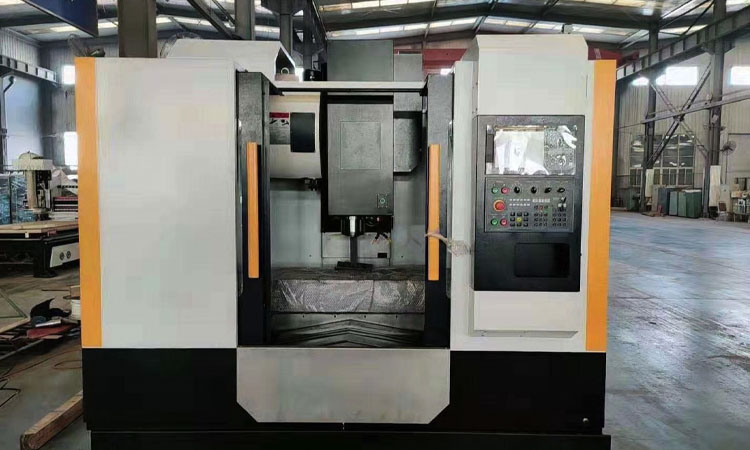
A Vertical Machining Center VMC is a type of CNC machine where the spindle axis is oriented vertically. This configuration allows gravity to assist in chip removal, making it well-suited for a wide range of milling, drilling, tapping, and boring operations. The workpiece is typically mounted on the machine's table, which moves along the X and Y axes, while the spindle, holding the cutting tool, moves up and down along the Z-axis. This design provides excellent visibility and easy access to the workpiece, simplifying setup and inspection. Because of their versatility and efficiency, VMCs are a foundational piece of equipment in job shops, mold making facilities, and production lines for industries ranging from aerospace to medical device manufacturing. Selecting the correct machine size and capability is a critical decision that directly impacts production efficiency, part quality, and overall profitability.
Common Types of CNC Machining Centers
While the VMC is highly popular, it is part of a broader family of CNC machining centers. Understanding the different types helps clarify which machine is best for a given application. The primary distinction lies in the spindle orientation and the number of axes.
- Vertical Machining Centers (VMCs): As described, these feature a vertical spindle. They are ideal for parts that are best machined from the top down, such as plates, molds, and die sets. Their setup is generally simpler and faster for 2.5D and 3D work.
- Horizontal Machining Centers (HMCs): These machines have a horizontally oriented spindle. HMCs excel at machining multiple sides of a part in a single setup, often using an integrated pallet changer and a rotary B-axis. This makes them highly productive for series production of cubic or complex parts. You can find a horizontal cnc machining center for applications requiring high-volume output.
- 5-Axis Machining Centers: These advanced machines add two rotary axes (typically A and C, or B and C) to the standard three linear axes (X, Y, Z). This allows the cutting tool to approach the workpiece from any direction, enabling the production of highly complex geometries like turbine blades and impellers in a single clamping.
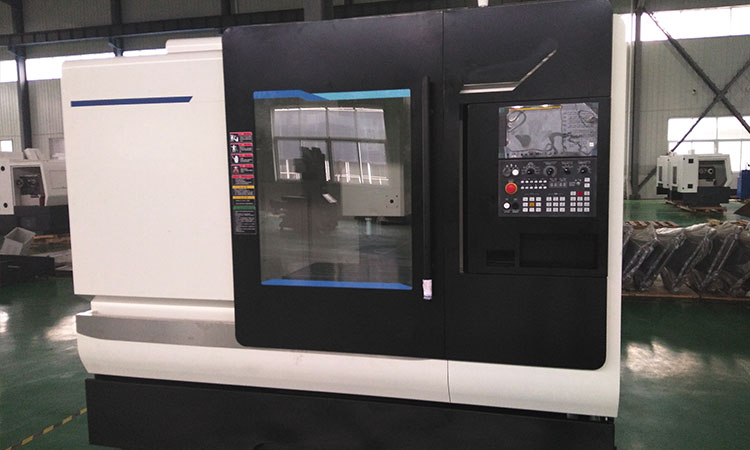
- CNC Lathes and Turning Centers: Unlike machining centers that use rotating tools on a stationary part, lathes rotate the workpiece. A high quality and durable cnc lathe is used to produce cylindrical components like shafts, pins, and flanges.
Key Features of a High-Precision VMC
The performance and longevity of a Vertical Machining Center VMC depend heavily on its construction and components. A machine built for sustained accuracy incorporates specific design principles and materials. The machine body, for instance, should be made from high-strength cast iron, such as resin sand castings. This material provides superior vibration damping compared to welded steel frames. To ensure long-term stability and prevent deformation, these castings undergo an aging treatment. This process relieves internal stresses, maintaining the geometric accuracy of the machine frame over years of operation. The core drive components, including the ball screws and linear guideways, are critical for precision. We utilize high-precision components from established manufacturers in Taiwan and Germany to ensure smooth, accurate motion. For demanding applications like mold making, the control system integration is just as important. Our systems incorporate intelligent feed-forward control and quadrant glitch compensation to solve common issues like over-cutting, quadrant marks, and tool chatter, resulting in a superior surface finish.
Typical Applications for Vertical Machining Centers
The versatility of a VMC makes it suitable for a vast array of industries and components. Its ability to perform multiple operations—from roughing to finishing—in a single setup reduces handling time and improves accuracy. One of the primary applications is in the mold and die industry. The high-precision requirements for injection molds, stamping dies, and casting patterns are perfectly met by a rigid, thermally stable VMC. The machine's ability to execute complex 3D contours is essential for creating these tools. Another significant area is in job shops and contract manufacturing, where part variety is high and batch sizes are small. A VMC's quick setup time and capacity for multi-face machining in one clamping are invaluable for this type of high-mix, low-volume production. This capability allows workshops to efficiently produce everything from prototype parts to small production runs without significant downtime between jobs. Other common applications include manufacturing components for the automotive, electronics, and general machinery sectors.
Understanding Vertical Machining Center Price Factors
The price of a Vertical Machining Center VMC can vary significantly based on several key factors. Buyers must evaluate their needs carefully to invest in a machine that provides the best return. The most obvious factor is the machine's size, defined by the X, Y, and Z axis travels. Larger machines require more material and larger components, increasing the cost. However, simply buying the biggest machine is not always the best strategy. It's more important to match the work envelope to your largest typical part family. Other factors include the spindle specification (speed, torque, and taper size), the type of automatic tool changer (ATC), and the sophistication of the CNC control system. Optional features like through-spindle coolant, chip conveyors, and probing systems also add to the final price. Below is a checklist of factors to consider when preparing an RFQ.
| Specification Category | Key Decision Points | Impact on Price |
|---|---|---|
| Work Envelope (X, Y, Z Travel) | What are the dimensions of your largest and most common parts? Consider fixture and vise height. | Major cost driver. Larger travels significantly increase the price. |
| Spindle | What materials will you cut (e.g., aluminum, steel, titanium)? Do you need high speed for finishing or high torque for roughing? Common tapers are BT40 or BT50. | High-speed or high-torque spindles are more expensive. BT50 is generally costlier than BT40. |
| Tool Changer (ATC) | How many tools are required for your most complex part? Arm-type ATCs are faster than umbrella-type. | Higher tool capacity and faster arm-type mechanisms increase the cost. |
| Control System | Do you need advanced features like high-speed machining look-ahead, or is a standard control sufficient? Fanuc, Siemens, and Mitsubishi are common options. | Advanced controls and software options add to the price. |
| Options & Accessories | Chip conveyor, through-spindle coolant, 4th/5th axis rotary table, tool and part probes. | Each option adds to the total investment but can significantly improve productivity. |
Practical Guide to VMC Usable Work Travel
A common mistake when specifying a Vertical Machining Center VMC is to confuse the machine's nominal axis travels with the actual usable work envelope. The advertised specifications (e.g., 1000mm X-axis travel) represent the maximum distance the machine table can move. However, the practical space available for your part is always smaller due to the physical realities of workholding and tooling. This difference between nominal and usable travel is the boundary that defines your true machining capacity. Ignoring it can lead to purchasing a machine that is too small for your key components. To avoid this, you must account for several factors that reduce the effective machining area and height.
- Vise and Fixture Overhang: The workholding device itself occupies space. A standard 6-inch vise can be over 18 inches (450mm) long. If your part is mounted in the center of the vise, the ends of the vise body may overhang the table and limit its travel before colliding with the machine's sheet metal enclosures.
- Workpiece Clearance: Your tool needs space to move around the part, not just over it. For face milling, the cutter must be able to clear the edge of the part completely. This means the actual required table travel is the part's length plus the cutter's diameter.
- Z-Axis Height Reduction: The Z-axis travel is consumed by the height of your vise/fixture, the height of the workpiece itself, and the length of the cutting tool in its holder. A tall part mounted in a tall vise with a long-reach tool can easily use up a significant portion of the available Z-height before cutting even begins.
MAKCNC: Your Reliable Vertical Machining Center Supplier
Established in 2016, MAKCNC operates from an ISO9001:2015 certified facility with multiple production lines dedicated to building reliable CNC machinery. We understand that purchasing a vertical cnc machining center mv1380 or any other CNC machine is a significant investment. That is why we focus on delivering long-term value through robust engineering and responsive support. Our machine frames are constructed from high-strength, treated cast iron for enduring precision. We maintain a stock of sample machines to facilitate faster evaluations and can accommodate lead times of 1 to 6 months depending on machine configuration and production schedules. We offer flexible purchasing terms with no rigid minimum order quantity; a single machine can be procured. However, bulk orders may qualify for improved commercial terms regarding price, delivery, or service. For more details about our company and manufacturing philosophy, you can learn more about makcnc, professional cnc lathing machine manufacturer.
Frequently Asked Questions about VMCs
What is the typical warranty period for a MAKCNC VMC?
Our standard warranty is 12 months from the date of final machine acceptance. We also provide lifetime paid technical support and service. For specific projects or tenders with higher requirements, we can offer extended warranty periods, such as three years of free warranty coverage.
Is there a minimum order quantity (MOQ)?
No, there is no strict MOQ. You can purchase a single machine. However, placing a batch order for multiple units may provide access to more favorable commercial terms, such as better pricing, prioritized delivery, or enhanced after-sales service packages.
What is your after-sales service response time?
We have a mature after-sales network and typically commit to an initial response within 8 hours of a service request. If on-site intervention is required, our technicians can generally arrive at the customer's location to address the issue within 48 hours.
How long does delivery take?
The standard lead time for a Vertical Machining Center VMC ranges from 1 to 6 months. The exact delivery schedule depends on the specific model, level of customization, and current production capacity. We can provide a more precise timeline with a formal quotation.
If you are evaluating suppliers for a Vertical Machining Center VMC, contact our technical team to discuss your application and receive a detailed quote.