How Your Part Mix Should Determine Your Vertical Machining Center VMC Spindle Choice
Vertical Machining Center VMC buyers hit a fork in the road long before any quotation arrives: BT40 or BT50 taper, high-speed low-torque or low-speed high-torque, light aluminum housings or heavy steel blocks. Choose wrong and you either leave throughput on the table or pay for spindle horsepower you will never use. The decision comes down to one question — what does your actual part mix look like over the next two or three years, not just the job sitting on the shop floor this week.
What is a Vertical Machining Center VMC?
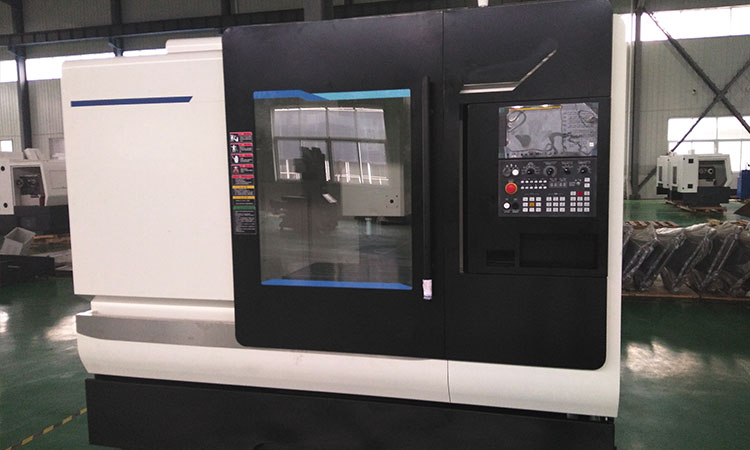
A Vertical Machining Center VMC is a computer-controlled milling platform built around a fixed column, a table that travels in X and Y, and a spindle head that moves on the Z axis, oriented straight down into the workpiece. This layout differs from a horizontal machining center, where the spindle sits parallel to the floor and the table often indexes on a pallet system. VMCs are the default choice for prismatic parts, mold cavities, plate work, and any job where the operator needs direct visual access to the cutting zone. Frame construction typically relies on cast iron that has gone through aging treatment, which stabilizes the casting and holds geometric accuracy over years of cutting rather than weeks.
Types of VMC Spindle Configurations
Three spindle drive types dominate the VMC market: belt-driven, direct-drive, and built-in motor spindles. Belt-driven units cost less and deliver strong low-end torque, which suits steel and cast iron roughing. Direct-drive spindles couple the motor shaft straight to the spindle, cutting vibration and improving surface finish at mid-range speeds. Built-in motor spindles integrate the motor winding inside the spindle sleeve itself, reaching the highest RPM ranges for aluminum and graphite work but at a higher price point and typically needing more careful coolant and bearing maintenance. Machine footprint matters as much as spindle type — a compact model such as the MV970 suits small precision parts, while larger frames like the MV1380 handle longer travel and heavier fixtures. Shops running mixed part families sometimes pair a VMC with a horizontal machining center to separate roughing and finishing operations entirely.
Features of VMC Spindles for Production Work
A spindle only performs as well as the system around it. Core transmission parts — ball screws and linear guides — are commonly sourced from Taiwan or German brands for repeatable positioning, and the whole drivetrain is tuned together rather than treated as separate components bolted onto a frame. For mold and die shops, intelligent feedforward control and quadrant-protrusion compensation address the three complaints every toolmaker knows by name: overcut marks, quadrant witness lines, and chatter marks left on a finished cavity wall. Machines built for high-mix, low-volume work also support one-clamp, multi-face machining, letting an operator finish several faces of a part in a single setup instead of re-fixturing and re-zeroing three or four times.
BT40 vs BT50 Spindle Comparison for Part Size and Torque
This is the single biggest configuration decision on any VMC quotation, and it cannot be reversed later without buying a different machine. The spindle taper standard you choose locks in your tool holder inventory, your maximum cutting torque, and effectively your maximum part size for years.
| Spec | BT40 | BT50 |
|---|---|---|
| Typical torque range | Lower torque, suited to light-to-medium cuts | Significantly higher torque for heavy roughing |
| Typical speed range | Higher top RPM, better for aluminum and small-diameter tools | Lower top RPM, built for large-diameter tooling at slower speeds |
| Tool shank diameter / capacity | Smaller shank, lighter tool weight limit | Larger shank, supports heavier face mills and boring bars |
| Best part size | Small to mid-size parts, molds, brackets, housings | Large castings, heavy steel blocks, big mold bases |
| Tool magazine footprint | Compact, lower cost tool changer | Larger, heavier tool changer and higher cost |
Decision rule: choose BT40 when your part mix is mostly aluminum, mid-size steel brackets, or mold inserts under roughly 300-400 kg, and you value spindle speed for small-tool finishing work. Choose BT50 when your jobs regularly involve heavy roughing on large steel or cast iron blocks, deep cavity milling with big face mills, or parts where rigidity under sustained cutting load matters more than top RPM. The limit of BT40 shows up fast once you try to rough large-diameter tooling — torque runs out before the tool does. The limit of BT50 shows up on small precision parts, where the extra spindle mass and lower achievable RPM slow down finishing passes and raise cycle time for no benefit.
VMC Spindle Application by Part Mix
A mold shop cutting steel cavity blocks, aluminum cores, and occasional graphite electrodes needs a spindle that can swing between torque-heavy roughing and high-RPM fine finishing without two separate machines. An automotive supplier machining aluminum housings in high volume gains more from raw spindle speed and fast tool changes than from BT50 torque headroom. A job shop quoting one-off steel brackets one week and aluminum enclosures the next should size the spindle around its heaviest recurring job, not its lightest, because undersized torque turns into scrapped tools and rebooked delivery dates. Reviewing actual machining center cases across these industries is a faster way to validate a spindle choice than relying on catalog numbers alone.
VMC Price and Cost Factors
Price on a Vertical Machining Center VMC moves with four main variables: spindle type and taper size, table travel, control brand, and tooling options such as a fourth axis or an extended tool magazine. Lead times generally run one to six months depending on configuration and current production slot availability. There is no hard minimum order quantity — a single machine can be purchased — though batch orders of multiple units typically unlock better pricing, faster scheduling, or stronger after-sales terms. Buyers evaluating total cost should also factor in standard warranty coverage of twelve months after acceptance, with paid lifetime service available afterward, and note that some tender projects specify longer coverage such as a three-year free warranty.
VMC Spindle Selection User Guide
Follow this sequence before sending an RFQ rather than after the quote comes back.
- Step 1 — list your top five recurring parts by material, weight, and roughing depth of cut.
- Step 2 — identify your heaviest, not your average, cutting load; spindle torque needs to cover that job.
- Step 3 — check tool holder inventory you already own; switching taper size means replacing holders too.
- Step 4 — confirm table size and Z-travel against your largest fixture, not just the raw part dimension.
- Step 5 — ask the supplier for demo machine availability so you can verify cycle time on a sample part before ordering.
Common mistakes to avoid: sizing the spindle around a promotional job instead of steady-state production; ignoring tool magazine capacity when a part needs more than twenty tools per cycle; skipping a trial cut on your own material because a catalog spec looked sufficient; and assuming a bigger spindle is always safer, when oversizing can slow down light finishing work and raise electricity and maintenance cost for no real gain.
VMC Supplier Selection
MAKCNC has operated multiple production lines since 2016 under an ISO9001:2015-certified quality system, and keeps demo machines in stock so buyers can inspect or test a configuration before committing. Standard warranty runs twelve months post-acceptance with paid lifetime service afterward, backed by a service network that targets an 8-hour response and 48-hour on-site arrival for breakdowns. Shops with unusual part geometry or fixture requirements can also request customized equipment rather than forcing a standard configuration to fit. For buyers comparing a VMC against turning operations in the same shop, our CNC lathing machine range and background on who we are cover the rest of the product line.
FAQ of VMC Spindle Selection
Can one VMC cover both BT40 and BT50 work? No — the taper is fixed at the time of manufacture, so a shop running both part families typically needs two machines or a BT50 unit with smaller tool holders adapted for light work.
Is a 4th axis worth adding at the quote stage? If your part mix already includes multi-face parts needing one-clamp machining, yes; adding it later usually costs more than specifying it upfront.
How long does delivery take after order confirmation? Typically one to six months, depending on spindle configuration, control brand, and current production scheduling.
Do I need to order multiple machines to get good pricing? No minimum order quantity applies — single-unit orders are accepted — though batch orders can earn better commercial terms on price, lead time, or service.
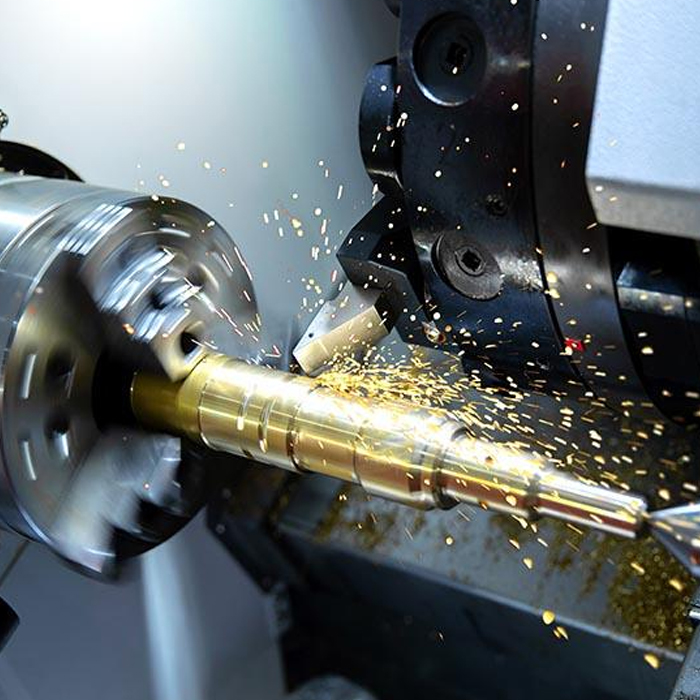
If you are comparing spindle configurations for an upcoming part mix, send us your part drawings or production list and we can recommend a BT40 or BT50 setup along with a quotation.