Specify an Automatic CNC Slant Bed Lathe Cell
What is an Automatic CNC Slant Bed Lathe?
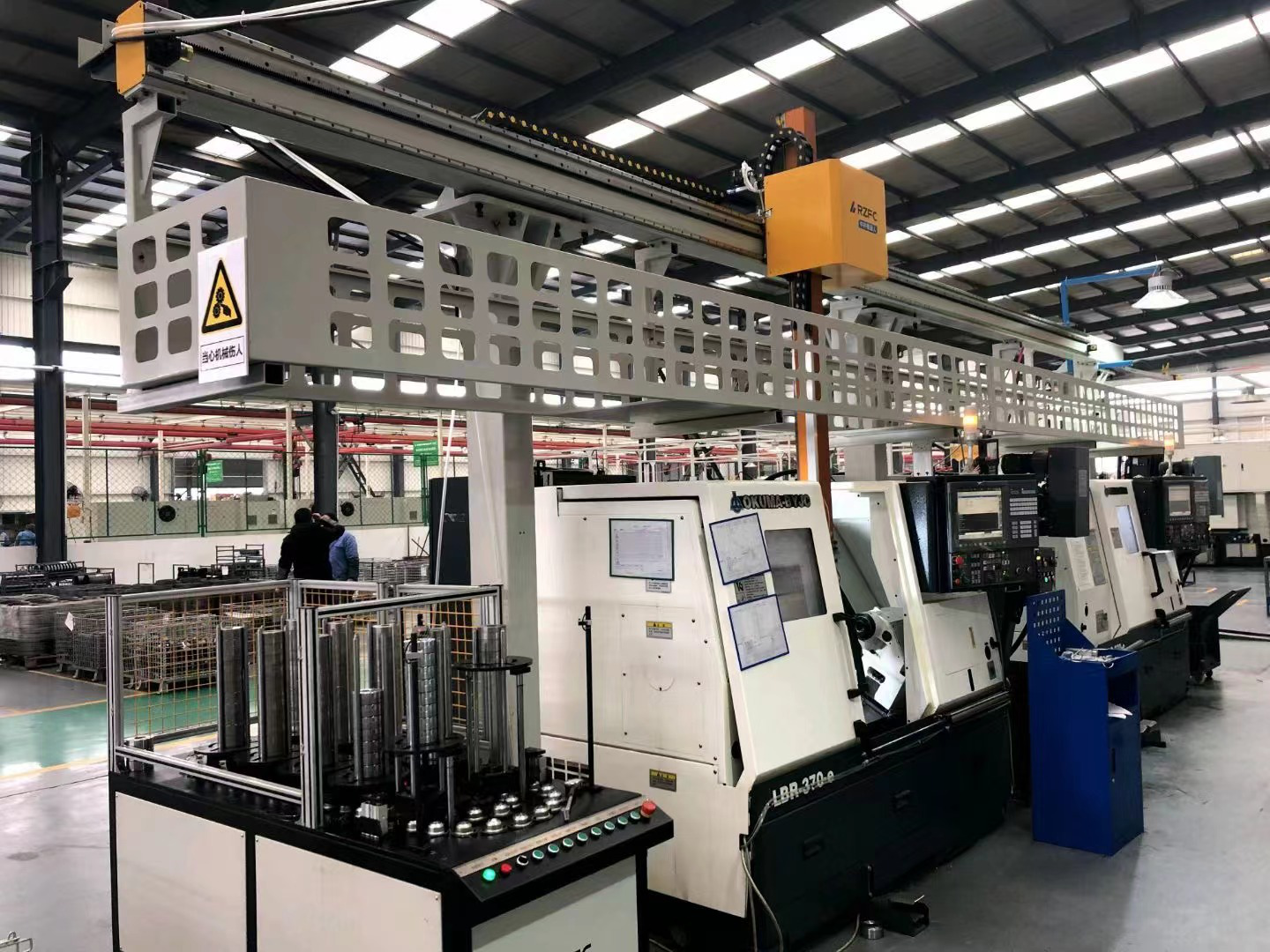
Automatic CNC Slant Bed Lathe quotes often arrive with the wrong scope because the buyer described the machine but not the automation around it. Then the bar feeder does not fit the spindle bore, the robot door is too narrow, or probing is missing. A slant bed lathe is a lathe whose bed and guideways sit at an angle, so chips fall away from the cutting zone and the operator or robot reaches the chuck easily. The automatic version adds loading, unloading, part handling and in-process checking, so the machine can run with little attention between interventions.
Treat it as a cell, not a single machine. The lathe, the feeding method, the part-removal method, the measuring routine and the control interface all need to be defined together. Quote requests that fix only the spindle size leave the supplier to guess the rest.
Types of Automatic Slant Bed Lathe Cells
Cells differ mainly in how raw material enters and finished parts leave. Choose the type from your part shape and batch pattern, not from the machine brochure. Each option below has a scenario where it fits and one where it does not.
| Cell type | Best fit | Limit |
|---|---|---|
| Bar feeder with parts catcher | Shafts, pins, fittings and other bar-stock parts in repeat batches | Not suitable for forgings, castings or parts that need chucking from a blank |
| Robot or gantry loading of blanks | Discs, flanges, rings and other chucked workpieces | Needs a defined gripper, door opening and part orientation; cycle time must justify the integration |
| Manual loading with in-machine probing | Mixed small batches where operators still load but tool and part checks run automatically | Unattended time is limited by the loading interval |
| Twin-spindle or live-tooling configuration | Parts needing second-side machining or milled features in one setup | Raises machine cost and programming effort |
Features of an Automation-Ready Slant Bed Lathe
The rigid inclined bed is the starting point for heavy cutting and stable finishing. Beyond the bed, look at features that keep the cell running between operator visits.
- Chip evacuation: the slanted layout drops chips down and away. Add a conveyor if the material makes long, stringy chips, because tangled chips stop unattended runs faster than any mechanical fault.
- Casting and aging: ask how the bed is made. MAKCNC machine structures commonly use high-strength cast iron, including resin sand castings, with aging treatment to hold long-term accuracy and rigidity.
- Drive components: screws and guideways are typically Taiwanese or German brands. Ask for the brand per axis in writing.
- Access: the door, chuck position and tool turret clearance must allow the robot arm or catcher to move without collision.
- Control signals: automatic door, chuck clamp confirmation and part-present signals are what a robot or feeder needs from the lathe.
Map Bar Feeder, Parts Catcher, Probing and Robot Requirements to the Machine Specification
This step prevents most RFQ rework. Before you send a request, convert each automation device into a line in the machine specification. The table shows what to state for each and what it changes on the lathe.
| Device | What to state in the RFQ | Machine specification it affects |
|---|---|---|
| Bar feeder | Bar diameter range, bar length, bar shape, material, whether you need short-bar or magazine feeding | Spindle bore, collet or chuck type, guide bushing need, headstock length, floor layout |
| Parts catcher | Part size and weight, finished-part surface sensitivity, whether parts go to a conveyor or bin | Catcher mounting position, cut-off tool arrangement, door or chute opening |
| Probing | Tool setting, part measurement or both; which features you measure; offset correction rules | Probe type and mount, control macros, measurement cycle time |
| Robot interface | Robot brand if fixed, gripper type, loading direction, safety standard required by your site | Automatic door, I/O signals, chuck and clamp feedback, turret clearance, safety circuit |
One rule applies across all four. Do not accept a quote that says "automation compatible" without naming which signals and mounting points are included. If the supplier cannot list them, you will pay for them later. Also note the boundary: if you run under a small number of parts per shift, extra devices rarely repay their cost, and a plain machine with a good probe may be the better specification.
Automatic CNC Slant Bed Lathe Applications
Automated slant bed turning suits parts that repeat and need stable dimensions over many hours. Typical examples are shaft and pin families, bushings, hydraulic and pneumatic fittings, flanges and bearing-related rings. Bar-fed work suits long runs of the same diameter. Robot-loaded chucking suits medium batches of discs and housings where changeover happens once a shift or less.
It is a poor fit for one-off prototypes, very long slender shafts that need steady rests you cannot automate, and parts that need heavy manual inspection after every cut. Where milling, drilling and multi-face work dominates, a professional cnc machining center solution may be a better route than extending a lathe cell.
Slant Bed Lathe Price and What Moves It
We do not quote a fixed price here because it depends on your configuration, and a general figure would mislead you. These are the items that move the quote, from largest to smallest influence in most RFQs:
- Machine size, spindle power and chuck or bar capacity.
- Control system brand and options such as live tooling or a second spindle.
- Automation devices: feeder, catcher, robot, conveyor and safety guarding.
- Probing and measurement packages, including software macros.
- Drive component brands, as stated in the specification.
- Order quantity. MAKCNC has no hard minimum, so one unit can be bought, but multiple units can bring better commercial terms in price, delivery or after-sales service.
- Delivery schedule. Lead time generally runs from 1 to 6 months depending on configuration.
Compare quotes line by line against the same specification table. A lower headline price often means a device or signal list was left out.
Slant Bed Lathe Cell User Guide for RFQ Preparation
Follow this sequence before you contact suppliers. It takes a production manager and a process engineer about one working session.
- Pick two or three representative parts and record diameter, length, material, batch size and annual volume.
- Decide whether the cell is bar-fed, chucked or mixed.
- Fill in the device table above for each automation item you want.
- Define the target unattended time, for example a lunch break, a full shift or overnight.
- List site limits: floor area, power supply, air supply, crane access and safety rules.
- Ask each supplier for acceptance conditions, warranty scope and service response terms.
Common mistakes
- Choosing the machine first and the bar feeder second, so the spindle bore does not match the stock.
- Leaving the robot brand open and expecting the lathe supplier to settle it.
- Skipping chip control for long-chip materials.
- Comparing quotes with different scope without noticing.
Automatic CNC Slant Bed Lathe Supplier: MAKCNC Terms and Fit
MAKCNC was founded in 2016 and operates multiple production lines, with demonstration machines held in stock. Our quality system is certified to ISO 9001:2015. Read more about makcnc for the company profile. Our range includes a cnc lathing machine series, machining centers and special configurations built through customized cnc machines and machining centers from makcnc.
The terms below come from our standard conditions and should be confirmed in your contract:
- Order size: no hard minimum; a single unit is acceptable.
- Warranty: normally 12 months after machine acceptance, with paid lifetime service. Some tenders require three years free warranty, which we would treat as a separate agreement.
- Service: the usual commitment is a response within 8 hours and on-site arrival within 48 hours for fault handling.
- Lead time: 1 to 6 months, set by configuration.
What remains to agree per project: the automation scope, the robot or feeder brand, acceptance tests, and who is responsible for integration on your site. We would rather settle these in writing before the order than after the machine arrives.
FAQ of Automatic CNC Slant Bed Lathe Cells
Do I need a robot to call it an automated cell?
No. A bar feeder with a parts catcher already gives unattended turning for bar-stock parts. A robot becomes useful when you load chucked blanks.
Can I buy only one machine?
Yes. There is no hard minimum order. Several machines can improve price, delivery or service terms.
What should I send with my RFQ?
Part drawings or sketches, material, batch sizes, the device table filled in, and your site limits.
How long is delivery?
Typically between 1 and 6 months, depending on the specification and automation scope.
What is the standard warranty?
12 months after acceptance, followed by paid lifetime service. Longer warranty can be discussed for tenders that require it.
If you are looking for a CNC lathe supplier for an automated turning cell, send your part list and device table to makcnc and we will return a quotation based on your specification.