How to Source a 3 Axis Vertical CNC Machining Center
What is a 3 Axis Vertical CNC Machining Center
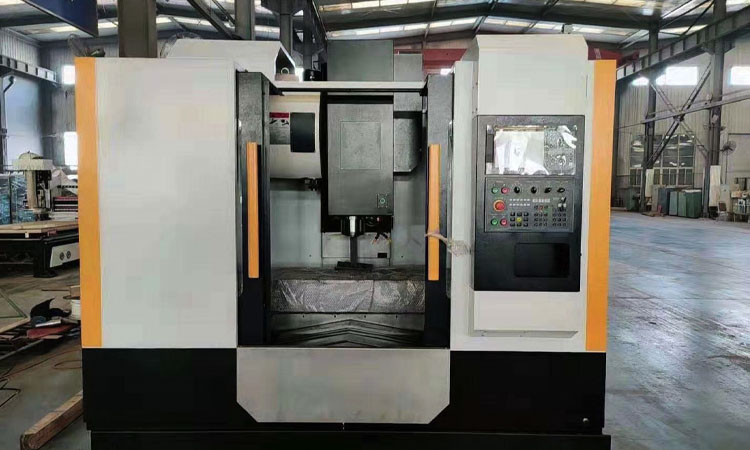
3 Axis Vertical CNC Machining Center is a machine tool that uses three controlled linear axes to machine a workpiece from above with a vertically oriented spindle. The X, Y, and Z axes position the table or spindle for operations such as milling, drilling, boring, tapping, and pocketing. It is a common purchase category for shops producing plates, housings, brackets, mold components, fixtures, and other prismatic parts. Before comparing suppliers, buyers should separate the machine category from the actual machine configuration. A vertical machine may look similar in a catalog but differ in spindle arrangement, guideway design, tool-changing system, control package, coolant provisions, guarding, and supplied options. Computer numerical control allows the machine to follow programmed toolpaths, but CNC control alone does not confirm that the machine will meet your part, tooling, material, or inspection requirements. The sourcing decision should therefore begin with documented application needs rather than a general request for a “standard VMC.”

Types of Vertical Machining Center Configurations to Shortlist
Procurement teams should shortlist machine types according to workpiece geometry, production mix, and planned automation rather than selecting by table size alone. A compact vertical machine can suit smaller fixtures and limited floor space, while a larger travel configuration may better suit longer plates, multiple vises, or tombstone-style workholding. Buyers should also distinguish between machines intended mainly for general component machining and configurations selected for mold work, where surface quality, contour control, thermal behavior, and fine finishing may receive more attention. A machine with a tool changer supports mixed operations in one program, but the needed tool capacity and tool interface should be defined from the actual process plan. For work that needs access to several faces without repeated manual repositioning, a horizontal machining center or a multi-axis solution may be a better fit. This does not mean a vertical machine is unsuitable; it means the expected number of setups, handling time, and fixture complexity must be reviewed before purchase.
| Configuration to Compare | Best-Fit Situation | What to Confirm in the RFQ | When It May Not Fit |
|---|---|---|---|
| General-purpose vertical machine | Mixed batches of plates, brackets, housings, and fixtures | Work envelope, table loading requirement, control, tool changer, coolant, and standard accessories | Less suitable if the work requires frequent multi-face machining in one clamping |
| Mold-oriented vertical machine | Die and mold components with demanding surface finish expectations | Control functions, spindle option, guideway evidence, machining trial scope, and contour test method | Not automatically the best value for simple drilling and face-milling work |
| Large-travel vertical machine | Long workpieces, larger fixture plates, or multiple parts per setup | Usable travel, loading method, foundation needs, chip handling, and access around the machine | May add cost and consume space when smaller parts dominate production |
| Alternative machine concept | Parts needing several faces machined with fewer re-clampings | Setup count, fixture design, workholding, and cycle-time comparison | May be unnecessary for simple top-face machining |
Use this table as a screening tool, not as a substitute for a part review. For example, a buyer making several different small-batch parts may benefit more from flexible workholding and a suitable tool changer than from selecting the largest possible frame. MAKCNC notes that its equipment can support multi-face machining in one clamping for diverse, small-batch production, but the achievable setup reduction depends on the workpiece, fixture, tooling access, and required operations. Ask the supplier to state which configuration is proposed and why. A catalogue label without that reasoning is not enough.
Features That Need Evidence Before You Compare Quotes
The most useful machine features are the ones tied directly to your part risks. For mold-related work, control functions intended to address overcut marks, quadrant marks, and vibration-related surface marks can be relevant, but buyers should ask how these functions are configured and demonstrated for the proposed machine. For general production, frame rigidity, guideway selection, spindle suitability, tool changing, chip evacuation, and operator access may matter more than a long option list. MAKCNC states that many machine bodies use high-strength cast iron, including resin-sand castings, with aging treatment intended to maintain long-term rigidity and accuracy. It also states that key transmission parts such as ball screws and guideways often use high-precision components from Taiwan or Germany. These are useful starting points, not blanket proof for every quotation. Ask the supplier to identify the exact construction and component brands supplied on the machine you are evaluating.
- Choose a spindle based on the process. State whether your work is mainly drilling, tapping, rough milling, finishing, or a mix. Ask for the spindle specification sheet and the approved tool interface. Do not select solely from a headline speed figure when cutting load, tool length, and material are the real constraints.
- Review the guideway arrangement against part loading and cutting style. Request the guideway type and a drawing or technical document showing the axis arrangement. This is especially relevant for heavy roughing or long overhang tooling. It may be less decisive for light-duty work, but it should still be documented.
- Specify the automatic tool changer around the tool list. Provide the expected tool count, tool diameters, tool lengths, and any heavy or special tools. An ATC claim is incomplete if the supplier cannot show permitted tool conditions and interference limits.
- Ask for the control and compensation scope in writing. For contour-sensitive work, identify the part features that need protection. A general statement about accuracy does not replace an agreed test piece or acceptance procedure.
Applications and Part Requirements That Should Drive the RFQ
A clear RFQ is more valuable than an early low quote. Start by grouping the parts the machine will process during its first production period. For each part family, provide material, finished dimensions, machining features, stock condition, required surface finish, tolerances, annual or monthly quantity, fixture concept, and the operations planned for the machine. If you expect prototype work alongside production batches, say so. That changes the balance between setup flexibility and dedicated tooling. If you expect mold work, submit representative drawings and identify the surfaces where tool marks, overcut, or quadrant marks are unacceptable. The correct supplier response should connect the proposed configuration to these requirements. If it does not, you may be receiving a catalog-based quote rather than an application-based offer.
There are limits to a three-axis vertical format. It can machine many part features efficiently, but it cannot eliminate every re-clamping requirement when parts need access around multiple sides or at compound angles. A buyer should calculate the number of setups needed for representative parts and include inspection after each setup in the estimate. If setup count becomes the main source of cost or dimensional variation, compare the proposal with a horizontal cnc machining center or another machine arrangement. That comparison should be based on actual part routing, not on a presumption that a more complex machine is always better.
Price Factors and a Quote Comparison Method
Machine pricing can change materially when the configuration changes. A quote should be compared as a defined package, not as a single number. The base machine may not include the same control, spindle option, tool changer arrangement, coolant system, chip handling, transformer, installation support, tooling, workholding, packaging, freight terms, or commissioning scope as another offer. Currency, destination, delivery responsibilities, and optional equipment can also alter the commercial comparison. Do not ask suppliers to simply “match the lowest price.” Instead, issue one requirement sheet and ask each supplier to mark included, excluded, optional, or not available for every item. This method fits overseas sourcing because it prevents a low initial quotation from hiding equipment or services required before the machine can produce parts.
| Quote Line | Buyer Check | Reason for Checking |
|---|---|---|
| Base machine configuration | Confirm model, travels, table, spindle, guideway type, control, and ATC scope | Different base configurations are not directly comparable |
| Options and accessories | List each option separately and state whether it is included | Prevents required equipment from appearing later as an extra cost |
| Freight and export packing | Confirm Incoterm, port or destination, packing method, and insurance responsibility | Separates machine price from logistics obligations |
| Installation and commissioning | Define who prepares the site, who connects utilities, and what supplier support covers | Avoids unclear responsibility when the machine arrives |
| Acceptance and warranty | Attach the acceptance procedure and warranty start point | Sets a measurable handover basis |
| Spare parts and service | Request recommended spares, service contact method, and paid-service terms | Supports maintenance planning after warranty |
MAKCNC states that it has no hard minimum order quantity, so a single machine may be purchased. Multi-machine orders may receive improved commercial terms related to price, delivery time, or after-sales service, but these terms should be confirmed for the specific order rather than assumed. The stated lead-time range is one to six months. That range should be treated as planning information, not a fixed delivery commitment. Ask for the lead time applicable to the exact model, configuration, and order date, then include the agreed delivery basis in the purchase contract.
Supplier Document and Acceptance Test Checklist for Verifying Spindle Guideway ATC and Accuracy Claims
Do not accept broad statements such as “high precision” or “premium components” without documents and an agreed test method. The supplier-document and acceptance-test checklist below gives procurement teams a practical way to verify spindle, guideway, ATC, and accuracy claims before final payment or shipment approval. The main recommendation is simple: convert every performance-sensitive promise into a document, a test item, or both. This approach is most useful when comparing overseas suppliers whose machines cannot all be inspected in person. It does not replace an independent inspection where one is required by your contract, customer, or local regulations. Instead, it creates a common evidence package that can be reviewed remotely and used as the basis for factory acceptance.
| Area | Documents to Request Before Order | Acceptance-Test Evidence to Agree | Buyer Decision Rule |
|---|---|---|---|
| Spindle | Spindle specification, motor and drive information, tool interface, cooling arrangement, and approved operating conditions | Spindle runout test method, test instrument, recorded result, and operating demonstration agreed in advance | Accept only when the documented spindle matches your tooling and cutting process |
| Guideways and axis transmission | Guideway type, ball screw information, lubrication arrangement, and component brand confirmation where offered | Axis movement demonstration, lubrication verification, and test record for the agreed geometric checks | Reject vague “linear guide” or “precision screw” wording without the supplied configuration |
| Automatic tool changer | ATC type, tool capacity, permitted tool conditions, tool-change sequence, and collision limitations | Repeated tool-change demonstration with representative tools or agreed substitutes | Confirm the ATC supports your actual tool list, not only nominal capacity |
| Accuracy claims | Factory test format, measurement instruments, environmental conditions, and acceptance criteria | Signed test report, machine identification, date, instrument traceability evidence where required, and agreed test-piece results if specified | Put the pass/fail criteria in the purchase contract before production begins |
| Control functions | Control model, included software functions, and written scope of any compensation feature | Program demonstration tied to the agreed part feature or test requirement | Do not treat a control option as proof of finished-part quality without a defined demonstration |
- Issue the part drawings and process requirements with the RFQ.
- Ask each supplier to return a completed configuration sheet rather than a general brochure.
- List acceptance items that matter to your parts, including any test piece, measurement method, and required report.
- Review exclusions before issuing the purchase order, especially utilities, tooling, freight, site preparation, and commissioning.
- Attach the final configuration and acceptance checklist to the contract or purchase order.
- Before shipment approval, compare machine nameplate information, supplied configuration, and test records against the agreed checklist.
Installation and User Preparation Before Delivery
A machine purchase can fail at the site even when the equipment itself is correctly specified. Before shipment, assign responsibility for foundation preparation, unloading, positioning, electrical connection, air supply, coolant selection, chip handling, and operator training. Ask the supplier for the required site information for the quoted machine, then have your facilities team confirm that the building and utilities can meet it. This is especially useful when the machine is being imported because correcting a foundation or electrical mismatch after arrival can delay production. Do not assume the same preparation applies to every model. The exact requirements depend on the machine configuration and the supplier’s installation instructions. Procurement should also define who will inspect transit damage, when the acceptance period begins, and who signs the final acceptance record.
- Confirm the delivery route, unloading equipment, doorway clearance, and final machine location.
- Request the machine’s utility requirements in the quotation stage, not after shipment.
- Prepare a controlled area for machine leveling, inspection instruments, tools, and initial trial parts.
- Assign an engineer who can compare the delivered machine against the approved configuration sheet.
- Keep packing lists, photographs, serial information, and acceptance reports in the asset file.
MAKCNC as a Vertical Machining Center Supplier
When assessing MAKCNC as a supplier, buyers should evaluate the offered configuration against the same document and acceptance framework used for any overseas machine source. MAKCNC was established in 2016 and states that it operates multiple production lines with sample machine inventory. Its stated cooperation terms allow single-machine purchasing without a hard minimum order quantity, which can suit a shop adding one machine or a procurement team qualifying a supplier before a larger purchase. The usual warranty stated in the company information is 12 months after machine acceptance, followed by lifetime paid service. Some tender projects may require longer coverage, including three years of free warranty, so warranty scope should be agreed in the quotation rather than presumed. MAKCNC also states that its after-sales network generally targets an eight-hour response and on-site fault handling within 48 hours; buyers should confirm whether those service conditions apply to their destination and contract scope.
For model-level review, compare the work envelope and configuration details of the vertical cnc machining center mv1160 with your part drawings and fixture plan. Where the standard configuration does not match the application, discuss customized cnc machines and machining centers from makcnc and request a written statement of what can be supplied, what must be evaluated, and what remains outside the proposed scope. Submit your drawings and requirement checklist to MAKCNC for a current quotation and configuration review.