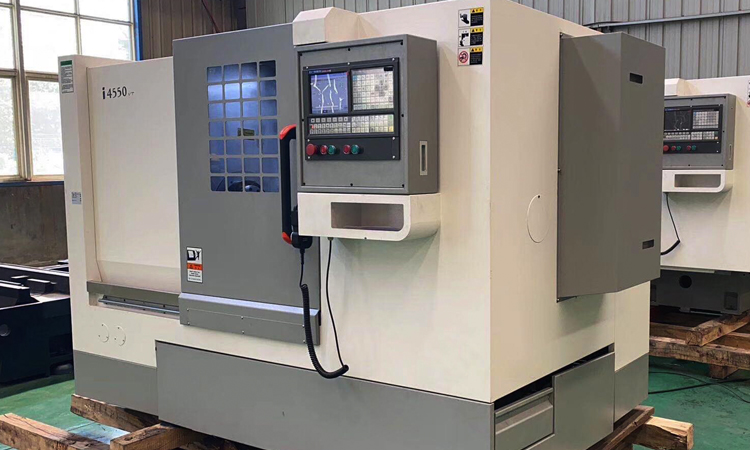
Automatic Tool Changer Vertical Machining Center Reduces Non-Cutting Time
What Is an ATC Equipped VMC
Automatic Tool Changer Vertical Machining Center refers to a vertical machining platform that stores multiple cutting tools and changes them automatically according to the programmed machining sequence. The machine uses numerical control to coordinate spindle movement, axis positioning, tool selection, spindle orientation, and tool clamping. Its main purpose is not simply to hold more tools. The practical value is reducing operator intervention and shortening the time between machining operations. On a manually changed machine, the spindle must stop, the operator removes the previous tool, installs the next one, confirms tool data, and restarts the program. An ATC-equipped VMC performs much of this sequence without breaking the program flow. This matters most when a part requires repeated drilling, tapping, milling, boring, chamfering, or finishing operations in one setup. The result is less idle spindle time, more consistent cycle planning, and fewer interruptions caused by manual tool handling.

Types of Tool Changers and Their Best Fit
ATC systems on vertical machining centers generally use either a carousel-type magazine or an arm-type magazine arrangement. A carousel stores tools around the spindle area and presents the selected tool for exchange. It is commonly suited to operations with a moderate tool list and straightforward change sequences. An arm-type arrangement uses a transfer arm to exchange the tool in the spindle with the prepared tool from the magazine. This format is often evaluated where frequent changes and more demanding production schedules justify closer review of tool-change motion. The correct choice depends on the process, not on tool magazine size alone. A buyer producing repeat parts with a predictable set of cutters should first examine the actual tool sequence. A buyer running mixed jobs should also check whether different tool lengths, holders, and tool weights can be managed safely. For broader equipment comparisons, review a professional cnc machining center solution before judging one ATC layout in isolation.
- Carousel-style tool storage: Best suited to planned machining programs with a stable tool list. It may be a sensible option when the program does not require frequent distant magazine positions.
- Arm-transfer tool changing: Best suited to buyers focused on reducing the exchange sequence between consecutive operations. Its value depends on the arm cycle, spindle orientation behavior, and whether magazine preparation can occur during cutting.
- Tool preselection capability: Best suited to programs with predictable next-tool commands. It can reduce waiting because the magazine can prepare the next tool before the current cut ends.
- Larger tool storage: Best suited to parts needing many distinct operations or unattended periods. It does not automatically reduce each tool-change time if indexing distance and control logic are not reviewed.
Tool Change Features That Affect Non-Cutting Time
The ATC reduces non-cutting time by replacing manual activity with programmed motion, but the benefit depends on several machine features working together. Magazine capacity affects whether all required tools can remain loaded for the complete job. If tools must be loaded between operations, the machine still loses productive time. Tool preselection affects whether the next cutter is already near the exchange position when the current cut ends. Spindle orientation affects how quickly and consistently the spindle reaches the required angular position for a tool exchange. The transfer mechanism affects how the old and new tools move between the spindle and magazine. None of these attributes should be treated as automatically better when the stated number is lower or higher. A very short exchange motion has limited value if the spindle repeatedly waits for indexing or if a program calls tools in an inefficient order. The practical question is whether the ATC sequence matches the part’s actual machining sequence, holder arrangement, and production mix.
Tool Change Timing Breakdown for Real Cycle-Time Analysis
When comparing machines, buyers should separate magazine indexing, arm swap, spindle orientation, and chip-to-chip time rather than treating them as interchangeable figures. Magazine indexing is the movement that positions the selected tool at the exchange station. Arm swap is the physical transfer of the tool currently in the spindle and the replacement tool. Spindle orientation is the positioning of the spindle to the required angular location before the exchange can occur. Chip-to-chip time is the broader production measure: it starts at the end of cutting with one tool and ends when the next tool begins cutting. That broader number can include spindle deceleration, retract movement, orientation, magazine preparation, transfer motion, clamping confirmation, axis return, spindle acceleration, and approach to the next cut. It is the most useful figure for estimating part cycle time, but only when the measurement conditions are clearly stated.
| Timing element | What it measures | What it changes in production | What buyers should verify |
|---|---|---|---|
| Magazine indexing | Movement of the selected tool position to the exchange point | Can create waiting time when the next tool is far from the current magazine position | Whether the next tool can be preselected while cutting continues |
| Arm swap | Transfer motion between the spindle and tool magazine | Affects the direct exchange portion of the tool-change event | Tool holder compatibility, permitted tool conditions, and transfer sequence |
| Spindle orientation | Angular positioning before release and clamping | Can delay the exchange if orientation begins only after the cut finishes | Whether orientation can overlap with retract or magazine preparation |
| Chip-to-chip time | Total elapsed time from one cutting event to the next | Directly affects the programmed machining cycle for multi-tool parts | The exact start point, end point, program conditions, and overlap assumptions |
A useful timing model is: chip-to-chip time equals the non-overlapped portions of tool retract, spindle orientation, magazine indexing, arm swap, clamp confirmation, axis return, and spindle preparation for the next cut. The word “non-overlapped” matters. If magazine indexing occurs while the current tool is still cutting, its full duration should not be added again after the cut. This is a frequent comparison error. Another error is accepting an arm-swap figure as the whole change time. A short arm movement does not prove a short chip-to-chip interval. Request a supplier’s timing definition and ask whether the quoted figure includes tool preselection, spindle acceleration, machine-axis travel, and cutting restart. This approach fits early-stage evaluation. It does not replace a cycle-time study using the buyer’s own NC program.
ATC VMC Applications Where the Gain Is Most Visible
An ATC-equipped vertical machining center has the strongest throughput effect when a part needs several tools in one clamping. Consider a mold insert that requires rough milling, finish milling, drilling, chamfering, and tapping. Without automatic exchange, each transition requires the operator to stop the sequence and intervene. With an ATC, the program can call the required tools in order while maintaining the established workholding position. This helps reduce handling between operations and supports more predictable scheduling. The same principle applies to fixture plates, valve bodies, machine components, and mixed-feature prismatic parts. The benefit is smaller for a job completed with one cutter or a process where loading, inspection, deburring, or material handling dominates the total time. For a machine configuration suitable for larger vertical machining work, buyers can compare the vertical cnc machining center mv1160 with their part envelope, tooling plan, and process sequence.

ATC VMC Price Factors and Cost Planning
The purchase price of an ATC-equipped VMC changes with more than magazine capacity. Buyers should assess the machine structure, spindle configuration, control system, tool-change mechanism, worktable size, axis travel, coolant arrangement, chip management, optional probing, guarding, and automation interfaces. A lower initial equipment price can be less attractive if the configured magazine cannot carry the required production tools or if the machine does not support the intended holder system. Conversely, paying for very large storage or complex automation may not be justified for a stable job using only a limited group of tools. The right approach is to compare total operating effect: planned cycle time, labor involvement, setup frequency, tool availability, maintenance requirements, and expected production mix. MAKCNC states that single-machine purchases are accepted without a hard minimum order quantity, while multi-machine orders may qualify for improved commercial terms relating to price, delivery, or service. This helps buyers begin with one machine when process validation is still underway.
- Choose the tool magazine around the process plan: List every cutter, drill, tap, probe, and spare tool required during the intended unattended period.
- Evaluate the stated timing method: Ask whether a supplier is quoting direct exchange motion or full chip-to-chip time.
- Include installation and commissioning scope: Electrical requirements, foundation conditions, lifting access, and operator training can affect the project budget.
- Allow for toolholder standardization: Mixed holder types or oversized tools can change usable magazine capacity and exchange behavior.
- Compare support terms in writing: MAKCNC generally provides a twelve-month machine warranty after acceptance and lifelong paid service, subject to the agreed order terms.
ATC VMC User Guide for Reducing Idle Motion
The best tool changer cannot compensate for an inefficient machining program. Start by arranging operations so that tool calls follow a logical sequence and avoid unnecessary exchanges. Then identify tools that can complete more than one operation without compromising the required result. For example, a suitable finishing tool may complete related surface passes before the program calls the next cutter. Verify tool offsets, holder dimensions, pull studs, and tool weight against the machine requirements before loading the magazine. During program proving, observe whether the next tool is being prepared during cutting or only after the spindle stops. Check safe retract positions and make sure there is adequate clearance for long tools, workholding, and fixtures. This method suits production engineers commissioning a new part family. It does not justify combining operations when tool wear, surface quality, chip evacuation, or dimensional control requires separate tools. Safety and process stability always take priority over eliminating a tool call.
- Map the full machining sequence from first operation through final finishing.
- List the required tools, holders, offset data, and any tools needed for measurement.
- Place commonly consecutive tools in a logical magazine arrangement when the control and magazine design allow it.
- Program next-tool calls early enough for permitted magazine preselection.
- Measure the actual program cycle during proving rather than relying only on isolated ATC figures.
- Review alarms, tool-clamp confirmation, wear patterns, and chip buildup before extending unattended run time.
MAKCNC as an ATC VMC Supplier
MAKCNC has manufactured CNC machine equipment since 2016 and operates multiple production lines with sample machine inventory. For buyers assessing machine rigidity alongside throughput, the company states that many machine bodies use high-strength cast iron, including resin-sand castings, followed by aging treatment intended to support long-term stability. Core transmission components such as ball screws and guideways are commonly selected from high-precision Taiwan or German brands, depending on the machine configuration. For mold-related precision machining, advanced system integration may include intelligent feedforward and quadrant-transition compensation to address issues such as overcut marks, quadrant marks, and vibration patterns. Buyers with nonstandard parts, special tooling plans, or multi-face processing requirements can discuss customized cnc machines and machining centers from makcnc before finalizing an RFQ. Stated delivery planning ranges from one to six months, so order schedules should be confirmed against the selected configuration and current production plan.
FAQ of ATC VMC Non-Cutting Time
Does a larger tool magazine always shorten cycle time?
No. A larger magazine can reduce interruptions caused by missing tools and can support more complex programs, but it does not automatically shorten every exchange. Indexing distance, preselection logic, tool sequence, spindle orientation, and transfer motion still affect the time between operations. Larger storage is most useful when the full job requires many tools, when sister tools are needed for longer production periods, or when tool availability is limiting the process. It is less useful when the part repeatedly uses a small, stable tool set and the existing magazine already covers all required operations.
Is chip-to-chip time the same as arm swap time?
No. Arm swap time describes one portion of the exchange cycle. Chip-to-chip time describes the wider interval between the end of cutting with one tool and the beginning of cutting with the next. It may include retract movement, orientation, indexing, clamping, spindle preparation, and axis positioning. Buyers should avoid comparing one supplier’s arm-motion figure with another supplier’s chip-to-chip figure because they are measured differently. Request the same timing definition from each supplier and validate it through a program demonstration using representative tooling where possible.
When does manual tool changing remain acceptable?
Manual changing can remain practical for prototype work, low-volume jobs with only occasional tool changes, or parts completed by a single cutter. In these situations, the cost and complexity of an ATC may not create a meaningful return. The balance changes when a part requires several operations, labor availability is limited, repeatability is needed across shifts, or a production schedule depends on predictable unattended machining periods. The decision should be based on actual tool-call frequency and production planning rather than assuming that every VMC application needs the same ATC configuration.
If you are evaluating an ATC-equipped VMC for a specific part family, contact MAKCNC with your drawings and tool list for a machine selection discussion and current quotation.