Reduce Chatter With a Box Guide Vertical CNC Machining Center
What Is a Box Guide VMC?
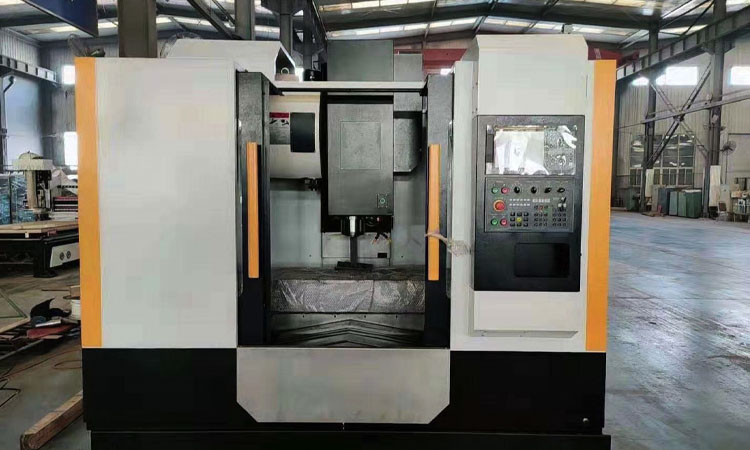
A Box Guide Vertical CNC Machining Center is a vertical-spindle milling machine whose axes slide on wide, flat, hardened or scraped surfaces cast into the machine structure, instead of on narrow rolling-element linear rails. The sliding surface is lubricated and held in position by adjustable strips called gibs. Because the saddle or table rests on a large area of cast iron, it adds friction damping and stiffness to the cutting loop. That is why production engineers look at it when chatter shows up on steel or cast iron work. Chatter is self-excited vibration between tool and workpiece. It leaves wavy marks on the surface, shortens tool life and forces you to cut shallower than the spindle can actually handle. A box-way design does not remove the cause on its own, but it changes how much vibration energy the structure absorbs before it reaches the cut.
Types of Box Guide VMCs
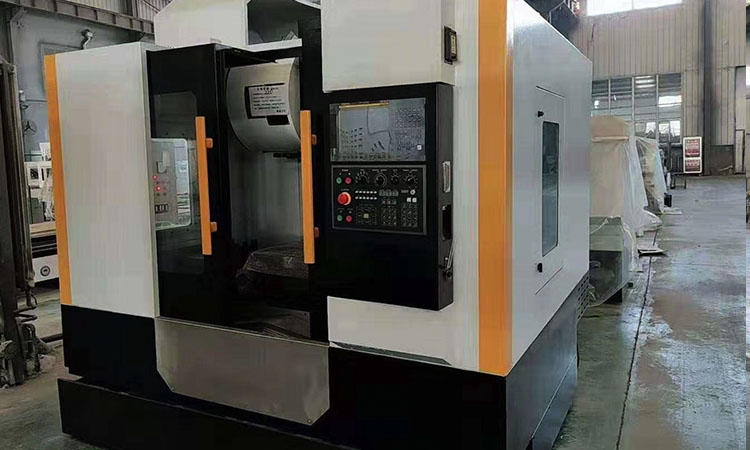
Not every machine sold as "box way" is built the same way, so ask which axes use sliding surfaces. The table below shows the common configurations and what each means for heavy cutting. These are general design categories, not a statement about any specific model.
| Configuration | What it means | Best fit | Limit |
|---|---|---|---|
| Box ways on X, Y and Z | Maximum sliding contact on every axis | Steel and cast iron roughing, deep slotting | Higher friction, slower rapid traverse, regular lubrication checks |
| Hybrid (box ways on the heaviest axes, linear rails elsewhere) | Damping where cutting load is highest, speed elsewhere | Mixed roughing and finishing jobs | Damping is uneven between axes |
| Linear-guide machine (for comparison) | Rolling contact on narrow rails | Light alloy, high-speed finishing, short cycles | Less inherent damping in heavy interrupted cuts |
How Box Ways, Gibs and Machine Mass Suppress Vibration in Heavy Milling
Three parameters work together. Reading them separately is where most buyers go wrong.
| Parameter | What it affects | Practical effect in the cut | Trade-off or misreading |
|---|---|---|---|
| Contact area of the box way | Load spread and friction damping | Cutting forces spread over a wide surface, and sliding friction dissipates vibration energy | More contact means more friction. Feed response is slower than rolling rails |
| Gib adjustment | Clearance and preload between saddle and bed | Too loose lets the axis shift under interrupted load. Too tight raises friction and can cause stick-slip at low feed | A well-built way still performs poorly if the gib is set badly |
| Machine mass and casting quality | Natural frequency and energy absorption | Heavy, aged cast iron holds geometry and resists forced vibration from interrupted cuts | Mass helps only if the structure is stiff where it matters, around the column, spindle seat and saddle |
The interaction matters most. Contact area gives damping, the gib decides how much of that contact you can actually use, and mass lowers the amplitude of the disturbance reaching the guideway. If any one is weak, the others cannot fully compensate. Heavy face milling with large inserts on steel is the typical scenario where all three are tested at once. Light finishing in aluminium usually is not, and there a box-way machine may add friction without any benefit.
Features of Box-Way Machines and Their Trade-Offs
The main feature is damping under heavy, interrupted cutting. The cost is slower axis response and a need for lubrication discipline. Construction quality decides how much of the benefit you actually get. MAKCNC states that its machine bodies mostly use high-strength cast iron, including resin sand castings, with aging treatment to hold long-term accuracy and rigidity. Its core drive components, ball screws and guideways, are typically from Taiwanese or German brands, and the company emphasizes system coordination so the whole machine performs as one unit. On the control side, its systems integrate intelligent feedforward and quadrant-jump compensation, aimed at overcut marks, quadrant marks and chatter marks in mold work. Treat these as design intentions to verify on the exact model you are quoted, not as guaranteed cutting results for every job.
What Box Ways Do Not Fix
The common misunderstanding is that a box-way machine eliminates chatter. It does not. Chatter depends on the whole loop: spindle, tool holder, tool overhang, fixture, workpiece stiffness and cutting parameters. A long-reach cutter in a weak vise will chatter on any machine. To verify before you buy, request these items:
- Which axes use box ways, and whether the gibs are adjustable from outside the guard.
- The casting material and whether the castings are aged before machining.
- Guideway scraping or grinding records and contact checks.
- A test cut on your material, using your tool and fixture, with surface finish evidence.
Test-cut evidence tells you how the machine behaves in your setup. A brochure number does not.
Box Guide VMC Applications
These machines suit work where cutting force is high or interrupted: steel and cast iron roughing, large-diameter face milling, deep pocketing and mold bases. They also suit multi-product, small-batch shops that need several faces machined in one clamping, since a stable table supports repeated heavy cuts without re-fixturing. A practical scenario: a shop roughs a cast iron housing with a face mill, sees chatter marks at the feed it wants, and has to cut back depth of cut to remove them. Checking gib clearance, fixture clamping and tool overhang comes first. If those are in order and chatter persists at the required removal rate, a box-way machine is a reasonable upgrade to evaluate. If the shop mostly cuts aluminium parts at high spindle speed, a linear-guide machine or a horizontal cnc machining center may serve better.
Box Guide VMC Price
Price depends on factors you can compare line by line. We do not quote fixed figures here because configuration changes the number.
| Factor | Effect on price |
|---|---|
| Table size and travels | Larger castings and longer ways raise cost, for example when stepping from the vertical cnc machining center mv1270 class to the vertical cnc machining center mv1380 class |
| Guideway type per axis | Full box ways cost more to cast and finish than hybrids |
| Screw and guide brand | Taiwanese or German components change the price tier |
| Spindle and control options | Higher torque spindles and advanced compensation functions add cost |
| Quantity and terms | There is no hard minimum order, and single units are available. Multi-unit orders may bring better price, lead time or after-sales terms |
Ask for lead time early. MAKCNC indicates a typical range of 1 to 6 months depending on configuration, and it keeps demonstration machines in stock.
Box Guide VMC User Guide
Good setup protects the damping you paid for. Follow this order when commissioning or when chatter appears:
- Confirm the machine is levelled and bolted on a stable foundation.
- Check lubrication supply to every way surface before running.
- Inspect gib setting on each axis, and adjust to the maker's procedure rather than by feel.
- Shorten tool overhang and check holder runout.
- Clamp the workpiece close to the cutting zone.
- Change spindle speed in small steps while holding chip load, and listen for the quietest range.
Common mistakes: over-tightening gibs to "remove play", skipping lubrication checks, and cutting at low feed where stick-slip appears on sliding ways. Warranty at MAKCNC typically runs 12 months after acceptance, with lifetime paid service afterward.
FAQ of Box Guide VMCs
Are box ways always better than linear guides?
No. They damp better in heavy, interrupted cuts but respond more slowly and need more lubrication. Light, high-speed work often favors linear rails.
Can gib adjustment alone cure chatter?
Only when clearance is the cause. If tool overhang, fixturing or parameters are the source, gib changes will not help and may add friction.
What should I ask a supplier to prove?
Guideway configuration, casting material and aging treatment, and a test cut in your material with your tooling.
Box Guide VMC Supplier
MAKCNC has built CNC machines since 2016 and runs multiple production lines. Its quality system is certified to ISO 9001:2015. The range covers professional cnc machining center solution offerings, lathes and customized cnc machines and machining centers from makcnc. Service commitments include 8-hour response and on-site support within 48 hours through its after-sales network. If you are evaluating a box-way machine for steel or cast iron work, send us your part drawing, material and current chatter symptoms. We will suggest a configuration and send a quote.