Understanding When a Vertical Machining Center with Rotary Table Is the Right Choice
What Is a Vertical Machining Center with Rotary Table?
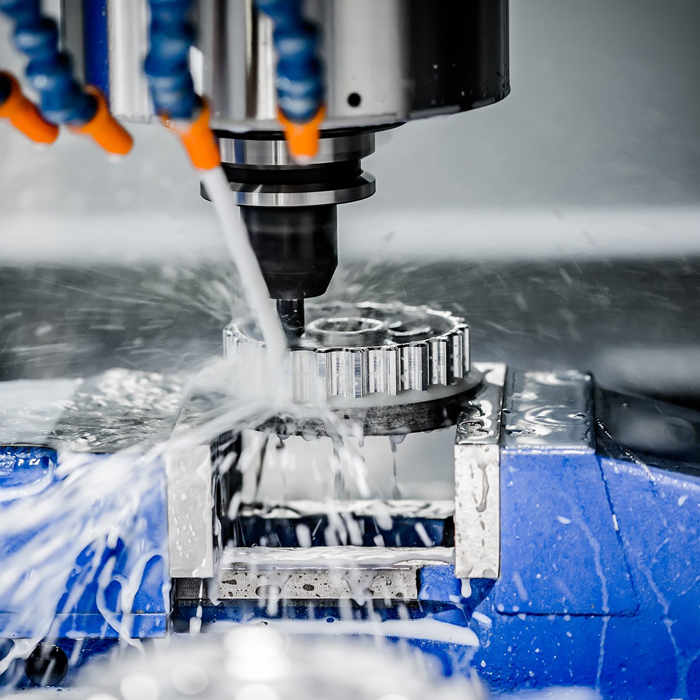
A Vertical Machining Center with Rotary Table is a CNC machine that enhances a standard 3-axis (X, Y, Z) VMC by adding a fourth rotational axis, typically designated as the A-axis or B-axis. This rotary table allows the workpiece to be tilted and rotated, enabling the spindle to access multiple sides of the part without manual intervention. The primary advantage is the ability to complete complex parts with fewer setups, which directly improves accuracy by eliminating the potential for re-clamping errors. This configuration bridges the gap between basic 3-axis machining and full 5-axis simultaneous operations, offering a cost-effective solution for producing parts that require work on four or five faces. For many shops, it represents an optimal balance of capability, investment, and operational simplicity, especially for multi-sided prismatic parts.
Types of Rotary Table Configurations for VMCs
There are primarily two ways to integrate a fourth axis into a vertical machining center. The first is a standalone rotary table unit that can be mounted directly onto the machine's existing T-slot table. This offers flexibility, as the unit can be added or removed based on job requirements, preserving the machine's full work envelope for larger 3-axis jobs. The second is an integrated trunnion-style table, which typically includes both a rotating (A-axis) and tilting (C-axis) platter, effectively creating a 3+2 or "5-sided" machining setup. It's important to distinguish between an indexing (positional) 4th axis and a full-contouring 4th axis. An indexing table simply rotates to a specific angle and locks in place for 3-axis machining operations. A full-contouring table can rotate continuously and simultaneously with the X, Y, and Z axes, enabling the machining of helical profiles and other complex geometries.
Key Features and Material Specifications
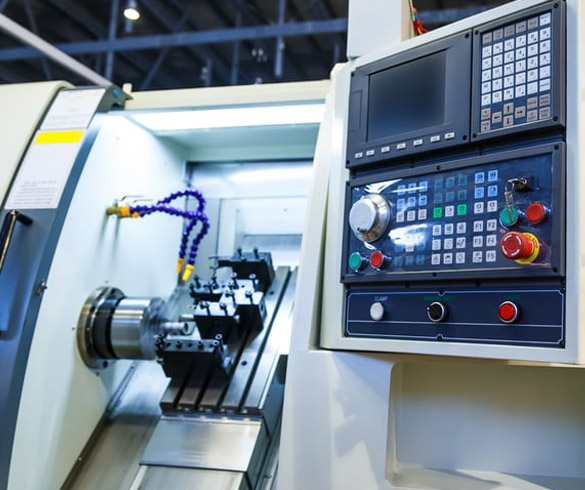
The performance and longevity of a Vertical Machining Center with Rotary Table depend heavily on its structural integrity and the quality of its components. At MAKCNC, we build our machine bodies using high-strength cast iron, such as resin sand castings, which undergo a meticulous aging treatment process. This ensures the frame maintains its rigidity and dimensional stability over years of operation, providing a solid foundation for high-precision work. Key features of our machines include:
- Core Component Quality: We integrate high-precision transmission components, including ball screws and linear guideways, from established manufacturers in Taiwan and Germany to ensure smooth, accurate motion.
- Advanced System Control: Our systems are equipped with technologies like intelligent feed-forward control and quadrant glitch compensation. These features are specifically designed to address common machining defects in the mold industry, such as over-cut marks, quadrant marks, and chatter marks, resulting in superior surface finishes.
- One-Clamping Capability: The addition of a rotary axis facilitates multi-sided machining in a single setup. This is highly beneficial for small-batch, high-variety production runs, as it drastically reduces setup time and improves part-to-part consistency.
When to Choose a 4th-Axis Rotary Table Over a Full 5-Axis Machine
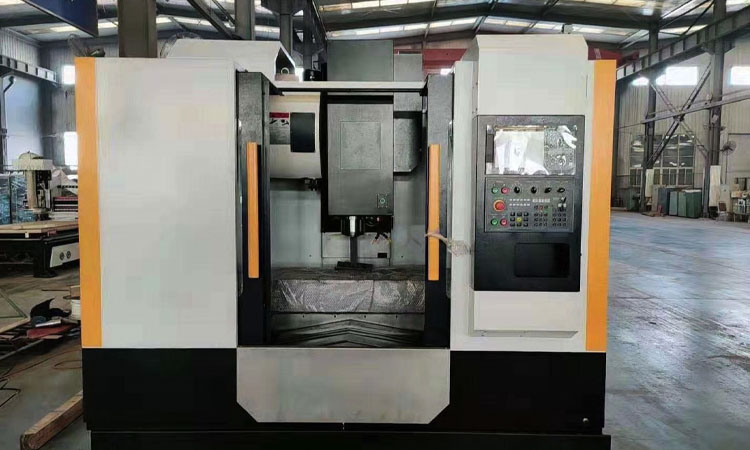
The decision between a 4-axis VMC and a full simultaneous 5-axis machine is a critical investment choice. A 4-axis setup is not merely a "lesser" version of a 5-axis machine; it is the superior choice for a specific, and very large, class of workpieces. A full 5-axis machine is necessary for parts requiring continuous tool-path contouring across complex, doubly-curved surfaces, such as turbine blades or impellers. For any part that can be completed by positioning the workpiece at various angles and then performing 2D or 3D milling—a process known as 3+1 or 3+2 machining—the 4-axis VMC often provides a more cost-effective and simpler solution. The programming is less complex, and the risk of tool collisions can be lower. The following table breaks down the decision boundary.
| Decision Factor | Vertical Machining Center with 4th-Axis Rotary Table | Simultaneous 5-Axis Machining Center |
|---|---|---|
| Part Geometry | Ideal for prismatic parts requiring work on 4 or 5 faces. Holes, pockets, and features on different sides of a block. Helical milling. | Necessary for parts with complex, organic surfaces, compound curves, and deep cavities requiring tool tilting to avoid collision (e.g., impellers, blisks, molds with deep undercuts). |
| Primary Benefit | Drastically reduces setup time and improves accuracy by eliminating re-clamping for multi-sided parts. | Enables machining of the most complex geometries possible in a single setup. Allows use of shorter, more rigid tools for better surface finish. |
| Programming & Setup | Relatively straightforward. Often uses standard G-code with indexing commands. Less complex collision avoidance. | Significantly more complex. Requires advanced CAM software and highly skilled programmers to manage simultaneous tool and workpiece motion. |
| Investment Cost | Lower initial machine cost. Can often be retrofitted to an existing 3-axis VMC. | Substantially higher initial investment in the machine, software, and operator training. |
| When It's the Best Choice | You are machining housings, manifolds, engine blocks, or any part where the main challenge is accessing multiple faces, not complex surface contouring. | Your primary work involves aerospace components, medical implants, or complex molds where the tool must follow a continuously changing angle relative to the surface. |
Common Applications and Industries Served
The versatility of a Vertical Machining Center with a Rotary Table makes it a valuable asset in numerous industries. Its ability to machine multiple faces in one go is particularly advantageous where both precision and efficiency are paramount. In the mold and die industry, these machines are used to create complex core and cavity details without the accumulated error from multiple setups. The automotive sector uses them for parts like engine blocks, transmission housings, and suspension components that have features on many sides. In aerospace, they are effective for producing structural brackets and fittings that are complex but do not require the full simultaneous motion of 5-axis machining. For general job shops, this configuration offers the flexibility to take on a wider variety of jobs, from simple 3-axis work to more complex 4-axis projects, maximizing machine utilization.
Factors Influencing Vertical Machining Center Pricing
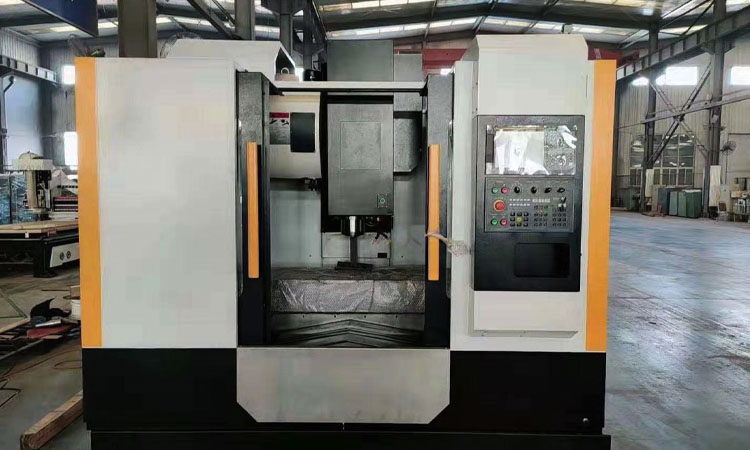
The price of a vertical machining center can vary significantly based on its configuration and capabilities. Understanding the key cost drivers helps in making an informed purchasing decision. The primary factor is the machine's size, defined by the X, Y, and Z axis travels. Larger machines require more robust castings and more powerful motors, increasing the cost. The quality and size of the rotary table itself is another major factor; a high-precision, high-speed contouring table will cost more than a basic indexing unit. Other influencing factors include:
- Spindle Taper and Speed: Higher-speed spindles (e.g., 12,000 RPM vs. 8,000 RPM) and different taper sizes (BT40, BT50) affect price.
- Tool Changer Capacity: A larger automatic tool changer (e.g., 32 tools vs. 24) adds to the cost but increases automation potential.
- Control System: The choice between control systems like Fanuc, Siemens, or Mitsubishi can impact the final price.
- Options: Features like through-spindle coolant, probing systems, and chip conveyors are typically add-ons that affect the total investment.
At MAKCNC, we offer flexible terms, with no hard minimum order quantity. While single-unit purchases are welcome, clients who procure multiple machines may be eligible for improved commercial terms regarding price, delivery, or after-sales service.
MAKCNC: Your ISO9001-Certified VMC Supplier
Established in 2016, MAKCNC operates multiple production lines within our ISO 9001:2015 certified facility. We are a professional cnc machining center solution provider, committed to delivering reliable and precise machines. We maintain an inventory of standard models to facilitate shorter lead times, which typically range from one to six months depending on customization. Our commitment extends beyond the sale, with a mature after-sales support network. We provide a standard 12-month warranty upon machine acceptance and offer lifetime paid service. Our support promise includes an 8-hour response time to inquiries and, when necessary, a 48-hour on-site arrival for troubleshooting and repairs. For more information about MAKCNC, our history, and our quality commitments, please visit our company page.
Frequently Asked Questions
What is the standard lead time for a MAKCNC machine?
Our standard lead time is between one and six months, depending on the specific model and level of customization. We also keep a stock of popular machine models to accommodate urgent requirements.
Is there a minimum order quantity for purchasing a machine?
No, we do not have a rigid minimum order quantity. You can purchase a single machine. However, bulk orders of multiple units may qualify for more favorable commercial terms.
What does your after-sales support include?
Every machine comes with a standard 12-month warranty after final acceptance. We also provide lifetime paid technical service. Our support team is committed to an 8-hour response time and can be on-site within 48 hours to address any issues.
Can you customize a machine for a specific application?
Yes, we offer services for customized cnc machines and machining centers from MAKCNC. Our engineering team can work with you to configure a machine that meets the specific demands of your production process.
If you are sourcing a vertical machining center with a rotary table, contact our technical team to discuss your application and receive a detailed quotation.