How to Model the True Cost of a Heavy Horizontal Machining Center
Choosing a Heavy Horizontal Machining Center based on its initial price tag is a common mistake that can lead to significant, unplanned expenses. The real investment includes the machine, its foundation, shipping, and installation—costs that escalate dramatically with workpiece size and mass. Before requesting a quote, understanding how these factors influence the total cost of ownership is essential for accurate budgeting and avoiding project delays.
At MAKCNC, an ISO 9001:2015 certified manufacturer established in 2016, we believe an informed buyer makes the best partner. Our machines are built for lasting performance, but performance starts with a solid plan. This guide breaks down the cost factors you must consider to make a sound investment in large-scale machining capacity.
Modeling Total Cost by Pallet Size and Workpiece Mass
The sticker price of a horizontal cnc machining center is only one part of your budget. As pallet size and the maximum weight of the workpiece increase, associated costs for site preparation and logistics grow non-linearly. A heavier machine requires a more substantial foundation, and its larger dimensions can push shipping from standard freight into specialized, costly transport.The following table illustrates how these interconnected costs can change between two common scenarios. Use this as a framework to build your own project budget, separating confirmed costs from estimates that require supplier consultation.
| Cost Factor | Scenario A: Medium-Heavy HMC (e.g., 800mm Pallet, 1,500 kg Load) | Scenario B: Large-Heavy HMC (e.g., 1250mm Pallet, 4,000 kg Load) | Budgeting Notes |
|---|---|---|---|
| Machine Price | Base Price (Index: 100) | Significant Increase (Index: 180-250+) | This is a confirmed cost from your supplier's quotation. Price increases with axis travel, spindle power, and options. |
| Foundation Requirements | May be suitable with existing high-strength, reinforced concrete floors (check thickness and rating). | Almost always requires a new, specially engineered foundation (e.g., isolated deep concrete pit with rebar). | This is an estimated cost. Requires a civil engineer to assess soil conditions and design the foundation. Costs include excavation, concrete, rebar, and curing time. |
| Inbound Freight | Often manageable with standard flat-rack or open-top containers. | Likely an "out of gauge" (OOG) or oversize load. Requires special permits, escort vehicles, and restricted travel times. | This is an estimated cost. Get firm quotes from logistics providers. International freight for oversize loads can be 2-5x the cost of standard freight. |
| Rigging & Commissioning | Requires heavy-duty forklifts or a small mobile crane. Standard installation team. | Requires specialized rigging crews and high-capacity cranes (e.g., 50-100 ton). Site access for cranes is a factor. | This is an estimated cost. The supplier can often quote this, but crane rental and local labor rates will vary. Commissioning time may be longer for larger, more complex machines. |
Key Machine Characteristics for Long-Term Precision and Rigidity
When investing in a machine designed for heavy-duty work, the underlying construction determines its ability to maintain accuracy over years of operation. Superficial features can be impressive, but the core structural integrity is what delivers a return on investment. Focus on these fundamental elements during your evaluation.Frame and Casting Quality
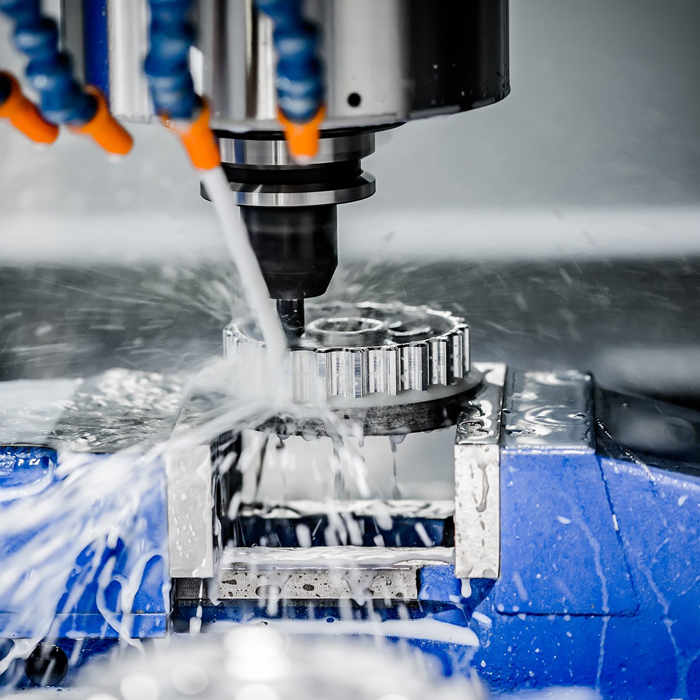
The machine's base, column, and saddle form its structural backbone. We utilize high-strength cast iron, specifically resin sand castings, for these core components. This method produces a dense, stable structure capable of absorbing cutting vibrations effectively. More importantly, every major casting undergoes a time-consuming aging and stress-relieving process. This critical step stabilizes the material's internal structure, preventing the slight deformations over time that can ruin machining accuracy. A machine without properly treated castings may hold tolerance when new but lose its precision as the frame settles.
Core Drive and Motion Components
A rigid frame is useless without a precise motion system. The accuracy of a Heavy Horizontal Machining Center depends directly on its ball screws and linear guideways. We source these critical components from leading manufacturers in Taiwan and Germany, ensuring high-grade materials and grinding precision. This focus on the core transmission system provides the smooth, backlash-free movement necessary for holding tight tolerances on large, heavy workpieces. The entire system is engineered for synergy, ensuring that the high-quality components deliver optimal performance as a whole.
Evaluating Control Systems for Your Specific Application
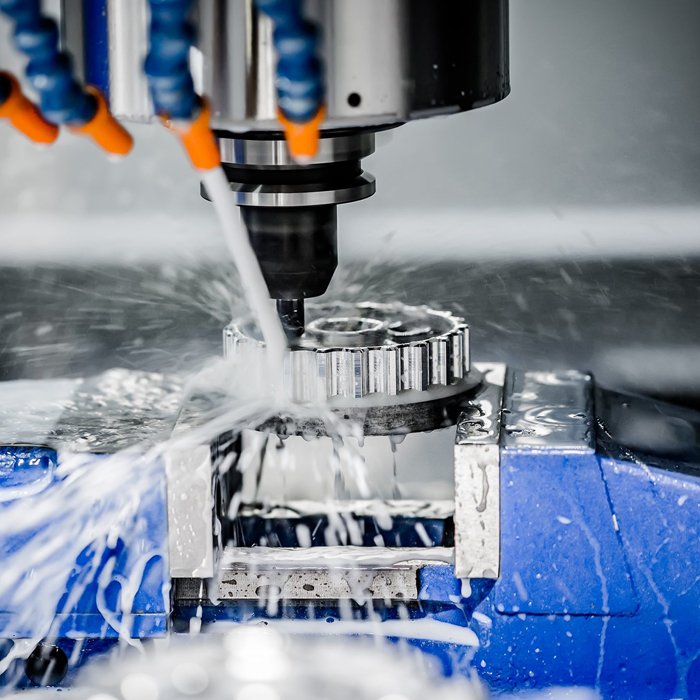
The CNC control system is the brain of the machine. While many systems can execute basic G-code, specialized applications like mold making or multi-axis contouring require advanced functions to achieve a high-quality surface finish and prevent costly errors.Checklist for Mold and Die Machining
If your work involves complex 3D surfaces, such as those found in injection molds, look for control features that solve common quality problems. Here are a few to ask about:
- Intelligent Feed-Forward: This function allows the control to anticipate changes in direction (corners and arcs), reducing servo lag and preventing the machine from "overshooting" the programmed path. The result is sharper corners and more accurate profiles. _
- Quadrant Glitch Compensation: When an axis crosses from positive to negative (or vice-versa), a tiny hesitation can leave a visible mark on the workpiece, known as a quadrant mark. This compensation algorithm smooths the transition, eliminating the mark for a better surface finish.
- Vibration Suppression: Advanced controls can actively dampen low-frequency vibrations that cause "chatter" or "vibration marks," especially during heavy roughing cuts. This allows for more aggressive machining parameters without sacrificing surface quality.
These technologies are vital for preventing common defects like "over-cut marks" and "vibration marks," which can require hours of manual polishing to correct. For businesses in the mold and die industry, these features translate directly to reduced labor costs and faster delivery times.
Capabilities for High-Mix, Low-Volume Production
For job shops, the ability to machine multiple faces of a complex part in a single clamping is a primary advantage of a professional cnc machining center solution. The B-axis rotary table on an HMC allows the workpiece to be presented to the spindle from various angles. This capability minimizes setup time, reduces the chance of operator error from re-fixturing, and improves the dimensional accuracy between features on different sides of the part.
Sourcing a Reliable Heavy HMC Supplier
Choosing the right machine is only half the battle. Your supplier's commercial terms, lead time, and after-sales support structure are just as important for a successful, long-term partnership. Since our founding in 2016, we have structured our operations to support international B2B clients.Key Supplier Questions:
- What is the Minimum Order Quantity (MOQ)? We have no rigid MOQ. You can procure a single machine. However, bulk purchases of multiple units may qualify for improved pricing, delivery, or service terms.
- What is the typical lead time? Production and delivery typically range from 1 to 6 months, depending on machine configuration and current production schedules. We maintain an inventory of sample machines for evaluation.
- What does the standard warranty include? Our standard warranty covers the entire machine for 12 months after final acceptance. We also offer a lifetime of paid service and support. For specific tenders or projects, extended warranties, such as a three-year free warranty, can be negotiated.
- What are your service response times? Our established after-sales network commits to an 8-hour initial response to service requests and, if necessary, having a technician on-site within 48 hours to address any issues.
If you are looking for a supplier for a Heavy Horizontal Machining Center, please contact us for the latest product specifications and a detailed quotation tailored to your project.