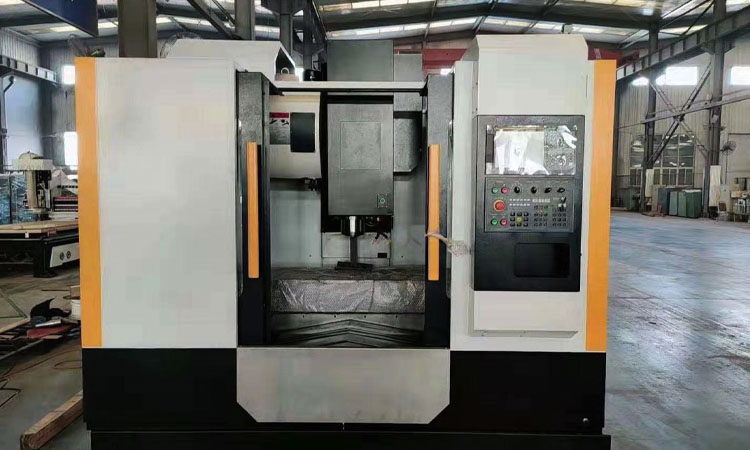
Slant Bed Geometry Explains Why A Metal Turning Slant Bed CNC Lathe Cuts More Accurately
What is a Metal Turning Slant Bed CNC Lathe?
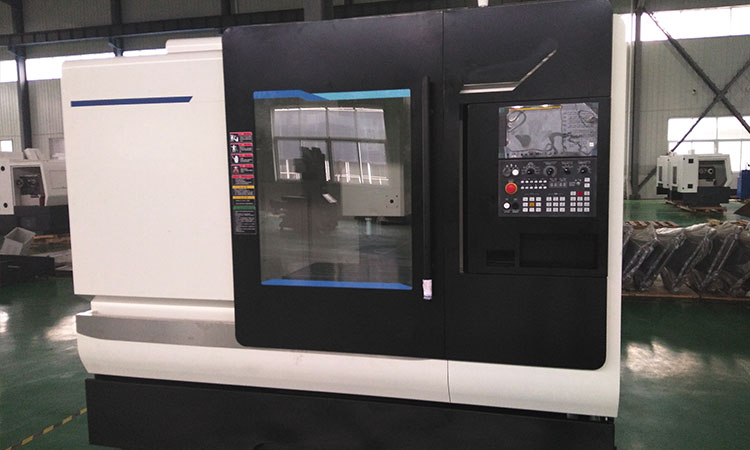
Metal Turning Slant Bed CNC Lathe equipment is a computer-controlled turning machine built on a bed tilted away from horizontal, typically somewhere between 30 and 60 degrees. That angled bed changes how cutting forces travel through the machine frame, how chips fall away from the workpiece, and how far an operator has to reach to load a part. Unlike a flat-bed lathe, where the carriage sits level and swarf tends to pile on top of the ways, the slant configuration lets gravity pull chips down and away from the cutting zone. This one geometric decision affects almost every practical part of turning steel, aluminum, and brass on a production floor, not just the machine's price tag.
Types of Slant Bed CNC Lathes
Slant bed machines are generally grouped by bed angle and spindle layout. A 30-degree bed favors light and medium parts where operator reach matters more than chip clearance. A 45-degree bed is the most common compromise, balancing rigidity against ease of loading. A 60-degree or near-vertical bed suits heavy chucking work and bar work, where chips need to drop fast and coolant flushing handles the rest. Beyond angle, buyers also choose between single-spindle and twin-spindle layouts, and between a fixed headstock or a version with live tooling for milling during the same setup. A CNC lathing machine built on a slant bed can also be specified with different turret capacities, from 8-station to 12-station tooling, depending on part complexity and cycle-time targets.
How Bed Angle Changes Force Paths, Chip Evacuation, and Operator Access
Bed angle is not a styling choice. It changes three things that decide whether a shop hits tolerance consistently: where cutting force loads the frame, where chips go after they are cut, and how far an operator has to reach to load a part.
On a flat bed, cutting force pushes down and sideways against horizontal ways, and that load path can lift the front of the carriage slightly under heavy cuts, which shows up as chatter marks on interrupted cuts. On a slant bed, the same force is directed more into the bed casting itself, closer to the machine's center of mass, so the carriage resists lift better during heavy roughing passes. This matters most on mold steel and hardened alloys where interrupted cuts are common.
Chip evacuation follows the same logic. A steeper angle lets chips fall by gravity into the collection trough instead of resting on the ways, where they can be re-cut, scratch finished surfaces, or work into the linear guides and shorten service life. Shops running long, stringy chips from mild steel or aluminum see the biggest benefit from steeper angles, since those chips do not clear on their own.
Operator access moves in the opposite direction. A steeper bed pushes the spindle centerline higher and further back, which helps chip drop but can make manual chucking awkward for heavy parts. Shops running mostly bar-fed automatic cycles rarely notice this trade-off; shops doing manual chucking of large flanges feel it every cycle.
| Bed Angle | Force Path Behavior | Chip Evacuation | Operator Access |
|---|---|---|---|
| 30° | Moderate resistance to carriage lift under heavy cuts | Adequate for short, broken chips | Easiest manual loading |
| 45° | Good resistance, common industry compromise | Good gravity drop for most chip types | Moderate reach, standard operator training |
| 60°+ | Best resistance to lift during heavy roughing | Best for long stringy chips and high swarf volume | Reduced access, favors automated or bar-fed loading |
Getting this wrong has a real cost. Choosing a shallow bed angle for a shop running mostly hardened mold steel with interrupted cuts leaves chatter marks that need re-polishing later. Choosing a steep bed angle for a shop doing frequent manual chucking of large parts slows down every changeover. Match the angle to your chip type and loading method on any Metal Turning Slant Bed CNC Lathe you shortlist, not to whichever machine is cheapest that week.
Features of a Slant Bed CNC Lathe for Metal Turning
Beyond bed angle, several build details decide whether a slant bed lathe holds tolerance over years of production rather than months. The base is typically cast from high-strength iron, often resin sand casting, and aged before machining to relieve internal stress so the frame does not creep out of alignment as it warms up during long shifts. Core transmission parts, ball screws and linear guides, commonly come from established Taiwanese or German brands, and how these components are matched to the frame and control system determines whether the whole machine performs to its rated accuracy, not just the individual parts on a spec sheet. For mold and die work, some control systems add feedforward compensation and quadrant glitch correction, which directly reduce overcut marks, quadrant marks, and chatter marks on contoured surfaces. Machines built for small-batch, multi-variety production often add one-setup multi-face capability, letting a single chucking complete several faces of a part without repositioning, which cuts cumulative setup error.
Slant Bed CNC Lathe Application in Metal Turning
Slant bed lathes turn up wherever round parts need repeatable finishes and fast cycle times. Automotive shops use them for shafts, flanges, and hub components. Mold and die shops use the steeper-angle, higher-rigidity versions for hardened steel inserts, where chatter is the enemy of surface finish. General job shops running mixed small-batch orders lean on multi-face, one-setup models to avoid repositioning error between operations. Many of these same shops pair a slant bed lathe with a CNC machining center for parts that need milling features after turning, keeping the whole job inside one supplier relationship instead of splitting it across vendors. Bar-fed automatic slant bed machines also show up in high-volume fastener and fitting production, where steep bed angles and gravity chip drop keep unattended run time high between operator checks.
Slant Bed CNC Lathe Price Factors
Price on a slant bed lathe swings on a handful of factors, not on brand name alone. Spindle bore and chuck size raise cost quickly once you move from small-bore turning into large-diameter chucking work. Turret station count, tool changer type, and whether the machine includes live tooling for milling operations add cost on top of the base turning package. Control system choice matters too, since feedforward and quadrant glitch compensation packages cost more than a standard turning control but pay for themselves on mold-grade work by cutting rework. Lead times also affect landed cost planning: standard configurations typically ship in 1 to 6 months depending on customization scope. There is no fixed minimum order quantity, so a single machine purchase is workable, and buyers ordering across multiple units usually unlock better pricing, faster scheduling, or stronger after-sales terms.
Selection and Setup Guide for a Slant Bed CNC Lathe
Before signing a purchase order, walk through these checks so the machine matches the parts actually running on your floor, not just the spec sheet.
- Confirm bed angle against your dominant chip type: long stringy chips need steeper angles, short broken chips tolerate shallower ones.
- Match spindle bore and chuck size to your largest current part, plus a margin for future work.
- Check whether your parts need multi-face work in one chucking, which points toward a multi-face capable model instead of a basic turning-only machine.
- Verify ball screw and guide rail brand, since these components govern long-term repeatability more than headline accuracy numbers alone.
- Ask about warranty terms in writing: standard coverage typically runs 12 months from acceptance, with paid service available afterward, though some tender projects specify extended co