How to Specify a Vertical Machining Center with Rotary Table for Multi-Side Parts
A Vertical Machining Center with Rotary Table is often the machine buyers regret not specifying carefully enough before the purchase order goes out. Get the table diameter wrong, or mismatch the payload against your fixture weight, and you find out only after the machine lands on your shop floor — by then freight, customs, and installation costs are already sunk. Mold shops and job shops running multi-variety, small-batch production feel this risk the hardest, because one mis-specified rotary axis can block an entire part family from being machined in a single setup. This guide covers what the machine actually is, how configurations differ, and the compatibility checks that separate a working RFQ from an expensive mistake.
What is a Vertical Machining Center with Rotary Table?
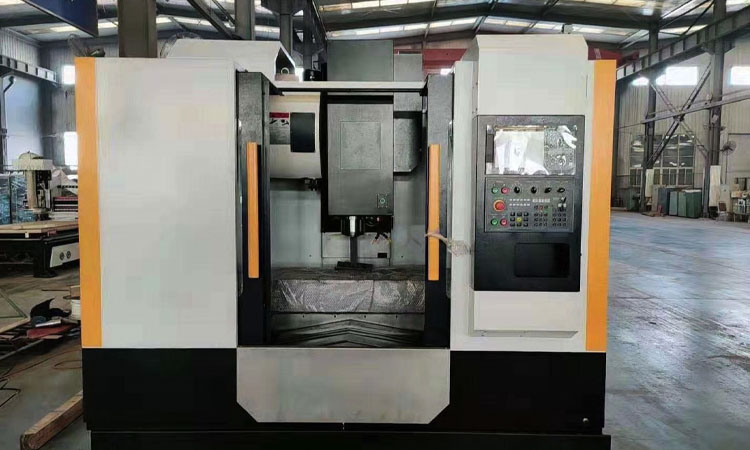
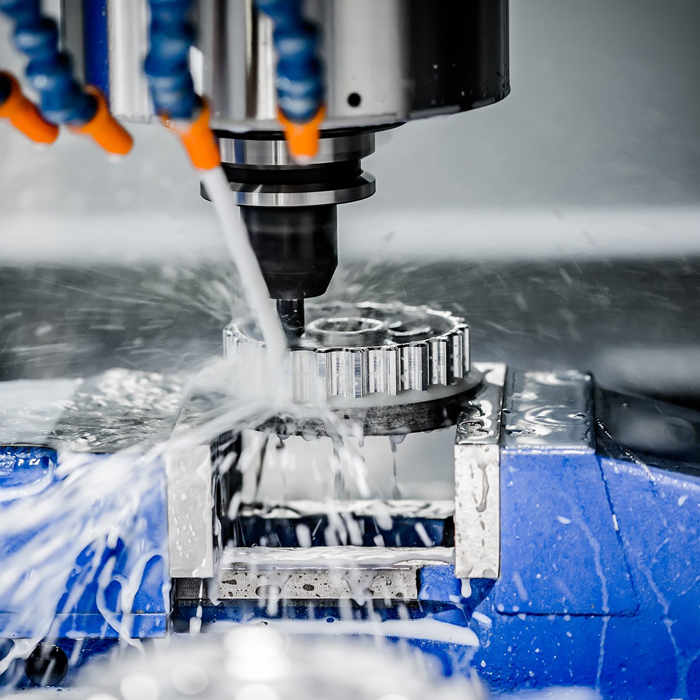
This machine is a 3-axis vertical CNC platform fitted with an added rotary axis — either a trunnion cradle or a flat rotary platter — that lets the spindle reach multiple faces of a workpiece without manual re-fixturing. A standard 3-axis VMC machines one face, then requires the operator to stop, unclamp, flip, and re-zero the part for the next face. Adding a rotary axis turns that sequence into a single program: the table indexes or rotates the part while the spindle stays fixed, cutting cycle time and removing the re-fixturing error that shows up later as face-to-face misalignment. For mold and die work, where six or more faces on a core block may need machining to hold profile tolerance, this single-setup capability is often the deciding factor over a plain 3-axis machine.
The Compatibility-Based Sourcing Checklist for a Rotary Table VMC
Picking a rotary-table VMC isn't just picking a bigger machine — it means matching six mechanical and control variables to your actual parts. Skip any one of these and the machine may still run, but it won't run your parts. The table below explains why each item matters, not just what it is.
| Check Item | Why It Matters | What Goes Wrong If Ignored |
|---|---|---|
| Table diameter | Sets the largest part or fixture plate that can be clamped and cleared through a full rotation without hitting the column or way covers. | Oversized fixtures foul on the machine frame mid-rotation, forcing a tooling redesign after delivery. |
| Payload capacity | The rotary drive motor and bearing set are rated for a maximum load, including fixture weight plus part weight at a given offset from center. | Exceeding rated payload accelerates bearing wear and can trip torque alarms mid-cycle, stopping production. |
| Torque at the table | Cutting forces transmitted through an off-center part create a torque load on the rotary axis, not just a static weight load. | Undersized torque rating causes lag or stall during heavy cuts on parts clamped away from the rotation center. |
| Spindle clearance | The distance between spindle nose and table surface, at every rotation angle, decides whether tall fixtures or tombstones clear the head. | Tall workholding collides with the spindle housing at certain trunnion angles, usually discovered during first-part trials. |
| Control interface | The rotary axis must be recognized and synchronized by the CNC control — tool length offsets, work coordinates, and simultaneous motion all depend on this. | A poorly integrated retrofit axis behaves as a bolt-on, forcing manual re-zeroing between faces and erasing the single-setup benefit. |
| Trunnion vs platter configuration | A trunnion tilts the table on a horizontal axis for true 5-face access; a flat platter only indexes around a vertical axis for 4th-axis work. | Buying a platter-only table when the part needs an angled or undercut face leaves that feature unreachable without manual re-fixturing. |
As a working rule, confirm table diameter and payload against your heaviest fixture first, then check torque and spindle clearance against your tallest, most off-center part, and only then decide between trunnion and platter based on how many distinct face angles the part family actually needs. A platter is usually cheaper and sufficient for parts that only need indexing around one axis, such as flanges with bolt patterns on four sides. A trunnion earns its extra cost when parts need angled or undercut features machined in the same setup as their flat faces — common in mold cores and aerospace brackets, but unnecessary for simple rotational parts.
Features That Affect Multi-Side Machining Accuracy
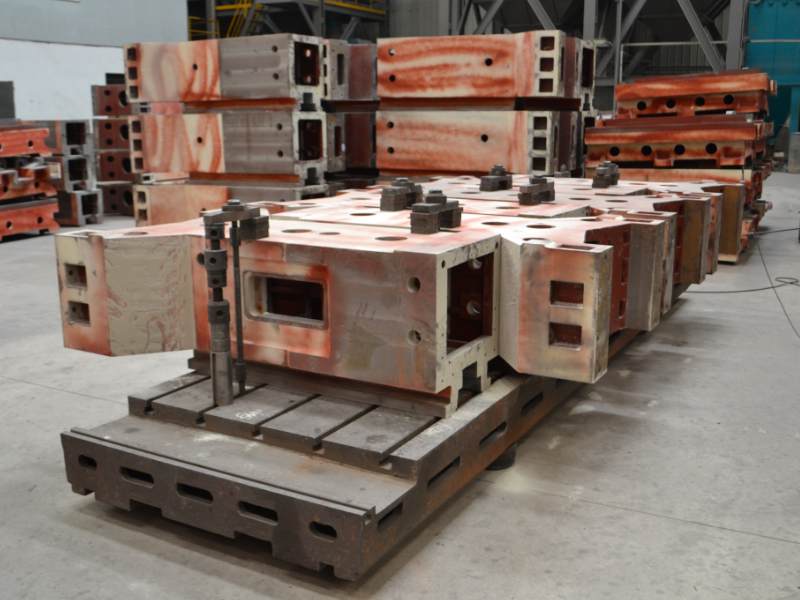
The base casting matters more than most buyers expect. Machines built on high-strength cast iron — often resin-sand castings — that have gone through aging treatment hold their geometry over years of heavy cutting, while a lighter or non-aged casting will drift out of tolerance as internal stresses release under load. On the drive side, ballscrews and linear guides sourced from established Taiwanese or German brands keep backlash and repeatability tight enough for mold-grade tolerances, provided the motor, screw, guide, and table are tuned to work as one system rather than assembled from mismatched parts. For the control side, look for servo feedforward control and quadrant-glitch compensation, since these directly address the overcut marks, quadrant lines, and chatter marks that appear on curved mold surfaces when the rotary axis reverses direction. A machine that finishes multi-face machining in one clamping, instead of requiring the operator to break and re-fixture between faces, is the actual feature buyers are paying for when they add a rotary table.
Where a Rotary Table VMC Pays Off in Production
Mold and die shops see the clearest return, because a single core or cavity block often needs machining on five or six faces to hold profile and parting-line tolerance — one-setup, multi-face capability removes the stack-up error that comes from re-fixturing between operations. Shops running multi-variety, small-batch work benefit for a different reason: instead of building a dedicated fixture for every face of every part number, a rotary table lets one fixture handle several faces, shortening changeover between job runs. Models such as the Vertical CNC Machining Center MV1380 are sized for exactly this kind of work, where table diameter and Z-clearance need to match mid-size mold components. This setup is less useful for high-volume single-face parts — a dedicated 3-axis VMC with a simple fixture usually runs faster and costs less per part when the geometry never requires a second face.
What Drives the Price of a Rotary Table VMC
Base machine price for a VMC without a rotary table sets the floor; adding the table itself is a separate line item that scales with diameter, payload rating, and whether it's a trunnion or platter design. Here is a rough breakdown of what moves the quote:
- Table type — a flat platter (4th axis) generally costs less than a tilting trunnion (5th axis), because the trunnion needs an additional tilt drive, bearing set, and control axis.
- Table diameter and payload rating — larger diameters and higher payload ratings need heavier castings and bigger drive motors, raising cost proportionally.
- Control interface integration — a factory-integrated rotary axis, pre-configured in the control's kinematics, costs more upfront than a bolt-on retrofit but avoids the programming and offset problems retrofits often carry.
- Spindle and drive-train components — machines using branded ballscrews, linear guides, and spindles sit at a higher price point than machines using generic components, but hold tolerance longer under repeat cutting cycles.
- Order volume and commercial terms — there is no fixed minimum order quantity, and single units can be purchased, but multi-unit orders can usually negotiate better pricing, lead time, or after-sales terms.
Lead time for a rotary-table VMC typically runs one to six months, depending on configuration and whether the unit is a stock sample or a custom build. Buyers on a tight schedule should ask upfront whether a sample or demo machine is available, since stock units can ship faster than a made-to-order configuration.
Commissioning Checklist Before First-Part Cutting
Before running production parts, work through a short commissioning sequence rather than trusting the factory acceptance test alone. First, verify level and anchor the machine per the foundation drawing — a rotary table amplifies any base-level error into rotational runout at the table face. Second, run a full 360-degree rotation with the heaviest fixture you plan to use, checking for interference at every 30-degree increment rather than just at 0 and 90 degrees. Third, confirm the work coordinate system holds position after a spindle orientation and a full table index, since offset drift here is the most common cause of face-to-face mismatch on early production runs. Fourth, cut a test part with features on at least three faces and measure face-to-face position, not just individual feature tolerance, because that comparison is what actually validates the rotary axis calibration.
Common mistakes at this stage include skipping the interference check at intermediate rotation angles, assuming the control software already knows the table's rotation center without running a calibration cycle, and under-sizing fixture clamping force based on static weight alone rather than the dynamic torque load generated during cutting. Each mistake is cheap to catch during commissioning and expensive to find after the machine is already scheduled for production.
Choosing a Rotary Table VMC Supplier
MAKCNC has built CNC lathes, machining centers, and rotary-table VMCs since 2016, operating multiple production lines with sample machines kept in stock for buyers who need faster delivery than a full custom build. Our facility works under an ISO 9001:2015 quality system, which governs process controls behind every machine that leaves the line, from casting aging schedules to final acceptance testing. Standard warranty coverage runs 12 months from acceptance, with paid lifetime service support after that; some tender projects request extended coverage such as a three-year free warranty, which we can accommodate on a project basis. Our service network targets an 8-hour response and 48-hour on-site arrival for after-sales issues, which matters most to buyers running the machine on a tight production schedule where downtime carries a direct cost. For buyers whose part geometry doesn't fit a standard table configuration, our customized CNC equipment option lets us match table diameter, payload, and trunnion or platter type to the actual part family rather than the closest catalog machine. Full specifications for individual models, including the MV1270 and MV970 series, are available on request, and background on the company is on our about page.
FAQ of Vertical Machining Center with Rotary Table
What's the difference between a 4th axis and a 5th axis rotary table?
A 4th axis platter indexes or rotates around one axis, usually vertical, adding rotation to a standard 3-axis VMC. A 5th axis trunnion adds a second rotation, tilting the table itself, which lets the spindle reach angled and undercut faces without breaking the setup. Choose a trunnion only if your parts actually need angled-face access; otherwise a platter costs less, is simpler to program, and is easier for operators to maintain over the life of the machine.
Can an existing 3-axis VMC be retrofitted with a rotary table?
Mechanically, yes, in many cases. The harder part is control integration — the CNC needs to recognize the added axis for tool offsets and coordinate transforms to work correctly. A retrofit that isn't properly integrated into the control's kinematics will still cut parts, but operators end up re-zeroing manually between faces, which erases most of the time savings a rotary table is supposed to deliver. It's worth asking a supplier to demonstrate the control integration on a similar retrofit before committing.
How long does delivery take for a rotary table VMC?
Lead time typically runs one to six months depending on configuration, options, and whether a comparable machine is already in stock as a sample unit. Buyers on a tight schedule should ask specifically about sample-line availability rather than assuming every configuration ships on the same timeline, since custom trunnion builds generally take longer than a standard platter configuration.
Is there a minimum order quantity?
No hard minimum applies — single units can be ordered without issue. Placing a multi-unit order can open room for better pricing, delivery scheduling, or after-sales terms, which is worth raising directly with the supplier if volume purchasing is part of your plan.
If you're specifying a Vertical Machining Center with Rotary Table for a multi-side part family, send us your part drawings and fixture details, and we'll help match table diameter, payload, and control configuration to your actual production needs.