Choosing Metal Working CNC Machine Tools Starts With Matching the Process to the Part
Metal Working CNC Machine Tools range from turning centers to laser cutters, and picking the wrong category costs more than a delayed shipment — it can mean scrapped tolerance-critical parts and a re-quote from scratch. A shop that actually needs a CNC Machining Center for multi-face milling gains almost nothing from a plasma table, and the reverse is just as wasteful. Before requesting a quote, buyers need a clear answer to one question: what geometry, tolerance, and volume does this part require? That answer, not the machine's brochure specs, should drive the shortlist.
What Metal Working CNC Machine Tools Actually Cover
The term describes computer-controlled equipment that removes, cuts, or forms metal according to programmed toolpaths. This includes CNC (Computer Numerical Control) lathes, machining centers, laser cutters, plasma cutters, and CNC routers. Each process uses a different mechanism — cutting tool, focused beam, or ionized gas — so each is suited to a different combination of material thickness, tolerance band, and part shape. Grouping them under one label is convenient for procurement conversations, but a buyer still has to separate turning jobs from sheet-cutting jobs before comparing suppliers.
Types of Metal Working CNC Machine Tools by Process
Five process families cover most metalworking shops:
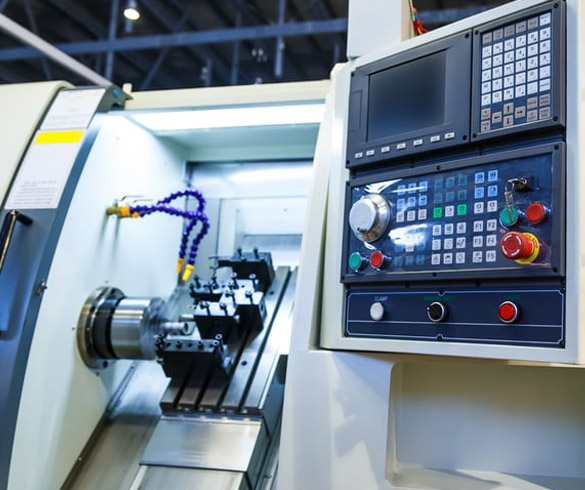
- CNC turning — rotates the workpiece against a fixed or moving tool, ideal for round, symmetrical parts like shafts and flanges.
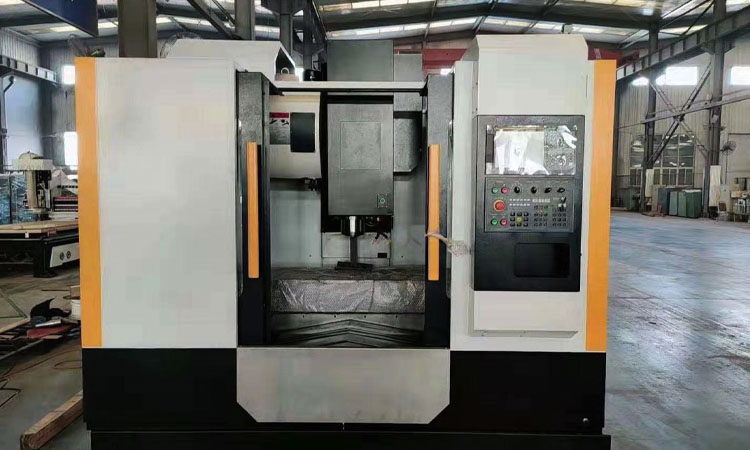
- CNC milling / machining centers — rotates the tool against a fixed or moving workpiece, suited to prismatic parts, pockets, holes, and multi-face features.
- Laser cutting — uses a focused beam to cut sheet and plate with a narrow kerf and minimal heat distortion on thin sections.
- Plasma cutting — uses ionized gas to cut thicker plate faster than laser, at the cost of edge finish and tolerance.
- CNC routing — originally for wood and composites, now used on soft metals and thin aluminum where cutting forces are low.
Comparison Table: Matching Process to Part Geometry, Tolerance, and Volume
This is the decision layer most buyers skip, and it's where wrong purchases happen. The table below is a starting filter — confirm final tolerance with your drawing before ordering.
| Process | Best Part Geometry | Typical Tolerance | Production Volume Fit |
|---|---|---|---|
| CNC Turning | Round, rotationally symmetric parts (shafts, bushings, flanges) | ±0.01–0.03 mm | Low to high volume, strong for repeat rotational parts |
| CNC Milling / Machining Center | Prismatic parts, pockets, multi-axis holes, mold cavities | ±0.01–0.02 mm | Prototype to mid-volume, excellent for multi-variety small-batch work |
| Laser Cutting | Flat sheet, thin-to-mid plate, intricate profiles | ±0.05–0.1 mm | High volume sheet parts, fast changeover |
| Plasma Cutting | Thick plate, structural blanks, non-precision profiles | ±0.5–1 mm | Medium to high volume, cost-driven cutting |
| CNC Router | Soft metal or thin aluminum sheet, low cutting force parts | ±0.1–0.2 mm | Low to medium volume, lighter-duty production |
The decision rule is simple: geometry decides the process family, tolerance decides whether cutting or machining is required, and volume decides whether you need a single-purpose machine or a flexible one. A mold insert with 3D contours and ±0.01 mm tolerance never belongs on a plasma table, no matter how fast that table is. A structural bracket cut from 20 mm plate rarely justifies laser cutting economics.
Common Mistakes When Selecting a Metalworking Process
- Choosing a machine based on spindle speed alone, ignoring workholding and multi-face access needs.
- Assuming laser and plasma are interchangeable — plate thickness above roughly 20 mm usually favors plasma on cost, not laser.
- Ordering a general-purpose milling machine for high-volume rotational parts, where a lathe is faster and cheaper per piece.
- Underestimating quadrant-transition marks and chatter on mold-grade surfaces, a problem that untuned control systems struggle to correct.
- Skipping a review of after-sales response time until a spindle failure stops the line.
Machine Construction Details That Affect Real-World Precision
Two machines with identical spec sheets can perform very differently on the shop floor. Frame material matters: machine bodies built from high-strength cast iron, such as resin sand castings, and aged through stress-relief treatment hold geometric accuracy longer under continuous cutting loads. Core transmission components — ballscrews and linear guides — sourced from established Taiwanese or German brands reduce backlash and improve repeatability, but only when the control system is tuned to work with them as a unit.
For mold and die work specifically, look for control systems with intelligent feed-forward compensation and quadrant-transition correction. These features directly reduce overcut marks, quadrant witness lines, and chatter marks on curved surfaces — the three defects that most often fail mold inspection. Machines built for multi-variety, small-batch production should also support one-clamping, multi-face machining, cutting cycle time and fixture error on parts that need several sides finished.
Applications Across Industries
Turning centers dominate automotive shafts, hydraulic fittings, and fastener production. Machining centers, including both vertical and horizontal CNC machining center configurations, handle mold bases, aerospace brackets, and multi-face housings. Laser and plasma systems serve sheet metal fabrication, structural steel, and enclosure manufacturing. Routers cover signage, thin aluminum panels, and lighter fabrication work. A single mold shop often runs turning, milling, and grinding in sequence — which is why process compatibility across the shop matters as much as any single machine's spec sheet.
Price Factors for Metal Working CNC Machine Tools
Quoted prices swing widely based on a handful of factors buyers should ask about directly:
- Axis configuration — a 3-axis machining center costs less than a 5-axis unit with simultaneous multi-face capability.
- Control system and components — Taiwan or German-brand ballscrews and guides add cost but reduce long-term rework.
- Order volume — there is no hard minimum order quantity; a single unit can be purchased, but multi-unit orders typically unlock better pricing, lead time, or after-sales terms.
- Customization — modified travel, custom fixtures, or specialized tooling add engineering time to the quote.
- Lead time pressure — standard production runs 1 to 6 months depending on configuration; expedited builds from sample stock can be faster.
Installation, Commissioning, and Warranty Checklist
Before signing off on delivery, confirm the following with your supplier:
- Foundation and leveling requirements — cast iron beds need a stable floor to hold long-term accuracy.
- Power and air supply specifications matched to spindle and hydraulic clamping systems.
- Operator training scope and duration included in the commissioning package.
- Warranty terms — standard coverage is 12 months after acceptance, with paid lifetime service afterward; some tender projects negotiate extended 3-year free warranty terms.
- Service response commitment — a mature after-sales network should confirm 8-hour response and 48-hour on-site arrival for breakdowns.
Buyers evaluating CNC Lathing Machine options for rotational parts, or a vertical CNC machining center MV1380 for larger prismatic work, should request this checklist in writing as part of the quote package, not as a verbal assurance.
Choosing a Metal Working CNC Machine Tools Supplier
MAKCNC has manufactured CNC lathes and machining centers since 2016, operating multiple production lines and keeping sample machines in stock for faster evaluation. The facility works under ISO 9001:2015 quality management, and machine frames go through stress-relief aging to hold accuracy over years of use, not just at first inspection. For shops needing something outside standard catalog configurations, MAKCNC also builds customized CNC machines for specific fixture, travel, or tooling requirements, including inclined-bed turning options such as the CNC inclined bed lathe. Project references and installed applications are documented on the global CNC machinery cases page, and background on the manufacturing facility is available on the about MAKCNC page.
FAQ on Metal Working CNC Machine Tools
What tolerance can a standard CNC machining center hold?
Most vertical and horizontal machining centers hold ±0.01 to ±0.02 mm on properly fixtured parts, though this depends on tool condition, part rigidity, and thermal stability of the shop floor.
Is plasma cutting ever more accurate than laser?
No. Plasma is chosen for speed on thick plate, not precision. Laser cutting holds tighter tolerance and a cleaner edge on thinner material.
Do I need a minimum order quantity to buy from MAKCNC?
No hard minimum applies — a single machine can be purchased. Multi-unit orders typically receive improved pricing, lead time, or service terms.
How long is the standard warranty?
Standard coverage runs 12 months after acceptance, with paid lifetime service available afterward. Some tender-based projects negotiate a 3-year free warranty.
What is a typical production lead time?
Lead times generally run 1 to 6 months depending on configuration and customization scope; sample stock machines can reduce this window.
If you are comparing turning, milling, laser, plasma, or router options for a specific part drawing, send your specifications to MAKCNC for a tailored recommendation and quote.