
Choosing a CNC Turning Machine for Automotive Parts
What Is a CNC Turning Machine for Automotive Parts?
CNC Turning Machine for Automotive Parts refers to a numerically controlled lathe configured to machine rotational automotive components such as shafts, sleeves, rings, hubs, threaded fittings, and other parts that require turned diameters, bores, faces, grooves, or threads. The workpiece rotates while cutting tools remove material according to a programmed path. For engineers preparing an equipment shortlist, the machine should not be selected from the maximum workpiece diameter alone. The drawing, annual volume, incoming stock form, machining sequence, quality-control method, and loading method all affect the required configuration. A CNC Turning Machine for Automotive Parts is therefore a production system decision, not simply a lathe purchase. Start by separating features that are mandatory for the current part drawing from options that may only be needed for future programs. This prevents an underspecified machine from creating secondary operations, while also avoiding payment for functions that will remain unused.
The first specification should define the part family and its process route. Identify every turned feature, the raw material condition, the datum structure, the tolerance callouts, and whether milling, drilling, or tapping must be completed in the same clamping. Where the drawing uses geometric dimensioning and tolerancing, the machine review should include how those requirements will be inspected after machining. A CNC Turning Machine for Automotive Parts fits best when the primary geometry is rotational and the process can be organized around stable chucking, collet holding, or bar feeding. It does not replace a machining center when the part has extensive prismatic faces, large off-center features, or multi-directional machining requirements that cannot be reached efficiently from the turning spindle.
Types of Machines to Match the Process Route
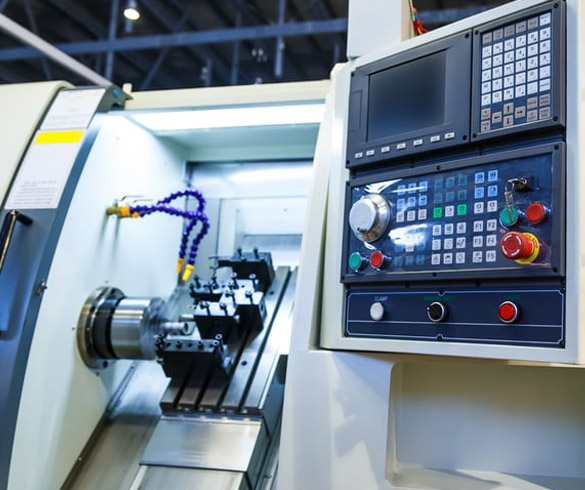
The main types include chucking lathes for blanks or forgings, bar-fed turning machines for long production runs from bar stock, inclined-bed lathes for production-oriented turning layouts, and turning solutions combined with driven tooling or secondary machining capability. A CNC Turning Machine for Automotive Parts intended for wheel-side blanks, flanges, or short forgings usually needs a stable chucking arrangement and a clear loading plan. A machine intended for pins, bushings, fittings, or long shaft-like parts may instead benefit from bar processing when the stock form and part length support it. The right type depends on the raw material and completed-part geometry, not on the part name used in a purchasing document.
Choose a standard machine when the drawing and workholding are repeatable, the required operations are known, and the part can be finished in a conventional turning sequence. Choose customized CNC machines and machining centers when the operation requires a special loading method, dedicated clamping logic, linked stations, or a process arrangement that a standard platform cannot support. A CNC Turning Machine for Automotive Parts should not be forced into a bar-fed concept if material is supplied as forgings, cast blanks, or cut billets. Likewise, a large chucking machine is not automatically the better answer for small turned fittings where bar stock and automatic feed can reduce manual handling. Confirm the incoming blank format before asking suppliers to quote machine options.
- Chucking configuration: Best for forgings, cast blanks, discs, hubs, and irregular blanks; less suitable when frequent manual loading restricts output.
- Bar-fed configuration: Best for parts that can be made from qualified bar stock; not suitable when the part begins as a forging or when bar remnants create unacceptable material loss.
- Driven-tool configuration: Best when cross holes, flats, drilling, or tapping can be completed in one clamping; not necessary for parts requiring turning only.
- Turning plus machining center route: Best when the part has both rotational and prismatic features; it may add handling if the second process is not genuinely required.
Features That Should Appear in the Equipment Requirement
A useful requirement sheet for a CNC Turning Machine for Automotive Parts names the features that protect part quality and reduce handling. Specify the desired spindle workholding method, bar or blank dimensions from the drawing, turret station needs, tool type, coolant and chip-management needs, gauging method, and loading concept. Do not write only “high precision” or “automatic machine.” Those phrases cannot be quoted consistently or verified during acceptance. Instead, state which drawing features must be completed in one clamping, which features require live tooling, and which checks must be performed before the part leaves the machine.
For automotive mold-related and precision machining needs, advanced control-system integration can include intelligent feedforward and quadrant-jump compensation to address common issues such as overcut marks, quadrant marks, and chatter patterns. The applicability must be reviewed against the actual part, tooling, material, and cutting process; these functions are not a substitute for poor clamping or worn tools. MAKCNC machine bodies commonly use high-strength cast iron, including resin-sand castings, with aging treatment intended to support long-term rigidity and accuracy. Many core transmission components, such as ball screws and guideways, use high-precision components from Taiwan or Germany. For related prismatic operations, a professional CNC machining center solution may be a better fit than adding unnecessary turning-machine complexity.
Comparison of Spindle, Bar Capacity, Turret Tooling, and Automation Requirements by Automotive Part Family
Use the part family as the first filter for a CNC Turning Machine for Automotive Parts. This comparison gives a practical starting point for the specification meeting. The “requirement” column is not a universal machine specification. It identifies what the buyer must define from the drawing and production plan before requesting quotations. The common failure column matters because many unsuitable machines appear acceptable until tooling, loading, or inspection is discussed. Confirm all final spindle, bar, turret, and automation details with the supplier against the approved part drawing and raw-stock condition.
| Automotive part family | Spindle requirement to define | Bar capacity requirement to define | Turret tooling requirement | Automation requirement | Common selection failure |
|---|---|---|---|---|---|
| Shafts, pins, and small fittings | Confirm clamping method, part length support, and the needed turning sequence. | Match the qualified stock diameter and material form to the planned bar feed. | Include turning, grooving, threading, drilling, and any required finishing tools. | Assess bar feeder compatibility and safe part collection. | Choosing bar feed without checking stock straightness, remnant handling, or finished-part length. |
| Bushings, sleeves, and rings | Define bore holding, face access, and concentricity control from the drawing datum. | Use bar capacity only when the part can be made economically from bar stock. | Plan boring, internal grooving, chamfering, and cut-off tools. | Consider automatic loading only after confirming blank consistency. | Ignoring internal-tool clearance or failing to plan inspection of the bore and face relationship. |
| Flanges, hubs, and forged blanks | Define chucking force, workholding envelope, and access to both faces. | Usually not the main decision factor when blanks are forged or pre-cut. | Allow for facing, OD turning, boring, drilling, and possible driven-tool operations. | Review robot or gantry loading only if blank orientation is repeatable. | Specifying a bar-fed machine for a forged blank process or overlooking fixture change time. |
| Parts with holes, flats, or tapped features | Confirm spindle indexing and access for secondary features. | Set from the stock form, not from the finished outside diameter alone. | Specify driven tools, drilling tools, tapping tools, and required tool stations. | Automate only after proving the one-clamping sequence and chip evacuation. | Assuming a turning-only turret can finish off-axis features without an added process. |
The executable approach is simple. First, group drawings by stock form and primary geometry. Second, list every operation in machining order. Third, mark which operations must remain in one clamping to protect the datum relationship. Fourth, identify the tools that must be present at the same time. Fifth, determine whether manual loading, a bar feeder, a robot, or a gantry is justified by the approved production plan. A CNC Turning Machine for Automotive Parts should be shortlisted only after these five checks are documented. This process is especially useful for mixed-model automotive programs, where one machine may need to change among several related components without compromising setup discipline.
Applications and Process Boundaries for Automotive Turning
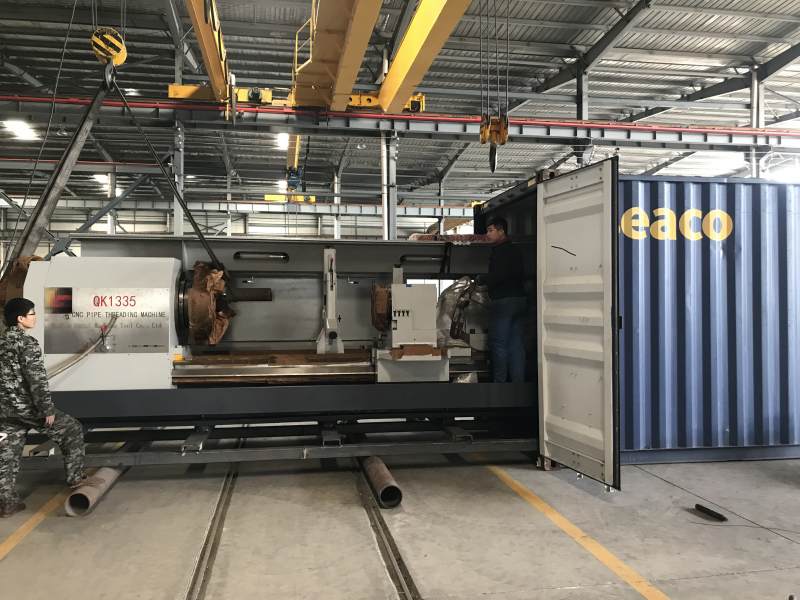
Typical applications for a CNC Turning Machine for Automotive Parts include turning of bearing seats, axle-related shafts, transmission sleeves, threaded connectors, bushings, collars, brake-related cylindrical components, and rotational housing features. The machine can also support multi-variety, small-batch work where several faces or features can be processed in one clamping, provided the chosen configuration gives access to those features. This is valuable when the production team needs to reduce repeated positioning errors between operations. However, the machine is not the preferred first choice for parts dominated by large milled surfaces, complex cavities, or features that require access from several directions. In those cases, turning may prepare the part, while a vertical or horizontal machining center completes the remaining work.
For each application, write a routing decision before placing the machine on the approved-equipment list. Use turning as the primary process when the part’s functional datums are concentric diameters, bores, faces, and threads. Use a second operation when a feature cannot be safely or economically reached from the turning setup. A CNC Turning Machine for Automotive Parts should also be reviewed alongside inspection capacity. If the drawing requires measurement of a relationship created in one clamping, the inspection plan must verify that relationship rather than only checking individual diameters. This prevents a machine decision from being separated from the actual quality-control method.
Price Factors That Change the Equipment Budget
The price of a CNC Turning Machine for Automotive Parts changes with configuration rather than with machine category alone. Buyers should request a line-by-line quotation that separates the base machine, spindle and workholding arrangement, turret and driven-tool options, bar-feeding or blank-loading equipment, chip and coolant equipment, automation interface, commissioning scope, packing, and export logistics. This is the best way to compare quotations fairly. A lower base-machine figure may exclude tooling, automation preparation, or workholding that another quotation includes. Conversely, an option-heavy quote may not be justified if the current drawing needs only straightforward chucking and turning.
| Cost area | What to compare | When it adds value | When to question it |
|---|---|---|---|
| Workholding | Chuck, collet, jaws, fixture concept, and changeover needs | When the blank shape or datum requires controlled clamping | When a standard solution is quoted without reference to the part drawing |
| Turret and tooling | Tool station count, driven-tool needs, and tool package scope | When several operations must remain in one clamping | When stations are added with no planned operation |
| Automation | Bar feeder, robot, gantry, tray, collection, and safety interface | When stock and part orientation are stable and production volume supports it | When frequent part changes make manual loading more practical |
| Service scope | Installation, acceptance, training, warranty, and future paid support | When export commissioning responsibility must be clear | When service terms are described only in general language |
A CNC Turning Machine for Automotive Parts should be evaluated on total process cost, including secondary operations and operator handling, rather than the equipment invoice alone. Ask suppliers to identify what is included and excluded in writing. This applies particularly to special fixtures and automation, which depend on confirmed blanks and production conditions. MAKCNC states that single-machine purchasing is available without a hard minimum order quantity, while multi-machine purchases may receive improved commercial terms for price, delivery, or after-sales service. That point is relevant for buyers comparing a pilot purchase with a larger production-cell plan.
User Guide for Building a Shortlist and Avoiding Common Errors
Prepare the request for quotation in a controlled sequence. First, provide the latest approved drawing and identify all special characteristics. Second, state the incoming material, blank shape, and stock condition. Third, provide the intended process route, including operations that must be completed in one clamping. Fourth, identify the expected loading method and whether the machine will run related part numbers. Fifth, define the acceptance method, including the measurements used to verify the finished part. A CNC Turning Machine for Automotive Parts cannot be assessed properly from a part photo or finished dimensions alone. Suppliers need the process information to recommend suitable workholding, tooling, and automation.
- Classify the part: Decide whether it is primarily a shaft, sleeve, ring, hub, flange, or mixed-feature component. Failure reason: selecting by industry name rather than actual geometry.
- Map the operations: List facing, OD turning, boring, grooving, threading, drilling, tapping, and any milling in sequence. Failure reason: missing a required tool or a secondary process.
- Set workholding requirements: Define the locating datum, clamping area, and orientation. Failure reason: assuming a general chuck will protect every functional datum.
- Check the loading method: Match bar feeder, manual loading, robot, or gantry loading to the supplied blank. Failure reason: specifying automation before confirming blank repeatability.
- Review acceptance support: Require the quoted scope, documentation, commissioning responsibilities, and service terms. Failure reason: comparing machine prices without comparing delivery and support scope.
Do not treat automation as an automatic requirement. It fits when the stock form is consistent, safety conditions are defined, chip control is planned, and the production plan supports the added system. It may not fit a low-volume development program with frequent blank changes and shifting setups. Similarly, a CNC Turning Machine for Automotive Parts with advanced control features still requires suitable cutting tools, stable fixtures, correct programming, and planned inspection. The machine, tooling, material, and process must work as one system.
MAKCNC as a CNC Turning Machine Supplier
When selecting a CNC Turning Machine for Automotive Parts supplier, assess manufacturing capability, configuration support, delivery communication, and after-sales terms alongside the quotation. MAKCNC was established in 2016 and operates multiple production lines with sample-machine inventory. Its product range includes CNC lathing machines, CNC machining centers, and CNC machines for different process requirements. Machine bodies commonly use high-strength cast iron and aging treatment, while core transmission components may use high-precision Taiwan or German components. These construction details should be reviewed against the specific model and proposal rather than assumed across every configuration.
MAKCNC’s stated production lead time is generally 1 to 6 months, subject to the selected machine and order scope. The usual warranty is 12 months after complete machine acceptance, with lifetime paid service available. Some tender projects may require a higher warranty level, such as three years of free warranty. Mature after-sales networks commonly state an 8-hour response and on-site fault handling within 48 hours, but buyers should confirm the applicable service arrangement for their location and contract. Learn more about MAKCNC as a professional CNC lathing machine manufacturer when preparing a supplier comparison.
FAQ of CNC Turning Machines for Automotive Parts
Should a CNC Turning Machine for Automotive Parts use a bar feeder?
Use a bar feeder when the component can be produced from qualified bar stock and the finished-part length, stock diameter, remnant plan, and production volume support bar processing. It is often suitable for pins, sleeves, fittings, and similar shaft-like components. It does not apply automatically to forged hubs, cast blanks, or parts requiring a blank shape that cannot be made from bar stock. Confirm the material supply condition first.
When are driven tools necessary?
Driven tools should be specified when cross drilling, tapping, flats, or other non-turning operations need to be completed in the same clamping. They can reduce handling and protect relationships between turned and secondary features. They do not add value for a part requiring only facing, turning, boring, grooving, and threading. The decision should come from the operation list, not from a general preference for more machine options.
What should be sent with an RFQ?
Send the approved drawing, material and blank details, process sequence, required production plan, loading preference, inspection method, and any required commercial or service terms. This allows the supplier to evaluate whether a CNC Turning Machine for Automotive Parts should use chucking, bar feeding, driven tools, or a linked machining-center process. If you are looking for an automotive turning-machine supplier, contact MAKCNC for the latest quotation and selection advice based on your drawings.