
CNC Turning Machine for Hardware Processing Helps Match Capacity to Part Needs
What Is a CNC Turning Machine for Hardware Processing
CNC Turning Machine for Hardware Processing is a computer-controlled machine used to remove material from a rotating workpiece and form hardware parts such as screws, threaded fittings, pins, bushings, shafts, and small connectors. The basic operating principle comes from the lathe, where the workpiece rotates while a cutting tool moves along programmed paths. For buyers, the key question is not simply whether a machine can turn metal. It is whether the machine’s chuck, collet, spindle, feeding method, tooling layout, and control functions suit the actual part family.
A CNC Turning Machine for Hardware Processing should be selected from the part drawing outward. Start with raw-material form, maximum and minimum diameters, finished length, tolerance requirements, thread forms, cross holes, flats, grooves, and required secondary operations. A machine that is too small can limit production. A machine that is too large often raises purchase cost, tooling cost, floor-space demand, and changeover effort without improving the hardware part. This definition matters because hardware production commonly involves mixed batches, repeated part families, and short changeovers rather than one identical component forever.
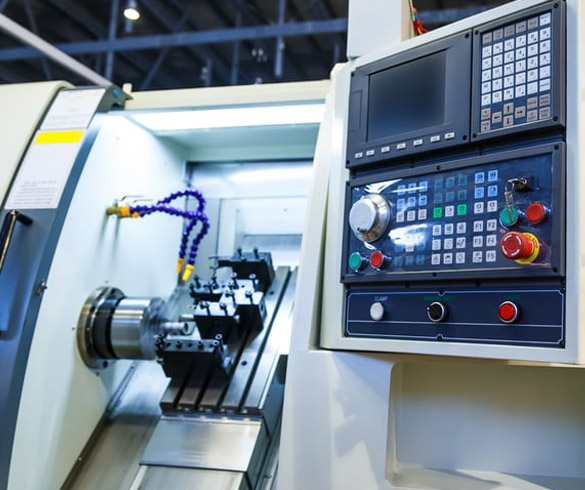
Types of CNC Turning Machines for Hardware Parts
A CNC Turning Machine for Hardware Processing can be grouped by bed layout, workholding method, bar-feeding arrangement, and whether it performs milling-related operations. The best type depends on what must leave the machine complete. For straightforward shafts, pins, spacers, and externally threaded components, a standard turning configuration may fit. For fittings that need cross-drilled holes, milled flats, slots, or wrench features, a configuration with live tooling may reduce separate handling. However, live tooling is not automatically the right choice when all secondary features can be made economically on existing equipment.
| Machine Type | Best-Fit Hardware Parts | Reason to Choose It | When It May Not Fit |
|---|---|---|---|
| Chuck-based CNC lathe | Short fittings, larger blanks, forged or cast blanks | Supports secure clamping for parts that are not supplied as bar stock | Less efficient for long runs of small bar-fed pins or screws |
| Collet-based turning setup | Small pins, screws, bushings, precision round parts | Can suit repeated bar stock work and frequent small-part production | Not suitable if the raw material exceeds the collet range |
| Bar-fed CNC lathe | Long-run screws, connectors, nipples, threaded fittings | Reduces manual loading when raw material is supplied in straight bar form | Not appropriate for irregular blanks or short castings |
| Turning machine with live tooling | Fittings with flats, cross holes, slots, or milled faces | Can combine turning and selected secondary operations in one clamping | Over-specified for purely turned cylindrical parts |
When reviewing a CNC lathe, ask the supplier to match the proposed configuration to the complete part drawing rather than only the maximum outside diameter. A pin may look simple, but a small cross hole or milled notch can change the preferred machine type. Conversely, a machine with extra driven tools and axes may add cost for a part that only needs facing, turning, grooving, threading, and cut-off.
Features That Affect Hardware Part Quality and Changeovers
A CNC Turning Machine for Hardware Processing should have a structure and transmission system suited to stable repeated work. MAKCNC machines commonly use high-strength cast iron, including resin-sand castings, with aging treatment intended to support long-term rigidity and accuracy retention. Core transmission items such as ball screws and guideways may use high-precision components from Taiwan or Germany. These details deserve review because small hardware parts can expose vibration, tool deflection, clamping inconsistency, and poor synchronization between machine systems.
For mold-industry machining requirements, advanced system integration can include intelligent feedforward and quadrant transition compensation. These functions are designed to address issues such as overcut marks, quadrant marks, and chatter patterns. For hardware buyers, the practical lesson is to specify the defect risks visible on the finished part. Do not request advanced control functions by name unless the part geometry, inspection results, and process need justify them. A CNC Turning Machine for Hardware Processing used for simple low-risk spacers may not need the same control package considered for demanding contour work.
- Choose rigid construction when the part has interrupted cuts, long unsupported lengths, or demanding surface requirements. It may not be the main selection factor for simple short parts with light cuts.
- Choose a suitable guideway and ball-screw arrangement when repeatability across repeated batches affects acceptance. Ask how the supplier matches the system to the proposed machine configuration.
- Choose intelligent control functions when trial cuts show contour marks, overcut issues, or chatter-related surface defects. Do not treat them as a substitute for correct tools, workholding, and process parameters.
- Choose one-clamping capability when a part needs several faces machined and repositioning creates alignment risk. It may add unnecessary complexity for a part requiring only axial turning operations.
CNC Turning Machine Applications for Screws Fittings and Pins
A CNC Turning Machine for Hardware Processing is commonly considered for parts that begin as round bar stock or rotational blanks. Typical examples include threaded screws, sleeves, stepped pins, pipe-related fittings, adapters, bushings, connector bodies, and small shafts. The part family determines the required workholding before the machine size is discussed. A production planner should first separate bar-fed parts from chuck-loaded blanks, then separate fully turned parts from those needing flats, holes, or slots.
For a screw produced from bar stock, the process may include facing, diameter turning, thread generation, groove cutting, chamfering, and cut-off. For a fitting, the sequence may additionally include internal boring, threading, cross-hole drilling, or external flats. This is where a CNC Turning Machine for Hardware Processing with live tooling can be considered. If the fitting only needs turning and threading, a live-tool arrangement may not provide enough value. If it needs multiple features around the outside diameter, completing more work in one clamping can reduce handling and alignment exposure.
CNC Turning Machine Price Factors for Early Stage Buyers
The price of a CNC Turning Machine for Hardware Processing changes with configuration rather than one single machine label. Buyers should avoid comparing quotations that use different workholding, feeding, tooling, control, and after-sales scopes. A lower initial quotation can omit items needed for the actual part process. A higher quotation can include functions that the drawing does not require. The useful comparison is total configuration fit, not only the machine base price.
| Price Driver | What the Buyer Should Define | Cost Risk If Not Defined |
|---|---|---|
| Workholding | Chuck or collet requirement, blank shape, and clamping length | A quoted machine may need different workholding after the order review |
| Material supply | Bar stock, cut blanks, forgings, or cast blanks | A bar feeder may be quoted when it cannot handle the supplied stock |
| Secondary features | Cross holes, flats, slots, and off-center work | Live tooling may be needed later, or may be purchased without use |
| Delivery scope | Tooling, inspection expectations, commissioning, and training requirements | Different quotation scopes cannot be compared fairly |
| Service terms | Warranty, response expectations, and site support needs | Support requirements may remain unclear until a machine issue occurs |
MAKCNC can support single-machine purchasing without a hard minimum order quantity. Multi-machine purchasing may allow better commercial terms in price, delivery, or after-sales service. Lead time is normally stated within 1 to 6 months depending on the order situation and configuration. The normal warranty is 12 months after whole-machine acceptance, followed by lifetime paid service. Ask for the exact commercial scope in writing because special tender projects may require different warranty terms.
How Matching Chuck or Collet Capacity Bar Feed Diameter and Live Tool Needs to Screws Fittings and Pins Prevents Over Specification
The most effective way to avoid over-specification is to create a part-routing sheet before requesting a CNC Turning Machine for Hardware Processing quotation. List every part family, raw material shape, finished diameter range, length, clamping area, thread type, hole direction, flat or slot requirement, and planned batch pattern. Then compare that sheet against the proposed chuck or collet capacity, bar-feed diameter, and live-tool layout. This approach fits buyers selecting equipment for a defined product mix. It does not replace a technical review when drawings contain unusual materials, difficult geometry, or special inspection requirements.
- Classify the raw material. Mark each item as straight bar, cut bar, forging, casting, or another blank type. A bar feeder fits straight material that can be fed through the machine; it does not solve loading for irregular blanks.
- Match holding method to the clamping zone. Select collet workholding for repeated small round bar work when the diameter is within the selected range. Select a chuck arrangement when a part needs broader clamping flexibility or arrives as a short blank.
- Check the bar-feed diameter against the actual stock diameter. Use the purchased raw-material diameter, not only the finished part diameter. Stock allowance, coating, and supplier tolerances must be included in the review.
- Map every non-turning feature. Cross holes, radial holes, flats, slots, and polygon-like features may justify live tooling. If the drawing has none, do not add driven-tool capability simply because it appears more advanced.
- Test the process sequence. Confirm whether the part can be completed in one clamping or whether a second operation is acceptable. One-clamping work can help where repositioning affects feature alignment, but it may not be necessary for simple pins.
Common Failure Reasons During Machine Selection
- Using finished diameter instead of stock diameter: this can result in a bar feeder or collet range that does not suit purchased material.
- Choosing a chuck only because it is familiar: repeated small bar work may need a collet and bar-feed review for better process fit.
- Buying live tooling for a fully turned part: the machine cost and setup burden increase without removing a real operation.
- Ignoring clamping length: a part can fit by diameter but still lack a stable clamping condition during machining.
- Combining unrelated parts in one requirement list: an oversized machine may be selected to cover a rare outlier part. Consider whether that outlier should remain on another process route.
CNC Turning Machine User Guide for Process Planning
Before operating a CNC Turning Machine for Hardware Processing, production teams should confirm the approved program, material identity, tool offsets, workholding setup, coolant condition, safety guarding, and first-part inspection method. The first part should be checked against the drawing before extended production begins. This is especially relevant for threaded hardware, mating fittings, and pins with diameter changes because small setup errors can affect assembly. The same checklist supports repeat orders, although a stable previous program still requires verification after a tooling or material change.
- Confirm that the chuck jaws or collet match the approved material diameter and clamping condition.
- Load the correct turning, grooving, threading, drilling, and cut-off tools for the documented process.
- Verify tool offsets and program revision before making the first part.
- Inspect the first component at the features that affect mating, such as thread, diameter, bore, groove, or cross-hole position.
- Record the approved setup details so the next batch does not depend only on operator memory.
For part families requiring prismatic faces or multiple side features, compare turning capacity with a professional CNC machining center solution. A turning machine is appropriate when the part is mainly rotational. A machining center may be the better process choice when milling operations dominate. Some production plans require both machines, each handling the operation it suits best.
CNC Turning Machine Supplier Considerations for Hardware Manufacturers
A CNC Turning Machine for Hardware Processing supplier should be evaluated on more than the brochure configuration. Send drawings, material form, batch expectations, operation sequence, inspection points, plant power information, and required service scope. Ask whether the proposed machine is based on a standard configuration or whether it needs adaptation. MAKCNC was established in 2016, operates multiple production lines, and maintains sample-machine inventory. For requirements beyond standard machine selection, buyers can discuss customized CNC machines and machining centers with the technical team.
MAKCNC provides CNC lathing machines, CNC machining centers, and CNC machine solutions for export buyers. The normal service commitment includes response within 8 hours and on-site fault handling within 48 hours through the established after-sales network, subject to service arrangements and project conditions. This should not be treated as a blanket guarantee for every location or contract. Review the agreed service scope before purchase. A CNC Turning Machine for Hardware Processing should be supplied with a clear acceptance basis, installation plan, warranty statement, and documented configuration list.
FAQ of CNC Turning Machine for Hardware Processing
Should screws always use a bar feeder?
No. A CNC Turning Machine for Hardware Processing with a bar feeder fits screws made from compatible straight bar stock and produced in repeat quantities. It may not fit screws supplied as pre-cut blanks, forged heads, or irregular material. Confirm the purchased stock diameter and straightness requirements before specifying the feeder.
When is live tooling worth adding?
Live tooling is worth reviewing when a fitting or connector needs cross holes, flats, slots, or other features beyond normal turning. It may not be justified for pins, sleeves, or threaded parts with only rotational features. List every non-turning feature on the drawing before deciding.
Can one machine be purchased for an initial project?
Yes. MAKCNC has no hard minimum order quantity, so a single machine can be purchased. Buyers with multi-machine requirements may discuss commercial terms for price, delivery, and after-sales support. If you are looking for a CNC Turning Machine for Hardware Processing supplier, contact MAKCNC with your drawings to request the latest quotation and machine-selection advice.