
How to Choose a Hydraulic Chuck CNC Slant Bed Lathe for Shaft and Disc Parts
A Hydraulic Chuck CNC Slant Bed Lathe looks straightforward on a spec sheet, but the real sourcing risk shows up after the machine lands on the shop floor — when a hydraulic chuck rated for one clamping force gets bolted to a cylinder and drawtube built for another. That mismatch doesn't show up in a quote comparison. It shows up as chatter marks, part slippage, or a machine that simply can't hold the tonnage your process needs. This guide walks through what the machine is, what varies between models, and the exact compatibility checks buyers skip before placing an RFQ.
What is a Hydraulic Chuck CNC Slant Bed Lathe?
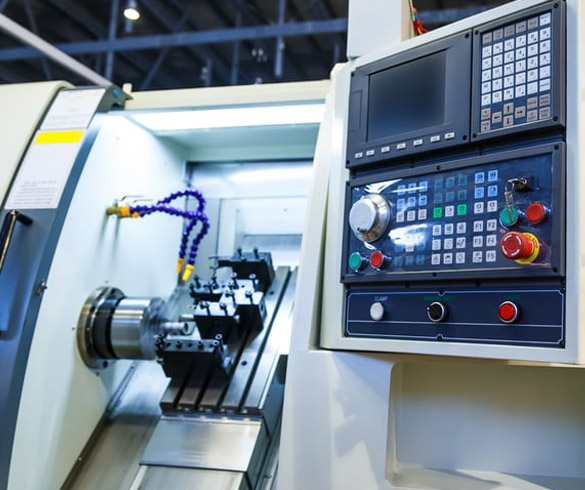
A hydraulic chuck CNC slant bed lathe is a CNC-controlled turning machine built on an inclined bed structure, using a hydraulic power chuck instead of a manual scroll chuck for workholding. The slant bed design routes chips downward by gravity, keeps the machine compact, and improves rigidity for heavier cuts compared to flat bed layouts. The hydraulic chuck connects to a rotary cylinder through a drawtube running the length of the spindle, so clamping and unclamping happen automatically through hydraulic pressure rather than a wrench. This combination is standard for shops running shaft, flange, and disc parts in production volumes where manual chucking would slow down cycle time.
Types of Hydraulic Chuck CNC Slant Bed Lathes
Not every slant bed lathe on the market serves the same job. Broadly, buyers see three configurations:
- Standard turning lathes — two-axis machines for shaft and disc turning, facing, and threading, typically fitted with a 3-jaw hydraulic chuck.
- Live-tooling / sub-spindle lathes — add milling, drilling, or a second spindle for one-setup completion of complex parts, reducing handling errors on multi-feature components.
- Heavy-duty large-bore lathes — built with wider spindle bores and higher tonnage chucks for bar stock or thick-wall tube work.
Choosing between these depends on part geometry, not just diameter. A flange with back-face features usually needs live tooling; a simple shaft rarely does.
Features of Hydraulic Chuck CNC Slant Bed Lathes
The base structure is usually high-strength cast iron, often resin sand casting, with aging treatment applied before final machining. This aging step matters because it relieves internal stress in the casting — skip it, and the bed can shift dimensionally months after installation, which shows up as gradual accuracy drift, not a sudden failure. Core transmission components — ball screws and linear guides — are commonly sourced from Taiwan or German precision brands, and the system is tuned so these parts work together rather than being specified independently. For mold-industry work specifically, some control systems integrate intelligent feed-forward and quadrant-protrusion compensation, which directly targets overcut marks, quadrant marks, and chatter lines on contoured surfaces. For multi-variety, small-batch production, the ability to complete multiple faces in one clamping setup reduces repositioning error, an advantage that matters more as part complexity goes up.
A Compatibility-Based Sourcing Method Buyers Should Use Before RFQ
Most RFQ mismatches trace back to five values that buyers assume are "standard" but aren't. Check each one against your actual part before quoting, not after delivery.
| Check Item | Why It Matters | Risk If Ignored |
|---|---|---|
| Chuck diameter | Determines max workpiece swing and jaw stroke range for your part family | Undersized chuck can't grip larger blanks; oversized chuck wastes spindle speed headroom |
| Rotary cylinder rating | Sets the hydraulic pressure delivered to the chuck at running spindle speed | Under-rated cylinder loses clamping force as RPM increases, risking part slip mid-cut |
| Drawtube length and thread | Physically connects cylinder to chuck through the spindle bore; must match both ends | Wrong thread or length means the chuck simply cannot be installed or actuates incorrectly |
| Spindle bore diameter | Limits the maximum bar stock diameter that can feed through for bar work | Bar stock jobs get blocked entirely if bore is smaller than required stock size |
| Required clamping force | Calculated from cutting force, part weight, and jaw friction coefficient for your operation | Insufficient force causes chatter, poor surface finish, or part ejection during heavy cuts |
Ask your supplier to confirm all five together, not one at a time — a chuck diameter change almost always shifts the required clamping force and cylinder rating too.
Hydraulic Chuck CNC Slant Bed Lathe Applications
These machines fit shaft and disc turning across automotive components, flanges, pump housings, valve bodies, and hydraulic fittings. Shops running mixed small-batch orders benefit most from live-tooling configurations, since one setup can finish a part that would otherwise need a second operation on a CNC machining center. High-mix mold and die shops, where overcut marks and quadrant lines are a recurring quality complaint, are a common fit for models with feed-forward compensation built into the control system. Heavy-duty large-bore variants suit tube and bar processors needing continuous stock feed rather than single-blank loading.
Hydraulic Chuck CNC Slant Bed Lathe Price Factors
Price spread on these machines is wide, and most of the variation traces back to a short list of specification decisions, not brand markup alone:
- Chuck diameter and rated clamping force — larger chucks and higher-tonnage cylinders cost more per unit
- Spindle bore size — wider bore machines require larger castings and bearings
- Ball screw and linear guide brand — Taiwan-sourced components typically price below German equivalents
- Control system and compensation software — feed-forward and quadrant compensation add to base price
- Live tooling or sub-spindle options — adds axes, tooling stations, and control complexity
- Order quantity — single-unit purchase is accepted with no minimum order requirement, but multi-unit orders typically unlock better pricing, lead time, or after-sales terms
Get quotes against a fixed spec sheet, not a general "slant bed lathe" description — two quotes for the "same" machine can differ by 20% or more once bore size and chuck tonnage are actually matched.
Hydraulic Chuck CNC Slant Bed Lathe User Guide
Commissioning a new machine correctly reduces the chance of early failures. A practical sequence:
- Confirm hydraulic pressure calibration against the chuck manufacturer's rated pressure before first clamp cycle.
- Run a clamping force test on a scrap blank matching your heaviest part before production begins.
- Check drawtube alignment and torque per the supplier's installation manual — misalignment here causes premature seal wear.
- Verify spindle bore clearance against your largest bar stock diameter, not just your typical job.
- Log baseline vibration and surface finish on a test cut, so future drift is measurable against a known starting point.
- Schedule preventive maintenance on the hydraulic cylinder seals at intervals recommended in the machine manual, since seal failure is the most common cause of clamping force loss over time.
Hydraulic Chuck CNC Slant Bed Lathe Supplier
MAKCNC has manufactured CNC lathes and machining centers since 2016, operating multiple production lines with sample machines kept in stock for faster evaluation. Our facility is ISO 9001:2015 certified, and lead times typically run 1 to 6 months depending on configuration and options selected. There is no hard minimum order quantity — a single unit can be purchased — though multi-unit orders generally receive better commercial terms on price, lead time, or after-sales service. Standard warranty runs 12 months after acceptance, with lifetime paid service available afterward; some tender projects can be arranged with extended terms such as a 3-year free warranty. Our after-sales network commits to an 8-hour response and 48-hour on-site arrival for service issues. Buyers with non-standard requirements can review our customized equipment options, and past project references are documented in our global cases archive. More on our background is available on the about MAKCNC page. If you are looking for a Hydraulic Chuck CNC Slant Bed Lathe supplier, feel free to contact us for the latest product quote.
FAQ of Hydraulic Chuck CNC Slant Bed Lathe
Is there a minimum order quantity?
No. A single machine can be ordered. Multi-unit orders typically qualify for better pricing or service terms.
How long is the standard lead time?
Lead time typically runs 1 to 6 months, depending on chuck size, bore diameter, and control system options selected.
Can the chuck, cylinder, and drawtube be matched to my existing tooling?
Yes, provided chuck diameter, rotary cylinder rating, drawtube dimensions, spindle bore, and required clamping force are confirmed together before order, as outlined in the compatibility section above.
What warranty applies after acceptance?
Standard warranty is 12 months post-acceptance with lifetime paid service afterward; extended terms such as a 3-year free warranty can apply to specific tender projects.
Does MAKCNC offer machining centers alongside slant bed lathes?
Yes, including vertical CNC machining centers and horizontal configurations, for shops needing milling capability alongside turning.
If you are preparing an RFQ and want help matching chuck diameter, drawtube, and clamping force to your part drawings, submit your specifications and our team will confirm compatibility before quoting.