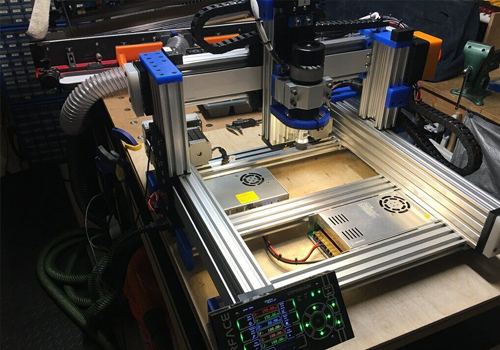
How an Automatic CNC Turning Lathe Prevents Costly Idle Time
An automatic CNC turning lathe is a machine tool designed for high-precision turning operations with minimal operator intervention. Unlike manual or semi-automatic lathes that require constant supervision for loading material and monitoring the process, these automated systems use mechanisms like bar feeders, gantry loaders, and part catchers to run continuous production cycles. For production managers, the primary value is not just speed but stability. Every minute an operator spends clearing a chip jam, adjusting an offset, or reloading stock is a minute of lost production. An effective automatic CNC turning lathe directly addresses these sources of idle time, converting unattended hours into profitable output.
Established in 2016, MAKCNC operates from an ISO9001:2015 certified facility, focusing on building machines that deliver this stability. By integrating high-quality components and thoughtful design, we help shops achieve more predictable and efficient manufacturing.
Key Types of Automated Turning Centers
Choosing the right level of automation depends entirely on your production needs, including part volume, complexity, and material form. There is no single "best" type; the ideal choice balances capability with cost and floor space. Understanding the main configurations helps clarify which is the best fit for your operations.
- Bar-Fed Lathes: This is the most common type of automatic CNC turning lathe for small to medium-diameter parts. A bar feeder automatically pushes a long bar of stock material through the spindle as needed. It is ideal for high-volume production of parts like shafts, pins, and fittings. The main advantage is long periods of unattended operation, often lasting an entire shift.
- Gantry-Loaded Lathes: For larger, heavier workpieces like castings or forgings, a gantry robot is used. The robot picks individual blanks from a pallet or conveyor and loads them into the chuck, then unloads the finished part. This system is flexible and can be configured to feed one or multiple machines.
- Lathes with Sub-Spindles: These machines feature a second, opposing spindle that can grab the part from the main spindle to perform secondary operations on its back side. This eliminates the need for a second setup on another machine, enabling "done-in-one" production. It drastically reduces handling time and improves concentricity between features on opposite ends of the part.
- Multi-Axis Turning Centers: Incorporating live tooling and a Y-axis, these advanced machines can perform milling, drilling, and tapping operations in the same setup as turning. This is essential for complex components and supports the goal of single-clamping, multi-face machining, reducing total cycle time and potential for setup errors.
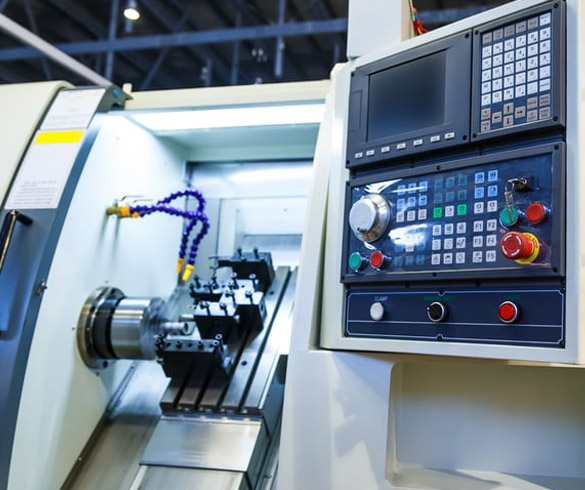
Machine Features That Directly Impact Unattended Operation
The reliability of an automatic CNC turning lathe during an unattended run is not accidental. It is the direct result of specific design and construction choices. When a machine stops mid-cycle, the cause can often be traced back to a lack of rigidity, thermal instability, or imprecise components. At MAKCNC, we build our machines around a foundation of high-strength cast iron, such as resin sand castings. This material provides superior vibration damping compared to welded steel frames. The castings undergo an aging treatment to relieve internal stresses, ensuring the machine's geometric accuracy remains stable over years of operation.
The core transmission components, including the ball screws and linear guideways, are sourced from premier manufacturers in Taiwan and Germany. These high-precision parts ensure smooth, accurate axis movement with minimal backlash, which is critical for maintaining tight tolerances across thousands of cycles. For industries like mold making, our machine systems integrate intelligent feedforward and quadrant glitch compensation. These technologies proactively address common machining flaws like over-cutting marks and chatter, preventing scrapped parts that would otherwise interrupt a long production run. Below is a checklist to use when evaluating a machine for unattended performance.
Buyer's Checklist for Unattended Machining Reliability
- Machine Base Construction: Is the frame made from high-density, stress-relieved cast iron for maximum rigidity and thermal stability?
- Core Drive Components: Does the machine use high-precision ball screws and linear guides from reputable brands (e.g., from Germany or Taiwan)?
- Spindle Quality: What are the specifications for spindle runout and thermal growth compensation? A stable spindle is key to consistent part quality.
- Chip Management System: Does the machine offer a high-pressure coolant system and a well-designed chip conveyor to prevent chip buildup?
- Control System Features: Does the CNC control include tool life management, thermal compensation, and error-prevention functions?
- Automation Integration: How seamlessly does the machine interface with bar feeders, part catchers, or robotic loaders? Check for proven compatibility.
Diagnosing Common Cycle Interruptions to Maximize Uptime
Even the best automatic CNC turning lathe can experience cycle interruptions. The key to maximizing uptime is diagnosing the root cause quickly and systematically. Unattended operation magnifies the impact of small, persistent issues. Here is a troubleshooting framework for the most common causes of automation stoppages, organized by what to check first.
| Symptom / Alarm | What to Check First (Immediate Fixes) | Likely Root Cause & Diagnosis |
|---|---|---|
| Bar Feeder Fails to Load or Jams | Bar remnant length setting in the control; physical alignment of the bar with the spindle centerline; guide channel size matches bar stock diameter. | An incorrect remnant setting causes the feeder to discard bars with usable material left, wasting stock and stopping production. Misalignment causes the bar to bind during feeding, leading to a jam and a machine alarm. |
| Machine Stops Due to Chip Buildup | Coolant nozzle direction and pressure; chip breaker style on the cutting insert; depth of cut and feed rate parameters in the program. | Poor coolant aim fails to flush chips away from the cutting zone. Stringy materials (like some stainless steels or aluminum) require specific chip breakers and cutting parameters to produce small, manageable chips that do not wrap around the tool or workpiece. |
| Premature Tool-Life Alarms | Tool wear values in the offset page; programmed spindle speed (SFM) and feed rate (IPR); tool life counter settings. | If the tool life counter is set too conservatively, it will trigger an alarm while the tool is still capable of making good parts. Running a tool with overly aggressive speeds and feeds will cause it to wear rapidly, legitimately triggering the alarm and requiring more frequent tool changes. |
| Part Catcher Misses or Drops Parts | Physical alignment of the catcher basket with the part-off position; timing of the catcher's movement in the M-codes of the program; actuation air pressure or hydraulic fluid level. | A simple misalignment is the most common cause of missed parts. If the timing is off, the catcher may move too early (colliding with the part) or too late (missing it entirely). Low actuation pressure can result in a weak grip or slow movement. |
Evaluating the Price and Long-Term Value
The initial purchase price of an automatic CNC turning lathe is only part of its total cost. A lower-priced machine that suffers from frequent downtime or requires constant adjustment can quickly become more expensive than a higher-quality alternative. When evaluating cost, consider the entire lifecycle. Factors like machine rigidity, component quality, and after-sales support directly influence your return on investment. For example, a machine built with a heavy cast iron base and premium linear guides may cost more upfront but will hold tighter tolerances for longer, reducing scrap rates and service calls.
Furthermore, flexible procurement options are important. We have no rigid minimum order quantity, allowing you to purchase a single machine to start. However, placing a bulk order for multiple units can provide access to more favorable commercial terms, whether in pricing, delivery schedules, or extended service agreements. Our standard lead time is between one and six months, depending on the machine configuration and production schedule.
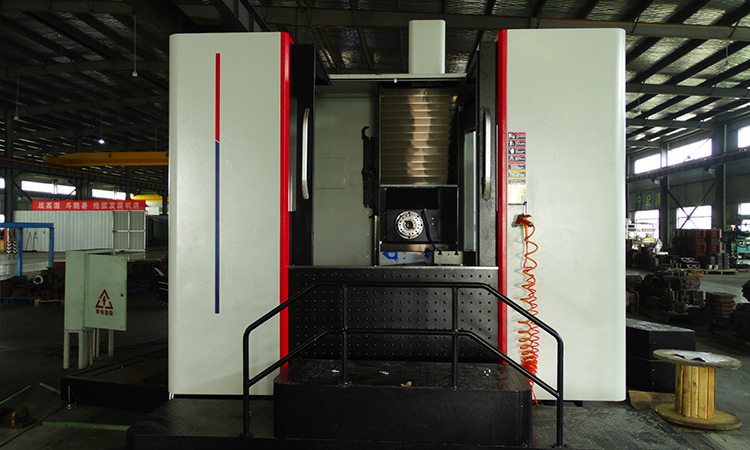
MAKCNC as Your Automatic CNC Turning Lathe Supplier
Since 2016, MAKCNC has been dedicated to manufacturing reliable and precise CNC machinery. Our ISO9001:2015 certification reflects our commitment to quality management across our multiple production lines. We understand that investing in an automatic CNC turning lathe is a significant decision, and our goal is to provide a machine that delivers lasting value. Our machines are engineered for stability, using high-strength cast iron structures and premium drive components to ensure long-term precision.
We stand behind our equipment with a standard 12-month warranty after machine acceptance and provide lifetime paid service. For specific tenders or large projects, we can offer extended warranty terms, such as three years of free coverage. Our mature after-sales network is structured for responsiveness, typically committing to an 8-hour response to service inquiries and, if needed, having a technician on-site within 48 hours to resolve any issues.
Frequently Asked Questions
What is the typical lead time for an automatic CNC turning lathe?
Our standard lead time ranges from one to six months. This varies based on the specific machine model, the level of customization required, and our current production backlog.
Is there a minimum order quantity (MOQ)?
We do not have a strict MOQ. You can procure a single CNC machine. However, purchasing multiple units often allows for better commercial terms regarding price, delivery, or after-sales support.
What kind of warranty and after-sales support is provided?
All our machines come with a standard 12-month warranty covering the entire machine after final acceptance. We also offer lifetime paid technical service. Our support network aims to respond within 8 hours and provide on-site assistance within 48 hours.
If you are looking for a supplier for your next automatic CNC turning lathe, please feel free to contact us for a detailed consultation and the latest quotation.