
How to Source Custom CNC Machine Tools for Complex Parts
What is Custom CNC Machine Tools?
Custom CNC Machine Tools are purpose-built machine configurations designed around a buyer’s actual part geometry, material, process sequence, and production plan rather than a standard machine specification alone. In practical sourcing terms, this can mean selecting a CNC lathing machine for rotational parts, a CNC machining center for prismatic parts, or a modified CNC machine arrangement for a specialized production task. The goal is not simply to buy more equipment. It is to match the machine structure, workholding approach, control functions, and machining access to the workpieces that will be produced. CNC machining uses programmed control to guide machine movements, but the final machine selection still depends on the physical and commercial details supplied by the buyer. A machine can look suitable on a brochure and still be a poor fit if the part cannot be clamped safely, the required surfaces cannot be reached, or the expected batch size does not justify the setup approach.
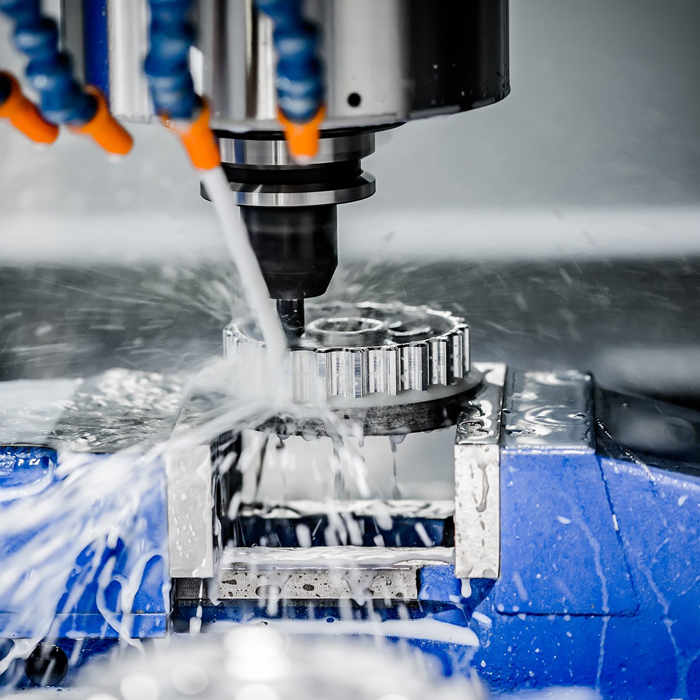
Types of Custom CNC Machine Tools
Custom CNC Machine Tools generally fall into three sourcing categories. The first category is a CNC lathe-based solution for shafts, flanges, sleeves, threaded components, and other parts dominated by turning operations. The second is a vertical or horizontal CNC machining center solution for housings, plates, mold components, and parts requiring machining on several faces. The third is a combined or specially configured machine solution, where the buyer needs specific workholding, loading, tooling, or process support beyond a standard configuration. A CNC lathing machine is usually the logical starting point when the main features are concentric diameters and axial profiles. A machining center is better suited to milling, drilling, boring, and multi-face work. Do not select by part name alone. A part described as a “flange” may require turning, drilling, and face machining, so the process route should determine the machine category.
| Machine option | Best-fit part characteristics | Why buyers select it | When it may not fit |
|---|---|---|---|
| CNC lathing machine | Round, tubular, shaft-like, or threaded parts | Matches processes centered on turning and concentric features | Not the first choice when several non-rotational faces require milling |
| Vertical CNC machining center | Plates, mold components, housings, and top-access workpieces | Supports common milling and drilling operations with accessible upper surfaces | May require additional setups when many side faces need machining |
| Horizontal CNC machining center | Box-type parts and parts needing repeated multi-face machining | Can support multi-face processing from fewer handling stages | May not be justified for simple workpieces or low-complexity processes |
| Configured CNC machine solution | Parts with special clamping, access, or production requirements | Allows the machine proposal to address a defined production problem | Cannot be specified well without drawings, process details, and RFQ data |
Features That Matter for Complex Part Production
For complex parts, Custom CNC Machine Tools should be assessed as a system rather than as a list of isolated components. Machine body rigidity matters because cutting forces, workpiece weight, and long machining cycles can affect stability. MAKCNC machine bodies commonly use high-strength cast iron, including resin-sand castings, followed by aging treatment to support long-term rigidity and precision retention. Core transmission parts such as ball screws and guideways commonly use high-precision components from Taiwan or Germany. For mold-industry precision work, available system integration can include intelligent feedforward and quadrant-transition compensation intended to address issues such as overcut marks, quadrant marks, and chatter patterns. These features are relevant when surface quality and contour transitions are part of the acceptance standard. They do not replace sound fixture design, suitable tooling, stable cutting parameters, or a complete inspection plan.
- Machine structure: Ask how the proposed structure supports your workpiece and fixture. This matters for heavy, tall, or offset parts. It is less decisive for light parts with short cutting cycles.
- Guideway and screw selection: Request the proposed configuration for the intended process. This is relevant to repeatability and motion quality, but it cannot be evaluated separately from the total machine design.
- Control functions: Identify whether contour quality, mold work, or difficult transitions are part of the job. Advanced compensation functions are useful only when the process conditions and programming also support them.
- Workholding access: Confirm that the fixture can hold the part while leaving all required surfaces accessible. This check is often more useful than comparing machine appearance.
Custom CNC Machine Tools Application Planning
Application planning should start with the finished part, not with the supplier’s nearest standard model. Custom CNC Machine Tools can be considered for mold components with demanding contour and surface requirements, multi-face machined housings, rotational production parts, and mixed families of small-batch components. For a mold component, the buyer should identify the critical surface areas, material condition, finishing expectations, and whether visible marks at contour transitions are acceptable. For a housing, list every face that requires machining and identify whether one clamping position can reach the required features. For a shaft or sleeve, define the diameters, threads, bores, and any secondary milling or drilling work. The best application fit is often a machine that reduces unnecessary reclamping while preserving safe access to the part. However, a multi-face processing approach is not automatically the best choice when the part is simple or when production volume is too low to justify specialized fixtures.
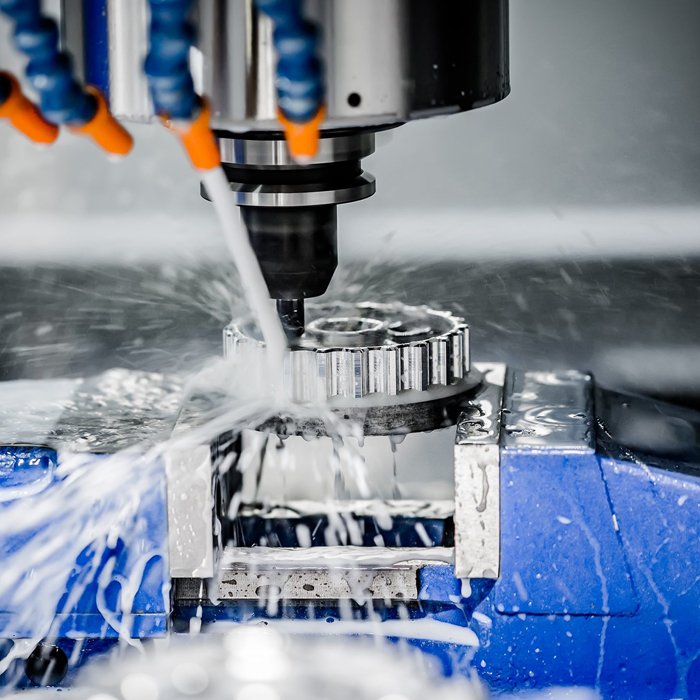
How defining the workpiece envelope, material range, tolerance targets, and production volume in an RFQ prevents a misconfigured custom build
A purpose-built request can fail before production starts if the RFQ does not describe the real job. Custom CNC Machine Tools are configured from buyer inputs, so missing information can lead to a machine proposal that fits a nominal part size but not the fixture, process load, quality target, or production schedule. The strongest RFQ does not merely attach a drawing. It explains the machining conditions that determine the configuration. Buyers should provide a part drawing, a 3D model when available, a list of materials, critical dimensions, required surfaces, target output, and the planned workholding method. If several part families will run on the machine, identify the largest, heaviest, most difficult, and highest-volume part. This prevents a supplier from sizing the machine around an easy sample part while the actual production part creates access or stability problems.
| RFQ item to define | Why it matters | Risk when omitted | When the detail may be less important |
|---|---|---|---|
| Workpiece envelope | Determines whether the part, fixture, tools, and required movement can fit together | A machine may accept the raw part but lack practical space for clamping or tool access | Only less sensitive for very small, simple parts using standard workholding |
| Material range | Material affects cutting behavior, tooling, fixture requirements, and machine loading | A proposal based on one easy-to-machine material may not suit the full production mix | Less variable when every part uses the same confirmed material condition |
| Tolerance targets | Shows which features require controlled machining, compensation, and inspection attention | The supplier may configure for general production rather than the critical features | Less demanding for non-functional roughing operations |
| Production volume | Helps determine whether fixture automation, setup reduction, or flexible processing is justified | The machine may be overconfigured for occasional work or underconfigured for repeat orders | Less decisive for a single prototype, although future production plans should still be stated |
A practical RFQ procedure for supplier shortlisting
- Separate part families by machining method, such as turning-dominant, milling-dominant, or multi-face parts.
- Select the most demanding representative part from each family rather than sending only the easiest drawing.
- State the raw material and finished material requirements for every representative part.
- Mark critical dimensions, visible surfaces, and functional interfaces directly on the drawing or inspection document.
- Describe the intended production volume and whether the machine will run one part family or frequent changeovers.
- Ask each supplier to explain the proposed workholding and machining sequence, not only the machine model.
- Compare quotations using the same RFQ package so that differences in configuration are visible.
Custom CNC Machine Tools Price Factors
The price of Custom CNC Machine Tools can vary because the commercial scope is not limited to the base machine. A quotation may reflect the chosen machine category, the workpiece size and weight requirements, motion components, control options, fixture-related needs, tooling scope, inspection expectations, packaging, and requested service terms. Buyers should avoid comparing only the total price because two quotations can cover different technical responsibilities. One supplier may quote a standard machine while another includes a configuration intended for the supplied part drawing. The lower figure is not automatically the lower procurement cost if it leaves fixture design, process confirmation, or required accessories outside the scope. Conversely, specialized features should not be accepted without a stated reason linked to the parts you will run. Single-machine purchasing is available without a hard minimum order quantity, while multi-machine purchases may receive better commercial terms on price, delivery, or after-sales service.
| Quotation area | Buyer question | Why it affects procurement cost |
|---|---|---|
| Base machine configuration | Which standard machine is the proposal built from? | Shows whether the supplier is adapting an appropriate platform or starting from a poor fit |
| Part-specific requirements | Which items are included because of our drawing and process? | Separates necessary configuration from optional additions |
| Fixture and tooling scope | Who is responsible for workholding and process tooling? | Prevents unplanned spending after the machine arrives |
| Delivery and service terms | What delivery period and service coverage are stated in writing? | Allows buyers to compare the full commercial offer rather than machine price alone |
Custom CNC Machine Tools User Guide for Acceptance and Start-Up
Before accepting Custom CNC Machine Tools, verify that the delivered configuration matches the approved quotation, drawings, and application discussion. Begin with a document review that covers the machine configuration, included accessories, electrical requirements, manuals, and service contacts. Then confirm installation conditions at the plant, including the planned machine location, handling route, power supply, and space for maintenance access. During trial machining, use a representative part or an agreed test piece that reflects the intended application. The objective is to confirm the agreed process, workholding feasibility, and critical feature requirements rather than merely proving that the machine powers on. MAKCNC typically provides a 12-month warranty after complete machine acceptance and offers lifetime paid service. Some tender projects require different terms, such as a three-year free warranty. Mature after-sales networks may state an 8-hour response commitment and on-site fault handling within 48 hours, but buyers should confirm the applicable service terms for their destination and contract.
Custom CNC Machine Tools Supplier Selection at MAKCNC
A Custom CNC Machine Tools supplier should be shortlisted on the quality of its technical questions as much as on its product catalog. MAKCNC was established in 2016 and operates multiple production lines with sample-machine inventory. This can support buyers who need to review a proposed platform before confirming a customized configuration. The product range includes CNC lathing machines, CNC machining centers, and CNC machines for varied manufacturing tasks. Buyers considering prismatic and multi-face work can review a CNC machining center solution, while buyers comparing configurations for more complex access requirements may also consider a horizontal CNC machining center. When evaluating MAKCNC or any other supplier, ask for a written connection between your part requirements and the proposed machine arrangement. A supplier should be able to explain what is included, what remains the buyer’s responsibility, and which assumptions require confirmation before production.
FAQ of Custom CNC Machine Tools
Can one machine be purchased for a custom project?
Yes. MAKCNC does not impose a hard minimum order quantity, so a single machine can be purchased. This suits buyers adding one purpose-built machine for a defined part family, a new process, or a factory expansion. A single-machine order may not receive the same commercial conditions available for multiple-machine purchasing, so ask the supplier to state the price, delivery, and after-sales terms for your order quantity.
What should be sent before requesting a quotation?
Send representative drawings, available 3D models, material details, critical tolerances, required machining operations, expected production volume, and any workholding limitations. For Custom CNC Machine Tools, this information helps the supplier identify whether a lathe, vertical machining center, horizontal machining center, or configured solution is suitable. If the process route is still undecided, state that clearly and ask the supplier to explain the assumptions behind the recommendation.
How long does a custom machine order take?
The stated production lead time is generally 1 to 6 months. The applicable period depends on the requested configuration and the order scope, so it should be confirmed during quotation and contract review. Do not treat this range as a guaranteed delivery date for every project. Buyers should also allow time for technical confirmation, shipping planning, installation preparation, and acceptance procedures.
If you are sourcing Custom CNC Machine Tools for complex parts, send MAKCNC your drawings and RFQ requirements to request the latest machine quotation.