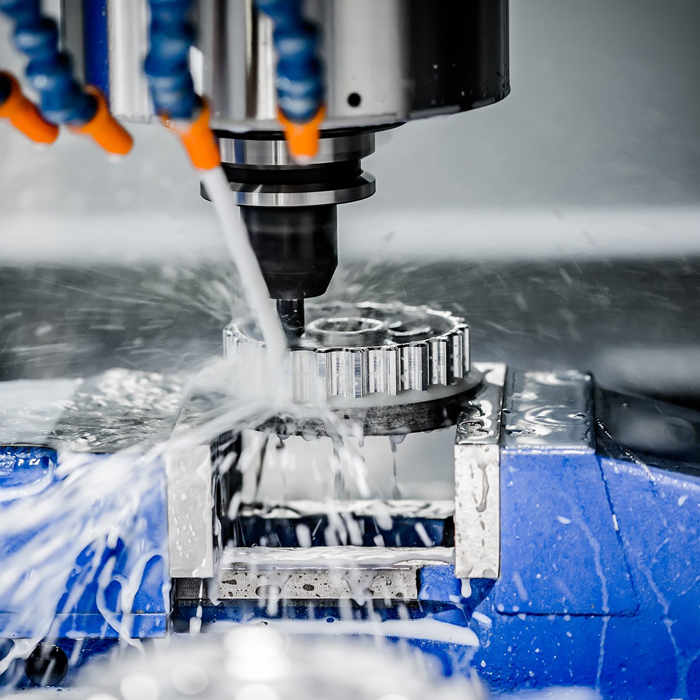
Sizing a Horizontal CNC Milling Center Correctly Before You Compare Vendors
A Horizontal CNC Milling Center is not a one-size decision. Production managers usually face two competing paths at this stage: buy a bigger, more automated pallet system now and grow into it, or start smaller and risk a second purchase in 18 months. Both choices carry cost consequences — idle pallet capacity ties up capital, while undersized machines cap throughput right when demand rises. The right answer depends on part volume, number of faces to be cut, and how your tombstone is loaded, not on brochure specs alone.
What Is a Horizontal CNC Milling Center
A Horizontal CNC Milling Center is a machine tool where the spindle axis runs parallel to the worktable, letting the cutter approach the part from the side rather than from above. This orientation makes it easier to machine multiple faces of a workpiece in one setup, because the part sits on a pallet or tombstone fixture that indexes around a rotary axis. Chips fall away from the cutting zone instead of collecting on the table, which helps with unattended running. Compared with a vertical machining center, an HMC is generally chosen when parts need several faces machined accurately relative to one another, and when daily volume justifies the added mechanical complexity of pallet changers and rotary indexing.
Types of Horizontal CNC Milling Centers
Horizontal machining centers are typically grouped by table size, pallet configuration, and automation level. Common categories include:
- Single-pallet HMC — one fixed pallet, manual or semi-automatic loading, suited to low-volume or prototype work.
- Twin-pallet HMC — two pallets that swap in and out, allowing the operator to load one part while the machine cuts another.
- Pallet-pool HMC — four, six, or more pallets staged on a pool system, feeding the machine automatically for extended unattended cycles.
- Tombstone-based HMC — square or rectangular tombstone fixtures mounted on the pallet, allowing multiple small parts to be fixtured on several faces at once.
Each type overlaps with the others in capability, but the practical difference is how much idle spindle time you eliminate per shift. A single-pallet machine sitting idle during load and unload can lose 20-40% of available spindle hours on small-batch work; a pallet-pool system removes most of that gap.
Features of Horizontal CNC Milling Centers
Core features that affect part-volume decisions include rotary table indexing (typically in 1-degree or finer increments), pallet clamping repeatability, spindle taper size, and tool magazine capacity. Machine bodies are commonly built from high-strength cast iron, often resin-sand castings, and stress-relieved through aging treatment to hold accuracy and rigidity over years of use. Core motion components — ballscrews and linear guides — are frequently sourced from established Taiwanese or German brands, since the system-level fit between these parts determines real-world positioning accuracy more than any single spec sheet number. For mold and die work, advanced control systems add intelligent feed-forward compensation and quadrant-transition correction, which reduce overcut marks, quadrant witness lines, and chatter marks — common headaches on parts with tight contour tolerances. Many HMCs also support one-setup, multi-face machining, cutting several sides of a part without re-fixturing, which is a direct advantage for multi-variety, small-batch production runs.
Application-Sizing Method: Matching Volume, Faces, Pallets, and Tombstone Layout
This is the step most buyers skip, and it is the one that actually determines machine fit. Before comparing brands, work through four variables together — not in isolation.
| Variable | Low-volume fit | Mid-volume fit | High-volume fit |
|---|---|---|---|
| Daily part count | Under 20 pcs/shift | 20-80 pcs/shift | 80+ pcs/shift |
| Faces per part | 1-2 faces | 3-4 faces | 4-6 faces, tight face-to-face tolerance |
| Pallet configuration | Single pallet | Twin pallet | Pallet pool (4-8+) |
| Tombstone layout | Not typically used | 2-sided tombstone, few parts per face | 4-sided tombstone, dense multi-part fixturing |
Step-by-step sizing procedure:
- Count average daily part volume across your busiest recurring job, not your peak order.
- Map how many distinct faces each part needs machined, and whether those faces must hold position relative to each other.
- Estimate load/unload time per pallet cycle — if it exceeds 15% of your cutting time, a twin-pallet or pool system usually pays back its added cost.
- Sketch your tombstone layout on paper first: how many parts fit per face, and does spindle reach clear the fixture at full tombstone rotation.
- Cross-check against the table above — if two of your four variables land in the same tier, size the machine to that tier, not the lowest one.
When this method does NOT apply: if your part mix changes weekly with no repeat jobs, pallet-pool automation is often wasted investment — a single-pallet HMC or even a vertical CNC machining center MV1160 may fit better since setup flexibility matters more than unattended cycle time. Likewise, if parts need only one or two faces machined, a horizontal configuration adds cost without adding value — a vertical center handles that scope more economically.
Horizontal CNC Milling Center Applications
HMCs are common in mold and die shops producing cavity blocks and core plates that need several faces machined square to each other. They also show up in automotive component runs, hydraulic manifold production, and gearbox housing work — parts where drilling and milling patterns repeat across multiple faces. Job shops running multi-variety, small-batch orders use HMCs to cut setup count, since one fixturing can complete several operations. For shops needing broader configuration options across part families, a professional CNC machining center solution can combine horizontal and vertical platforms under one production plan.
Horizontal CNC Milling Center Price
Pricing varies with table size, pallet count, spindle taper, control brand, and tooling capacity. A single-pallet HMC sits at the lower end of the range; twin-pallet and pallet-pool configurations cost more upfront but reduce per-part labor over time. Additional cost drivers include:
- Rotary table precision class and indexing speed
- Tool magazine capacity (40 vs. 60+ stations)
- Chip management and coolant-through-spindle options
- Control system brand and software packages for feed-forward and quadrant compensation
- Freight, installation, and commissioning costs for export orders
There is no fixed minimum order quantity — single units can be purchased, though multi-unit orders typically receive better commercial terms on price, lead time, or after-sales service.
Horizontal CNC Milling Center User Guide
Before running production, confirm tombstone balance to avoid vibration during rotary indexing, verify pallet clamping pressure meets spec, and run a dry cycle to check tool-to-fixture clearance at every rotation angle. Keep way covers and chip conveyors clean daily — chip buildup near linear guides is a leading cause of premature wear. Schedule geometric accuracy checks according to your quality system; for shops holding ISO 9001 certification, this typically means documented calibration intervals. Lead times for new machines commonly run 1 to 6 months depending on configuration, so plan procurement against your production calendar rather than ordering at the last minute.
Horizontal CNC Milling Center Supplier
MAKCNC has manufactured CNC equipment since 2016, operating multiple production lines with demo-unit stock for faster evaluation. Our facility is ISO9001:2015 certified, and machine frames use high-strength cast iron, resin-sand cast and aging-treated for long-term accuracy and rigidity. Core transmission components — ballscrews and linear guides — are sourced from established Taiwanese or German brands, matched at the system level for real-world performance. Standard warranty covers 12 months after acceptance, with paid lifetime service available afterward; select tender projects can include extended terms such as three-year free warranty. Our service network targets an 8-hour response and 48-hour on-site arrival for reported faults. Browse our CNC lathing machine range, review customized CNC machines and machining centers, or check global CNC machinery cases to see the range of configurations we have supplied. Learn more about MAKCNC as a manufacturer.
FAQ of Horizontal CNC Milling Center
Q: How many pallets do I actually need?
A: If load/unload time exceeds 15% of cycle time on your busiest job, move from single to twin pallet. Beyond 80 parts/shift with multiple faces, consider a pallet pool.
Q: Can a Horizontal CNC Milling Center replace my vertical machines entirely?
A: No. Parts needing only one or two faces machined are usually more economical on a vertical CNC machining center MV970 or similar vertical platform.
Q: What is the minimum order quantity?
A: There is no hard minimum — single units can be ordered, though bulk orders often receive improved pricing or service terms.
Q: How long is the warranty?
A: Standard coverage is 12 months post-acceptance, with paid lifetime service after that; some tender-based projects specify longer terms.
If you are evaluating whether a Horizontal CNC Milling Center fits your part volume and face count, send us your part drawings and daily output target, and we can help size the right pallet and tombstone configuration.