Estimating Custom CNC Machine Tool Costs Before You Buy
Before committing to a significant capital investment, accurately estimating the long-term costs of custom CNC machine tools is critical. Overlooking hidden expenses or underestimating operational outlays can lead to budget overruns and operational inefficiencies. A thorough cost analysis provides clarity, allowing procurement teams and business leaders to make informed decisions that align with strategic objectives and financial realities. Understanding the full financial picture—from initial design to ongoing maintenance—mitigates sourcing risks and ensures the chosen solution delivers sustained value.
Understanding Custom CNC Machine Tools and Their Value
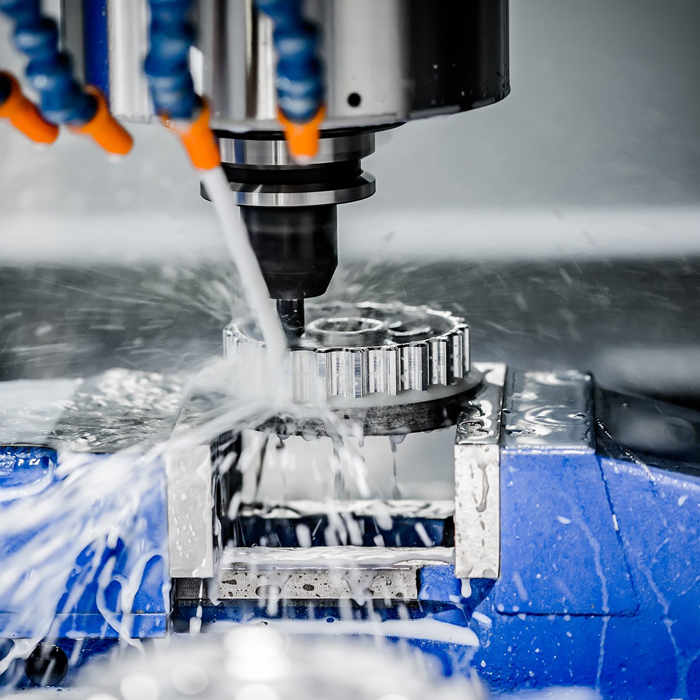
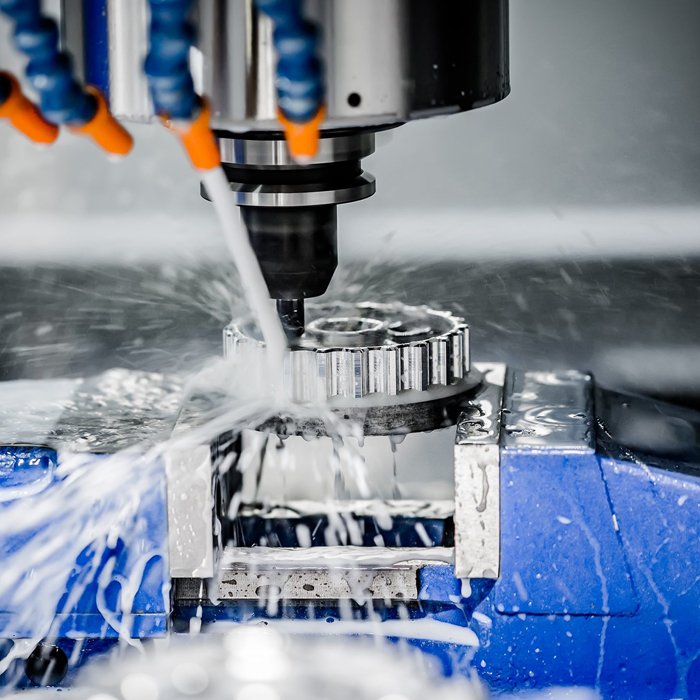
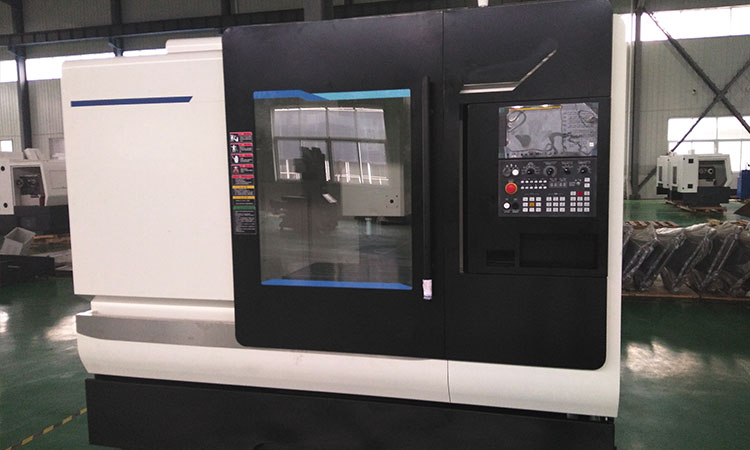
Custom CNC machine tools are specialized manufacturing systems engineered to meet unique production requirements that standard, off-the-shelf machines cannot. These machines, which can include bespoke CNC lathing machine configurations or advanced CNC machining center designs, offer distinct advantages such as optimized performance for specific materials or geometries, enhanced precision for critical applications like mold making, and integrated automation for complex process flows. For example, our custom solutions often feature high-strength cast iron bodies, such as resin sand castings, which undergo aging treatment to ensure long-term precision and rigidity. Core transmission components, like ball screws and guide rails, are typically sourced from high-precision brands in Taiwan or Germany, emphasizing system synergy for optimal overall machine performance. This tailored approach allows businesses to achieve higher quality output, reduce cycle times for niche products, and gain a competitive edge in specialized markets, often resolving common issues like over-cut marks, quadrant marks, and chatter marks through intelligent feedforward and over-quadrant jump compensation technologies.
Key Factors Influencing Custom CNC Machine Tool Investment
The total investment in custom CNC machine tools extends beyond the initial purchase price. Several critical factors contribute to the overall cost, and understanding these will help you budget accurately:
- Design and Engineering Complexity: The more specialized the machine's function or the tighter the required tolerances, the greater the engineering effort. This includes custom fixture design, software integration, and unique control system development.
- Material and Component Selection: High-grade materials for enhanced durability or specific performance characteristics (e.g., aerospace-grade alloys, precision ceramic components) will increase costs. Likewise, opting for premium brands for critical components like spindles, controllers, or tooling systems will impact the price.
- Automation and Integration: Adding features such as robotic loading/unloading, automated tool changers, in-process gauging, or seamless integration with existing factory automation systems (e.g., ERP, MES) significantly adds to the complexity and cost.
- Testing and Validation: Extensive factory acceptance testing (FAT) and site acceptance testing (SAT), especially for machines with stringent performance or safety requirements, are crucial but add to the project timeline and cost.
- Shipping and Installation: Depending on the machine's size and destination, freight, customs duties, and professional installation services can be substantial. Our team typically handles installation and commissioning to ensure proper setup.
- Warranty and After-Sales Service: While basic warranties are standard (e.g., 12 months after acceptance), extended warranties (such as three-year free warranty for specific bids) or comprehensive service contracts will add to the initial investment but reduce long-term risk. Our standard offering includes lifetime paid service.
- Lead Time: While standard machines might ship quickly, custom CNC machine tools often require 1 to 6 months for design, manufacturing, and testing. Expedited delivery, if available, typically incurs additional charges.
Considering these elements will provide a more realistic capital expenditure estimate for your custom CNC machining center or lathing solution.
A Five-Year Cost Model for Custom CNC Machine Tools
A comprehensive five-year cost model is essential for evaluating the true economic impact of acquiring custom CNC machine tools. This framework helps differentiate between initial outlays and ongoing operational expenses, providing a clearer picture of total cost of ownership (TCO). This model separates costs into confirmed, estimated, and potential unknown categories to avoid presenting estimates as facts.
| Cost Category | Description | Confirmed Costs (Example) | Estimated Costs (Example) | Potential Unknown Costs |
|---|---|---|---|---|
| Engineering & Design | Initial custom design, software development, fixture design. | N/A (varies per project) | $15,000 - $100,000+ (complex projects) | Scope creep, unforeseen design challenges requiring rework. |
| Machine Options & Purchase | Base machine price, custom features, specialized components (spindle, controller). | Quoted machine price (e.g., ~$150,000 - $500,000+) | N/A | Future component obsolescence requiring costly upgrades. |
| Installation & Commissioning | Shipping, customs, foundation work, utility hook-ups, professional setup, calibration. | Freight charges (e.g., $5,000 - $20,000+), installation service fees. | Site preparation (e.g., $2,000 - $15,000). | Unforeseen site access issues, utility upgrades. |
| Tooling & Fixturing | Purchase of custom cutting tools, workholding fixtures, spare tool sets. | N/A (depends on application) | $10,000 - $50,000+ initially, then annual replacement costs. | Rapid wear of specialized tools due to unexpected material properties. |
| Training (Initial & Ongoing) | Operator, programmer, and maintenance staff training. | Initial training package (e.g., $2,000 - $10,000). | Annual refresher courses or training for new staff (e.g., $1,000 - $5,000/year). | High staff turnover requiring frequent retraining. |
| Maintenance & Consumables | Preventive maintenance, routine inspections, coolant, lubricants, filters, spare parts. | N/A | $5,000 - $25,000+ per year (depending on usage). | Major component failure outside warranty, unexpected part lead times. |
| Downtime Costs (Lost Production) | Revenue loss due to planned maintenance, unplanned breakdowns, setup changes. | N/A | Estimate based on hourly production value (e.g., $100 - $1,000+/hour). | Prolonged breakdowns, catastrophic failure, parts unavailability. |
| Utilities | Electricity consumption, compressed air, HVAC. | N/A | $3,000 - $15,000+ per year (energy rates vary). | Sudden spikes in energy prices, increased usage during peak production. |
This model highlights that the initial purchase price is just one component of the total investment. Factors like maintenance, specialized tooling, and potential downtime can significantly impact profitability over five years. Proactive planning for these elements is essential for a sound financial decision.
Optimizing Maintenance and Support for Your Custom CNC Machine
Effective maintenance and robust support are critical for maximizing the uptime and lifespan of your CNC machine. For custom solutions, this is even more pertinent due to specialized components or unique programming. Here are key considerations:
- Preventive Maintenance Schedule: Implement a strict preventive maintenance (PM) schedule based on manufacturer recommendations and actual usage. This includes routine checks of lubrication systems, filter replacements, calibration verification, and inspection of wear parts. PM helps prevent major failures and extends machine life.
- Spare Parts Inventory: For custom machines, identifying and stocking critical spare parts is essential. While our service network aims for an 8-hour response and 48-hour on-site resolution, having common wear items or long-lead-time custom components on hand can minimize downtime.
- Operator Training and Empowerment: Well-trained operators can identify early signs of issues, perform basic troubleshooting, and adhere to proper machine operation protocols, reducing the likelihood of user-induced errors or damage.
- Supplier Support Agreement: Beyond the standard 12-month warranty, consider negotiating a service level agreement (SLA) for guaranteed response times, access to technical specialists, and planned annual inspections. For certain larger projects, we even provide a three-year free warranty as required by the bid. Our commitment to lifetime paid service ensures long-term support.
- Remote Diagnostics and Monitoring: Modern custom CNC machine tools often incorporate remote diagnostic capabilities. Leveraging these can allow your supplier to troubleshoot issues off-site, potentially resolving problems faster and without an on-site visit, reducing repair costs and downtime.
Proactive maintenance and a clear support strategy are non-negotiable for ensuring your custom CNC machine tools deliver consistent performance and a strong return on investment.
Common Pitfalls When Procuring Custom CNC Machine Tools
Procuring custom CNC machine tools can be complex. Avoiding common pitfalls ensures a smoother process and a more successful investment:
- Inadequate Specification Definition:
- Conclusion: Poorly defined requirements lead to machines that don't meet needs.
- Reasoning: Vague specs result in misinterpretations by manufacturers, leading to costly redesigns or underperforming machines.
- Scenario: Requesting a "high-precision" machine without specifying actual tolerance ranges (e.g., ±0.005mm vs. ±0.02mm).
- Limits: Over-specifying can unnecessarily inflate costs. Focus on critical parameters.
- Underestimating Total Cost of Ownership (TCO):
- Conclusion: Focusing solely on upfront purchase price ignores significant long-term costs.
- Reasoning: Maintenance, tooling, training, and downtime contribute substantially to the total cost.
- Scenario: Budgeting only for the machine price and ignoring the $25,000 annual maintenance cost.
- Limits: While TCO is vital, don't get paralyzed by every minor potential cost. Focus on major categories.
- Neglecting After-Sales Support and Warranty:
- Conclusion: A cheap machine with poor support becomes an expensive liability when it breaks down.
- Reasoning: Downtime costs are often far higher than repair costs. Reliable support minimizes this.
- Scenario: Choosing a supplier with minimal warranty and no local service network to save 5% on the initial purchase.
- Limits: Not all projects require the highest tier of support, especially for less critical applications.
- Lack of Cross-Functional Team Involvement:
- Conclusion: Involving only procurement or engineering can miss critical operational insights.
- Reasoning: Operators, maintenance staff, and production managers have unique perspectives on usability, maintainability, and actual production needs.
- Scenario: An engineering team designs a machine that is impossible for maintenance staff to service efficiently.
- Limits: Too many stakeholders can slow down decision-making. Select key representatives.
- Ignoring Future Scalability or Flexibility:
- Conclusion: A machine perfectly suited for today's needs might become obsolete quickly if future production changes.
- Reasoning: Custom machines can be highly specialized. Consider if minor modifications for future products are feasible.
- Scenario: Designing a machine for a single product line without considering potential future variants or material changes.
- Limits: Over-engineering for extreme flexibility can add unnecessary cost if future needs are truly unknown or unlikely.
Frequently Asked Questions on Custom CNC Machine Tools
What is the typical lead time for custom CNC machine tools?
The lead time for custom CNC machine tools can vary significantly based on design complexity, component availability, and our current production schedule. Generally, it ranges from 1 to 6 months from design approval to delivery. We maintain sample machine inventory for some configurations to facilitate quicker review or testing where applicable. For specific project timelines, we recommend discussing your requirements directly with our technical team.
Is there a minimum order quantity for custom CNC machine tools?
No, there is no rigid minimum order quantity for our custom CNC machine tools. We understand that some specialized applications may only require a single unit. While individual machines can be purchased, we do offer more favorable commercial terms—including pricing, delivery schedules, and after-sales service—for bulk orders or multiple units.
What kind of warranty and after-sales support does MAKCNC offer?
MAKCNC typically provides a 12-month warranty on the entire machine after acceptance. Beyond this period, we offer lifetime paid service. For certain tender projects that require more extensive coverage, a three-year free warranty can be arranged. Our mature after-sales network is committed to an 8-hour response time and aims to have technicians on-site within 48 hours to address any issues, ensuring minimal disruption to your operations.
How does MAKCNC ensure the precision and rigidity of its custom CNC machines?
We prioritize long-term precision and rigidity by utilizing high-strength cast iron for our machine bodies, such as resin sand castings. These components undergo extensive aging treatment to relieve internal stresses. For core transmission components like ball screws and guide rails, we typically select high-precision components from reputable Taiwanese or German brands. Our manufacturing process emphasizes system synergy to ensure the entire machine performs optimally, especially for high-precision machining demands in industries like mold making. For example, our vertical CNC machining center MV1380 embodies these principles.
Can MAKCNC's custom machines handle multi-face processing for small batch production?
Yes, our custom CNC machine tools are specifically designed to address the needs of multi-variety, small-batch production environments. Many of our vertical CNC machining centers and horizontal CNC machining centers are engineered with the capability to complete multi-face processing in a single clamping. This significantly reduces setup times and improves efficiency for complex parts, which is particularly beneficial for industries requiring high-precision, flexible manufacturing.
Choose MAKCNC for Your Custom CNC Machine Tools
As an ISO9001:2015 certified manufacturer established in 2016, MAKCNC specializes in delivering high-performance customized CNC machines and machining centers from MAKCNC. With multiple production lines and a strong focus on quality, we provide solutions that integrate advanced technologies to meet the most demanding high-precision machining requirements. Our expertise in addressing challenges like over-cut marks and chatter marks, combined with robust after-sales support, positions us as a reliable partner. We offer a range of products including CNC inclined bed lathe options and various vertical CNC machining center MV1160 models, all built to deliver lasting precision and efficiency. Our commitment to quality and customer satisfaction is reflected in our robust machine construction and dedicated service network.
If you are evaluating suppliers for custom CNC machine tools and require a detailed, transparent cost assessment, please contact us to discuss your project specifications and receive a tailored quote.