When Does a Horizontal CNC Milling Center Beat a VMC?
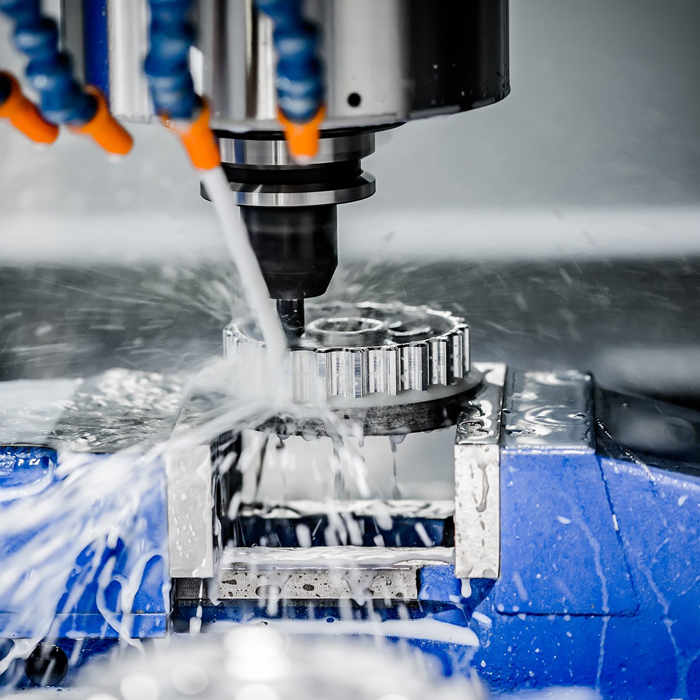
A Horizontal CNC Milling Center (HMC) is a type of computer-numerically controlled machine tool where the main cutting spindle is oriented horizontally. This configuration fundamentally changes how the machine interacts with the workpiece and manages chips compared to its vertical counterpart. While both HMCs and Vertical Machining Centers (VMCs) perform milling, drilling, and tapping operations, the horizontal spindle setup provides distinct advantages for specific production scenarios, particularly those involving complex, multi-sided parts or high-volume manufacturing where cycle time is critical.
What is a Horizontal CNC Milling Center?
The defining characteristic of a Horizontal CNC Milling Center is its spindle axis, which is parallel to the floor. The workpiece is typically mounted on a rotary table (B-axis) that sits on the machine's main table. This setup allows the workpiece to be rotated to present different faces to the cutting tool without requiring a new manual setup. The tool moves in the X, Y, and Z axes while the workpiece can rotate. This architecture is especially effective for "tombstone" fixtures, where multiple parts can be mounted on the vertical faces of a single block, maximizing the number of parts per cycle and enabling unattended operation. The horizontal orientation also allows gravity to assist in chip evacuation, preventing chips from accumulating on the workpiece surface and interfering with the cutting process or affecting surface finish.
Key Features of High-Performance HMCs
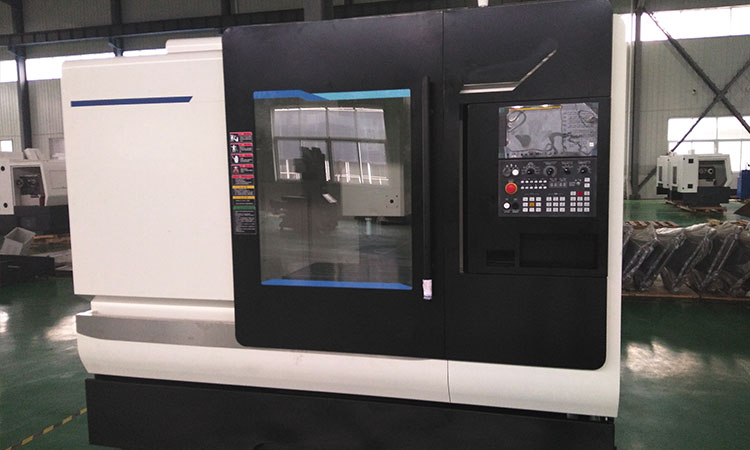
The performance of any CNC machine is determined by the quality of its construction and the sophistication of its control system. For demanding applications in industries like mold and die manufacturing, a machine's ability to maintain precision over long periods is paramount. At MAKCNC, we build our machines to deliver sustained accuracy and reliability.
- Structural Rigidity and Stability: The machine body is constructed from high-strength cast iron, often using resin sand castings, which provides excellent vibration damping. All major structural components undergo an aging treatment to relieve internal stresses, ensuring the machine frame maintains its geometric accuracy and rigidity for many years of service.
- High-Precision Drive Components: Core transmission parts, including the ball screws and linear guideways, are sourced from leading high-precision brands in Taiwan or Germany. This ensures smooth, backlash-free motion and precise positioning, which is essential for achieving tight tolerances and superior surface finishes.
- Advanced System Integration: To address common machining challenges in the mold industry, our systems incorporate technologies like intelligent feed-forward control and quadrant glitch compensation. These features actively prevent "over-cut marks, quadrant lines, and tool vibration marks," resulting in cleaner, more accurate parts directly off the machine.
- Multi-Face Machining Capability: The integrated rotary table (B-axis) is a core feature that enables the machine to complete operations on multiple sides of a workpiece in a single clamping. This drastically reduces setup time, minimizes the potential for human error from re-fixturing, and improves the geometric accuracy between features on different faces. We provide a professional cnc machining center solution tailored to your specific part complexity.
HMC vs VMC: A Head-to-Head Comparison for Buyers
Choosing between a milling machine with a horizontal or vertical spindle is one of the most significant decisions a machine shop can make. It impacts workflow, part cost, and overall productivity. The right choice depends entirely on your specific parts, production volume, and operational goals. This table breaks down the key decision criteria.
| Decision Factor | Horizontal CNC Milling Center (HMC) | Vertical Machining Center (VMC) | Decision Rule: When to Choose |
|---|---|---|---|
| Chip Evacuation | Excellent. Gravity pulls chips away from the workpiece and cutting zone, falling directly into the conveyor. | Fair to Poor. Chips can pile up on top of the workpiece, requiring flood coolant or air blasts to clear. Can lead to re-cutting of chips. | Choose HMC for materials that produce large volumes of chips (like aluminum) or when surface finish is critical and cannot be marred by chip re-cutting. |
| Multi-Face Setups | Superior. A 4th-axis rotary table is standard, allowing access to four sides of a workpiece (or more with a full 5-axis) in a single setup. | Limited. Requires multiple manual setups or an add-on 4th/5th-axis rotary unit, which can reduce the work envelope and rigidity. | Choose HMC for box-type parts, housings, or any component requiring machining on three or more faces to minimize setup time and improve accuracy. |
| Automation Readiness | High. Designed to integrate easily with pallet pool systems for unattended, "lights out" manufacturing. Tombstone fixtures maximize part density. | Moderate. Can be automated with robotics, but pallet changing systems are less common and often less integrated than on HMCs. | Choose HMC if your goal is high-volume production with maximum machine uptime and minimal operator intervention. |
| Floor Space & Initial Cost | Larger footprint and significantly higher initial investment compared to a VMC of similar travel size. | More compact and lower initial investment. Easier to fit into smaller workshops. | Choose VMC when floor space is limited or the initial capital budget is the primary constraint. |
| Ideal Batch Size | Best suited for medium to high-volume production runs where the setup efficiencies can be fully utilized across many parts. | Excellent for prototyping, one-offs, and small-batch production due to faster, simpler setups for single-sided work. | Choose VMC for high-mix, low-volume job shop work. Choose HMC for dedicated production lines or recurring part orders. |
Common Applications and Industries
The unique advantages of a Horizontal CNC Milling Center make it the preferred choice in several demanding industries. Its ability to combine high metal removal rates with precision on complex parts is invaluable where performance and reliability are non-negotiable.
- Automotive: Production of engine blocks, cylinder heads, transmission cases, and differential housings. These parts are often complex, require machining on multiple faces, and are produced in high volumes.
- Aerospace: Machining of structural components, bulkheads, and landing gear components from challenging materials like titanium and aluminum alloys. The HMC's rigidity and chip management are critical here.
- Heavy Equipment: Manufacturing large hydraulic manifolds, pump bodies, and gearbox housings that require deep hole drilling and precision boring operations on multiple sides.
- Mold & Die: While VMCs are common, HMCs are used for the base structures of large molds, where features on multiple sides must be precisely aligned. Our advanced control systems help achieve the fine finishes required.
Buyer's Checklist Before Purchasing
Investing in a new machining center is a major decision. Before issuing a purchase order, work through this checklist to ensure a Horizontal CNC Milling Center is the right fit for your operations. Answering these questions will clarify your needs and help you specify the right machine configuration.
- Analyze Your Parts: What percentage of your work requires machining on more than two faces? If it's over 30-40%, an HMC will likely provide a strong return on investment through reduced setup times.
- Evaluate Production Volume: Are you running hundreds or thousands of the same part? The productivity gains from pallet pools and tombstone fixtures on an HMC shine in medium-to-high volume scenarios.
- Consider Material and Chip Load: Are you machining materials that generate a lot of chips, like aluminum? An HMC's superior chip management will increase uptime and improve part quality.
- Assess Operator Skill & Workflow: An HMC can enable one operator to manage multiple machines, but it requires a different approach to programming and fixturing. Is your team ready to leverage this capability?
- Plan for a Higher Initial Investment: HMCs cost more than VMCs. Have you calculated the total cost of ownership, factoring in the HMC's higher throughput and lower per-part labor cost?
- Verify Facility Readiness: Do you have adequate floor space, foundation depth, and power supply for a larger, heavier machine?
MAKCNC: Your ISO9001-Certified HMC Supplier
Since our establishment in 2016, MAKCNC has been dedicated to manufacturing high-performance CNC machinery. Our operations are certified under the ISO 9001:2015 standard, a reflection of our commitment to quality and process control. We understand that purchasing a Horizontal CNC Milling Center is a long-term investment. That's why we build our machines for durability and back them with comprehensive support. We offer flexible purchasing terms with no rigid minimum order quantity; single-unit orders are welcome, while batch purchases benefit from improved commercial terms on pricing, delivery, and service. Our standard warranty covers the machine for 12 months after acceptance, and we provide lifetime paid service. Our mature after-sales network is committed to an 8-hour response time and having a technician on-site within 48 hours to address any issues.
Frequently Asked Questions about HMCs
What is the main advantage of a horizontal machining center?
The two primary advantages are superior chip management due to gravity and significantly increased productivity for multi-sided parts. The ability to use tombstone fixtures and pallet changers allows for much higher machine utilization compared to a typical VMC.
Are HMCs more difficult to program than VMCs?
Programming for 3-axis motion is the same. The added complexity comes from managing the 4th-axis (B-axis) rotation and planning for tombstone setups. However, modern CAM software makes this process much more straightforward for programmers.
What is the typical lead time for a new machine?
Our standard lead time ranges from 1 to 6 months, depending on the specific machine configuration and current production schedules. We also maintain a stock of prototype machines for faster delivery in some cases.
If you are evaluating a vertical and horizontal cnc machine center for your production needs, our technical team is ready to help. Contact us with your part drawings to receive a detailed quote and machining proposal.