
Horizontal CNC Machining Center for Die Casting Buyers Can Match Pallet Capacity to Real Cycle Targets
What Is a Horizontal CNC Machining Center for Die Casting?
A horizontal CNC machining center for die casting is a machine built to finish raw castings — housings, brackets, pump bodies — without manual re-fixturing between faces. The spindle sits on a horizontal axis, so chips fall away from the work zone instead of collecting on top of it, which matters a lot when you're cutting aluminum or zinc die casting parts all shift. Production managers sizing pallet capacity against a target cycle time face a real tension here: buy a single-pallet machine and keep capital low, or add a second pallet and pay more upfront to cut idle spindle minutes. The right answer depends on part family repeatability, not on machine specs alone.
Types of Horizontal CNC Machining Centers for Die-Cast Production
Three configurations cover most die-cast shops. Single-pallet machines suit low-volume or prototype work where fixture changes are infrequent. Twin-pallet machines let an operator load the next part while the spindle is still cutting on the other pallet — this is the standard choice for repeat part families. Four-pallet or tombstone-style setups push further into unattended operation but need stable, high-volume programs to justify the extra fixturing cost. Shops also pair horizontal machining centers with a vertical CNC machine center solution for simpler, single-face castings where horizontal multi-face access isn't needed. If your part mix changes weekly with no repeat family, a flexible vertical setup or a CNC inclined bed lathe for rotational pre-machining may fit better than committing to a dedicated twin-pallet horizontal cell.
Features That Matter When Matching Pallets to Cycle Targets
Pallet count only pays off if the rest of the machine holds tolerance shift after shift. Frames are typically high-strength cast iron, often resin sand castings, aged to relieve internal stress so geometry holds over years of cutting — not just during acceptance testing. Ballscrews and linear guideways sourced from Taiwan or German brands keep positioning repeatable at the tolerances die-cast tooling demands. On the control side, look for smart feed-forward compensation and quadrant-bump correction; these directly reduce overcut marks, quadrant scars, and chatter lines on thin-wall die-cast surfaces, which is exactly where die-cast parts tend to fail inspection. A machine that can complete multiple faces in one clamping is also worth more than raw spindle speed when you're running small-batch, multi-variety die-cast orders, since every re-clamp is a chance to lose datum accuracy.
How Twin-Pallet Loading and Fixture Access Reduce Non-Cutting Time for Repeat Die-Cast Part Families
This is where pallet configuration stops being a spec sheet line and starts affecting your shift output directly. On a single-pallet machine, the spindle sits idle every time an operator unloads a finished casting and loads the next blank. On a twin-pallet machine, that load/unload step happens on the parked pallet while the spindle keeps cutting on the other side — the exposed non-cutting time shrinks to just the pallet-swap motion itself, often a matter of seconds rather than minutes.
| Factor | Single-Pallet HMC | Twin-Pallet HMC |
|---|---|---|
| Load/unload exposure | Full stop, spindle idle | Overlapped with active cutting |
| Fixture access for repeat jobs | Requires full machine stop | Operator accesses parked fixture without halting production |
| Best-fit scenario | One-off castings, prototypes, mixed low-volume jobs | Repeat die-cast families sharing a common fixture base |
| Capital outlay | Lower | Higher — second pallet and changer mechanism |
| Where it breaks down | Not applicable — flexible by design | Second fixture cost isn't recovered if lot sizes stay small or part geometry changes every run |
In practice: twin-pallet loading fits shops running the same housing or bracket family across multiple cavities or revisions, week after week. It is not the right call when every job needs a new fixture built from scratch — in that case the pallet-swap advantage never gets used, and you're carrying extra capital for no cycle benefit. If your die-cast family is stable and the fixture can be reused, the second pallet usually pays for itself through reduced non-cutting time within a few production cycles rather than years.
Horizontal CNC Machining Center for Die Casting Applications
Typical parts include automotive transmission housings, pump bodies, gearbox casings, and electronic enclosure blanks straight off the die-casting line. The one-setup, multi-face capability matters most here because die-cast blanks often need several machined faces — mounting bosses, bearing bores, sealing surfaces — and re-clamping between operations risks losing the as-cast datum. Shops running multi-variety, small-batch die-cast programs, where tooling changes but the overall family stays similar, get the most benefit from a horizontal layout with reliable pallet-indexing. Reviewing documented machining center cases before specifying a layout helps confirm the configuration matches your actual part geometry rather than a generic catalog spec.
Horizontal CNC Machining Center for Die Casting Price Factors
Price moves with four main variables, not just machine size:
- Pallet count and size — twin or four-pallet setups cost more than single-pallet machines of the same travel size.
- Control and compensation package — feed-forward and quadrant-bump compensation add to the control cost but reduce rework on die-cast surfaces.
- Automation integration — robot loading or conveyor linkage adds engineering time on top of the base machine.
- Order volume — there is no hard minimum order quantity; a single unit can be purchased, but multi-unit orders typically unlock better pricing, faster production slotting, or extended after-sales terms.
Lead time generally runs one to six months depending on configuration and whether the unit is built from stock or customized. Buyers needing a non-standard pallet layout or fixture interface can request a customized CNC machine configuration rather than forcing a standard catalog unit into a die-cast workflow it wasn't built for.
User Guide for Matching Pallet Count to Your Die-Casting Cycle
Follow this sequence before specifying a machine:
- Record your current die-cast cycle time per part, including cooling and trim steps upstream.
- Measure how long fixture load/unload actually takes on your existing setup — time it, don't estimate.
- Compare that load/unload time against your target machining time per part. If it's a meaningful share of total cycle time, twin-pallet overlap is worth the extra capital.
- Confirm the part family is stable enough to reuse one fixture base across revisions — twin-pallet gains disappear if every batch needs a new fixture.
- Check after-sales coverage before ordering: ask for response time commitments and whether on-site repair is included in the warranty period.
Buyer's decision checklist:
- Does the part family repeat often enough to amortize a second pallet's fixture cost?
- Is spindle idle time during load/unload currently a bottleneck, or is it masked by other upstream delays?
- Do you need one-setup multi-face machining to protect datum accuracy, or is a single clamped face enough?
- What warranty and response terms apply once the machine passes acceptance?
Choosing a Horizontal CNC Machining Center for Die Casting Supplier
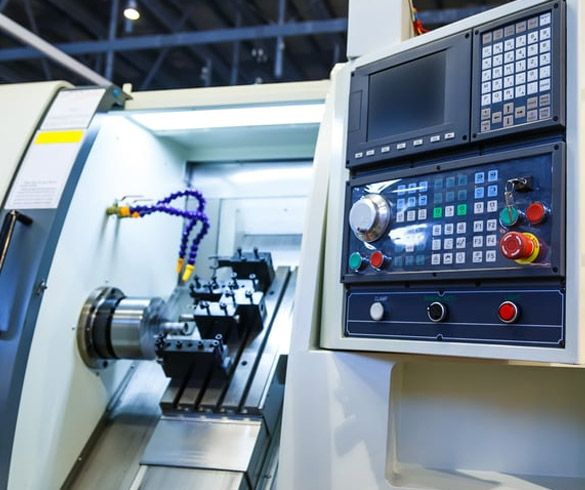
MAKCNC has been building CNC lathes and machining centers since 2016, operating multiple production lines with demo machines kept in stock for faster evaluation. Our facility runs under ISO 9001:2015 quality management, and core transmission components — ballscrews and guideways — are sourced from Taiwan or German brands to keep machine geometry stable over years of die-cast production. Standard warranty covers twelve months after machine acceptance, with lifetime paid service available afterward; some tender projects qualify for an extended three-year free warranty. Our after-sales network commits to an eight-hour response window and on-site arrival within forty-eight hours for confirmed faults. You can read more about our background on the company profile page, or browse the full CNC lathing machine range if your die-cast parts also need rotational pre-machining before they reach the horizontal center.
FAQ of Horizontal CNC Machining Center for Die Casting
Is there a minimum order quantity?
No hard minimum. A single machine can be purchased, though multi-unit orders usually come with better pricing, priority production slotting, or extended service terms.
How long is the lead time?
Typically one to six months, depending on whether the configuration is standard or customized and current production line load.
What warranty applies after acceptance?
Twelve months standard with lifetime paid service afterward; qualifying tender projects can receive a three-year free warranty instead.
Can the machine be customized for non-standard die-cast fixtures?
Yes — customized configurations are available for pallet layout, fixture interface, and automation integration.
Does twin-pallet loading help every die-cast job?
Only when the part family repeats with a reusable fixture. For one-off or constantly changing geometries, a single-pallet machine or a vertical CNC machining center may suit better.
If you're comparing pallet layouts against your own die-casting cycle targets, send us your part drawings and target cycle time, and our team can recommend a configuration or quote that fits — request a quote whenever you're ready.