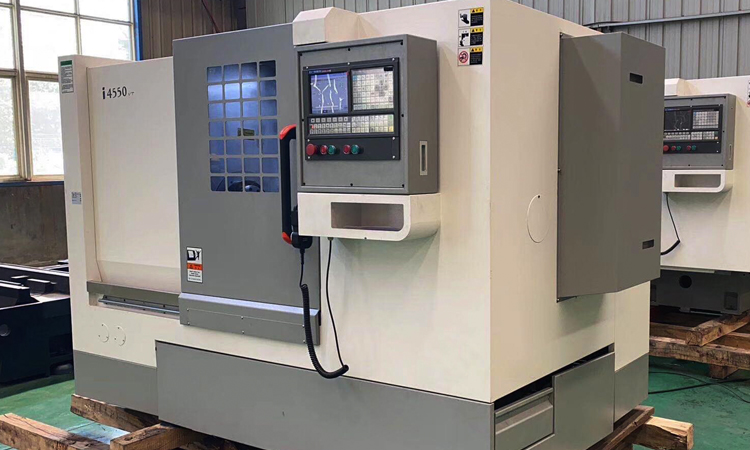
How to Accurately Budget for a Large Horizontal CNC Machining Center
A Large Horizontal CNC Machining Center represents a significant capital investment that can define a workshop's capacity and profitability for years. Choosing a machine that is too small for future projects creates an immediate production bottleneck. Conversely, over-specifying a machine ties up capital that could be used elsewhere. The key is to understand the primary cost drivers and align them with your specific production needs, from workpiece size and material to required precision and cycle times.
This guide breaks down the essential factors that influence the price of a large HMC. We will examine how core specifications translate to initial cost and long-term payback, enabling you to build a realistic budget and make a more informed purchasing decision. Whether you are machining large molds, engine blocks, or complex aerospace components, understanding these variables is the first step toward acquiring the right asset for your business.
What Defines a Large HMC for Your Application?
While there is no universal standard, a Large Horizontal CNC Machining Center is typically characterized by a pallet size of 630 mm x 630 mm or greater and significant axis travels, often exceeding 1,000 mm in the X-axis. However, the "large" designation is less about raw dimensions and more about capability. The critical question is what defines "large" for your parts. Key factors include the workpiece envelope (the maximum part size the machine can accommodate), the weight of the workpiece, and the complexity of the machining operations. For some, a large HMC is necessary for heavy-duty roughing on massive castings, while for others, it's about the reach needed to machine multiple faces of a tall component in a single setup.

Core Machine Configurations and Their Impact
The fundamental design of an HMC directly influences its performance, footprint, and cost. Horizontal machining centers primarily fall into a few design categories, each with distinct advantages.
- Pallet Configuration: The most common setup is a twin-pallet automatic pallet changer (APC). This allows an operator to set up a new workpiece on one pallet while the machine is cutting on the other, dramatically reducing non-productive spindle downtime. Single-pallet machines are simpler and less expensive upfront but sacrifice this efficiency. For high-volume production, multi-pallet systems (linear or rotary) can be integrated, offering extended periods of unattended operation.
- Axis Travel Design: Most large HMCs use a moving column design, where the spindle moves in the X, Y, and Z axes while the workpiece remains stationary on the pallet/table. This provides excellent support for heavy parts, as the table does not have to move a massive workpiece back and forth. This contrasts with smaller vertical machines where the table often moves in X and Y.
- Spindle Taper: The spindle taper (e.g., BT40, BT50, HSK) determines the rigidity of the tool-spindle connection. For large machines performing heavy cuts, a BT50 or HSK-A100 taper is standard. This larger, more rigid interface allows for higher metal removal rates and better surface finishes under load compared to a smaller BT40 taper, which is more common on smaller machines.
Key Features for Precision and Long-Term Stability
The performance of a Large Horizontal CNC Machining Center depends heavily on its construction quality and the sophistication of its control system. These features are critical for maintaining accuracy over the machine's lifespan, especially when working on high-value parts.
At MAKCNC, we build machines designed for sustained performance. Our structural components are made from high-strength cast iron, such as resin sand castings, which provide superior vibration damping compared to welded steel frames. After casting, these components undergo an aging treatment process to relieve internal stresses. This ensures the machine's geometric accuracy remains stable over many years of thermal cycles and cutting forces. Key features to look for include:
- High-Quality Drive Components: Core transmission parts like ball screws and linear guideways are major factors in accuracy and reliability. We prioritize high-precision components from established brands in Taiwan and Germany to ensure smooth motion and minimal backlash.
- Intelligent Control Features: For industries like mold and die manufacturing, surface finish and accuracy are paramount. Our advanced control systems incorporate technologies like intelligent feedforward and quadrant glitch compensation. These features proactively manage tool path dynamics to solve common machining problems like over-cutting marks at corners, quadrant marks on circular paths, and chatter marks from vibration.
- Multi-Face Machining Capability: The inherent design of an HMC with a B-axis rotary table allows for machining on multiple sides of a part in a single clamping. This reduces setup time, minimizes tolerance stack-up errors from re-fixturing, and improves overall part accuracy.
Analyzing the Total Cost of Ownership: A Breakdown
The sticker price of a Large Horizontal CNC Machining Center is only part of the equation. A true cost analysis considers how machine specifications affect both the initial purchase price and the long-term operational payback. Below is a framework for evaluating these costs. The capital cost increases with size and capability, while the operating payback is realized through higher throughput, better quality, and reduced manual intervention.
| Configuration Factor | Impact on Capital Cost | Impact on Operating Payback |
|---|---|---|
| Axis Travel (X/Y/Z) | High. This is a primary cost driver. Larger travels require longer ball screws, bigger castings, and a larger machine footprint, all of which increase price significantly. | Directly enables machining of larger parts, opening up new market opportunities. Reduces setups for long parts that might otherwise require multiple operations. |
| Table Load Capacity | Medium. Higher capacity requires more robust table bearings, a stronger B-axis drive, and a more rigid machine base. | Allows for the machining of heavy workpieces like large mold bases or gearbox housings, which is a key capability for certain industries. |
| Spindle Taper & Speed | Medium. Upgrading from a BT50 to an HSK spindle, or opting for a high-speed spindle (10,000+ RPM), increases cost due to more complex spindle technology and bearings. | A BT50 or larger taper provides rigidity for higher metal removal rates, reducing cycle times. High-speed spindles improve surface finish and are ideal for aluminum or finishing operations. |
| Pallet Configuration | High. A standard twin-pallet APC adds significant cost over a single-pallet machine. Multi-pallet linear or rotary systems are a further major investment. | Highest Impact. An APC can boost spindle utilization from 30-40% to over 85%. This massive increase in productive time often provides the fastest return on investment. |
Selecting a Qualified Large HMC Supplier
Choosing the right partner is as important as choosing the right machine. A reliable supplier provides not just a machine, but also the support infrastructure to ensure it remains a productive asset. As an ISO 9001:2015 certified manufacturer established in 2016, MAKCNC has built multiple production lines and maintains a stock of sample machines. We focus on delivering a complete solution. When evaluating suppliers, consider their after-sales service network. We commit to an 8-hour response time and 48-hour on-site service for troubleshooting. The standard warranty is 12 months after machine acceptance, with lifetime paid service available. For specific tenders, we can offer extended terms, such as a three-year free warranty. We also offer flexible commercial terms; we have no rigid minimum order quantity, allowing you to procure a single machine, while offering better terms on price and delivery for bulk purchases.
Frequently Asked Questions
What is the typical lead time for a Large Horizontal CNC Machining Center?
Our standard lead times range from 1 to 6 months, depending on the specific machine configuration and current production schedules. More complex or customized cnc machines and machining centers from makcnc may require longer lead times.
What kind of warranty and after-sales support is provided?
All machines come with a standard 12-month warranty after final acceptance. We provide lifetime access to paid service and technical support. Our after-sales network is structured to respond to service requests within 8 hours and have a technician on-site within 48 hours to address any issues.
Can I purchase a single machine?
Yes. We do not have a strict minimum order quantity. You can purchase a single unit. However, purchasing multiple machines may qualify you for more favorable commercial terms regarding price, delivery, or service packages.
If you are looking for a reliable and professional cnc lathing machine manufacturer and machining center supplier, please contact us for a detailed quote based on your specific requirements.