A Practical Guide to Using a Horizontal Machining Center for Casting Parts
What is a Horizontal Machining Center for Casting Parts?
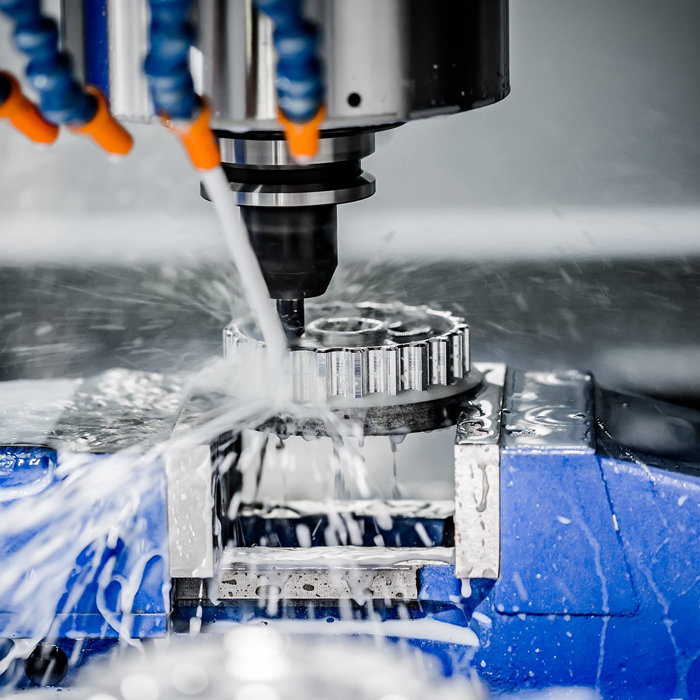
A Horizontal Machining Center for Casting Parts is a specialized CNC machine designed to accurately and efficiently machine components made from raw castings, such as aluminum, iron, or steel. Unlike vertical machines, an HMC's spindle is oriented horizontally. This configuration is exceptionally well-suited for parts that require machining on multiple faces. The workpiece is mounted on a tombstone fixture on a rotating B-axis table, allowing the spindle to access four sides of the part in a single setup. This significantly reduces handling time, minimizes the risk of setup errors, and improves overall part accuracy. For casting applications, the horizontal orientation offers superior chip evacuation, as gravity helps chips and coolant fall away from the cutting zone, preventing recutting and improving surface finish. These machines are engineered for high rigidity to handle the interrupted cuts and variable material conditions common with as-cast surfaces.
Types of HMCs for Machining Castings
Horizontal machining centers are not a one-size-fits-all solution. They are categorized primarily by their pallet size, which dictates the maximum workpiece dimensions they can accommodate. Common sizes include 400mm, 500mm, 630mm, and 800mm pallet systems. For smaller cast components like hydraulic valve bodies, a 400mm or 500mm machine is often sufficient. Larger parts, such as automotive transmission housings or small engine blocks, typically require a 630mm or larger machine. Another key differentiator is the spindle taper, commonly BT40 or BT50. A BT40 spindle is suitable for high-speed machining of aluminum, while the more robust BT50 spindle provides the torque and rigidity needed for heavy-duty cutting in cast iron and steel. Finally, axis configuration is a factor. A standard HMC offers 4-axis simultaneous machining (X, Y, Z, and a rotating B-axis pallet). For highly complex geometries, such as impellers or blisks, a 5-axis HMC with an additional tilting or rotating axis may be required.
Key Features of a High-Performance HMC for Castings
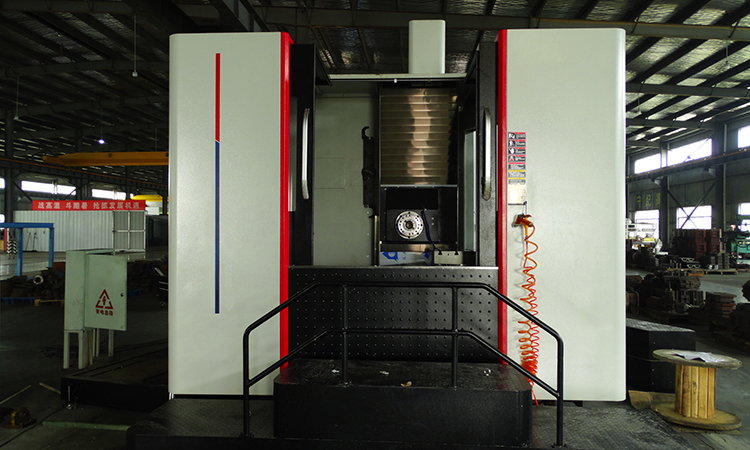
When selecting a horizontal machining center for finishing cast parts, certain features are non-negotiable for achieving consistent quality and reliability. The machine's structural integrity is paramount. Our machine bodies are constructed from high-strength cast iron, often using resin sand casting methods, and subjected to an aging treatment. This process relieves internal stresses in the material, ensuring the machine frame maintains its geometric accuracy and rigidity over years of heavy use. The performance of the machine is also directly tied to its core components. We integrate high-precision ball screws and linear guideways from trusted German and Taiwanese brands. These components ensure smooth, accurate motion and minimal backlash. On the control side, our systems incorporate advanced technologies to solve common machining problems:
- Intelligent Feed-Forward Control: Proactively adjusts for machine dynamics to reduce corner rounding and improve accuracy during high-speed contouring.
- Quadrant Glitch Compensation: Eliminates the small "tick" marks that can appear when an axis reverses direction, a common issue when machining circular features or profiles. This is essential for high-quality mold surfaces.
- Vibration Suppression: Actively dampens chatter and vibration during heavy cuts, resulting in better surface finishes and extended tool life.
- Multi-Face Machining Capability: The integrated rotary table allows for one-time clamping to complete machining on multiple sides, which is a core advantage for complex castings.
Common Applications for Machining Cast Parts
The unique capabilities of a professional cnc machining center solution make it ideal for a wide range of industries that rely on cast components. In the automotive sector, HMCs are the standard for producing engine blocks, cylinder heads, transmission cases, and differential housings. The ability to machine multiple faces, bore cylinders, and deck surfaces in a single setup is critical for meeting the tight tolerance and high-volume demands of the industry. In the aerospace and defense industries, these machines are used for structural components, gearbox housings, and fuel system parts where precision and reliability are essential. General industrial applications are also widespread, including the manufacturing of pump bodies, complex valve housings, hydraulic manifolds, and compressor components. Essentially, any cast part that is roughly cubic in shape and requires precision features on more than one side is a prime candidate for a horizontal machining center.
Understanding Price and Total Cost of Ownership
The initial purchase price of a Horizontal Machining Center for Casting Parts can vary significantly based on several factors. The primary cost drivers are the machine's size (pallet size), the power and speed of the spindle, the capacity of the automatic tool changer (ATC), and the sophistication of the CNC control system. Optional features such as high-pressure through-spindle coolant, Renishaw probing systems for in-process measurement, and advanced software packages will also influence the final price. At MAKCNC, we have no rigid minimum order quantity; single-unit purchases are entirely possible. However, we can often provide more favorable commercial terms regarding price, delivery schedules, or after-sales service for batch orders. Beyond the initial investment, buyers should consider the Total Cost of Ownership (TCO). This includes ongoing expenses for maintenance, tooling, and service. Our machines come with a standard 12-month warranty after formal acceptance and are backed by lifetime paid service, ensuring long-term operational support.
User Guide for Fixturing Aluminum Casting Parts
Properly locating and clamping a raw casting is one of the most challenging aspects of machining. Unlike a billet of raw material, a casting has inherent variations in its dimensions and surface conditions. An effective fixturing strategy must securely hold the part while accommodating these inconsistencies without distorting it. The goal is to establish a consistent machining reference that ensures all finished features are in the correct location relative to each other and to key functional datums.
How to Accommodate As-Cast Variation While Protecting Key Features
The key to success is a robust locating strategy, typically based on the 3-2-1 principle, which constrains the part in all six degrees of freedom. This method uses a series of fixed and sometimes compliant locators to create a stable and repeatable setup.
- Establish the Primary Datum (3 Points): The first step is to define the primary plane. This is done by resting the casting on three fixed locating points. These points should be placed as far apart as possible on the most stable and consistent cast surface. Using three points creates a stable plane, preventing the part from rocking. These locators should ideally contact designated datum pads cast into the part.
- Establish the Secondary Datum (2 Points): Next, you must constrain the part's rotation around the primary plane. This is achieved by pushing the part against two locating points on a second face, typically perpendicular to the first. One of these locators can be fixed, while the other might be a floating or diamond pin to accommodate variation between features.
- Establish the Tertiary Datum (1 Point): Finally, a single locating point on a third face (perpendicular to the first two) locks the part's position along the final axis. This completes the 3-2-1 setup, fully constraining the part.
- Apply Clamping Force: Clamps should always apply force directly opposite a locator or solid section of the casting. Clamping on a thin, unsupported wall will cause it to deflect, leading to inaccurate machining. Use hydraulic or pneumatic clamps with regulated pressure to apply consistent force without distorting the workpiece.
Avoiding common mistakes is just as important as following the correct steps. Below is a checklist of frequent errors in casting-part fixturing.
| Common Mistake | Resulting Problem | Corrective Solution |
|---|---|---|
| Over-constraining the part (e.g., using 4 points for the primary plane) | Part distortion, internal stress, and inconsistent locating as the part "rocks" on the highest two points. | Strictly adhere to the 3-2-1 principle. Three points define a plane. |
| Locating on a drafted or uneven surface | Inconsistent Z-height positioning and poor repeatability from part to part. | Designate and use flat, stable datum pads in the casting design. Use hardened, rounded locating pins. |
| Clamping on thin walls or unsupported sections | Wall deflection, bell-mouthing of bored holes, and inaccurate feature dimensions. | Always position clamps directly over a solid support or locating point. Use top clamps where possible. |
| Using only fixed locators for all datums | The fixture may fail to load if a casting is slightly oversized or if feature positions vary. | Use a combination of fixed and compliant locators (e.g., a round pin and a diamond pin) to accommodate tolerance stack-up. |
Your Professional Horizontal CNC Machine Center Supplier
Since our establishment in 2016, about makcnc has been dedicated to providing high-quality CNC machinery. As an ISO 9001:2015 certified manufacturer, we operate multiple production lines and maintain a stock of sample machines to ensure consistent quality and responsive delivery. Our HMCs are built with rigid cast iron frames and high-precision drive components from leading global suppliers. We understand that uptime is critical, which is why our mature after-sales service network commits to an 8-hour response time and 48-hour on-site arrival for troubleshooting. Whether you need a single machine or a complete production line, our team is equipped to provide a solution tailored to your needs.
Frequently Asked Questions
What is the typical lead time for a horizontal machining center?
Our standard lead time ranges from 1 to 6 months. The exact delivery schedule depends on the specific machine configuration, the level of customization, and the current order volume.
Do you have a Minimum Order Quantity (MOQ)?
No, we do not have a hard MOQ. We support single-unit procurement for workshops and R&D facilities. However, purchasing multiple units may unlock more favorable commercial terms on pricing, delivery, or after-sales support.
What brands of core components are used in your machines?
We prioritize long-term reliability and precision. Our core transmission components, such as ball screws and linear guideways, are sourced from highly regarded manufacturers in Taiwan and Germany to ensure optimal performance.
What kind of warranty and after-sales service do you provide?
Our standard warranty covers the entire machine for 12 months after final acceptance. We also offer lifetime paid service. For specific tenders or large projects, extended warranties, such as a three-year free warranty, can be negotiated. Our service team is committed to an 8-hour response and 48-hour on-site arrival to address any issues.
If you are looking for a reliable supplier for a Horizontal Machining Center for Casting Parts, please feel free to contact us for a detailed quote and technical consultation.