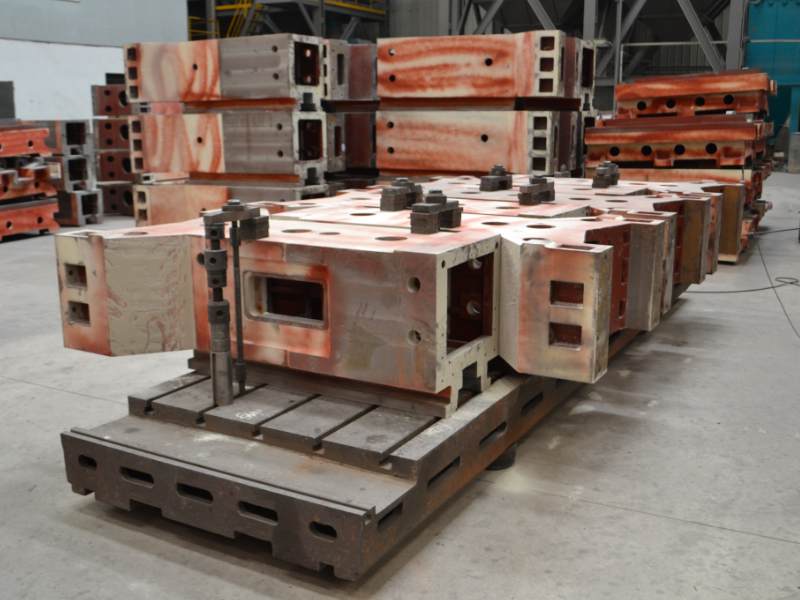
How to Choose a Reliable Builder for Your Custom Special CNC Machine
Custom Special CNC Machine orders go wrong long before the first chip flies. Most procurement teams catch problems during acceptance testing — not during RFQ review, when fixes are still cheap. A builder's drawing can look perfect on paper and still fail on your shop floor if the workholding doesn't match your part geometry, or the automation sequence stalls your cycle time. Skip the verification step and you inherit someone else's assumptions about your production line. This guide covers what to check, what it costs, and what questions separate a capable machine builder from one that just looks capable in a sales deck.
What Is a Custom Special CNC Machine?
A custom special CNC machine is a lathe, machining center, or hybrid platform engineered around a specific part family or process — not a catalog model pulled off a shelf. Instead of buying a general-purpose machine and adapting your tooling to fit it, you specify the spindle configuration, axis count, workholding, and automation interface up front, and the builder designs the machine around those requirements. This suits manufacturers running repeat production of complex geometries, tight tolerances, or parts needing multiple operations finished in one setup. The tradeoff is longer lead time and more upfront engineering review compared with buying a standard CNC lathing machine off the shelf.
Types of Custom Special CNC Machines
Custom builds generally fall into four categories, each suited to a different part profile and production volume. Picking the wrong category is one of the most expensive mistakes a buyer can make, because retrofitting axis count or spindle orientation after delivery is rarely practical.
| Machine Type | Best For | Typical Limitation |
|---|---|---|
| CNC inclined bed lathe | Shaft and flange parts needing good chip evacuation and rigidity | Limited to rotational geometries |
| Vertical machining center | Prismatic parts, mold cavities, multi-face milling | Longer cycle time on deep pockets without proper tool paths |
| Horizontal machining center | High-volume multi-face production with pallet changers | Higher capital cost, larger footprint |
| Turn-mill / multi-axis combo | Complex parts needing one-clamping completion | Programming complexity, longer commissioning |
A CNC machining center covers the middle two rows above, and most mold shops end up comparing vertical versus horizontal configurations before locking a spec.
Features That Separate Production-Grade Builds from Showroom Demos
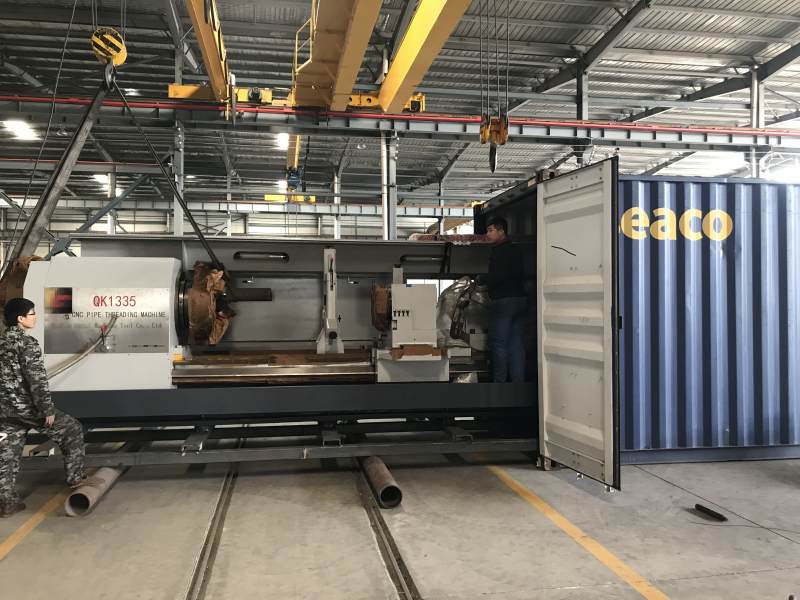
Frame rigidity comes first. Machine bodies built from high-strength cast iron — resin sand castings that go through aging treatment — hold tolerance over years of continuous cuts, not just during the first acceptance run. Core transmission parts matter just as much: ball screws and linear guides sourced from Taiwanese or German brands keep positioning accuracy consistent, provided the control system is tuned to work with them rather than around them. For mold-industry work, look for intelligent feedforward control and quadrant protrusion compensation — these directly address overcut marks, quadrant marks, and chatter marks that show up on complex cavity surfaces. For multi-variety, small-batch production, confirm the machine can complete multiple faces in a single clamping; re-fixturing between faces is where tolerance stack-up usually creeps in.
Custom Special CNC Machine Applications
Mold and die shops are the heaviest users of custom builds, mainly because cavity and core machining demands both surface finish control and multi-face accuracy that general-purpose machines struggle with. Manufacturers running multi-variety, small-batch orders are the second major group — they need one-clamping, multi-face capability so changeover time doesn't eat into margin on short-run jobs. A third group is subcontractors supplying automotive or industrial components who need a dedicated automation sequence (bar loader, robot arm, or pallet pool) built around one part family rather than a flexible-but-slower universal setup.
What Drives Custom Special CNC Machine Pricing
Quoted prices for a custom special CNC machine vary mainly by scope, not by brand markup. Before you compare quotes line by line, know what's actually inside the number:
- Base platform — frame casting, spindle, control system
- Automation integration — loaders, robot arms, pallet pools, interlocks
- Workholding engineering — custom fixtures, jaws, chucks designed for your part
- Control software — feedforward tuning, quadrant compensation, probing cycles
- Tooling and probing packages — tool holders, in-process gauging
- Commissioning and training — onsite setup, operator training hours
- Freight and duty — varies by destination and incoterm
There's no hard minimum order quantity — a single unit is purchasable. Batch orders, when you need several machines for one line, typically earn better pricing, shorter lead time, or stronger after-sales terms, simply because the builder can schedule production more efficiently. Lead times generally run 1 to 6 months, driven mostly by automation complexity and fixture design, not the base machine itself.
Action: Validate the Builder's Proposed Workholding, Automation Sequence, and Cycle-Time Proof Before You Issue an RFQ
This is the step most buyers skip, and it's the one that causes the most expensive surprises after delivery. A quote looks complete when it lists axis travel and spindle speed, but none of that tells you whether the machine will actually run your part at the cycle time you budgeted for.
| Check Item | Why It Matters | Risk If Skipped |
|---|---|---|
| Workholding drawing matched to your part geometry and clamping force | Wrong fixture design causes part shift or tooling damage mid-cycle | Re-engineering fixtures post-delivery adds weeks and unplanned cost |
| Automation sequence simulated with your actual load/probe/unload steps | Paper sequences often ignore dwell time and interference zones | Line stalls on the first production run, idle labor stacks up |
| Cycle-time proof from a trial cut or video, not just a quoted number | Quoted cycle times assume ideal material and tolerance conditions | Real cycle time only shows up after acceptance, too late to renegotiate |
| Spindle torque and axis rating checked against your heaviest part | Undersized torque stalls on tougher alloys | Repeated tool breakage and rework |
| After-sales response commitment in writing | Verbal promises don't hold when a spindle bearing fails mid-run | Downtime outlasts your buffer stock, delivery dates slip |
Before you send the RFQ, request: a full workholding drawing with clamping-force calculation, a cycle simulation video or test cut on a sample part, a written automation sequence broken down step by step, and warranty terms in writing. Review published project cases for part families similar to yours — it's a faster way to sanity-check a quoted cycle time than trusting the number alone.
Custom Special CNC Machine User Guide and Acceptance Tips
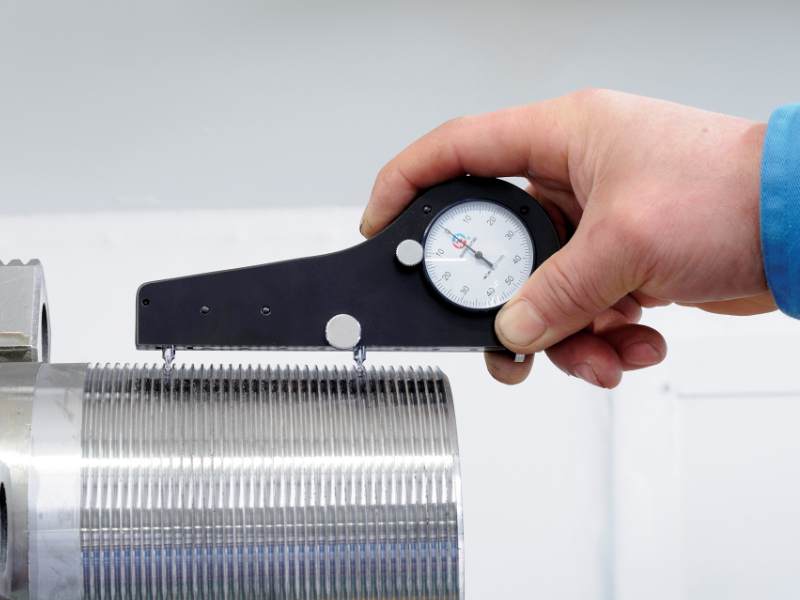
Acceptance testing is where warranty terms actually start, so treat it as a formal checkpoint, not a formality. Standard coverage runs 12 months from the acceptance date, with lifetime paid service available afterward; some tender-driven projects negotiate a 3-year free warranty, so confirm which applies to your contract before signing. A mature after-sales network typically commits to an 8-hour response and 48-hour onsite arrival for breakdowns — get that commitment written into the service agreement, not just mentioned verbally.
Common mistakes to avoid during acceptance:
- Signing off after a single sample part instead of a full production batch
- Leaving the warranty start date undefined (it should be acceptance date, not shipment date)
- Not confirming spare parts stock near your facility before signing
- Skipping the request for as-built workholding drawings, which you'll need for future fixture repairs
Choosing a Custom Special CNC Machine Supplier
MAKCNC was established in 2016 and runs multiple production lines with demo machines kept in stock, which shortens lead time for buyers who can accept a near-match configuration. The facility operates under ISO 9001:2015 quality management, and the core machine body construction follows the resin-sand cast iron and aging-treatment approach described above, paired with Taiwanese or German transmission components. For mold-industry buyers specifically, the control system integrates feedforward and quadrant protrusion compensation to reduce overcut marks and chatter on cavity work, and machines can be configured for one-clamping, multi-face jobs common in small-batch production. Read more about the company's background on the about MAKCNC page, or review the horizontal CNC machining center line for pallet-based, multi-face applications.
FAQ of Custom Special CNC Machine
Is there a minimum order quantity?
No hard minimum — a single unit is purchasable. Batch orders usually earn better pricing, lead time, or after-sales terms.
How long does a custom build take?
Typically 1 to 6 months, depending mostly on automation scope and workholding complexity rather than the base machine design.
What warranty should I expect?
Standard coverage is 12 months from acceptance plus lifetime paid service. Some tender projects specify a 3-year free warranty — confirm this in writing.
What certification should I verify?
Ask for the builder's quality system certificate, such as ISO 9001:2015, and confirm its scope covers the product line you're ordering.
Can one machine finish multiple part faces without re-fixturing?
Builds designed for one-clamping, multi-face machining exist for exactly this purpose — confirm it's part of your spec, not an assumed feature.
If you're comparing builders for a dedicated production line, send us your part drawing and cycle requirement — we'll walk through workholding and automation options and prepare a quote.