Calculate the Real Payback of a Horizontal CNC Machining Center for Die Casting
A Horizontal CNC Machining Center for Die Casting is a specialized machine tool designed for the secondary machining operations on parts produced through die casting. After a part is cast, it often requires precise finishing to remove flashing, drill holes, tap threads, and machine critical mating surfaces. Unlike general-purpose machines, these HMCs are configured for high-volume, automated environments. The key decision for any operations leader is not just the initial purchase price, but understanding the total cost of ownership and the speed of payback, which is driven by superior throughput, reduced labor, and enhanced process stability compared to traditional methods or using vertical machining centers.
What is a Horizontal CNC Machining Center for Die Casting?
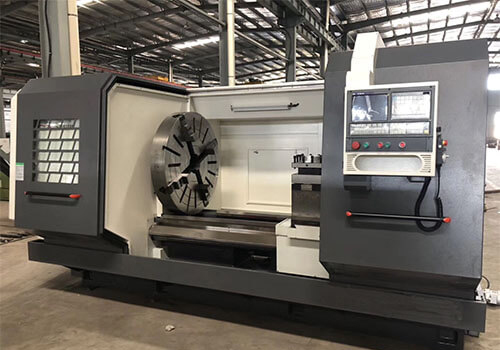
At its core, a Horizontal CNC Machining Center for Die Casting is a machine where the spindle is oriented horizontally. This configuration is exceptionally effective at chip evacuation, a critical factor when machining materials like aluminum at high speeds. For die casting operations, these machines are typically equipped with a pallet changing system. This allows an operator to load and unload a finished part on one pallet while the machine is actively cutting on another, nearly eliminating idle spindle time. This continuous operation model is fundamental to achieving the low cycle times required in industries like automotive and consumer electronics. The machine's rigid structure, often built from high-strength cast iron, provides the stability needed to hold tight tolerances on complex die-cast components, preventing issues like chatter marks and ensuring consistent quality across large production runs.
Types of HMCs for Die Casting Operations
While all HMCs share a common spindle orientation, the models best suited for die casting finishing vary based on several key parameters. The choice depends on part size, production volume, and complexity. A small change in specification can have a significant impact on cycle time and overall cell efficiency.
- Pallet Size and Configuration: The most common configurations are 400mm, 500mm, and 630mm pallet sizes. Twin-pallet systems are standard for maximizing uptime. For larger components like transmission cases, larger pallet machines are necessary.
- Spindle Type: High-speed spindles (12,000 RPM or higher) are essential for efficient aluminum machining. For operations involving harder materials or heavy cuts, a high-torque spindle might be more appropriate.
- Axis Configuration: A standard 4-axis HMC (X, Y, Z, and a rotating B-axis pallet) can machine four sides of a cube-shaped part in a single clamping. This drastically reduces the number of setups compared to a 3-axis VMC. For highly complex parts with angled features, a full 5-axis machine may be required.
Here is a basic comparison to illustrate the operational differences in a die casting cell:
| Parameter | Vertical Machining Center (VMC) | Horizontal Machining Center (HMC) |
|---|---|---|
| Part Setups | Multiple setups often required for multi-sided parts, increasing handling. | 1-2 setups for most parts using the B-axis, reducing labor and error risk. |
| Chip Management | Chips can accumulate on the part, requiring air blasts or operator intervention. | Gravity assists in clearing chips away from the workpiece and tool. |
| Spindle Utilization | Spindle is idle during part loading/unloading. | Spindle runs continuously thanks to the pallet changer. |
| Floor Space | Generally smaller footprint for a single machine. | Larger footprint, but often more productive per square foot. |
Key Features for Machining Die-Cast Components
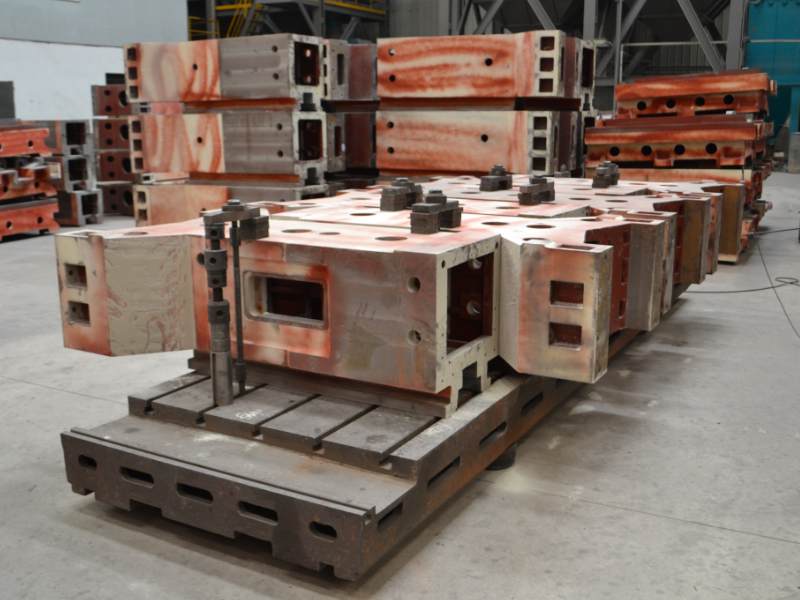
The performance of an HMC in a die casting environment is defined by more than its basic specifications. The integration of high-quality components and intelligent control systems is what enables reliable, high-precision production. Our machine bodies are constructed from high-strength cast iron, such as resin sand castings, which undergo an aging process to ensure long-term dimensional stability and rigidity. This solid foundation is critical for resisting vibration and maintaining accuracy over years of operation. Core transmission components, including the ball screws and linear guideways, are sourced from high-precision manufacturers in Taiwan or Germany. System-wide integration ensures these components work together to deliver optimal performance. For the specific demands of mold and die machining, our control systems incorporate technologies like intelligent feedforward and quadrant glitch compensation. These features directly address and solve common finishing defects such as over-cutting, quadrant marks, and chatter marks that can lead to scrapped parts.
Calculating Payback Beyond the Initial Machine Price
A true investment analysis for a Horizontal Machining Center goes beyond the sticker price. The payback comes from operational efficiencies that directly reduce the cost per part. A lower-priced machine that requires more labor, creates more scrap, and sits idle frequently is a more expensive choice in the long run. We encourage buyers to build a cost model that evaluates payback based on tangible operational savings.
Use this framework to analyze the total cost and payback period:
- Confirmed Costs (The Investment)
- Machine Purchase Price
- Shipping, Rigging, and Installation
- Tooling and Fixturing Package
- Initial Operator Training
- Estimated Annual Savings (The Return)
- Reduced Handling Labor: Calculate the cost of labor saved by moving from a multi-machine, multi-setup process to a single HMC. One operator can often manage an HMC cell that replaces the output of several VMCs and operators.
- Reduced Fixture Changeovers: Quantify the downtime saved. The ability to machine multiple faces in one clamping eliminates hours of weekly changeover time.
- Lower Scrap Risk: Assign a value to your current scrap rate from handling errors and inconsistent setups. The HMC's single-clamping process dramatically improves repeatability and reduces this cost.
- Increased Spindle Utilization: This is the biggest driver. An HMC with a pallet changer can achieve 85-95% spindle uptime, compared to 25-40% for a standalone VMC. Calculate the value of this extra production capacity without adding shifts or machines.
- Variable Factors (To Monitor)
- Future Part Volume Fluctuations
- Preventive Maintenance Costs
- Cost of Consumables (coolant, tooling)
By comparing the annual savings to the initial investment, you can calculate a realistic payback period, often much shorter than anticipated when looking at the purchase price alone. MAKCNC provides a professional cnc machining center solution designed to maximize these savings.
Common Applications in the Die Casting Industry
The benefits of using an HMC for finishing are most apparent on complex, high-volume parts where consistency and speed are paramount. The ability to perform multi-face machining in a single setup makes it ideal for a wide range of components across various industries. Automotive applications are a primary driver, including the finishing of transmission housings, engine blocks, oil pans, and suspension components. In electronics, HMCs are used to machine enclosures, chassis, and large heat sinks that require precise features on multiple sides. The power tool industry also relies on this technology for finishing complex housings. In every case, the goal is the same: to take a near-net-shape casting and turn it into a finished, high-precision component with minimal human intervention and maximum throughput.
Understanding the Price of a Horizontal Machining Center
The price of a Horizontal Machining Center is influenced by numerous factors. The primary drivers are the machine's work envelope (pallet size and axis travels), the brand and specification of the CNC control system, spindle speed and torque rating, and the number of pallets included in the automatic pallet changer (APC). Additional options like high-pressure through-spindle coolant, advanced probing systems, and tool life management software will also affect the final cost. At MAKCNC, we offer flexibility in procurement. We have no rigid minimum order quantity, so you can purchase a single machine. However, for clients looking to equip an entire production line, bulk purchases of multiple units can unlock more favorable commercial terms regarding price, delivery schedules, or extended after-sales service packages. Our typical lead times range from one to six months, depending on machine configuration and current production schedules.
User Guide for Optimal Machine Performance
Maximizing the return on your HMC investment starts with proper planning and continues with consistent maintenance. Before installation, ensure you have a suitable foundation that meets the machine's rigidity and leveling requirements. Stable power and a clean, dry compressed air supply are also essential. During operation, the design of your workholding and fixtures is paramount. A well-designed fixture allows for secure clamping, grants tool access to all required features, and can be loaded/unloaded quickly by an operator. For maintenance, a daily routine of checking coolant concentration, lubrication levels, and ensuring the chip conveyor is functioning correctly will prevent most common issues. All our machines come with a standard warranty of 12 months after formal acceptance, and we provide lifetime paid service options. Our mature after-sales network is structured to provide a response within 8 hours and have a technician on-site to address any faults within 48 hours.
Your Horizontal CNC Machining Center for Die Casting Supplier
As a leading about makcnc, professional cnc lathing machine manufacturer and machining center supplier established in 2016, MAKCNC operates from an ISO9001:2015-certified facility with multiple production lines. We understand the unique demands of the die casting industry and have engineered our machines to deliver both precision and productivity. Our commitment to using high-strength, stress-relieved cast iron frames and premium German or Taiwanese drive components ensures lasting performance. With a stock of sample machines, we can often demonstrate capabilities and help you validate your process. Whether you need a single machine or a fully integrated production cell, our team is equipped to provide a solution that meets your technical and commercial requirements.
Frequently Asked Questions
What is the typical lead time for an HMC?
Our standard lead time ranges from one to six months, depending on the specific model, configuration, and our current order backlog.
Do you have a Minimum Order Quantity (MOQ)?
No, we do not have a hard MOQ. You can purchase a single unit. However, purchasing multiple machines in a single order may provide access to better commercial terms on price, delivery, or service.
What kind of warranty and after-sales support do you offer?
The standard warranty is 12 months after the machine is formally accepted at your facility. We offer lifetime paid service thereafter. Our support network commits to an 8-hour response time and 48-hour on-site arrival for troubleshooting.
Can your machines handle complex parts with features on multiple sides?
Yes, absolutely. Our horizontal machining centers are specifically designed for multi-face machining. The integrated 4th-axis rotary pallet allows the machine to access four sides of a part in a single clamping, which is ideal for complex die-cast components.
If you are evaluating a new Horizontal CNC Machining Center for your die casting operations, submit your part drawings and production requirements. Our team can provide a detailed quote and a payback analysis for your specific application.