
Horizontal machining center technical specifications
Definition of a Horizontal Machining Center
horizontal machining center technical specifications outline the measurable capabilities and operating limits of a CNC machine with a horizontally oriented spindle. Unlike a vertical machining center, an HMC positions the cutting tool parallel to the shop floor, while the workpiece is typically secured on a rotary pallet or tombstone. This layout lets chips drop away from the cutting area and makes it easier to machine several sides of a part in one setup. A specification sheet usually lists axis travel, spindle speed and power, table size, pallet capacity, tool storage, positioning accuracy, repeatability, control system, floor space, and machine weight. For international buyers, these details also help determine whether the machine suits the target part, production volume, container shipment plan, and available factory power.
Types of Horizontal Machining Centers
Horizontal machining centers come in several configurations. The right choice depends on workpiece size, material, production quantity, and the number of faces that require machining. A basic HMC uses X, Y, and Z linear axes with a rotary table for indexed workpiece positioning. A four-axis model adds controlled rotary movement, allowing holes, pockets, and angled features to be machined around multiple faces. Five-axis horizontal machines coordinate linear and rotary motion during cutting, making them well suited to aerospace parts, impellers, dies, and components with compound surfaces. Buyers can also select pallet-changing HMCs for repeat production, twin-pallet machines that allow loading while another part is being cut, and heavy-duty models for cast iron, steel, or large mineral equipment components. MAKCNC also supplies vertical models such as the vertical CNC machining center MV1380 when a vertical layout is the better fit.
Features Shown in HMC Machine Specs
Good HMC machine specs should be considered as a complete package, not as a list of isolated headline figures. For example, a 10,000 rpm spindle may work well for aluminum, yet a high-torque 6,000 rpm spindle can be more effective for roughing large steel forgings. Spindle power, torque, taper size, and motor design reveal much more about practical cutting performance. Travel dimensions show maximum axis movement, but the usable work envelope is smaller once fixture height, rotary table size, tool length, and safety clearance are included. Table dimensions and maximum load indicate whether a casting can be clamped safely. Automatic tool changers, chip conveyors, coolant systems, probing, through-spindle coolant, and pallet changers all influence cycle time and operator workload. In practice, buyers who compare these details together make more reliable equipment decisions than those who focus on spindle speed alone.
Applications of Horizontal Machining Centers
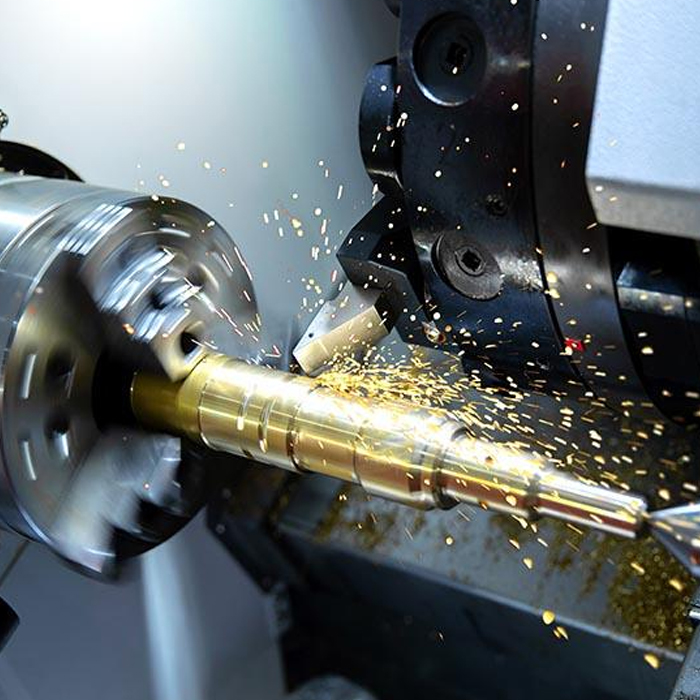
Horizontal machining centers are widely used when a component requires operations on several sides or when consistent chip evacuation is important during deep cutting. Automotive suppliers use HMCs for engine blocks, transmission housings, suspension components, and pump bodies. Aerospace manufacturers may machine aluminum structural parts, titanium brackets, and landing gear components, provided the machine offers adequate rigidity, thermal stability, and coolant delivery. Agricultural machinery and construction equipment plants often process large steel housings, gear cases, and hydraulic parts. In oil and gas manufacturing, horizontal machines are used for valve bodies, flanges, connectors, and other parts that demand accurate bore relationships. Communication equipment, consumer electronics tooling, chemical machinery, and geological exploration equipment can also benefit from multi-face machining. A pallet system is particularly useful when the same part family runs in batches and setup time must stay under control.
Horizontal Machining Center Specifications for Capacity
Capacity starts with axis travel and the work envelope, but the two terms are not interchangeable. X travel generally refers to left-to-right movement, Y travel to vertical movement, and Z travel to spindle movement toward or away from the workpiece. Check every value against the planned part dimensions, fixture height, tool projection, and required access angle. A machine with 800 mm of X travel may not accommodate an 800 mm workpiece if the fixture takes up 120 mm and the tool needs additional clearance. Table size, pallet diameter, maximum workpiece height, and maximum workpiece weight should be stated separately. Rotary table indexing accuracy also becomes important when holes or machined features on four sides must align precisely. Ask the supplier for a drawing showing the actual working envelope, pallet dimensions, door opening, and loading height. That drawing is often more valuable than a single travel number.
Spindle and Cutting Performance
Spindle specifications show how an HMC will perform during roughing, drilling, tapping, and finishing. Buyers should review rated power, peak power, maximum torque, spindle taper, speed range, and drive motor type. BT40 or CAT40 tapers are common for medium-size work, while BT50 or CAT50 tooling is often chosen for heavier cuts and larger tools. Higher speed supports small cutters and aluminum finishing; torque is more important for large drills, face mills, and steel removal. The data sheet should state whether the quoted power is continuous or short-term peak power. Coolant pressure and flow also affect deep-hole drilling and chip removal. If the machine will cut stainless steel, titanium, hardened steel, or cast iron, request sample cutting data instead of relying on rpm figures alone. Tool holding, cutter diameter, and fixture rigidity can change the real-world result considerably.
Accuracy and Control Information
Accuracy figures are useful only when the measurement method and test standard are clearly stated. A CNC machining center data sheet may list positioning accuracy, repeatability, squareness, circular interpolation results, and backlash compensation. Positioning accuracy indicates how closely an axis reaches a commanded location, while repeatability shows how consistently it returns to that position. Both can be influenced by temperature, foundation quality, lubrication, tool condition, and machine warm-up. Ask whether the figures follow ISO 230, VDI, or another recognized inspection method, and confirm the test length and environmental conditions. Control features deserve the same attention. Review memory capacity, conversational programming, Ethernet or USB transfer, remote diagnostics, tool-life management, probing support, and compatibility with the buyer’s CAD/CAM workflow. A familiar control reduces training time, but service access and spare-parts availability are equally important in a production environment.
Horizontal Mill Specifications for Tooling and Automation
Horizontal mill specifications should include automatic tool changer capacity, maximum tool diameter, maximum tool length, maximum tool weight, tool-to-tool change time, and chip-to-chip time. A 24-tool magazine may be enough for a small part family, while 40, 60, or more tools may be needed for mixed production involving drills, taps, reamers, boring bars, and finishing cutters. Check whether adjacent magazine pockets restrict the storage of large tools. Pallet changer information should identify pallet size, change time, indexing positions, and maximum load. For unattended or lights-out production, buyers should also evaluate coolant filtration, chip conveyor design, oil skimmer options, tool breakage detection, workpiece probing, and automatic tool measurement. Automation can include pallet pools, robots, tombstones, and loading stations. These additions affect both price and floor space, so they should be planned around the actual part family rather than added as generic options.

How to Read Horizontal Machining Center Technical Specifications
To learn how to read horizontal machining center technical specifications, begin with the part rather than the machine brochure. List the largest length, width, height, weight, material, required tolerance, number of faces, largest hole, deepest pocket, and expected monthly quantity. Then identify the operations that need a fourth or fifth axis and determine the fixture or tombstone required. Match those requirements to axis travel, table capacity, spindle torque, tool taper, and pallet dimensions. Next, review accuracy, control functions, coolant, chip handling, electrical supply, and environmental requirements. Request a complete layout drawing and a sample process plan from the supplier. Compare the proposed cutting tools, cycle time, fixture method, and inspection plan. This approach often reveals hidden limitations, such as inadequate door clearance or a tool magazine that cannot accommodate the required boring bars.
What Specifications Matter When Choosing an HMC
When asking what specifications matter when choosing an HMC, it helps to separate production requirements from installation requirements. Production specifications include usable travel, workpiece capacity, spindle torque, tool taper, rotary indexing accuracy, positioning repeatability, chip removal, and automation options. Installation specifications include total machine dimensions, shipping weight, floor loading, foundation details, electrical voltage, compressed air, coolant tank capacity, ventilation, and maintenance access. A machine may fit the part but still be unsuitable if the factory cannot provide three-phase power or move a 12-ton unit through the receiving door. Ask for packed dimensions and gross weight during export planning. Also confirm warranty coverage, commissioning support, software language, operator training, and the availability of wear parts in the destination country. These practical details can affect operating cost as much as spindle power.
Horizontal Machining Center Price Factors
Horizontal machining center price varies with machine size, spindle package, axis count, control brand, automation level, accuracy class, and export configuration. A compact three-axis HMC with a 400 mm pallet is priced very differently from a large twin-pallet five-axis machine designed for heavy steel components. The tool magazine, through-spindle coolant, probing, chip conveyor, oil mist collection, rotary table, pallet pool, and special fixtures can each alter the quotation. Shipping destination, crate dimensions, insurance, installation service, local taxes, and required certifications also influence delivered cost. Buyers should request a line-by-line quotation that separates the base machine from optional equipment. Compare cycle time and annual output, not purchase price alone. A machine that removes a setup, reduces manual loading, or cuts a 12-minute cycle to 8 minutes may offer stronger production value even if its initial quotation is higher.
Horizontal Machining Center User Guide
Before installation, verify the foundation drawing, anchor positions, floor strength, lifting route, power rating, air pressure, and coolant requirements. Leave enough room for operators to load pallets, open electrical cabinets, remove chips, and service the spindle. Level the machine according to the supplier’s instructions, then complete geometric checks and axis calibration after it reaches operating temperature. During use, warm up the spindle and axes, confirm tool offsets, inspect fixtures, and keep the chip conveyor and coolant filters clean. Do not exceed the rated pallet load or run an unbalanced tombstone. For export buyers, prepare a maintenance schedule covering lubrication, coolant concentration, way covers, hydraulic pressure, spindle chiller condition, and tool-holder cleaning. Record alarms and cutting results as they occur. This information helps service engineers identify recurring issues before they stop production.
How to Compare Horizontal Machining Center Data Sheets
To understand how to compare horizontal machining center data sheets, put each supplier’s figures into the same table and define the terms before assigning scores. Compare usable travel using the same measurement method, spindle power on the same rating basis, torque across the useful speed range, and accuracy under comparable inspection conditions. Record pallet size, maximum workpiece weight, tool capacity, change time, machine footprint, shipping weight, and utility demand. Include the cost of options required for your process so a basic machine is not compared with a fully equipped model. Ask whether the quoted cycle time includes tool changes, probing, pallet exchange, and operator loading. Review references from similar applications, such as the global CNC machinery cases of MAKCNC. A clear comparison should conclude with a technical compliance list, a commercial quotation, and a factory acceptance test plan.
FAQ of Horizontal Machining Centers
What is the main advantage of a horizontal machining center?
The main advantage is efficient multi-face machining with effective chip evacuation. A workpiece mounted on a rotary pallet or tombstone can often be machined on two, three, or four sides without being removed from the fixture. This reduces repeated alignment, lowers setup time, and helps preserve the relationship between bores and milled surfaces. The horizontal spindle also allows chips to fall away from many cutting zones instead of accumulating in a deep pocket. The benefit is especially clear for production parts such as gearbox housings, pump bodies, engine components, and valve blocks. A vertical machine may still be the better choice for open-top parts, simple plates, molds, or jobs that require frequent visual access from above.
Which HMC specifications should a buyer confirm first?
First confirm the usable work envelope, pallet or table size, maximum workpiece weight, spindle taper, torque, axis travel, and tool magazine capacity. These figures determine whether the machine can physically hold and machine the target part. Next, check positioning accuracy, repeatability, rotary indexing accuracy, control functions, coolant delivery, chip removal, and automation. Installation data should follow: machine footprint, total weight, floor loading, power supply, air demand, and access requirements. Ask for a complete machine layout rather than relying on a front-view photograph. It should show door opening, pallet loading height, maintenance zones, chip conveyor position, and electrical connections. Finally, confirm what is included in the quotation, since probing, through-spindle coolant, a fourth axis, and additional tooling are often optional.
Can an HMC machine cut steel and aluminum?
Yes, an HMC can cut both steel and aluminum when the spindle, tooling, coolant, and workholding are selected for the material. Aluminum generally benefits from higher spindle speed, sharp carbide tools, and strong chip evacuation. Steel may require greater torque, lower cutting speeds, rigid holders, suitable coolant, and stable clamping. Stainless steel and titanium need particular attention to heat, work hardening, tool wear, and coolant flow. Review the spindle torque curve rather than looking only at maximum rpm. Ask for recommended cutting parameters or a sample test using the actual material grade. The machine structure, fixture, and tool holder must also be rigid enough to prevent chatter. Material capability is therefore a system question, not a single line on the specification sheet.
How does a pallet changer affect HMC productivity?
A pallet changer lets the operator load or unload one pallet while the machine cuts on another, depending on the machine design and safety sequence. This reduces idle time and keeps the spindle productive for a larger portion of the shift. It is especially useful for repeat batches, part families, and operations with long loading or inspection steps. However, a pallet changer also adds cost, floor space, hydraulic or servo components, and maintenance points. Buyers should compare change time, pallet accuracy, maximum load, tombstone clearance, and the number of available pallets. If parts require lengthy setup, a twin-pallet machine or pallet pool may provide a clear return. For low-volume work with short loading times, a single-pallet HMC may be the more economical choice.
MAKCNC Horizontal Machining Center Supplier
MAKCNC supplies CNC machining equipment for international manufacturers, distributors, and engineering teams that need clear technical communication before purchase. Our product range includes CNC lathing machines, CNC machining centers, vertical and horizontal machining equipment, gantry processing systems, heavy-duty cutting lathes, CNC oilfield lathes, and manual oilfield lathes. We help buyers match machine capacity to material, part size, tolerance, output, and installation conditions rather than recommending a model based on spindle speed alone. You can learn more about MAKCNC as a professional CNC lathing machine manufacturer, or discuss customized CNC machines and machining centers from MAKCNC for special fixtures, automation, travel, tooling, or control needs. If you are looking for a horizontal machining center supplier, contact MAKCNC for the latest product quotation, technical data, export support, and a machine recommendation based on your workpieces.