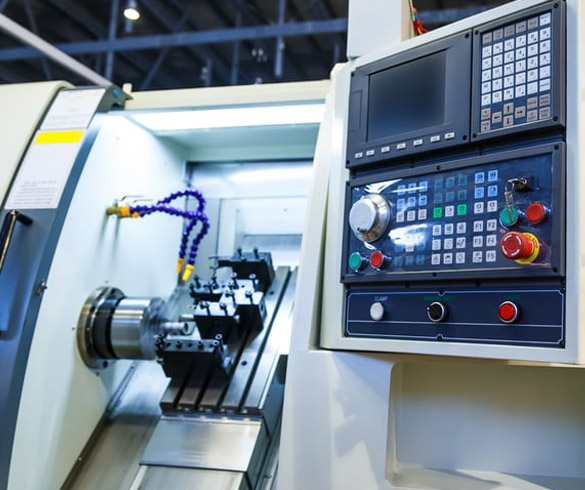
How to Choose a Small CNC Inclined Bed Lathe for Precision Turned Parts
A Small CNC Inclined Bed Lathe can look almost identical to a dozen other machines on a supplier's product page — same swing, similar spindle bore, comparable price tag. What buyers regret is not checking the details that actually decide whether the machine fits their parts: chuck size, bar capacity, turret stations, and floor space. Order the wrong configuration and you find out only after the crate is opened, and by then your RFQ deadline has already passed. This guide walks through what to verify before drawings go out for quotes.
What is a Small CNC Inclined Bed Lathe?
A small CNC inclined bed lathe is a compact turning machine built on a slanted bed casting — typically angled between 30 and 60 degrees — so chips fall away from the cutting zone by gravity instead of collecting around the tool and workpiece. The angled bed also allows a shorter, stiffer structure than a flat-bed lathe of the same swing, which matters when tolerances are held on small precision turned components rather than large shafts. Compact versions of this machine, often under 2 meters in floor length, are sized for parts under roughly 200mm in diameter — fittings, connectors, small shafts, bushings — the kind of work where several machines commonly run side by side instead of one large-capacity lathe doing everything. The underlying computer numerical control system is what keeps the tool path repeatable from the first part to the thousandth part on any modern CNC Lathing Machine.
Types of Small CNC Inclined Bed Lathe
Not every inclined bed lathe is built the same way, and the differences matter more than the marketing sheets suggest.
- 2-axis fixed-turret models — the simplest configuration, best for shafts and bushings with no milled features.
- Live-tooling / Y-axis models — add drilling, milling, and off-center holes without a second setup, useful when parts need cross-holes or flats.
- Twin-spindle configurations — a sub-spindle picks up the part after the first operation, cutting handling time for parts machined on both ends.
- Chuck sizes from 5-inch to 8-inch — the common range for this class of small CNC inclined bed lathe, matched to part diameter, not to whatever chuck the factory happens to have in stock.
Features of a Small CNC Inclined Bed Lathe
The frame is usually cast from high-strength iron, often resin sand casting, and aged before final machining so the structure holds its geometry over years of cutting loads rather than drifting after the first few thousand hours. Core motion components — ballscrews and linear guides — are commonly sourced from Taiwan or German brands, because the whole point of a rigid casting is wasted if the drive components introduce backlash. For mold-industry work, the control system typically integrates smart feedforward and quadrant-lag (quadrant-bulge) compensation, which directly addresses the overcut marks, quadrant lines, and chatter marks that show up on curved surfaces at direction changes. Many configurations can also complete multiple faces in a single clamping, a real advantage for multi-variety, small-batch production where re-fixturing eats into margin. Facilities producing this equipment are commonly certified to ISO 9001:2015, which governs the quality management process rather than any single machine spec.
Small CNC Inclined Bed Lathe Application
This machine class is common in mold and die component finishing, automotive fittings, hydraulic connectors, medical device housings, and small aerospace hardware — anywhere a shop needs tight tolerances on parts small enough to fit in one hand. Shops running mixed small-batch orders often pair a compact lathe with a CNC Machining Center for prismatic features that a lathe alone cannot cut, then route parts back for final turning operations. It is not the right fit for large shafts, oversized flanges, or heavy roughing work — that belongs on a larger flat-bed lathe with a bigger spindle bore and higher torque rating.
The Fit-to-Part Sourcing Method for a Small CNC Inclined Bed Lathe
Most buyers compare price and swing diameter and stop there. That's how machines end up undersized, or oversized and wasting floor space. A fit-to-part sourcing check matches four numbers on the machine to your actual part drawings before you ever request a quote.
| Check Item | Why It Matters | Risk If Ignored |
|---|---|---|
| Max bar diameter | Sets the largest raw stock the spindle bore and bar feeder can pull through | Machine can't run your largest part — you buy a second lathe mid-project |
| Chuck size | Determines clamping force and the practical part diameter range for stable turning | Undersized chuck causes chatter and out-of-round parts; oversized chuck wastes cycle time on jaw travel |
| Turret stations | Fixes how many tool changes a program can run without manual intervention | Too few stations forces mid-run tool swaps, killing unattended-run economics on multi-op parts |
| Footprint | Confirms the machine plus bar feeder plus chip conveyor actually fits the shop floor and crane access | Machine arrives and doesn't clear the doorway, or crowds the next work cell |
Run this check against your top 5 highest-volume part drawings, not your average part. A small CNC inclined bed lathe sized for your typical job may still choke on your one oversized outlier — and that outlier is usually the part that pays the bills.
Small CNC Inclined Bed Lathe Price
Price on this equipment moves with more than swing size. Buyers comparing quotes should break the number down into these components:
- Spindle bore and chuck size — larger bore capacity costs more even on an otherwise compact frame.
- Turret station count — an 8-station turret costs less than a 12-station turret with live tooling.
- Control system compensation package — feedforward and quadrant-lag compensation, useful for mold work, adds to the base price.
- Warranty terms — standard coverage is typically 12 months after acceptance plus lifetime paid service; some tender projects specify a 3-year free warranty, which raises quoted price accordingly.
- Order quantity — there is no hard minimum order quantity; a single unit can be purchased, but multi-unit orders generally get better pricing, lead time, or after-sales terms.
- Lead time pressure — standard build lead time runs 1 to 6 months depending on configuration; sample-stock machines ship faster than a fully customized build.
Small CNC Inclined Bed Lathe User Guide
Once the machine is on-site, these steps reduce commissioning delays:
- Level the bed using the supplier's leveling procedure before running any program — an out-of-level bed defeats even the best ballscrew accuracy.
- Set jaw pressure to the chuck manufacturer's spec for your bar diameter, not a generic setting carried over from the last machine.
- Align the bar feeder centerline with the spindle bore — misalignment shows up as inconsistent finish on long parts.
- Run a warm-up cycle before the first production batch; thermal growth affects tolerance on the first parts off a cold machine.
- Calibrate quadrant-lag compensation settings against a test part with an arc feature, then lock the parameter once quadrant marks disappear.
- Log the acceptance date — it starts the 12-month warranty clock, and after-sales networks on this equipment typically commit to an 8-hour response and 48-hour on-site arrival for warranty issues.
Small CNC Inclined Bed Lathe Supplier
MAKCNC has produced CNC lathes and machining centers since 2016, running multiple production lines with sample machines kept in stock for buyers who cannot wait out a full custom build. Machines are built to ISO 9001:2015 quality management standards, with cast-iron frames aged for long-term rigidity and core motion components sourced from established Taiwan and German brands. There is no fixed minimum order — a single small CNC inclined bed lathe can be purchased directly — while multi-unit orders receive improved pricing, delivery scheduling, or after-sales terms. Standard build and delivery runs 1 to 6 months depending on configuration, warranty is 12 months post-acceptance with lifetime paid service available afterward, and the after-sales network targets an 8-hour response with 48-hour on-site support. Buyers needing a non-standard footprint, turret configuration, or bar capacity can review customized CNC machines and machining centers, and shops that also need milling capacity alongside turning can compare the MV1160 vertical machining center or view documented project outcomes on the cases page.
FAQ of Small CNC Inclined Bed Lathe
What part diameter suits a small CNC inclined bed lathe? Most compact configurations handle parts up to roughly 200mm in diameter, matched to a 5 to 8-inch chuck — always confirm against your actual bar stock diameter, not the swing spec alone.
Is there a minimum order quantity? No. A single unit can be ordered; multiple units typically unlock better commercial terms on price, lead time, or service.
What warranty applies? Standard coverage is 12 months after acceptance with lifetime paid service afterward. Some tender-driven projects require an extended 3-year free warranty, which can be quoted on request.
How long is delivery? Typically 1 to 6 months depending on configuration and whether the build uses sample stock or is fully customized.
How is it different from a flat-bed lathe? The slanted bed drops chips away from the cutting zone and supports a shorter, stiffer casting — an advantage on small precision turned parts where a flat-bed design would need a larger footprint for the same rigidity.
If you're comparing suppliers for a small CNC inclined bed lathe, send us your part drawings and target volumes — we'll help match chuck size, turret configuration, and footprint to your production line and provide a current quote.