How to Source Custom CNC Machining Equipment Without Regretting Your Purchase Order
Custom CNC Machining Equipment is machinery built or configured to a buyer's specific part geometry, tolerance band, and production volume, rather than sold as a fixed catalog model. Most procurement teams find out too late that a "standard" machine can't hold the tolerance their part drawing calls for, or that the spindle taper doesn't match their tooling inventory. That gap between what's on the quote and what actually runs your parts is where most sourcing regret starts. Before you sign a purchase order, you need a clear picture of machine types, cost drivers, and a factory acceptance test that actually protects you.
What is Custom CNC Machining Equipment?
Custom CNC machining equipment refers to lathes, machining centers, or multi-axis systems configured around a buyer's part family instead of a generic spec sheet. This can mean a modified bed length, a specific spindle speed range for a certain alloy, added axes for one-hit machining, or integrated automation like bar feeders and robotic arms. The defining trait isn't the brand name on the control panel — it's whether the machine's working envelope, rigidity, and tooling setup were selected to match your actual parts. A supplier offering true customization will ask about your part drawing, batch size, and cycle time target before quoting a base model.
Types of Custom CNC Machining Equipment
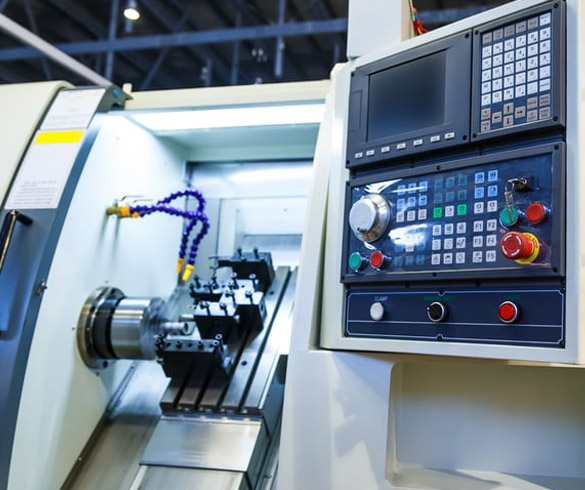
Buyers usually choose among a few core categories, and picking the wrong one is a common and expensive mistake. A CNC lathing machine is built for rotational parts — shafts, flanges, bushings — where the workpiece spins against a fixed or moving tool. A CNC machining center, by contrast, holds the part stationary while a rotating tool cuts across multiple faces, which suits prismatic parts like housings, brackets, and mold bases. Within machining centers, you'll also decide between vertical and horizontal configurations, and within lathes, between flat-bed and inclined-bed designs.
- CNC lathing machine — best for shafts, pins, and round parts needing OD/ID turning; see the CNC inclined bed lathe for chip evacuation on high-volume turning jobs.
- Vertical machining center — suited to flat or block-shaped parts, easier operator access, lower floor footprint; models like the vertical CNC machining center MV1160 fit small-to-mid part envelopes.
- Horizontal machining center — better chip fall-away and multi-face access in one setup, typically chosen for mold and die work; see the horizontal CNC machining center.
- Multi-axis / mill-turn hybrids — combine turning and milling in one chucking, reducing fixture changes for complex geometries.
Features of Custom CNC Machining Equipment
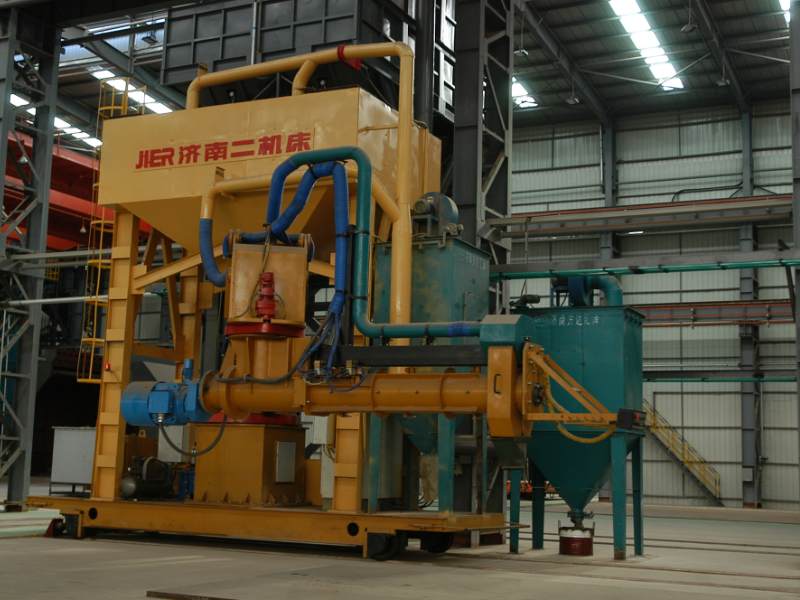
The features that actually matter for production parts go beyond spindle speed on a spec sheet. Frame material and heat treatment determine whether a machine holds tolerance after a year of three-shift running — high-strength cast iron (such as resin-sand castings) that has gone through aging treatment resists the thermal drift and vibration that gradually pushes parts out of spec. Core transmission components, like ballscrews and linear guides, are frequently sourced from established Taiwanese or German brands because these parts govern positioning repeatability more than almost anything else in the machine. For mold and die shops specifically, look for systems with intelligent feed-forward control and quadrant-transition compensation — these directly reduce the overcut marks, quadrant glitches, and chatter lines that ruin finish quality on curved surfaces. For shops running many small-batch part numbers, the ability to complete multi-face machining in a single clamping matters more than raw spindle horsepower, since every re-fixture introduces new tolerance stack-up risk.
Custom CNC Machining Equipment Application
Application context should drive machine selection, not the reverse. Mold and die manufacturers need the finish-quality features described above — feed-forward control, quadrant compensation, rigid castings — because their parts carry cosmetic and dimensional requirements simultaneously. Automotive component suppliers producing shafts, sleeves, or flanges in volume lean toward CNC lathing machines with bar-feed automation to hit takt time. Aerospace and hydraulic component makers, where part geometry is complex and batch sizes are smaller, often specify horizontal or multi-axis machining centers to cut setup time per part. General job shops serving multiple industries usually want a versatile vertical CNC machining center MV970 or similar mid-envelope machine that can switch between part families without major retooling.
Custom CNC Machining Equipment Price
Price on a customized machine swings on a handful of concrete factors, and understanding them prevents sticker shock or, worse, under-speccing to hit a budget number.
| Cost Driver | Why It Moves Price |
|---|---|
| Working envelope size | Larger bed/table travel needs heavier castings and longer guideways |
| Axis count | 4th/5th axis or mill-turn capability adds hardware and control complexity |
| Automation add-ons | Bar feeders, robotic loaders, pallet changers raise cost but cut labor per part |
| Component brand tier | Taiwanese/German ballscrews and guides cost more than generic alternatives, but hold tolerance longer |
| Order volume | Single-unit orders are accepted, but multi-unit purchases typically unlock better pricing, lead time, or after-sales terms |
| Lead time | Standard lead times run 1 to 6 months; compressed schedules can affect cost |
There's no fixed minimum order quantity — a single machine can be purchased — but batch orders generally come with better commercial terms on price, delivery, or service.
Turning Part Geometry and Takt Time Into an RFQ and Acceptance Criteria
This is the step most buyers skip, and it's the one that determines whether the machine you receive actually runs your production. An RFQ built only around "CNC machining center, 3-axis, table size X" gives suppliers too much room to quote a machine that technically matches the description but fails on your actual parts. Instead, convert three inputs — part geometry, takt time, and automation needs — into specific, testable criteria.
Step-by-step: Building the RFQ
- Attach the actual part drawing, not a verbal description. Include GD&T callouts, material, and hardness. Why it matters: a machine sized for aluminum brackets will struggle with hardened steel dies, even if the envelope fits.
- State takt time or required parts-per-shift. This forces the supplier to size spindle power, tool-change speed, and automation level to your throughput — not a generic benchmark. Skipping this is the top reason buyers end up with a machine that's technically capable but too slow for their line.
- List automation requirements explicitly — bar feeder, robotic arm, pallet pool, in-process gauging. Retrofitting automation after delivery costs more and can void warranty terms on the base machine.
- Specify tolerance and surface finish requirements per feature, not just "high precision." Vague tolerance language is the single most common cause of post-delivery disputes.
- Request sample-part run data before final payment — ask the supplier to cut a sample part on the actual machine and report dimensional results, not simulation data.
Factory Acceptance Test Checklist
| Check Item | Risk If Skipped |
|---|---|
| Dry-run axis travel and repeatability | Guideway or ballscrew defects surface only under real load later |
| Cut a sample of your actual part | Generic test blocks won't reveal chatter or tolerance drift specific to your geometry |
| Verify cycle time against quoted takt | A machine can be accurate yet too slow to meet production targets |
| Confirm tooling and fixture compatibility | Mismatched tool holders or chucks mean added cost after delivery |
| Review documentation for warranty terms | Standard warranty is 12 months post-acceptance with paid lifetime service; some tenders specify 3-year free warranty — confirm which applies |
| Check response-time commitment | A mature service network typically responds within 8 hours and arrives on-site within 48 hours — get this in writing |
None of this replaces a proper acceptance testing protocol reviewed by your quality team — treat the table above as the minimum, not the full scope, especially for tolerance-critical mold or aerospace parts.
Custom CNC Machining Equipment User Guide
Once the machine is on your floor, a few practices protect your investment. Run a thermal warm-up cycle before tight-tolerance jobs, since castings and ballscrews expand as they reach operating temperature — skipping this step is a common cause of first-part rejects on morning shifts. Keep a maintenance log tied to spindle hours, not just calendar time, since usage intensity varies more than most schedules assume. Train operators specifically on quadrant-compensation and feed-forward settings if your machine includes them — these features only help finish quality when configured correctly for the material and geometry being cut. Finally, keep spare ballscrew and guide components on hand if your production can't tolerate downtime beyond the standard 48-hour service window.
Custom CNC Machining Equipment Supplier
MAKCNC has been manufacturing CNC lathes and machining centers since 2016, operating multiple production lines with sample-machine stock for faster evaluation. Our facility is ISO9001:2015 certified, and machine frames use high-strength cast iron with aging treatment for long-term rigidity, paired with Taiwanese or German-brand ballscrews and guides on core models. We support single-unit purchases with no hard minimum order quantity, while batch orders receive improved commercial terms. Standard lead time runs 1 to 6 months depending on configuration, and our service network targets 8-hour response with 48-hour on-site resolution under standard warranty terms. You can review our vertical CNC machining center MV1380 or the vertical CNC machining center MV1270 for mid-to-large part envelopes, browse documented global CNC machinery cases, or read more about MAKCNC as a manufacturer.
FAQ of Custom CNC Machining Equipment
Is there a minimum order quantity for custom machines?
No hard minimum applies — a single unit can be purchased — though batch orders typically receive better pricing, lead time, or service terms.
How long does delivery usually take?
Standard lead times run 1 to 6 months depending on configuration, automation add-ons, and order volume.
What warranty terms should I expect?
Typical warranty is 12 months after acceptance, with paid lifetime service afterward. Some tender projects specify extended terms, such as a 3-year free warranty — confirm this in writing before signing.
What should I bring to the RFQ stage?
A dimensioned part drawing with tolerances, your required takt time or parts-per-shift, and a list of any automation you need — bar feeder, robotic loading, or pallet changers.
If you're evaluating suppliers for a new production line or replacing an aging machine, send us your part drawing and target cycle time — we'll help you match it to the right CNC lathing machine or machining center configuration and provide a current quote.