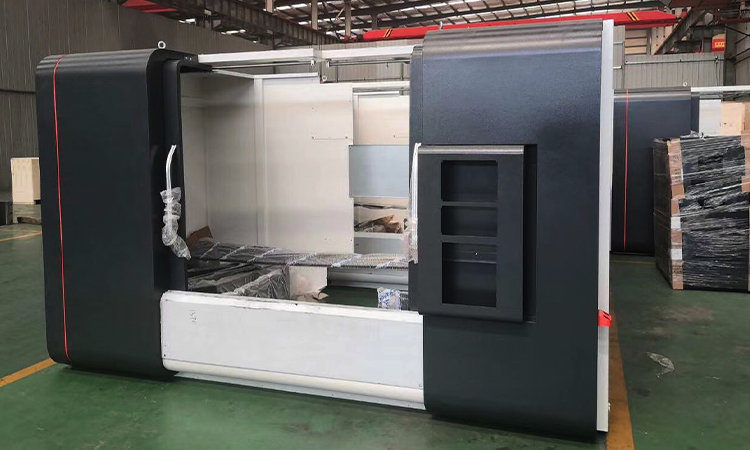
Metal CNC Lathing Machine Selection by Bar Capacity
What is a Metal CNC Lathing Machine?
Metal CNC Lathing Machine equipment is a computer-controlled turning machine used to remove material from rotating metal workpieces. It is commonly selected for shafts, sleeves, threaded components, flanges, hubs, bushings, and other cylindrical parts. For a production buyer, the central choice is often not simply machine brand or bed style. It is whether the bar capacity, spindle bore, chuck, and workholding arrangement fit the actual blank material. A machine that accepts the required bar can reduce repeated loading for long runs. A machine that is too large may add unnecessary investment and operating cost. A machine that is too small may force secondary cutting, manual loading, or a different manufacturing process. This is why Metal CNC Lathing Machine selection should begin with the largest raw bar, shaft diameter, finished-part length, and required holding method shown on the drawing.
The definition is straightforward, but the buying decision has several limits. Bar capacity refers to the maximum bar stock that can pass through the spindle under the configured machine specification. Spindle bore is the opening through the spindle that supports this passage. Chuck size and workholding then determine how securely a blank can be clamped for turning. A Metal CNC Lathing Machine may process a large forged blank in a chuck even when that blank cannot pass through the spindle bore. Therefore, buyers should not treat chuck capacity and bar capacity as interchangeable figures. For continuous bar-fed shafts, the bar must pass through the spindle. For short blanks, castings, forgings, or cut billets, a chuck or other fixture may be the more relevant selection point.
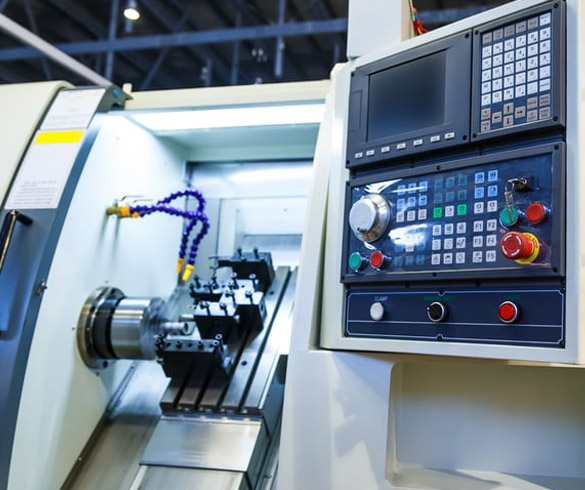
Types of Metal CNC Lathing Machine Configurations
Metal CNC Lathing Machine configurations are commonly compared by how they accept and hold the workpiece. The first type is a bar-fed turning setup, where material passes through the spindle and is advanced for repeated part production. This option fits shaft and bar-stock jobs with repeatable lengths and sufficient order volume to justify a bar feeder or manual bar handling process. The second type is a chuck-based setup, where cut blanks, forgings, castings, or larger diameter pieces are clamped at the spindle nose. This fits shorter workpieces and parts that exceed the spindle bore. A third option combines a chuck with a tailstock, steady rest, or special fixture for longer shafts or parts with limited rigidity. The right type depends on blank form, not only finished diameter.
- Bar-fed setup: Choose this when the material arrives as straight bar stock and repeated parts can be made from the same section. Do not choose it solely for a large batch if the required bar diameter exceeds the specified spindle bore.
- Chuck-based setup: Choose this for cut billets, forgings, castings, and blanks that cannot pass through the spindle. It is less suitable when unattended production from long bars is the main requirement.
- Tailstock or steady-rest setup: Choose this for long shafts that need added support during machining. It does not replace correct chuck gripping length or proper workpiece rigidity.
- Special fixture setup: Choose this for irregular forms, thin-wall parts, or parts requiring controlled clamping. It should be reviewed against the part drawing before machine selection.
Features That Affect Part Holding and Stability
A Metal CNC Lathing Machine should be assessed as a system rather than a list of isolated components. The machine body influences rigidity, while guides, ball screws, spindle arrangement, workholding, tooling, and control functions influence how that rigidity is used during machining. MAKCNC states that many machine bodies use high-strength cast iron, including resin-sand castings, followed by aging treatment to help maintain long-term accuracy and rigidity. Core transmission components such as ball screws and guideways may use high-precision Taiwan or German brands. These details are relevant when comparing machines for turning steel or other metal parts, but they must be confirmed in the specification of the selected model rather than assumed for every configuration.
For mold-related high-accuracy work, MAKCNC also integrates functions such as intelligent feedforward and quadrant-jump compensation in applicable advanced systems. These functions are intended to address common issues such as overcut marks, quadrant marks, and vibration patterns. A Metal CNC Lathing Machine with these functions can be worth considering when the part tolerance strategy depends on controlled contouring and repeatable finishing. However, software functions do not correct unsuitable workholding, poor blank quality, excessive tool overhang, or an unsupported long shaft. Buyers should treat control features as one item in the evaluation, alongside clamping method, material condition, tooling plan, and inspection requirements.
Metal CNC Lathing Machine Applications for Bar and Shaft Jobs
A Metal CNC Lathing Machine is suited to parts where the main geometry is rotational: diameters, shoulders, tapers, bores, grooves, threads, and faces. Bar-fed work is often appropriate for repeated pins, studs, connectors, sleeves, and stepped shafts made from consistent bar stock. Chuck-held work is often appropriate for larger hubs, flanges, ring-shaped blanks, short forgings, and pre-cut material. When a part needs several faces machined in one clamping, the manufacturing plan may also require a machining center or a turning configuration with suitable tooling and process capability. MAKCNC notes that multi-variety, small-batch production can use one clamping to complete multi-face machining where the selected equipment and process allow it.
The practical decision rule is simple. Choose bar-through-spindle processing when the raw material is supplied as bar stock, the bar diameter fits the stated spindle bore, and repeated production justifies the feeding method. Choose chuck loading when blank geometry, diameter, or material form makes through-spindle feeding unsuitable. Do not select a Metal CNC Lathing Machine based only on finished-part diameter. A turned part may finish at a small diameter while beginning as a much larger forging or cut blank. Send both the finished drawing and raw-material condition to the supplier so that spindle bore, chuck, jaws, support equipment, and loading approach can be checked together.
Comparison: Bar Capacity, Spindle Bore, Chuck, and Workholding Selection
The table below provides a decision framework for matching a Metal CNC Lathing Machine to shaft and bar-stock jobs. It intentionally uses drawing-based criteria instead of assumed machine dimensions. Actual bar capacity, spindle-bore size, chuck specification, and available workholding must be confirmed for the quoted model. The buyer should provide the maximum raw-stock diameter, maximum blank length, finished-part geometry, and expected batch pattern before comparing alternatives.
| Job Condition | Bar Capacity Requirement | Spindle Bore Check | Chuck and Workholding Choice | When to Choose It | When It Does Not Apply |
|---|---|---|---|---|---|
| Repeated straight bar-stock shafts | Specified capacity must accept the maximum supplied bar diameter. | The stated spindle bore must accommodate the bar with the planned feeding arrangement. | Collet or chuck with a suitable bar feeder and part catcher where required. | Choose for repeat parts cut from consistent bar stock. | Do not choose if the bar exceeds the bore or the material is not supplied as straight bar. |
| Short cut billets or forged blanks | Through-spindle capacity may not be the deciding factor. | Bore can be less relevant when the blank is loaded from the front. | Chuck jaws or dedicated fixture matched to the blank form. | Choose for larger blanks, forgings, or short pieces. | Do not use this approach alone when continuous bar-fed output is required. |
| Long shaft work | Check bar passage if feeding from stock. | Confirm the shaft can enter and pass through as planned. | Chuck plus tailstock or steady rest when the process requires additional support. | Choose when shaft length creates deflection risk. | Do not assume support equipment solves incorrect clamping or unsuitable cutting conditions. |
| Thin-wall sleeve or ring part | Bar capacity depends on the original material form. | Check bore only if the material must pass through the spindle. | Soft jaws, expanding mandrel, or purpose-built fixture may be needed. | Choose controlled clamping when distortion is a concern. | Do not rely on standard hard jaws without reviewing wall thickness and gripping area. |
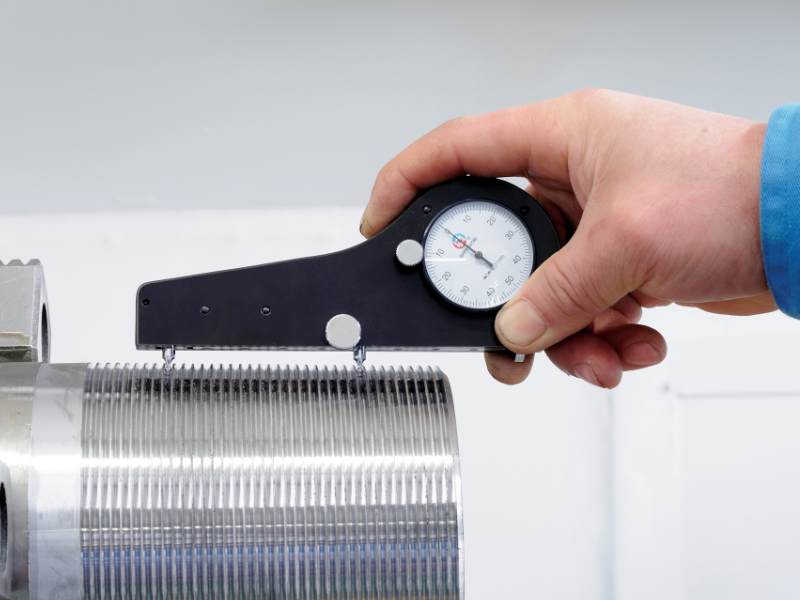
Common Matching Mistakes to Avoid
- Comparing finished diameter instead of raw diameter: Use the largest incoming blank or bar size as the selection input.
- Assuming spindle bore equals chuck capacity: A chuck may hold a blank that cannot pass through the spindle.
- Ignoring blank length: Long shafts may need tailstock or steady-rest support, depending on the machining plan.
- Quoting without workholding details: Include jaw type, fixture need, and whether the part will be bar-fed or manually loaded.
- Using one machine concept for every part family: A bar-fed solution may not be economical or technically suitable for forged or irregular blanks.
Metal CNC Lathing Machine Price Factors
Metal CNC Lathing Machine pricing changes with the machine configuration and commercial scope, rather than bar capacity alone. A buyer requesting a quotation should expect the price to reflect the selected machine structure, control configuration, spindle-bore requirement, chuck and workholding options, tooling scope, automation requirements, inspection needs, packing, shipping terms, and after-sales service arrangement. A larger bar-through-spindle requirement can affect the spindle and machine configuration. A tailored fixture can also change the quotation because it must match the workpiece shape and clamping method. The correct commercial approach is to compare quotations with the same technical basis. Comparing one bare machine quote with another quote that includes workholding or automation will not show the real purchasing difference.
| Quotation Item | Why It Can Change Price | Buyer Action |
|---|---|---|
| Bar capacity and spindle bore | The required raw-stock passage affects machine configuration. | State the maximum incoming bar diameter from the drawing. |
| Chuck and jaws | Standard and part-specific clamping needs differ. | Provide blank shape, gripping length, and material condition. |
| Tailstock, steady rest, or fixture | Long or irregular workpieces may need additional support. | Share maximum blank length and the intended machining operations. |
| Automation equipment | Bar feeders and loading arrangements depend on production method. | State expected batch size and loading preference. |
| Commercial terms | Quantity, delivery scope, and service terms affect the total offer. | Ask for separate equipment, option, packing, and shipping lines. |
MAKCNC states that a single machine can be purchased without a hard minimum order quantity, while multi-machine purchasing may receive better commercial terms in price, delivery, or after-sales service. Stated production timing is generally within 1 to 6 months, subject to the selected machine and order requirements. This is not a fixed delivery promise for every order. Before releasing a purchase order, request a written quotation that identifies the exact machine model, included accessories, technical configuration, delivery basis, and acceptance scope. That document gives procurement teams a clearer basis for comparing suppliers.
Metal CNC Lathing Machine User Guide for Buyers
Metal CNC Lathing Machine selection should follow a drawing-first procedure. Start by separating the finished-part requirement from the raw blank requirement. Then decide whether the process needs material to pass through the spindle or whether front loading into a chuck is sufficient. This approach avoids the frequent mistake of buying a machine around the final turned diameter while overlooking the larger stock dimension. For buyers handling mixed orders, group parts by raw diameter, blank shape, part length, and clamping requirement. A machine selected for the largest and most difficult part may be appropriate if it will be used regularly. It may not be appropriate if that difficult part is an occasional exception that could be subcontracted or processed separately.
- Collect the finished-part drawing and identify the largest raw bar, billet, forging, or casting dimension.
- State whether the material is straight bar stock, cut stock, forging, casting, or another blank form.
- Mark the required operations, including turning, boring, threading, grooving, and any multi-face machining need.
- Confirm whether the part requires chuck holding, collet holding, a tailstock, a steady rest, or a dedicated fixture.
- Ask the supplier to confirm bar capacity, spindle bore, chuck arrangement, and workholding against the drawing.
- Request the technical specification and quotation with included and optional items listed separately.
Metal CNC Lathing Machine Supplier Considerations
When comparing a Metal CNC Lathing Machine supplier, buyers should assess whether the supplier can discuss the whole process rather than only provide a catalog page. MAKCNC was established in 2016 and has multiple production lines and sample-machine inventory. The company supplies CNC lathing machines, CNC machining centers, and CNC machines. For buyers whose parts involve turned features plus multi-face machining, the available professional CNC machining center solution may also be relevant to the production plan. MAKCNC states that its normal warranty is 12 months after whole-machine acceptance, followed by lifetime paid service. Some tender projects may require a higher service scope, such as a three-year free warranty, so service terms should be confirmed in the contract.
A Metal CNC Lathing Machine supplier should receive usable technical inputs before recommending a model. Provide drawings, raw-material dimensions, annual or batch demand, machining sequence, required workholding, electrical requirements, destination country, and preferred shipping term. If the application needs an unusual clamping solution or nonstandard configuration, review customized CNC machines during the technical discussion. MAKCNC also states that its established after-sales network typically responds within 8 hours and can arrive on site within 48 hours for fault handling, where service arrangements apply. These timeframes should be verified for the destination and contract conditions because location, machine configuration, and project scope matter.
FAQ of Metal CNC Lathing Machine Bar Capacity
Can a larger chuck replace a larger spindle bore?
No. A larger chuck may hold a larger front-loaded blank, but it does not make that blank able to pass through the spindle. If the job uses continuous bar stock, the Metal CNC Lathing Machine needs a specified spindle bore and bar capacity that accept the maximum supplied bar diameter. If the job uses cut blanks or forgings, chuck holding may be the correct method instead.
Should buyers choose the biggest bar capacity available?
Not automatically. Choose the Metal CNC Lathing Machine configuration that fits the largest regular production requirement, not an unlikely part that appears only occasionally. A larger configuration can be justified when upcoming orders repeatedly need it. It may not be justified when most parts are much smaller and the exceptional work can be handled by another process.
What information is needed for a machine quotation?
Send the part drawing, raw blank dimensions, material form, maximum length, expected quantity, required turning operations, and preferred workholding method. For bar-stock jobs, clearly identify the maximum bar diameter. For shafts, state whether tailstock or steady-rest support is expected. This allows a Metal CNC Lathing Machine supplier to review the application against the machine specification instead of offering a generic option.
If you are looking for a Metal CNC Lathing Machine supplier, contact MAKCNC for the latest machine quotation and specification review based on your part drawings.