
Sourcing a Custom Horizontal CNC Machining Center Starts With Acceptance Tests Not Price Sheets
What Is a Custom Horizontal CNC Machining Center
A horizontal cnc machining center is a machine tool where the spindle sits parallel to the work table, letting a part be reached from multiple sides without repositioning. "Custom" means the buyer specifies the pallet size, spindle speed range, tool magazine capacity, or control brand to fit a particular part family instead of buying an off-the-shelf configuration. Buyers who skip a written acceptance protocol at the RFQ stage often discover, months later, that "custom" only applied to the paint color. The real risk in sourcing a Custom Horizontal CNC Machining Center isn't the sales brochure — it's what happens when the machine lands on your floor and the accuracy numbers don't match what was promised. That gap is exactly what factory acceptance testing is designed to close before money changes hands.
Types of Horizontal Machining Centers Available for Custom Orders
Horizontal machining centers generally fall into a few configuration families, and picking the wrong one shows up later as wasted floor space or idle spindle time. Fixed-column, single-pallet machines suit lower-volume shops that need flexibility over throughput. Twin-pallet or multi-pallet HMCs let one pallet run while the other is loaded, which matters for shops running two shifts with limited operator headcount. Boring-type horizontal centers, with heavier spindle cartridges, are built for larger castings and mold bases rather than small precision parts. When a supplier offers a customized CNC machine configuration, ask which of these base architectures it's built on — the pallet system and column structure drive both price and long-term rigidity far more than the control panel brand does.
Features That Define a Reliable Custom HMC
Frame material and drive components decide whether a machine holds tolerance after year three, not just at commissioning. Most reliable HMCs use high-strength cast iron, often resin-sand cast, then aged to relieve internal stress so the structure doesn't drift as it warms up during long runs. Core transmission parts — ball screws and linear guideways — are commonly sourced from Taiwanese or German brands, since these components carry the repeat-positioning load cycle after cycle. For mold and die work, look for control systems with intelligent feed-forward compensation and quadrant-overshoot correction; these features directly reduce overcut marks, quadrant scallops, and chatter lines that show up on complex 3D surfaces. A machine that can complete multi-face machining in a single clamping is worth a premium for multi-variety, small-batch production, because every re-fixturing introduces a fresh accuracy error.
Custom Horizontal CNC Machining Center Applications
Horizontal machining centers earn their keep on parts that need several faces machined with tight positional relationships — engine blocks, gearbox housings, hydraulic manifolds, and mold bases are classic examples. Mold and die shops in particular lean on a Custom Horizontal CNC Machining Center because a single setup can cut cavity, core, and mounting faces without breaking datum reference, which is the main source of assembly mismatch in multi-cavity tooling. Job shops running mixed small-batch orders also benefit, since pallet-changing reduces non-cutting time between different part numbers. Where a shop mostly runs simple, single-face plates in high volume, a vertical machining center — such as the Vertical CNC Machining Center MV1380 — is usually the more cost-efficient choice instead.
Building the Supplier-Selection Process Around Measurable Factory Acceptance Tests
Specs on paper mean little until they're proven on the shop floor with a witnessed test. A serious supplier-selection process for a custom HMC should be built around four measurable checkpoints, run before the machine ships and again after installation. Skipping any one of these is the most common reason buyers end up in a warranty dispute six months in.
| Test | What It Measures | Why It Matters | Risk If Skipped |
|---|---|---|---|
| Positioning accuracy | Repeatability of the axis reaching a commanded point, checked with a laser interferometer against ISO 230 methods | Directly determines whether finished parts hold tolerance across the full travel, not just near the origin | Parts pass inspection near the table center but fail near the axis limits, and you won't know until production starts |
| Cycle time | Actual chip-to-chip time on a representative part program, not the catalog rapid-traverse number | Rapid traverse speed on a spec sheet rarely reflects real acceleration under cutting load | Throughput assumptions used in your ROI calculation turn out to be 15-20% optimistic |
| Chip evacuation | How cleanly chips clear the work zone during continuous horizontal cutting, especially with coolant flow | Poor evacuation on horizontal beds causes chip recutting, surface damage, and unplanned stoppages | Operators spend shift time manually clearing chips, eroding the throughput gain the machine was bought for |
| Trial-part results | Dimensional and surface inspection of a sample part cut from your actual drawing, not a demo block | Confirms the machine, tooling, and program actually produce your tolerance and finish, together | The machine passes generic tests but your specific part geometry still fails on delivery |
Ask for these four results in writing, signed by the supplier's quality inspector, before final payment is released. A buyer's checklist worth keeping on file:
- Laser interferometer report showing positioning accuracy across full X/Y/Z travel
- Cycle time log from a program using your actual part, not the demo cycle
- Video or witnessed inspection of chip flow during a 30-minute continuous cut
- CMM or gauge report on a trial part machined from your submitted drawing
- Written warranty terms covering the acceptance period, not just the shipping date
Custom HMC Price Factors to Model Before You Request a Quote
Price on a custom horizontal CNC machining center swings on a handful of variables, and knowing them ahead of time keeps your RFQ comparison honest. Rough cost drivers include:
- Structural components — cast iron grade and aging process affect long-term rigidity and cost more upfront but reduce accuracy drift over the machine's life
- Ball screw and guideway brand — Taiwanese components generally price lower than German-branded equivalents, with a corresponding tradeoff in warranty confidence for very high-precision work
- Control system tier — feed-forward and quadrant compensation features add cost but pay back quickly on mold and die work where surface finish is inspected closely
- Pallet configuration — twin-pallet setups cost more than single-pallet but cut idle time in multi-shift operations
- Order volume — there's no hard minimum order quantity; a single unit can be purchased, but batch orders typically unlock better pricing, faster lead times, or stronger after-sales terms
- Warranty scope — standard coverage runs 12 months after acceptance with paid lifetime service available afterward; some tender projects specify extended terms up to three years
Typical lead time for a custom build runs one to six months depending on configuration complexity and whether the base machine exists in stock inventory. A common mistake is comparing two quotes side by side without normalizing for these variables — a lower headline price with basic guideways and no compensation software is not the same machine as a higher-priced unit with branded components and mold-grade control features.
Installation and Commissioning Checklist
Once the machine clears factory acceptance, installation on your floor is its own risk window. Follow this sequence to avoid the most common commissioning delays:
- Verify foundation flatness and load rating match the supplier's installation drawing before the machine arrives
- Confirm power supply voltage, phase, and amperage against the machine's electrical spec sheet
- Re-run the positioning accuracy test on-site, since transport can shift alignment even with proper crating
- Cut a second trial part on-site using your production tooling and fixtures, not the supplier's demo setup
- Train operators on the specific compensation and offset routines built into the control system, not just basic operation
- Document the on-site acceptance results separately from the factory results — this is the record you'll reference for warranty claims
Choosing a Horizontal CNC Machining Center Supplier
MAKCNC has operated multiple production lines since 2016, with sample machines kept in stock to shorten lead times where configuration allows. Our facility runs under ISO9001:2015 quality management, and machine beds use high-strength cast iron aged for dimensional stability, paired with Taiwanese or German-brand ball screws and linear guideways depending on the precision tier ordered. For mold and die customers, our systems include intelligent feed-forward and quadrant-overshoot compensation to address overcut marks and chatter on complex surfaces, and machines are built to complete multi-face work in a single clamping for multi-variety, small-batch production. There's no fixed minimum order — a single CNC lathing machine or machining center can be purchased directly — though batch orders qualify for improved commercial terms. Standard warranty runs 12 months after acceptance with paid lifetime service afterward, and our service network targets an 8-hour response with on-site arrival within 48 hours. You can review our company background or browse documented project cases before shortlisting a supplier for your next RFQ.
FAQ of Custom Horizontal CNC Machining Center Sourcing
Is there a minimum order quantity for a custom HMC? No hard minimum applies — a single unit can be ordered — though multi-unit purchases typically receive better pricing or delivery terms.
How long does a custom build usually take? Lead times generally run one to six months depending on configuration and stock availability.
What warranty should I expect? Standard coverage is 12 months after final acceptance, with paid lifetime service afterward; some tender-based projects specify extended terms.
Should I trust catalog cycle-time figures? Treat them as reference only — always request a cycle-time log from a program built on your actual part before final acceptance.
What happens if a machine fails acceptance testing? The written acceptance protocol should define remediation steps and timelines before payment is finalized, which is why documenting all four test categories matters.
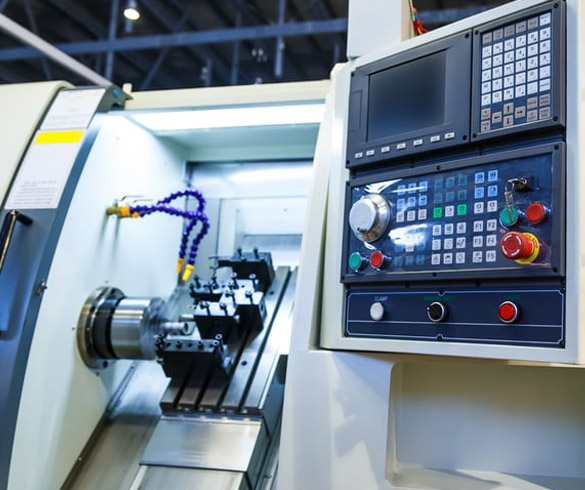
If you're preparing an RFQ for a Custom Horizontal CNC Machining Center and want the acceptance-test criteria built into your quote request, feel free to contact our team for a current specification and pricing reference.