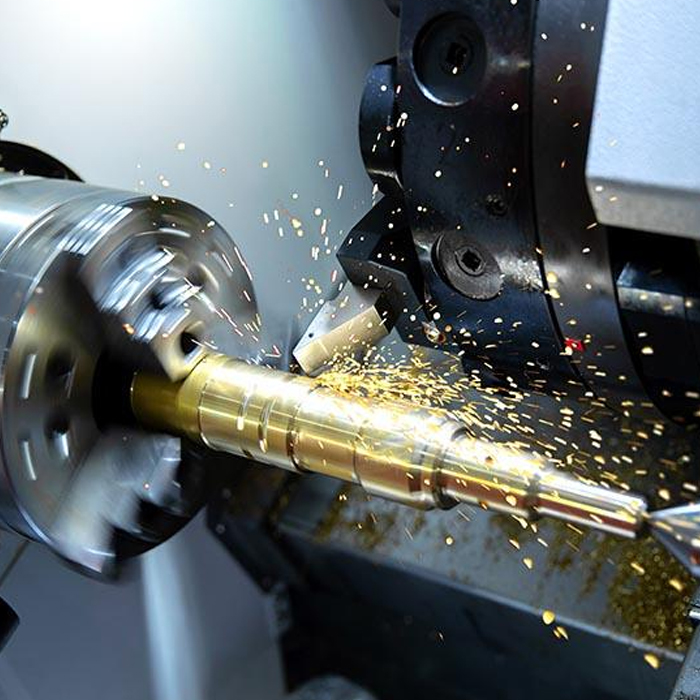
Achieving Precision with a Horizontal Machining Center for Casting Parts
What is a Horizontal Machining Center for Casting Parts?
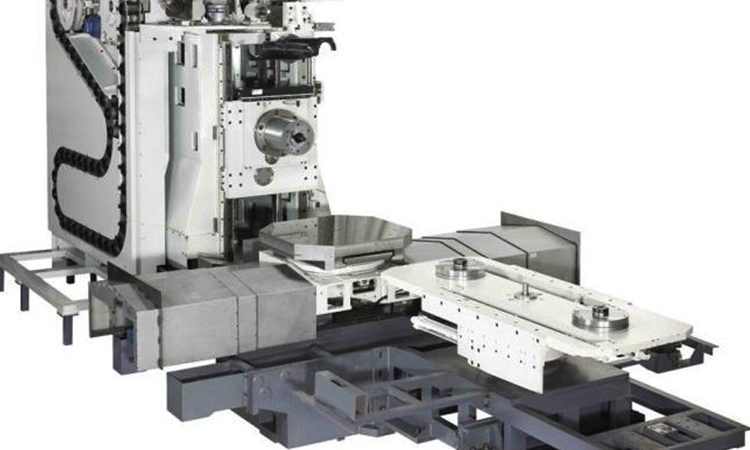
A Horizontal Machining Center for Casting Parts is a highly automated CNC machine tool designed with a horizontally oriented spindle. This configuration is exceptionally well-suited for machining blocky or cubic workpieces, like those produced by sand casting, die casting, or investment casting. Unlike vertical machines where gravity can cause chips to accumulate in pockets, the horizontal setup allows chips and coolant to fall away naturally, leading to better surface finishes and longer tool life. These machines typically feature an automatic pallet changer (APC) system, which enables one pallet to be in the machining envelope while an operator loads or unloads a second pallet. This concurrent operation significantly reduces non-productive time, making the HMC a cornerstone of efficiency for medium to high-volume production of complex cast components such as engine blocks, transmission housings, and hydraulic manifolds.
Types of Horizontal Machining Centers
Horizontal machining centers are primarily categorized by their pallet size, which dictates the maximum workpiece dimensions they can accommodate. Common industry sizes include 400 mm, 500 mm, 630 mm, and 800 mm square pallets. The choice depends entirely on the scale of the parts you intend to machine. A second key distinction is the axis configuration. The standard HMC operates on four axes (X, Y, Z, and a B-axis for pallet rotation), allowing access to four sides of a part in a single clamping. This capability is a major advantage over a typical 3-axis vertical cnc machining center mv1270, which would require multiple setups to achieve the same result. For even more complex geometries, 5-axis HMCs are available, adding an A-axis (tilting spindle or trunnion table) to enable simultaneous machining of intricate contours and angled features.
Key Features of a High-Performance HMC for Castings
When evaluating an HMC for demanding casting applications, certain features are non-negotiable for achieving long-term accuracy and reliability. The machine's foundation is paramount. Our machine bodies are constructed from high-strength cast iron, often using resin sand casting methods, and are subjected to aging treatments. This process relieves internal stresses to ensure the geometric accuracy and rigidity of the frame remain stable over years of operation. Beyond the structure, the performance is driven by the quality of its components and the intelligence of its control system.
- Drive System Integrity: Core transmission components, including the ballscrews and linear guideways, are sourced from high-precision manufacturers in Taiwan or Germany. This ensures smooth, accurate, and repeatable positioning.
- Advanced System Intelligence: To address common machining defects in molds and complex parts, our systems integrate technologies like intelligent feed-forward control and quadrant glitch compensation. These features proactively manage toolpath dynamics to effectively eliminate over-cutting, quadrant marks, and chatter marks.
- Multi-Face Machining Capability: The inherent design allows for the completion of multiple operations on different faces of a part in a single setup. This is ideal for high-mix, low-volume production runs, as it drastically reduces setup time and potential for operator error between operations.
Common Applications in Casting Machining
The rigidity and efficiency of a Horizontal Machining Center for Casting Parts make it indispensable across several key industries. In the automotive sector, it is the machine of choice for producing engine blocks, cylinder heads, transmission cases, and differential housings, where multi-sided features and tight tolerances are standard. For general industrial applications, HMCs are used to machine pump bodies, valve housings, and gearbox casings. The mold and die industry also relies on these machines for their ability to perform high-precision machining on complex cores and cavities. The machine's ability to maintain accuracy during heavy roughing and fine finishing makes it a versatile asset for any manufacturer working with cast iron, aluminum, or steel castings that require extensive metal removal and precision features.
Factors Influencing the Price of an HMC
The final investment for a horizontal machining center is not a single number but a sum of its configuration, options, and support package. Understanding these variables is key to specifying a machine that fits your budget and technical needs. While single-unit purchases are possible, procuring multiple machines can provide advantages in pricing, delivery schedules, or after-sales service terms. The primary cost drivers are broken down in the table below.
| Component/Factor | Description | Impact on Price |
|---|---|---|
| Pallet Size & Travel | The size of the pallet (e.g., 400mm, 500mm, 630mm) and the machine's X, Y, and Z travel distances. | High. Larger machines require more material, bigger motors, and a more robust frame, directly increasing cost. |
| Spindle Specification | The spindle's maximum speed (RPM), torque output, and tool interface (e.g., BT40, HSK-A63, BT50). | Medium. High-speed or high-torque spindles are specialized components that add significant cost. |
| Tool Changer Capacity | The number of tools the automatic tool changer (ATC) can hold, typically ranging from 40 to 120 tools or more. | Medium. A larger tool magazine increases the machine's complexity and price but also its automation potential. |
| Options & Peripherals | Features like through-spindle coolant (TSC), chip conveyor systems, in-machine probing, and advanced software options. | Variable. Each option adds to the cost, allowing for a highly customized but more expensive machine. |
| Warranty & Support | Standard 12-month warranty versus extended plans (e.g., 3 years for specific tender projects). | Low to Medium. Extended warranties increase the initial price but provide long-term cost security. |
User Guide: Setting Up for Thin-Wall Castings
Machining thin-walled castings presents a unique challenge: the parts are prone to distortion from clamping forces and vibration from tool pressure. A successful outcome depends less on the machine's raw power and more on a strategic setup that preserves the part's integrity. The following guide outlines how to use fixture design, datum selection, and a logical machining sequence to achieve stability and precision.
How Fixture Support, Datums, and Sequence Reduce Distortion
The goal is to support the workpiece adequately without introducing stress. This is accomplished by carefully planning how you hold the part, where you establish your reference points, and the order in which you remove material. Each step builds upon the last to systematically reduce the risk of scrapped parts.
- Datum Selection and Initial Clamping: Your first contact with the part is the most critical.
- Method: Apply the 3-2-1 locating principle on the most stable and rigid sections of the raw casting. Use three points to define the primary plane, two for the secondary, and one for the tertiary. Whenever possible, use cast-in pads or bosses as datum features. Avoid clamping directly onto thin walls or unsupported flanges.
- Checkpoint: After light clamping, verify the part is fully seated with no rocking. Use shims if necessary to eliminate any gaps between the part and fixture locators.
- Common Mistake: Overtightening clamps on an uneven surface. This bends the raw casting, and when the clamps are released after machining, the part springs back into a distorted shape.
- Machining Sequence Strategy: The order of operations can either balance or exacerbate internal stresses.
- Method: Perform heavy roughing operations first to remove the bulk of the material. This releases the inherent stresses from the casting process early on. Alternate machining operations on opposite sides of the part to maintain thermal and mechanical stability. Always save final finishing passes for the very end of the process, after the part's geometry is largely defined and stable.
- Checkpoint: After the main roughing phase, consider a stress-relief cycle if tolerances are extremely tight. For critical parts, it may be beneficial to unclamp and re-clamp the part before finish machining.
- Common Mistake: Finishing a critical surface or bore early in the process. Subsequent roughing operations on other areas can easily distort the already-finished feature out of tolerance.
- Dynamic Fixture Support: Support must adapt to the machining process.
- Method: Use adjustable supports (manual, hydraulic, or pneumatic) that can be engaged *after* the part is clamped in a free state. Position these supports directly underneath the area being machined to counteract cutting forces and dampen vibration. For extremely fragile sections, consider using tombstone fixtures that offer multiple support points.
- Checkpoint: Supporting pressure should be minimal—just enough to make contact and prevent deflection, not enough to lift or distort the part.
- Common Mistake: Using fixed, solid supports that don't account for variations in the raw casting. If a support post is 0.1mm too high, it will bend the part during clamping.
MAKCNC: Your Professional Horizontal Machining Center Supplier
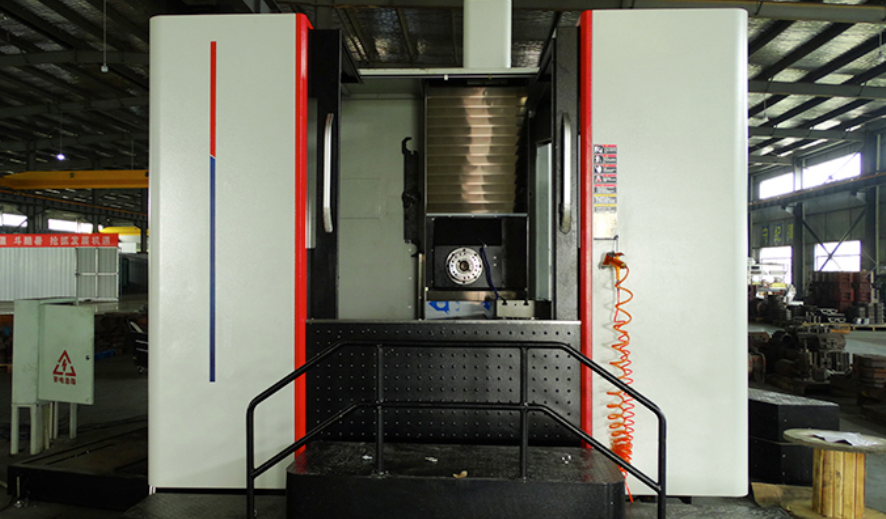
Established in 2016, MAKCNC operates from an ISO 9001:2015-certified facility, reflecting our commitment to quality and process control. We specialize in providing a professional cnc machining center solution that balances performance with practical needs. We understand that every customer has different procurement requirements, which is why we have no rigid minimum order quantity; you can source a single machine or an entire production line. Our lead times typically range from one to six months. At the core of our philosophy is building durable machines, which is why we use high-rigidity cast iron frames and premium drive components. This is backed by a mature after-sales service network that promises an 8-hour response time and 48-hour on-site support to keep your operations running smoothly. For more information, you can learn more about makcnc, professional cnc lathing machine manufacturer.
Frequently Asked Questions about HMCs for Castings
What is the typical lead time for a MAKCNC horizontal machining center?
Our standard lead time is between 1 to 6 months. This varies based on the specific machine configuration, current production schedules, and component availability.
Is there a minimum order quantity for your machines?
No, we do not enforce a hard minimum order quantity. We support single-unit procurement. However, purchasing in bulk may provide access to more favorable commercial terms regarding price, delivery, or service.
How does an HMC handle chips better than a VMC for casting parts?
The horizontal spindle orientation uses gravity to its advantage. Chips and coolant naturally fall away from the workpiece and cutting zone into the chip conveyor below. This prevents "re-cutting" of chips, which can damage the tool and mar the surface finish, a common issue in deep-pocket milling on vertical machines.
What warranty and after-sales support do you provide?
Our standard warranty covers the entire machine for 12 months after formal acceptance. We also offer lifetime paid service. Our established support network is committed to an 8-hour initial response and having a technician on-site within 48 hours to address any technical issues.
If you are looking for a reliable CNC machine supplier, please contact us for the latest product specifications and quotation.