A Horizontal Machining Center for Casting Parts Solves Chip Recutting Problems That Ruin Cast Iron Tolerances
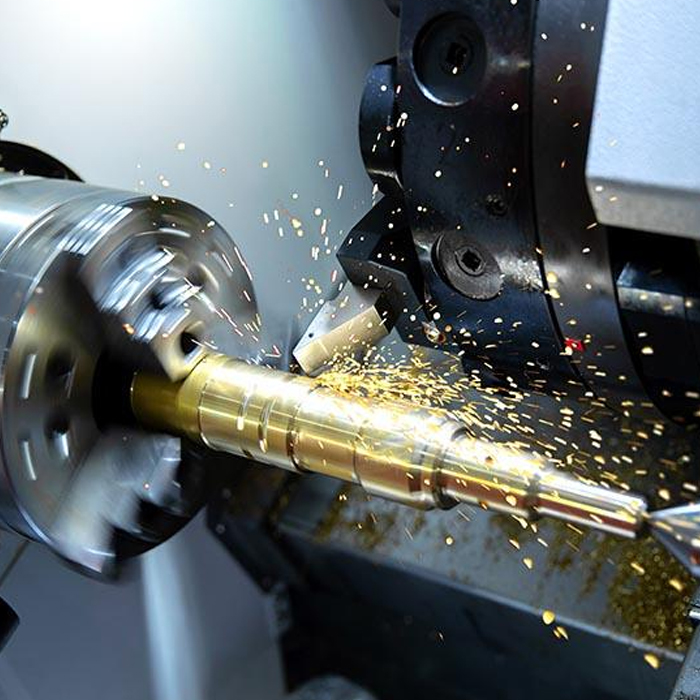
A Horizontal Machining Center for Casting Parts answers a specific question that trips up a lot of process engineers before they ever place an order: once the tool bites into gray iron or ductile iron stock, where do the broken, abrasive chips actually go, and what stops them from getting dragged back under the insert on the next pass? Cast iron doesn't curl into neat ribbons like steel or aluminum. It shatters into short, gritty fragments that behave more like sand than metal shavings. If those fragments sit on top of a horizontal work surface, gravity does nothing to move them away from the cutting zone. That's the core mechanical problem this article works through.
What is a Horizontal Machining Center for Casting Parts?
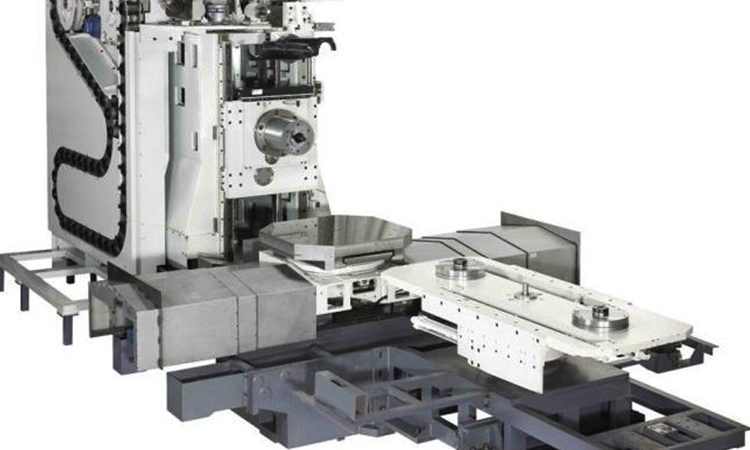
A Horizontal Machining Center for Casting Parts is a CNC machine tool where the spindle axis runs parallel to the ground instead of pointing straight down. The workpiece is mounted on a rotary pallet or fixture that sits vertically in front of the spindle. Because the cutting face is oriented sideways, gravity pulls chips downward and away from the tool path instead of letting them collect on the table. This orientation matters most on cast iron and other ferrous parts where the material breaks into abrasive, granular debris rather than long continuous chips. The machine typically pairs this layout with a high-strength cast-iron bed, often a resin sand casting that has gone through aging treatment to hold its geometry under repeated thermal and mechanical load over years of production.
Types of Horizontal Machining Centers
Not every HMC is built the same way, and the differences affect chip handling directly. Below is a quick breakdown of the configurations you'll run into during sourcing.
- Fixed-column, moving-table HMC — the spindle stays put, the pallet moves; common on mid-size iron housings and gearbox bodies.
- Traveling-column HMC — better for larger, heavier castings since the column carries the spindle over a stationary or lightly-moving table.
- Pallet-pool HMC — adds an automatic pallet changer so a second fixture loads while the first is still cutting, useful for multi-variety, small-batch runs.
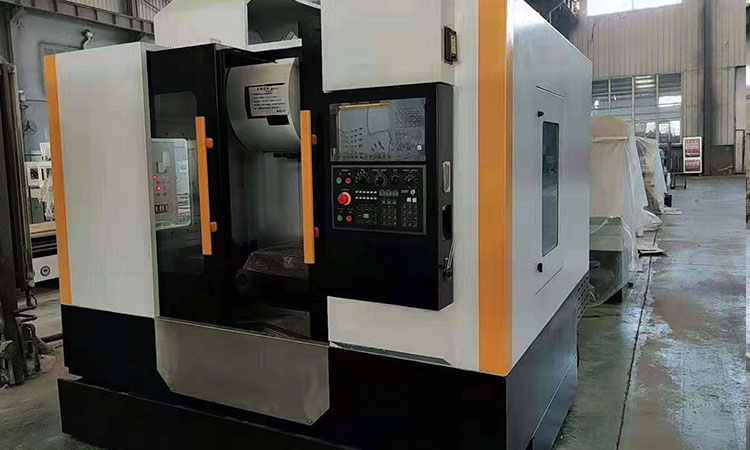
- Vertical machining center (for comparison) — same control logic, but spindle points down; chips fall onto the table surface and stay near the workpiece unless cleared constantly. See the professional CNC machining center solution range for both orientations.
How Horizontal Spindle Orientation, Through-Spindle Coolant, and Chip Conveyors Prevent Recutting
This is the section that decides whether cast-iron parts hold tolerance over a full production run or start drifting after the first hundred pieces. Recutting happens when a broken chip fragment gets caught between the workpiece and the insert flank, gets re-crushed, and either scores the surface finish or chips the cutting edge. On gray iron, this shows up as random scratch marks that don't match any programmed toolpath — a classic sign the machine, not the program, is the problem.
| Design Element | What It Actually Does | What Happens If It's Missing or Wrong |
|---|---|---|
| Horizontal spindle orientation | Chips fall by gravity into a collection trough below the work zone instead of resting on a horizontal table surface | Chips pile on the fixture, get compacted by clamping pressure, and re-enter the cut on the next pass |
| Through-spindle coolant | Flushes fine, abrasive iron powder out of blind holes and deep pockets at the moment of cutting, not after | Fine iron dust bakes onto the tool shank, causing dimensional drift in bored holes over a shift |
| Chip conveyor (scraper or hinge-belt) | Continuously removes accumulated chips from the collection trough to an external bin, away from the spindle and ways | Chips build up inside the enclosure, contaminate the coolant tank, and shorten guideway and ballscrew life |
The scenario worth remembering: a shop machining pump housings in ductile iron found scratch defects appearing only on bores deeper than 40mm. The cause wasn't the program — it was standard flood coolant failing to reach the bottom of the bore, letting fine iron powder settle and get dragged by the boring bar on the return stroke. Switching to through-spindle coolant at the same pressure eliminated the defect without touching the toolpath. This is the kind of fault that a horizontal layout alone won't fix — the three elements work as a system, not as independent features.
Features of a Horizontal Machining Center for Casting Parts
Beyond chip handling, several build details separate a machine meant for iron casting work from a general-purpose unit. The base and column are usually built from high-strength cast iron, often resin sand castings, and aged before final machining to relieve internal stress and hold rigidity under repeated heavy cuts. Core transmission components — ballscrews and linear guideways — are commonly sourced from Taiwan or German brands, since positioning accuracy on cast-iron parts depends on how well these components hold up under continuous abrasive load. For mold and die work specifically, the control system integrates smart feedforward and quadrant-glitch compensation, which reduces the overcut marks, quadrant lines, and chatter marks that show up on complex 3D surfaces. Many of these machines also complete multi-face machining in a single setup, which matters for multi-variety, small-batch production where re-fixturing eats into tolerance stack-up.
Applications of Horizontal Machining Centers
These machines are used wherever cast or forged parts need multiple faces machined without breaking the datum. Typical applications include engine blocks and cylinder heads, gearbox and transmission housings, pump and valve bodies, hydraulic manifolds, and mold bases for the plastics and die-casting industry. Automotive and heavy-truck component suppliers use HMCs specifically because the horizontal layout lets a single fixture present four or five faces to the spindle without unclamping the part. For buyers evaluating vertical alternatives instead, the vertical CNC machining center MV1380 and similar models remain a reasonable fit for flat-plate parts where chip fall-away isn't a major concern.
Horizontal Machining Center Price Factors
Pricing on these machines varies with a handful of measurable factors, not vague market conditions. Buyers should check these before comparing quotes line by line.
- Table size and pallet count — a second pallet for automatic changeover adds cost but cuts idle time on multi-variety runs.
- Spindle taper and torque rating — heavier roughing on cast iron needs higher torque, which raises the spindle package price.
- Ballscrew and guideway brand — Taiwan-sourced components sit at a lower price point than German-sourced ones, with a corresponding difference in expected service life.
- Coolant system — through-spindle coolant at higher bar pressure costs more than standard flood coolant but reduces tool wear on deep-bore work.
- Control system options — feedforward and quadrant compensation packages are priced separately from the base control on most quotes.
- Order volume — there's no fixed minimum order quantity, a single unit can be purchased, but multi-unit orders typically get better commercial terms on price, lead time, or after-sales terms.
User Guide for Setting Up a Horizontal Machining Center on Cast Iron Work
Getting first-run production right on a new HMC comes down to a short checklist rather than guesswork. Skipping any of these steps is the most common reason shops see chip-related scratch defects in the first month of operation.
- Confirm chip conveyor direction and discharge height match your existing chip bin or recycling system before the machine ships.
- Set through-spindle coolant pressure according to bore depth, not a single default value — deeper bores need higher pressure to clear chips at the tool tip.
- Check coolant filtration micron rating; cast iron fines are finer than steel chips and clog standard paper filters faster.
- Run a dry-air blow cycle before automatic pallet change to prevent fixture-mounted chip transfer between operations.
- Inspect the chip trough weekly during the first month to confirm the conveyor is clearing at the expected rate for your cutting parameters.
Common mistakes to avoid: running flood coolant pressure settings copied from a steel job without adjusting for cast iron's finer, more abrasive debris; ignoring conveyor belt tension until it slips under load; and mounting fixtures that block the chip fall-away path, which defeats the horizontal orientation's main advantage.
Horizontal Machining Center Supplier
MAKCNC has built CNC machines since 2016, operating multiple production lines with sample machines kept in stock for buyers who need to inspect a unit before committing. Our facility runs under ISO 9001:2015 quality management, and machine beds use high-strength cast iron with aging treatment for long-term rigidity. Core transmission parts — ballscrews and guideways — are sourced from established Taiwan and German brands. Standard warranty runs 12 months after acceptance, with paid lifetime service after that; select tender projects can qualify for extended three-year free warranty terms. Our service network targets an 8-hour response and 48-hour on-site arrival for fault handling. Delivery generally runs 1 to 6 months depending on configuration and order size. For buyers with non-standard fixture or pallet requirements, our customized CNC machines and machining centers service can adjust the base configuration. You can also review our global CNC machinery cases or read more about MAKCNC as a manufacturer.
FAQ of Horizontal Machining Centers for Casting Parts
Does a horizontal machining center always outperform a vertical one on cast iron?
Not always. For flat, shallow parts with minimal deep-pocket work, a vertical unit like the vertical CNC machining center MV1160 can be more cost-efficient. The horizontal advantage grows with part complexity, bore depth, and multi-face requirements.
What coolant pressure is typical for through-spindle systems on cast iron?
Pressure requirements vary with bore depth and diameter; the company brief doesn't specify a universal figure, so confirm the recommended setting for your specific part geometry with the machine builder before running production.
Is there a minimum order quantity?
No. A single unit can be purchased, though multi-unit orders may receive better pricing, lead time, or after-sales terms.
How fast can a fault be resolved after installation?
Our established service network targets an 8-hour response window and 48-hour on-site arrival for hardware faults, backed by a 12-month warranty after acceptance.
If you're evaluating a Horizontal Machining Center for Casting Parts against your current chip-control problems, send us your part drawings or ask about a spec sheet, and we'll help match a configuration to your tolerance and volume requirements.