Justifying Your 5 Axis Vertical CNC Machining Center Purchase with ROI
Acquiring a professional cnc machining center solution represents a significant capital investment. The biggest risk is not the initial price but a miscalculation of its long-term financial impact. Without a clear Return on Investment (ROI) model, a buyer may purchase a machine that fails to deliver the expected productivity gains, or worse, creates a new bottleneck. A proper financial justification moves the conversation from machine price to operational profitability. It quantifies how features translate into tangible savings and increased revenue, ensuring your investment accelerates business growth rather than just adding to your asset list.
At MAKCNC, we believe an informed purchase is a successful one. This guide provides a framework to build a five-year ROI projection, helping you evaluate not just the machine, but its total value contribution to your manufacturing operations. Our facility is ISO9001:2015 certified, reflecting our commitment to quality processes from production to delivery.
Beyond the Sticker Price: Key Drivers for 5-Axis ROI
The true financial performance of a 5-axis machine extends far beyond its purchase price. The most significant gains come from operational efficiencies that directly reduce cost per part and increase workshop capacity. Before building a model, it is essential to identify these key performance indicators. A comprehensive Return on Investment (ROI) analysis must account for both direct cost savings and new revenue opportunities.
Consider the following core value drivers:
- Setup and Fixturing Reduction: The ability to machine five sides of a part in a single setup ("done-in-one") is the most recognized benefit. This drastically cuts down on the labor and machine downtime associated with multiple setups on a 3-axis machine. It also simplifies or eliminates the need for complex, expensive custom fixtures for each operation.
- Improved Accuracy and Quality: Every time a part is moved and re-clamped, the risk of positional error increases. Single-setup machining removes this source of error, leading to higher dimensional accuracy and consistency. This reduces scrap rates and rework, which are direct costs to your bottom line.
- Enhanced Cutting Performance and Tool Life: A 5-axis machine can maintain an optimal cutting tool angle relative to the part surface. This allows for shorter, more rigid tools, enabling higher cutting speeds and feeds. The result is shorter cycle times and extended tool life, reducing annual expenditure on consumables.
- Increased Throughput and Machine Utilization: By combining operations and shortening cycle times, a single 5-axis VMC can often match the output of multiple 3-axis machines. This frees up floor space and labor, allowing you to take on more work without expanding your physical footprint or headcount.
A Five-Year ROI Model for Your Next VMC
Use the following framework to project the financial impact of a new 5-axis machine. Replace the example placeholders with figures from your own quotes and operational data. This model helps quantify the savings and revenue gains discussed previously against the initial and ongoing costs.
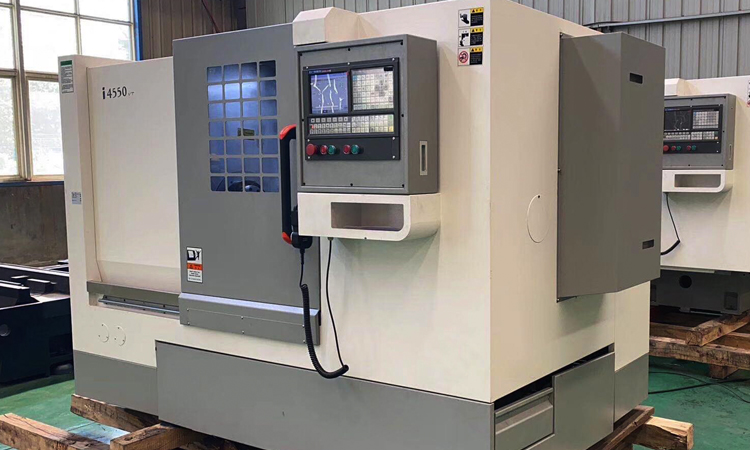
Financial Projection Worksheet
| Category / Item | Basis of Calculation | Year 1 | Year 2 | Year 3 | Year 4 | Year 5 |
|---|---|---|---|---|---|---|
| COSTS (Cash Outflow) | ||||||
| Initial Investment | Machine Price + Shipping + Installation + Tooling | (-$XXX,XXX) | - | - | - | - |
| Annual Maintenance | Service Contracts, Consumables | (-$X,XXX) | (-$X,XXX) | (-$X,XXX) | (-$X,XXX) | (-$X,XXX) |
| SAVINGS & REVENUE (Cash Inflow) | ||||||
| Labor Savings (Setups) | (Hours Saved/Job) x (Jobs/Year) x (Shop Rate) | +$XX,XXX | +$XX,XXX | +$XX,XXX | +$XX,XXX | +$XX,XXX |
| Fixture Cost Avoidance | (Avg. Fixture Cost) x (New Jobs Requiring Fixtures) | +$X,XXX | +$X,XXX | +$X,XXX | +$X,XXX | +$X,XXX |
| Scrap/Rework Reduction | (Old Scrap Rate % - New Rate %) x (Cost of Goods) | +$X,XXX | +$X,XXX | +$X,XXX | +$X,XXX | +$X,XXX |
| Increased Throughput | (Extra Parts/Day) x (Profit/Part) x (Workdays) | +$XX,XXX | +$XX,XXX | +$XX,XXX | +$XX,XXX | +$XX,XXX |
| New Business (Complex Parts) | (Est. Revenue from New Capabilities) x (Margin %) | +$XX,XXX | +$XX,XXX | +$XX,XXX | +$XX,XXX | +$XX,XXX |
| FINANCIAL SUMMARY | ||||||
| Annual Net Cash Flow | (Total Inflow) - (Total Outflow) | $XX,XXX | $XX,XXX | $XX,XXX | $XX,XXX | $XX,XXX |
| Cumulative ROI | (Cumulative Net) / (Initial Investment) | XX% | XX% | XX% | XX% | XX% |
This model provides a structured way to present the business case for new equipment. The payback period becomes clear when the cumulative net cash flow turns positive.
Technical Specifications That Drive Higher ROI
The financial gains projected in the ROI model are only achievable if the machine's underlying technology and construction are sound. Low-quality components or poor design can lead to excessive downtime, inconsistent accuracy, and high maintenance costs, quickly eroding any potential return.
At MAKCNC, we focus on engineering choices that support long-term performance and reliability. These features directly contribute to a stronger ROI by maximizing uptime and part quality.
- Structural Rigidity and Stability: The machine body is the foundation of accuracy. We utilize high-strength cast iron, such as resin sand castings, which undergoes an aging treatment. This process relieves internal stresses in the metal, ensuring the machine frame maintains its geometric accuracy and rigidity over years of heavy use. A stable frame absorbs vibration, leading to better surface finishes and longer tool life.
- High-Precision Drive Components: The accuracy of any CNC machine depends on its core transmission parts. We integrate high-precision ballscrews and linear guideways, often sourced from reputable Taiwanese or German brands. These components ensure smooth, precise motion with minimal backlash, which is essential for machining complex contours and holding tight tolerances.
- Advanced System Integration: For industries like mold and die manufacturing that demand superior surface quality, our systems incorporate intelligent control technologies. Features like smart feed-forward and quadrant glitch compensation actively prevent common machining flaws such as over-cut marks, quadrant marks, and chatter. This reduces or eliminates the need for secondary polishing or finishing operations, shortening the total production time per part. For example, our vertical cnc machining center mv1380 is built with these principles in mind.
Buyer's Sourcing Checklist
When you are ready to send out an RFQ, use this checklist to ensure you are comparing both the machine capabilities and the supplier's business terms. A reliable partner is as important as a reliable machine.
Machine Evaluation
- Construction: Does the machine frame use high-quality, stress-relieved cast iron to guarantee long-term stability?
- Components: Are the core motion components (ballscrews, guideways, spindle) from established, high-performance brands?
- Control System: Does the CNC control offer software features that solve your specific quality issues (e.g., surface finish, cornering)?
- Capacity: Do the table size, travels (X/Y/Z), and weight capacity match your current and anticipated workpiece requirements?
Supplier & Commercial Terms
- Certification: Is the manufacturer ISO9001:2015 certified, indicating a formal quality management system?
- Minimum Order Quantity (MOQ): What is the purchasing policy? We have no rigid MOQ; single-unit orders are welcome, though volume purchases may offer better commercial terms on price or delivery.
- Lead Time: What is the typical production and delivery timeline? Our standard lead times range from 1 to 6 months.
- Warranty: What is the standard warranty period? We typically provide a 12-month warranty after machine acceptance, with lifetime paid service available. Extended warranties (e.g., three years) can be negotiated for specific projects.
- After-Sales Support: What are the service level agreements (SLAs)? Our network generally commits to an 8-hour response time and 48-hour on-site arrival for troubleshooting.
If you are evaluating a 5-axis vertical machining center and need assistance building a business case, our technical team is available to help. Contact us with your project requirements to receive a detailed quotation and configuration advice.