
CNC Milling Centers From 3 Axis to 5 Axis Systems
CNC milling centers are computer-controlled machine tools that remove material from a workpiece using rotating cutters. Following a programmed toolpath, the machine coordinates the spindle, table, feed system, and cutting tools to produce accurate parts from metal, plastic, and other engineering materials. A basic machine moves along three linear axes, while more advanced models add two rotary axes that turn the workpiece or cutting head. That difference affects much more than the purchase price. It can change the types of parts a shop can make, fixture design, cycle time, operator workload, and the number of setups needed. For buyers, distributors, and production managers, understanding the difference between 3-axis and 5-axis equipment is essential when matching machine capability to real production requirements.
CNC Milling Centers Definition
A CNC milling center is a programmed machining system used for milling, drilling, tapping, boring, and related cutting operations within a controlled work envelope. Unlike a manual mill, it can store machining programs and repeat tool movements with consistent results. Most models include an automatic tool changer, coolant delivery, a rigid machine bed, and a control system that reads G-code. The term “axis” refers to a direction of movement. X, Y, and Z are the three linear directions. A fourth or fifth axis introduces rotary movement, allowing the cutter or workpiece to approach the part from different angles. This capability is particularly useful for components with angled faces, curved surfaces, deep pockets, or features on several sides.
Types of CNC Milling Centers
Manufacturers generally classify these machines as three-axis, four-axis, or five-axis models. 3-axis milling centers are the standard entry point for general production. The spindle moves along X, Y, and Z while the workpiece stays fixed on the table. Four-axis models add rotary positioning, often around the X-axis, so several sides of a part can be machined without removing it from the fixture. Five-axis systems add a second rotary direction. They can position the workpiece for multiple faces or continuously adjust the tool angle during cutting. Buyers may also compare vertical and horizontal configurations. Vertical models are commonly used for molds, plates, brackets, and smaller components. Horizontal machines offer efficient chip evacuation and are often chosen for larger workpieces or high-volume production.
3 Axis Milling Centers
Three-axis systems remain a practical choice for many workshops. They are easier to program, usually less expensive to purchase, and require less specialized training than more advanced platforms. A 3-axis machine can produce engine brackets, pump housings, flanges, plates, fixtures, and many general mechanical components. It performs well when key surfaces can be reached from one direction or through a limited number of planned setups. The main restriction is access. If a part has several angled faces, the operator may need to stop the cycle, reposition the workpiece, and reset the datum. Each additional setup takes time and introduces another chance for alignment error. Even so, three-axis equipment provides a strong balance of capability, maintenance demands, and investment for many job shops.
5 Axis Machining Centers
5-axis machining centers combine three linear axes with two rotary axes. Depending on the machine design, rotary movement may come from a tilting table, a swiveling spindle head, or a combination of both. The cutting tool can approach the workpiece from several directions while maintaining a controlled relationship with the machined surface. This is valuable for turbine blades, medical components, aerospace structures, impellers, molds, dies, and complex automotive parts. A five-axis machine will not automatically make every job faster. Programming, workholding, simulation, and operator training are more demanding. However, when a part includes curved surfaces or multiple angled features, the machine can reduce manual repositioning and shorten the overall production cycle.
Features of CNC Milling Centers
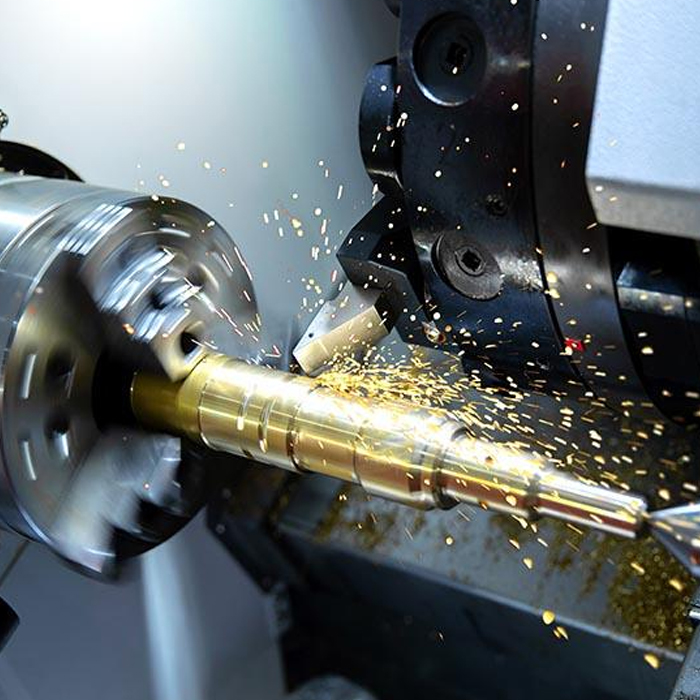
Moving from three axes to five axes changes how a part is held and machined. On a three-axis platform, the workpiece normally remains in one fixed orientation during the cutting cycle. Complex geometry may require several fixtures or repeated datum checks. A five-axis system can tilt the part or the tool, keeping the cutting edge at a more effective angle. This can improve surface finish and reduce tool deflection, particularly when machining deep walls or sloped surfaces. It may also allow the use of shorter tools, helping to limit vibration. Other important buying considerations include spindle speed, spindle power, table size, travel range, positioning accuracy, repeatability, tool magazine capacity, control interface, coolant system, and chip management. The right specification depends on the material, part dimensions, batch size, and tolerance requirements.
Precision and Setup Efficiency
Each time a component is removed and refitted, the production team must confirm its position again. Even a small workholding error can affect hole location, face alignment, or overall dimensional accuracy. Five-axis equipment can complete several features in one clamping, reducing repeated alignment checks. It also helps preserve a common coordinate relationship between machined surfaces. That does not mean a five-axis machine eliminates all quality risks. The fixture still needs to be designed correctly, rotary axes must be calibrated, and every program should be verified. In practice, the largest gains often appear on parts with five or more critical faces. A three-axis machine may still be the more efficient choice for simple flat components made in high quantities.
CNC Milling Centers Applications
These machines support a broad range of export-market industries. Automotive suppliers use them for transmission housings, suspension components, brackets, and tooling. Aerospace manufacturers need precise machining for lightweight structures, ribs, impellers, and complex aluminum parts. Communication equipment and consumer electronics production often require small housings, heat sinks, and precision fixtures. Agricultural machinery companies may machine shafts, connection plates, gear-related components, and hydraulic parts. Oil and gas operations use milling equipment for valve bodies, flanges, downhole components, and repair tooling. Medical manufacturers may select five-axis capacity for orthopedic parts and instrument components with curved or angled surfaces. A three-axis machine can handle many standard jobs, while five-axis equipment becomes increasingly valuable as part geometry, surface count, and tolerance demands rise.
When comparing CNC machining equipment, buyers should assess the full production process instead of focusing on axis count alone. A machine with a 12,000 rpm spindle may suit aluminum and general steel work, while a high-torque spindle can be a better fit for heavy cutting. A 24-tool magazine can support mixed jobs involving several drilling and milling operations. For longer production runs, automatic probing, pallet changing, and dependable chip removal can make a measurable difference in output. Buyers should also ask about electrical standards, operator language options, spare parts availability, installation support, and after-sales service in the destination market. These details become especially important when equipment is exported to factories with different power systems and operating conditions.
CNC Milling Centers Price Factors
The price of a milling center depends on machine size, axis configuration, spindle specification, control system, tooling package, automation, and delivery requirements. A standard three-axis vertical unit generally has a lower initial purchase cost because its mechanical structure and control requirements are simpler. Four-axis and five-axis machines cost more because they include rotary assemblies, added calibration requirements, advanced software functions, and more complex workholding options. Pricing is also influenced by table dimensions, travel range, spindle speed, motor power, tool capacity, probing systems, chip conveyors, and coolant filtration. Export costs may include packaging, inland transport, sea freight, insurance, customs documentation, installation, and operator training. Requesting a quotation based on drawings, material, tolerance, monthly quantity, and the preferred control system delivers a more useful comparison than reviewing a basic list price.
CNC Milling Centers User Guide
Correct installation starts with a level foundation, suitable electrical supply, clean compressed air, and adequate space for maintenance and material handling. Before production begins, the operator should check axis zero return, lubrication levels, coolant concentration, tool offsets, work offsets, and emergency stop functions. A new program should be tested through simulation or a controlled dry run before the cutter contacts the workpiece. For five-axis machining, collision checking is particularly important because the table, tool holder, spindle head, and fixture can move toward one another from several directions. Use recommended cutting data for the material, inspect tools for wear, and clear chips before they build up around the workholding system. Regular checks of rotary-axis accuracy, spindle condition, ball screws, and guideways help protect both part quality and machine service life.
How Have CNC Milling Centers Evolved From 3 Axis to 5 Axis
The development of CNC milling began with fixed workpieces and three linear movements. As control systems improved, manufacturers added rotary tables and tilting heads, enabling the cutter to reach additional surfaces without manual repositioning. CAM software became more capable of calculating multi-axis toolpaths, while sensors and probing systems improved setup control. The result was a steady move from simple positional machining to simultaneous multi-axis cutting. Earlier five-axis systems required specialist programming and careful machine tuning. Modern controls make these operations more manageable through tool-center-point control, collision monitoring, machine simulation, and automatic measurement options. This evolution has not made three-axis machines obsolete. Instead, it has given manufacturers a wider range of choices: a straightforward platform for prismatic parts or a multi-axis system for components that require several cutting angles.
What Are the Benefits of 5 Axis CNC Milling Centers
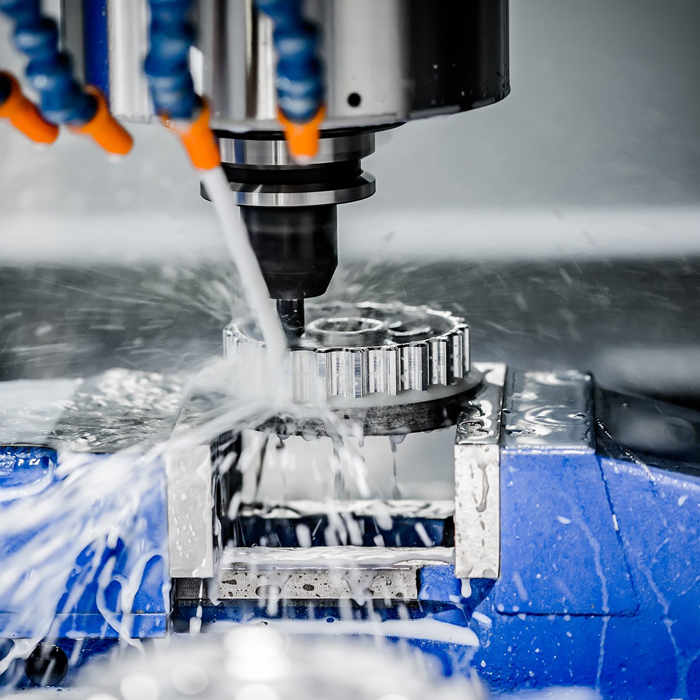
The main benefit is better access to complex geometry. A five-axis machine can machine several faces in one setup, which may reduce fixture changes, handling time, and alignment errors. Tilting the tool also helps maintain a more suitable cutting angle on curved surfaces. This can support a better surface finish, more stable cutting, and the use of shorter tools for deep features. In some applications, fewer setups lead directly to shorter overall lead times. Five-axis production can also reduce the need for special fixtures and secondary operations. The advantages are strongest when the workpiece has compound angles, free-form surfaces, deep cavities, or features distributed across multiple sides. For flat plates, simple pockets, and routine drilling patterns, the added axis capacity may not provide enough value to justify the higher investment.
MAKCNC as a CNC Milling Centers Supplier
MAKCNC supplies CNC machine solutions for manufacturers, importers, distributors, and industrial buyers in different markets. Our product range includes CNC Lathing Machine, CNC Machining Center, and CNC Machine models for production requirements across automotive, aerospace, agricultural machinery, petroleum, chemical, minerals, water conservancy, and geological exploration applications. The recommended machining center and oilfield lathe series are designed around high speed, high rigidity, high performance, and high efficiency. When selecting a machine, our team can review workpiece drawings, material, dimensions, tolerance, production volume, and preferred automation level. We can then help identify whether a three-axis platform, rotary-axis configuration, or five-axis solution is the practical fit. If you are looking for a CNC milling centers supplier, contact MAKCNC for the latest product quotation and technical information.
FAQ of CNC Milling Centers
How have CNC milling centers evolved from 3-axis to 5-axis?
They evolved by adding rotary movements to the original X, Y, and Z linear axes. A fourth axis typically rotates the workpiece, while a fifth axis adds another rotary direction through a tilting table or swiveling spindle. Improved CNC controls, CAM software, probing, and simulation now make multi-axis machining more practical for complex parts. The change reduces manual repositioning and gives the cutter better access to angled and curved surfaces.
What are the benefits of 5-axis CNC milling centers?
Five-axis systems can machine several faces in one setup, reduce fixture changes, improve tool access, and support a better surface finish on curved geometry. They may also reduce alignment errors and shorten production time for parts with compound angles, deep cavities, or features on multiple sides. Their value is lower for simple flat parts that a three-axis machine can complete efficiently.
Are 3-axis milling centers suitable for export manufacturing?
Yes. Three-axis equipment is suitable for brackets, plates, housings, flanges, fixtures, and many general mechanical parts. It is often easier to operate and maintain, making it a sensible option for buyers who need dependable production at a controlled investment level. The correct choice depends on part geometry, tolerance, material, batch size, and the programming and workholding resources available.
What should buyers check before ordering CNC milling machines?
Check the working travel, table load, spindle speed and torque, positioning accuracy, repeatability, tool magazine size, control system, coolant arrangement, chip removal, electrical requirements, and available service support. For export orders, also confirm packaging, voltage, documentation, spare parts, installation guidance, training, delivery terms, and the machine’s suitability for the target material and production process.
Choose the Right CNC Milling Centers for Your Production
Three-axis, four-axis, and five-axis systems each have a clear role in modern manufacturing. The right decision depends on the part, not simply on selecting the highest axis count. Review the number of surfaces, required tolerances, setup time, material, monthly volume, and future product plans before choosing a machine. MAKCNC provides CNC Machining Center, CNC Lathing Machine, and other CNC Machine solutions for industrial buyers and distributors. If you are seeking a reliable CNC milling centers supplier, contact MAKCNC to discuss your drawings, production requirements, and latest product quotation.