
Choosing a Multi-axis CNC Slant Bed Lathe for Your Production Parts
What Is a Multi-axis CNC Slant Bed Lathe?
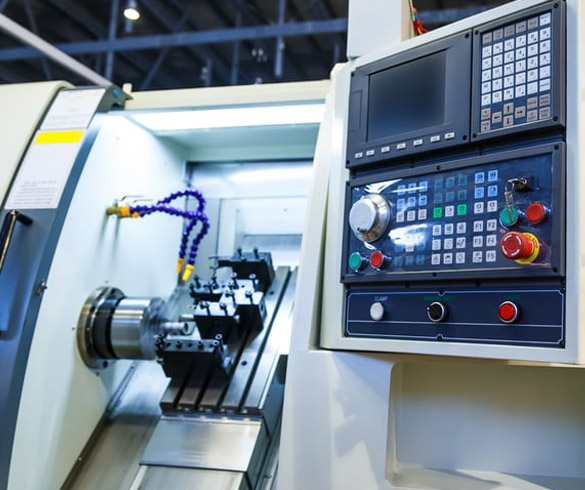
Multi-axis CNC Slant Bed Lathe is a CNC turning machine with an inclined machine bed and additional controlled functions that can combine turning, drilling, milling, indexing, and part transfer in one setup. The defining purchase question is not simply how many axes appear in a quotation. It is whether each axis removes a required secondary operation from the production route. A basic configuration can turn outside diameters, bores, threads, tapers, and faces. A more equipped machine can also drill cross holes, mill flats, machine off-center features, or transfer a completed part to a second spindle. The term numerical control refers to programmed motion that directs machine axes and spindle functions. For production engineers, the value of a Multi-axis CNC Slant Bed Lathe comes from reducing handling between operations when the part geometry supports it. It is not automatically the best choice for every workpiece. Simple rotational parts with no secondary features may be more economically produced on a less complex CNC lathe.
Types of Configurations and When Each Type Fits
A Multi-axis CNC Slant Bed Lathe is commonly selected in stages, beginning with standard turning axes and then adding functions for specific part features. The first type is a two-axis turning machine, normally used for shafts, bushings, rings, threaded fittings, and other parts requiring features along the main spindle centerline. The second type adds C-axis spindle positioning, allowing the spindle to stop at programmed angular positions. The third type adds live tooling, which turns driven tools for drilling, tapping, or milling. A further option adds Y-axis movement, allowing tools to move off the spindle centerline. The most production-focused configuration includes a sub-spindle for automatic transfer and back-side machining. Choose a Multi-axis CNC Slant Bed Lathe with only the functions your drawing requires repeatedly. A sub-spindle does not help when all surfaces are accessible from one side, while live tooling does not replace a machining center when a part has extensive prismatic milling features on multiple faces.
| Configuration Type | Best-Fit Part Features | Choose It When | Do Not Choose It When |
|---|---|---|---|
| Two-axis turning | ODs, IDs, faces, threads, tapers | All features remain on the main spindle centerline | Cross holes, flats, or milled features are required |
| C-axis with live tooling | Radial holes, tapped holes, flats, simple milled details | Secondary features need angular positioning | Features require significant off-center tool movement |
| Y-axis with live tooling | Off-center holes, slots, flats, asymmetric details | Tool movement away from centerline is required | All driven-tool work is centered or radial |
| Main spindle with sub-spindle | Front and back machining, parted-off side features | Two-ended machining must be completed in one cycle | Back-side work is absent or remains a separate process |
Features That Affect Part Quality and Process Stability
The useful features of a Multi-axis CNC Slant Bed Lathe should be assessed as a system rather than as isolated brochure items. The machine structure matters because it supports the spindle, turret, guideways, ballscrews, and workholding during interrupted cuts and repeated cycles. MAKCNC states that its machine bodies commonly use high-strength cast iron, including resin-sand castings, with aging treatment intended to support long-term accuracy and rigidity. Core transmission components such as ballscrews and guideways commonly use high-precision Taiwanese or German components. For mold-related high-accuracy machining, available advanced control integration can include intelligent feedforward and quadrant-jump compensation to address issues such as overcut marks, quadrant marks, and chatter patterns. These features are relevant when your drawing, material, cutting strategy, and quality plan show that surface traces or transition errors create rejection risk. They do not remove the need to select suitable tooling, workholding, cutting parameters, and inspection methods for the actual component.
- Slant bed structure: Select it when chip flow, turret accessibility, and production turning ergonomics matter. It does not determine finished-part quality by itself.
- High-precision guideways and ballscrews: Evaluate these when repeatability across production lots is important. Confirm the offered configuration in the technical proposal.
- Intelligent feedforward and compensation: Consider these for demanding profiles and high-finish work. They are less relevant for uncomplicated rough-turning work with broad tolerances.
- One-clamping multi-face machining: Choose this approach when re-clamping could affect feature relationships. It may not be suitable when a part is too large, too irregular, or better suited to a machining center.
Comparison: a capability-to-part-feature matrix for selecting live tooling, Y-axis travel, C-axis indexing, and sub-spindle transfer
Use this matrix before requesting a Multi-axis CNC Slant Bed Lathe quotation. Start with the finished drawing, identify each feature that cannot be made by standard turning, and then ask whether that feature must be completed in the same clamping. The decision rule is direct. Select C-axis indexing when a feature needs controlled angular orientation. Select live tooling when the machine must drive a drill, tap, or mill. Add Y-axis travel when the tool must move away from the centerline instead of approaching from a simple radial or axial direction. Add sub-spindle transfer when the back side of the part needs machining after cutoff. A Multi-axis CNC Slant Bed Lathe with every option can reduce handling for the right family of parts, but it can also add capital cost, programming work, and maintenance requirements where those functions are seldom used.
| Capability | Part Feature That Signals the Need | Choose This Option When | Limit or Alternative |
|---|---|---|---|
| Live tooling | Cross holes, tapped holes, flats, small milled surfaces | The tool must rotate while the part remains clamped | Do not add it for turning-only parts; a standard turret may be sufficient |
| Y-axis travel | Off-center holes, offset pockets, asymmetric flats, slots | The driven tool must move above or below the spindle centerline | Do not assume it is needed for every milled feature; centered operations may only need C-axis and live tooling |
| C-axis indexing | Equally spaced holes, polygonal details, angular flats | Angular position must be controlled relative to the turned profile | It does not by itself rotate cutting tools; live tooling may still be required |
| Sub-spindle transfer | Back-side bore, face, thread, chamfer, or drilled feature | The part must be completed on both ends without manual reversal | Do not select it if the second end is not machined or is handled elsewhere for a valid process reason |
Applications That Justify Secondary Machining on the Lathe
A Multi-axis CNC Slant Bed Lathe fits parts that are primarily rotational but include enough secondary features to make separate drilling, milling, or second-operation turning inefficient. Common examples include fittings with cross holes, threaded shafts with milled flats, couplings with indexed holes, valve-related components with drilled passages, and turned housings requiring back-side finishing. The best application is one in which turning remains the dominant process and the added work can be reached by the turret and selected axes. For example, a shaft with turned diameters, a thread, two opposing flats, and a radial tapped hole may justify C-axis indexing and live tooling. If the same part also has an off-center slot, Y-axis travel may be required. If its rear face needs a finished bore after cutoff, sub-spindle transfer becomes a valid consideration. A Multi-axis CNC Slant Bed Lathe is less suitable when milling occupies most of the cycle or when multiple broad faces require extensive tool access. In that case, a professional CNC machining center solution may be the better production route.
Price Factors and RFQ Information Buyers Should Prepare
The price of a Multi-axis CNC Slant Bed Lathe changes with the selected functional package rather than with the machine name alone. A two-axis configuration, a live-tooling configuration, a Y-axis version, and a machine with sub-spindle transfer should not be compared as if they provide the same production capability. The main cost drivers are the required axes, driven tooling arrangement, spindle arrangement, control functions, workholding, tooling requirements, automation scope, inspection expectations, packaging, and destination logistics. For MAKCNC sourcing discussions, production planning should also account for a stated lead-time range of 1 to 6 months, depending on the order and configuration. There is no mandatory minimum order quantity, and a single machine can be purchased. Buyers considering multiple machines may discuss better commercial terms for price, delivery, or after-sales service. Do not request a quote for a Multi-axis CNC Slant Bed Lathe using only a part diameter and length; that information cannot establish whether live tooling, Y-axis travel, or a sub-spindle is needed.
- Submit part drawings in the required revision level, including all front-side and back-side features.
- Mark materials, annual or monthly demand, and planned batch size.
- Identify tolerances, finish requirements, threads, holes, and milled details that affect machine functions.
- State whether one-clamping completion is required or whether a second process is acceptable.
- Specify local electrical requirements, installation location, preferred delivery timing, and training expectations.
User Guide for Configuration Review and Startup Planning
Before releasing an order for a Multi-axis CNC Slant Bed Lathe, create a process sheet that assigns every drawing feature to a spindle, axis, tool, and clamping stage. First, list turning features such as diameters, bores, faces, grooves, and threads. Second, list every secondary feature, including radial holes, axial holes, flats, slots, and back-side details. Third, determine whether the part must be transferred after cutoff. Fourth, verify that the proposed chuck, collet, jaws, or fixture can hold the part through all required cuts without obstructing tool access. Fifth, review the expected tooling list, including turning tools, drills, taps, and driven tools where applicable. This method identifies whether the Multi-axis CNC Slant Bed Lathe configuration is appropriate before the quotation is finalized. During installation and initial use, follow the supplier’s machine documentation, complete alignment and utility checks, confirm safety guarding, and prove out programs with controlled trial procedures. A machine option should never be selected solely because it appears useful for a future part that has not been defined.
- Map features: Separate turning work from drilling, milling, and back-side work.
- Choose axes: Add C-axis, live tooling, Y-axis, or sub-spindle only where the feature map requires it.
- Check access: Confirm tool clearance, clamping clearance, and transfer conditions.
- Review the cycle route: Compare one-clamping machining against manual reversal or a separate machine operation.
- Request a technical proposal: Ask the supplier to identify included functions and excluded items clearly.
MAKCNC as a Multi-axis CNC Slant Bed Lathe Supplier
MAKCNC supplies CNC lathing machines, CNC machining centers, and customized CNC machine solutions for B2B buyers assessing production equipment. Established in 2016, the company operates multiple production lines and maintains sample-machine inventory. A Multi-axis CNC Slant Bed Lathe supplier should be evaluated on more than the quoted configuration. Review how the supplier clarifies your part process, identifies limits in the proposed machine, documents included equipment, and supports acceptance and service planning. MAKCNC generally provides a 12-month warranty after complete machine acceptance and lifetime paid service. Certain tender projects may require a higher warranty level, including three years of free warranty. Its mature after-sales network generally states an 8-hour response commitment and on-site fault handling within 48 hours. These service periods should be confirmed in the purchase agreement because project location and contract terms matter. Buyers needing special layouts, process functions, or tailored equipment can also review customized CNC machines and machining centers from MAKCNC.
FAQ of Multi-axis CNC Slant Bed Lathe Selection
Do I need a Y-axis for every live-tooling application? No. A Multi-axis CNC Slant Bed Lathe with live tooling and C-axis indexing may handle centered axial work and radial work without Y-axis travel. Select Y-axis only when feature geometry requires off-center tool movement. Does a sub-spindle always reduce cost per part? No. It can remove manual reversal and support complete machining, but it adds machine complexity. It fits repeatable back-side work, not every short-run component. Can one machine replace a machining center? Not necessarily. A Multi-axis CNC Slant Bed Lathe is designed around turning-led work. Parts dominated by multi-face milling may fit a machining center better. What should be confirmed before ordering? Confirm every required axis, tooling interface, workholding method, material, drawing revision, delivery expectation, acceptance scope, and service terms. This avoids paying for unused functions or discovering missing capabilities after installation.
If you are looking for a Multi-axis CNC Slant Bed Lathe supplier, contact MAKCNC with your drawings and production requirements to request the latest configuration quotation.