Custom CNC Turning & Milling Machine Selection for One Setup Parts
What is a Custom CNC Turning & Milling Machine?
Custom CNC Turning & Milling Machine refers to a machine concept configured around a defined family of parts that need both rotational and prismatic features completed with fewer handling steps. Rather than treating turning and milling as separate purchasing decisions, the buyer assesses whether one platform can produce turned diameters, faces, holes, flats, slots, and related features while the workpiece remains clamped. The practical objective is not simply to add more functions. It is to reduce the quality and scheduling risk created when a part moves from a CNC lathe to a milling machine and then returns for finishing or inspection. A Custom CNC Turning & Milling Machine is justified when those transfers create measurable setup risk, inconsistent datum relationships, or unnecessary work in process. It is not automatically the right answer for every turned component. Simple shafts, bushings, and rings with no secondary features may be better suited to a dedicated lathe.
For buyers preparing an RFQ, the term “custom” should mean more than a special paint color or an accessory list. It should describe a machine layout, workholding approach, tool arrangement, control functions, and production method chosen for the actual part family. This definition matters because an oversized or overly complex machine can increase capital cost and programming effort without improving the part. On the other hand, an underspecified platform can force operators back into secondary setups, removing the business reason for selecting turn-mill equipment in the first place. The starting point is therefore the drawing set, expected mix of parts, material condition, required operations, and the datum scheme used for inspection.
Types of Machine Concepts for Mixed Turning and Milling Work
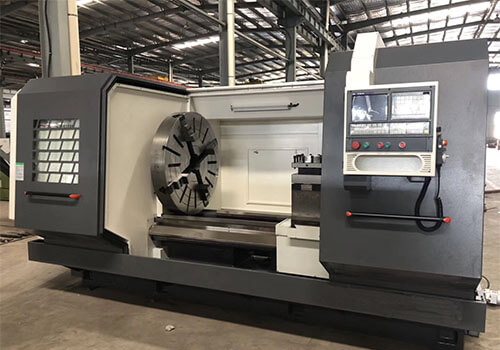
There are several practical routes for machining parts that combine round and milled geometry. A CNC inclined bed lathe is usually the direct choice when the work is dominated by diameters, threads, grooves, faces, and other rotational operations. It is the best fit for high proportions of turning work and limited secondary milling. A Custom CNC Turning & Milling Machine becomes more relevant when cross holes, flats, bolt patterns, or milled profiles must remain accurately located to the turned features. A machining-center-led process is another option when prismatic work dominates and only a small amount of turning is needed through a separate operation.
| Machine concept | Best-fit part pattern | Why buyers choose it | When it does not fit |
|---|---|---|---|
| Dedicated CNC lathe | Mostly round parts with turning operations | Direct process for shafts, rings, bushings, and threaded components | Cross holes and flats require separate handling |
| Custom CNC Turning & Milling Machine | Turned base geometry plus features around the circumference or on faces | Can reduce refixturing and preserve relationships between features | Not economical when milling features are rare or non-sensitive |
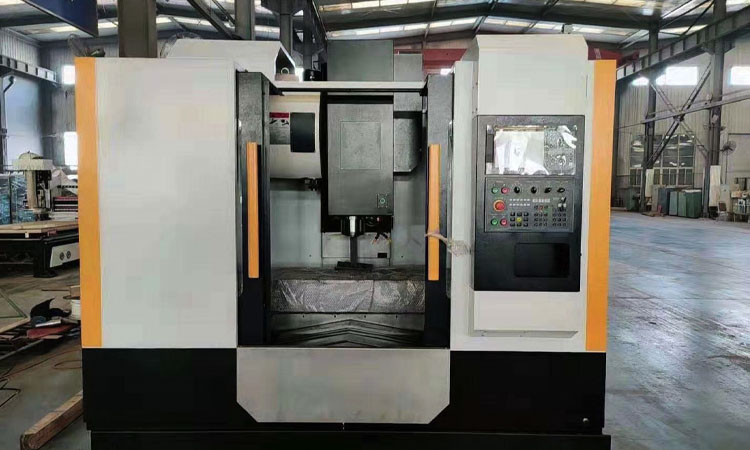
| Vertical machining center plus lathe | Prismatic parts with limited turning requirements | Uses separate machines for clearly separated processes | Creates additional setup control points for mixed-feature parts |
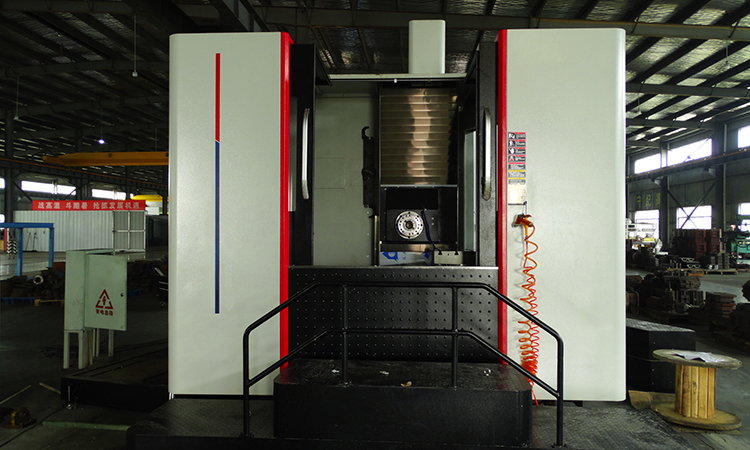
| Horizontal machining center plus lathe | Parts requiring several machined faces and repeat loading | Supports multi-face machining in a planned process route | May be unnecessary for simple rotational parts |
The correct type depends on the dominant geometry, not on the word “turn-mill” in a quotation. A Custom CNC Turning & Milling Machine should be specified when mixed operations are frequent enough that separate machines cause recurring clamping, alignment, or lead-time issues. If the part family contains only occasional milled flats that can be handled with a simple secondary process, a dedicated lathe may remain the lower-risk purchase. Buyers should separate parts by operation content before asking suppliers for a proposal.
Features That Should Be Defined Before Requesting a Quote
A Custom CNC Turning & Milling Machine proposal is only as useful as the information behind it. The most valuable input is not a broad statement such as “high precision required.” Buyers should provide part drawings, material information, annual or batch demand, the current routing, key inspection dimensions, and any feature that must retain its position after the part leaves the chuck or fixture. The machine builder can then assess whether the concept needs turning capability, milling capability, multi-face access, special workholding, or a different process route. For mold-related precision work, MAKCNC integrates system functions such as intelligent feedforward and quadrant-transition compensation to address common concerns including overcut marks, quadrant marks, and vibration patterns. These functions should be discussed against the actual machining task rather than requested as generic options.
- Workholding: Identify the gripping surface and the finished surfaces that cannot be clamped again. This determines whether one setup is physically possible.
- Tool access: Mark each hole, flat, pocket, and face that requires access. A feature may be easy to machine but inaccessible in the chosen clamping direction.
- Datum chain: State which diameter, face, or hole pattern controls inspection. This shows where secondary setup error can affect acceptance.
- Part-family range: Group parts with similar diameters, lengths, materials, and operations. A single special-purpose concept may not suit unrelated parts.
- Automation expectations: Explain whether the machine will be manually loaded, fixture loaded, or connected to upstream and downstream processes. Do not assume automation is appropriate without a stable part mix.
The conclusion is straightforward: specify the process risk before specifying accessories. A Custom CNC Turning & Milling Machine is useful when its configuration solves a known production problem. It is less suitable when the buyer has not yet identified how parts will be clamped, measured, and transferred through production.
Application Boundary for One Setup Parts
The application boundary is the point at which mixed features make a Custom CNC Turning & Milling Machine commercially reasonable rather than merely attractive on paper. Turned diameters alone do not justify it. Cross holes, milled flats, face patterns, and secondary setups often do. The reason is datum preservation: once a part is removed from the first machine, the next fixture must recreate the relationship between the turned axis and the secondary feature. Every transfer adds a potential source of alignment variation, handling damage, queue time, and inspection burden. However, a one-setup concept is not always better. If the part must be reclamped to reach inaccessible surfaces, or if the required volume does not support special workholding, a planned two-machine route may be more practical.
| Part feature or condition | Why it matters | When turn-mill is justified | Boundary or limitation |
|---|---|---|---|
| Turned diameters only | The machining reference is mainly the rotational axis | Usually not justified by diameters alone | A dedicated CNC lathe is generally the simpler route |
| Cross holes | Hole position must relate to the turned axis and face location | Justified when positional control after reclamping is a concern | Simple non-sensitive holes may remain secondary work |
| Milled flats | Flat orientation can affect fit, fastening, and assembly | Justified when the flat must align with threads, holes, or key diameters | A separate mill may be adequate for loose orientation requirements |
| Multiple face features | Part handling can multiply as each face is presented to a tool | Justified when a planned setup can access several features | Some surfaces may still need a second clamp for physical access |
| Repeated secondary setups | Each setup can add labor, queues, and datum recreation risk | Strong justification when secondary work is frequent across the part family | Low-volume occasional work may not support special configuration cost |
Use this table as a decision screen. For example, consider a cylindrical housing with turned outer diameters, a face bolt pattern, two cross holes, and milled wrench flats. If the bolt pattern and flats must remain tied to the turned axis, a Custom CNC Turning & Milling Machine can remove avoidable datum recreation between operations. If the same housing has only a non-functional flat used for identification, a secondary milling operation may be sufficient. The part drawing, not the machine category, should decide the route.
Applications for Custom Turn Mill Equipment
Typical applications include components that begin as rotational workpieces but require functional machining beyond the turning axis. Examples include housings with face holes, flanged parts with bolt patterns, connectors with cross-drilled passages, fittings with milled flats, and mechanical components requiring several operations before final inspection. A Custom CNC Turning & Milling Machine is particularly useful when the buyer wants one clamping method to support several of those operations. For production with many varieties and small batches, the ability to complete multiple faces in one clamping can also help simplify routing, provided that tool access and workholding have been proven during planning.
Where the work is dominated by prismatic faces, a professional CNC machining center solution may be the more appropriate starting point. Buyers should not force a rectangular or plate-like component onto a turn-mill concept simply because the component has one bore or one turned feature. A Custom CNC Turning & Milling Machine fits best where rotational geometry defines the natural workholding axis and secondary milling features depend on that same axis. This distinction prevents an expensive concept from being selected for the wrong part family.
Custom CNC Turning and Milling Machine Price Factors
The price of a Custom CNC Turning & Milling Machine changes with the scope of customization, the required machining operations, workholding complexity, control requirements, tooling interface, and the number of parts the machine concept must cover. A buyer should avoid asking only for a machine price without attaching a part package. That approach often produces quotations that cannot be compared fairly because each supplier may assume a different process method. The useful comparison is the total production concept: machine configuration, necessary fixtures, setup method, expected secondary operations, acceptance requirements, training needs, and service arrangement.
- Base machine platform: A standard platform can be appropriate when the part family is stable and the required functions already match the machine layout.
- Special fixtures: Custom jaws, locating methods, or dedicated clamping designs can add cost, but they may reduce repeat setup work for suitable parts.
- Process scope: Adding milling, cross-hole machining, or multi-face access changes the machine concept and quotation basis.
- Part-family breadth: A concept intended for many unrelated parts often needs more flexible tooling and setup provisions than a focused family.
- Commercial terms: MAKCNC does not impose a hard minimum order quantity; a single machine can be purchased. Multi-machine purchasing may receive improved commercial terms related to price, delivery, or after-sales service.
Do not compare quotations only by the lowest initial figure. The right evaluation asks what secondary operations remain after installation and whether the proposed concept can hold the intended datum chain. MAKCNC states a normal delivery range of 1 to 6 months, so buyers should align approval of drawings, fixtures, utilities, and acceptance expectations with the procurement schedule. A Custom CNC Turning & Milling Machine quote should also state what is included and what requires separate agreement.
User Guide for Converting Drawings into a Machine Specification
Before operating or purchasing a Custom CNC Turning & Milling Machine, convert the part family into a controlled specification package. Start by marking every turned surface, milled feature, hole direction, thread, and inspection datum on the drawing. Then identify which features must be completed before the part is removed from its first clamp. This step prevents a common sourcing error: asking for one-setup machining while providing no information about inaccessible surfaces or finished surfaces that cannot be gripped. The goal is a process plan that a supplier can evaluate, not a general request for “maximum flexibility.”
- Collect representative drawings, including the most difficult part in the family.
- List all operations in the current route, including deburring, drilling, milling, inspection, and any re-clamping.
- Mark dimensions or feature relationships affected by secondary setup.
- Identify the intended clamping surface and the surfaces that must remain protected.
- State the expected batch pattern and whether multiple part variants must share the machine.
- Ask suppliers to explain which operations can remain in one setup and which still require another fixture or machine.
- Review acceptance criteria before order confirmation, including the agreed part sample or machining demonstration where applicable.
A Custom CNC Turning & Milling Machine does not remove the need for process discipline. Tool condition, fixture cleanliness, program verification, and inspection planning still determine whether one-setup machining delivers consistent results. MAKCNC machines commonly use high-strength cast iron structures, including resin-sand castings, with aging treatment intended to support long-term rigidity and accuracy. Core transmission components such as screws and guideways commonly use high-precision Taiwan or German components. These design choices must still be matched to the buyer’s material, part geometry, and machining method.
FAQ of Custom CNC Turning and Milling Machines
Should every part with a cross hole use a turn-mill machine?
No. A cross hole alone does not automatically justify a Custom CNC Turning & Milling Machine. The deciding question is whether the hole’s position must remain tightly related to turned diameters, faces, threads, or other functional features after secondary clamping. If the relationship is non-sensitive and the hole is easy to fixture separately, a conventional lathe-plus-mill route may be reasonable. If the hole affects alignment, fluid passage location, assembly orientation, or functional fit, retaining the part in one controlled setup can be a stronger process choice.
What information should be sent with an RFQ?
Send drawings, materials, current process routing, part photos if available, expected part mix, planned batch pattern, and a clear list of quality concerns. Include which dimensions are inspected after machining and identify any issues caused by the current secondary setup. A Custom CNC Turning & Milling Machine supplier can give a more useful technical response when the RFQ states whether the objective is fewer clamps, reduced transfer time, improved feature relationships, or broader part-family coverage. Without this information, a quotation may reflect assumptions rather than your actual production method.
What support terms should buyers clarify?
Clarify machine acceptance scope, installation responsibilities, training needs, spare-part planning, response channels, and warranty conditions. MAKCNC normally provides a 12-month warranty after whole-machine acceptance and lifetime paid service. Some tender projects may require higher terms, such as a three-year free warranty. Its mature after-sales network normally commits to an 8-hour response and on-site fault handling within 48 hours. These terms should be confirmed in the commercial agreement because project requirements and service arrangements can differ.
Custom CNC Turning and Milling Machine Supplier Selection
MAKCNC was established in 2016 and supplies CNC lathing machines, CNC machining centers, and customized CNC equipment for manufacturing buyers defining practical production concepts. Multiple production lines and sample-machine inventory support machine selection and project discussion. When evaluating a Custom CNC Turning & Milling Machine supplier, request a process-based response rather than a catalog-only response. The supplier should address workholding, part access, secondary operations that remain, machine acceptance, delivery planning, and service terms. You can also review global CNC machinery cases of MAKCNC for company reference, while ensuring your own machine concept is based on your actual drawings and requirements.
If you are sourcing a Custom CNC Turning & Milling Machine, send MAKCNC your part drawings and process requirements for a current quotation and selection discussion.