How a Standard Horizontal Machining Center Works
What Is a Standard Horizontal Machining Center
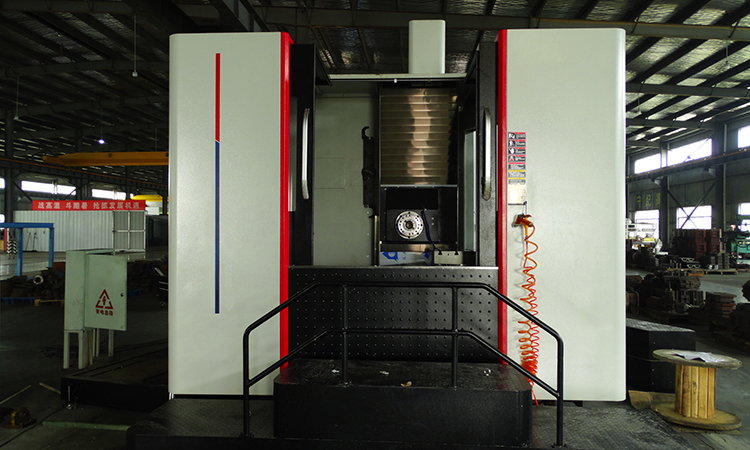
Standard Horizontal Machining Center is a CNC machine designed to machine prismatic parts with a spindle that runs horizontally rather than vertically. The workpiece is usually mounted on a pallet or fixture positioned in front of the spindle, while the machine moves the cutting tool and table through programmed axes. Its main purpose is to machine several faces of a part with fewer manual repositioning steps. The machine works through computer numerical control, which converts programmed coordinates, tool paths, spindle commands, and indexing positions into physical machine movement. For an engineer comparing concepts, the key question is not simply whether a horizontal machine can cut metal. The practical question is whether the part shape, number of machined faces, fixture approach, and production flow justify a Standard Horizontal Machining Center instead of a vertical machine or a turning solution.
Types of Standard Horizontal Machining Center
A Standard Horizontal Machining Center can be grouped by table arrangement, pallet arrangement, and indexing capability. A basic configuration may use one pallet and a fixed workholding position. This option suits lower-volume production, development parts, or parts that do not require continuous loading and machining. A machine with a B-axis indexing table can rotate the workpiece to different angular positions, allowing multiple faces to be reached during one setup. A twin-pallet configuration uses one pallet inside the machining area while another pallet is outside for loading and unloading. This arrangement is most relevant when spindle waiting time has become a production concern. Buyers should not assume every horizontal machine includes a B-axis or twin pallets. If the part only needs one or two accessible faces, a simpler configuration can be more suitable. If the part requires repeated machining on four sides, manual reclamping may create greater setup and alignment risk.
| Machine Arrangement | What It Changes in Practice | Best-Fit Situation | When It May Not Fit |
|---|---|---|---|
| Single-pallet setup | Loading and machining happen in the same work zone sequence. | Lower-volume work and varied part programs. | Less suitable when operators spend too much time waiting for the machine to finish. |
| B-axis indexing table | Rotates the part to present different faces to the spindle. | Prismatic components with several machined sides. | May add unnecessary complexity for single-face machining. |
| Twin-pallet setup | Supports part loading outside the active machining cycle. | Repeat production where fixture preparation can occur during machining. | May not be justified for occasional prototype work. |
Features That Affect Real Machining Results
The defining feature of a Standard Horizontal Machining Center is the horizontal spindle orientation. A horizontal spindle approaches the workpiece from the side, which can be useful for side-face milling, boring, drilling, and machining internal features on block-shaped components. Chip evacuation is also a practical consideration because chips can fall away from the cutting zone depending on the part orientation and fixture design. This does not remove the need for correct coolant delivery, tool selection, or chip-control planning. The machine structure also matters. MAKCNC machines use high-strength cast iron machine bodies, including resin-sand castings in many models, with aging treatment intended to support long-term rigidity and accuracy. Core transmission components such as ball screws and guideways are commonly selected from high-precision Taiwan or German brands. These features should be reviewed as a system rather than as isolated purchase points.
- Spindle orientation: Determines which part faces are naturally accessible and how tools approach bores, pockets, and side walls.
- Indexing table: Determines whether the part can be presented to the spindle at several programmed positions without manual repositioning.
- Pallet arrangement: Determines whether loading work can be separated from active machining time.
- Fixture design: Determines whether the workpiece remains stable and repeatable as different faces are machined.
- Control functions: Advanced control integration can include intelligent feedforward and quadrant-transition compensation to address issues such as overcut marks, quadrant marks, and vibration patterns.
Technical Breakdown of How the Horizontal Spindle B-axis Indexing Table and Twin-pallet Setup Combine to Machine Multiple Part Faces in One Clamping
A Standard Horizontal Machining Center achieves multi-face machining by coordinating the spindle, the B-axis table, and the pallet system around one accurately located workpiece. The horizontal spindle performs cutting from the side of the fixture. The B-axis indexing table rotates the pallet-mounted part to bring another face into the spindle’s working position. A twin-pallet arrangement then supports production flow by allowing the next fixture or workpiece to be prepared while the current pallet is being machined. The phrase “one clamping” means the workpiece stays located against the same fixture references while several faces are machined. This can reduce accumulated setup variation that may occur when an operator removes and remounts a part between operations. It does not mean that every feature is automatically reachable. Fixture jaws, clamps, workpiece geometry, tool length, and collision clearance still determine actual access.
| Element | Function During Machining | What Happens If It Is Specified Incorrectly | Practical Buying Check |
|---|---|---|---|
| Horizontal spindle | Drives milling, drilling, boring, and related cutting tools into side-facing workpiece surfaces. | Poor tool approach can leave key faces inaccessible or require extra setups. | Review the part drawing and identify every face that needs machining. |
| B-axis indexing table | Rotates the workpiece to programmed angular positions. | Insufficient indexing capability may force manual repositioning between faces. | List required face orientations and confirm the needed index positions. |
| Twin-pallet setup | Keeps one pallet available for loading while the other can support machining. | Without it, the spindle may wait during part exchange in repeat production. | Measure actual loading, clamping, and inspection time before selecting this option. |
| Fixture reference surfaces | Maintain part location through table rotation and multiple cutting operations. | Weak or inconsistent location can affect relationships between machined faces. | Define datum surfaces, clamp positions, and inspection references before ordering. |
For example, consider a block-shaped housing requiring machining on its front, side, rear, and top-related faces. The operator mounts the housing once on a pallet fixture. The horizontal spindle machines the first accessible face. The B-axis rotates the pallet to expose the next face, and the program continues with the required operations. During this cycle, a twin-pallet machine can allow a second fixture to be prepared outside the machining zone. This method fits repeatable prismatic-part production. It does not automatically fit thin parts, flexible parts, or components that need frequent manual measurement between operations. Those parts may require special fixturing, alternative process planning, or a different machine concept.
Standard Horizontal Machining Center Applications
A Standard Horizontal Machining Center is commonly considered for prismatic parts that require machining on several faces, such as housings, valve bodies, pump-related components, fixture plates, gearbox-style parts, and similar block-shaped workpieces. The strongest application case is usually a part with repeatable geometry and a process plan that benefits from fewer manual reclamping steps. For multi-variety, small-batch production, the ability to complete multiple faces in one setup can also be useful when fixtures are prepared for frequent changeovers. However, horizontal machining is not automatically the best answer for every component. Flat plates that mainly need top-surface drilling and pocket milling may suit a vertical machining center more directly. Rotational parts such as shafts, rings, and many cylindrical components may be better assessed with a CNC lathing machine. The decision should follow the part geometry, not the machine category alone.
Standard Horizontal Machining Center Price Factors
The price of a Standard Horizontal Machining Center can vary because the purchase is not limited to the base machine. Buyers should separate the quotation into machine configuration, pallet arrangement, table indexing capability, control system, tooling interface, fixture scope, optional automation, installation support, and after-sales terms. A lower initial price may not be the best commercial choice if the selected configuration cannot complete the required faces in one clamping. At the same time, purchasing a twin-pallet and B-axis arrangement for occasional low-volume parts can create unnecessary capital cost. The correct approach is to compare the machine against the process cost it can avoid, including repeated setup work, fixture changes, operator handling, and possible inspection work after reclamping. Request itemized quotations so the value of each option is visible.
- Base machine structure: Covers the primary machine body, axes, spindle arrangement, and standard control scope.
- B-axis table option: Adds workpiece indexing capability where multi-face access is required.
- Twin-pallet configuration: Should be evaluated against actual loading time and expected repeat production.
- Fixtures and tooling: Often determine whether theoretical machine capability becomes usable production capability.
- Service terms: MAKCNC normally provides a 12-month warranty after machine acceptance and lifetime paid service. Tender projects may require different terms, including three-year free warranty requirements.
Standard Horizontal Machining Center User Guide
Before operating a Standard Horizontal Machining Center, the engineering team should create a process sheet that identifies the workpiece datum, required machined faces, clamp locations, tool access, and inspection points. Start by choosing the primary locating surfaces that will remain stable throughout the machining cycle. Next, design the fixture so clamps do not block cutting access when the B-axis rotates. Then simulate or verify tool paths for possible collisions involving the spindle, fixture, toolholder, pallet, and workpiece. The production team should also define when tools will be changed, how chips will be removed, and which features need in-process inspection. Do not rely on the machine layout alone to solve process problems. A poor fixture can undermine the benefit of a well-configured horizontal machine. For parts with uncertain geometry or unstable clamping, confirm fixture feasibility before finalizing the machine order.
- Classify the workpiece as prismatic, rotational, plate-like, or irregular.
- Mark every face that needs milling, drilling, boring, tapping, or inspection.
- Identify whether those faces can be reached through table indexing without removing the part.
- Estimate loading and unloading time to determine whether twin pallets add value.
- Prepare a fixture concept based on stable datums and unobstructed tool access.
- Submit the part drawing, process target, and expected order pattern for technical review.
Standard Horizontal Machining Center Supplier Considerations
When selecting a Standard Horizontal Machining Center supplier, assess the supplier’s ability to discuss machine configuration alongside the actual part process. A useful supplier should ask for drawings, materials, production volume, tolerance requirements, fixture plans, and the number of faces to be machined. MAKCNC was established in 2016 and operates multiple production lines with sample-machine inventory. The company supplies CNC lathing machines, CNC machining centers, and CNC machines for export-oriented manufacturing needs. For buyers whose application requires non-standard fixture arrangements or process-oriented changes, MAKCNC also provides customized cnc machines and machining centers. Standard lead time information should be reviewed during quotation because stated delivery periods can range from one to six months depending on the order scope. For service planning, the established after-sales network generally commits to an eight-hour response and on-site fault handling within 48 hours.
FAQ of Standard Horizontal Machining Center
Is a Standard Horizontal Machining Center better than a vertical machining center?
No machine type is universally better. A Standard Horizontal Machining Center is usually a stronger candidate when a prismatic workpiece needs multiple side faces machined with minimal manual repositioning. A vertical machining center may be more suitable for parts dominated by top-face operations, simple plate work, or lower-complexity fixtures. Compare the actual part route before choosing.
Does every horizontal machine have a B-axis table and twin pallets?
No. These are configuration decisions. A B-axis table is relevant when programmed part rotation supports access to multiple faces. Twin pallets are relevant when loading time can be separated from machining time. Buyers should confirm the required configuration in the technical quotation rather than assuming it is standard.
What information should be sent for a machine selection review?
Provide part drawings, material information, the number of machined faces, expected batch pattern, target cycle expectations, fixture concept, and any inspection requirements. These details help determine whether a horizontal configuration, a vertical solution, or another CNC process is more appropriate.
If you are looking for a Standard Horizontal Machining Center supplier, contact MAKCNC with your part drawings to request the latest quotation and selection advice.