How to Source Horizontal CNC Machining Equipment for 4-Side Parts
Horizontal CNC Machining Equipment is a class of machine tools whose spindle axis runs parallel to the floor, built to cut several faces of a prismatic part in one clamping. Buyers who skip the geometry work before an RFQ usually regret it later. The machine arrives with too few pallets, the wrong spindle taper, or a fixture plan that forces a second setup and wipes out the expected saving. This guide shows how to convert a drawing into a specification a supplier can quote accurately, and what to ask a supplier before you shortlist it.
What Is Horizontal CNC Equipment?
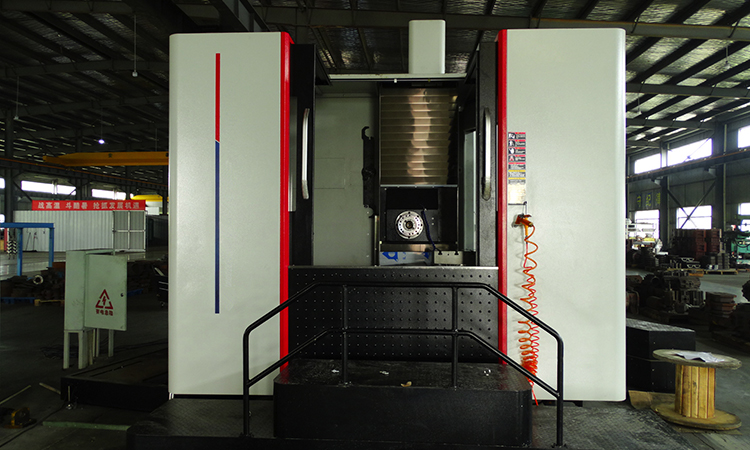
A horizontal machine puts the tool on a spindle that points sideways at the workpiece. The part sits on a rotary table or pallet, often on a tombstone fixture that exposes several faces. Because the spindle is horizontal, chips fall away from the cut instead of piling up in pockets. That matters for deep cavities and long unattended runs. A horizontal machining center adds an automatic tool changer and, usually, an indexing table. The table rotates the part so the spindle can reach the front, back and both sides without unclamping. For a four-sided component, that single clamping is the main reason to choose this machine type. Its limits are equally clear. It is a poor fit for flat plate work needing only one face, and for slender turned parts that belong on a lathe.
Types of Horizontal CNC Equipment
Choose the type by how many faces you cut, how often you change over, and whether the machine will run while the operator loads the next part. The table gives a first filter.
| Type | Best fit | Limit |
|---|---|---|
| Single-table horizontal with indexing | Low to medium volume, frequent part changes | Spindle idles while the operator loads |
| Twin-pallet horizontal | Repeat batches where loading time is a real share of cycle time | Needs two fixtures per part family |
| Tombstone-based horizontal | Several small parts per clamping, 3 to 4 faces each | Fixture design effort and tool reach need checking |
| Horizontal with pallet pool | Many part numbers in small batches, unattended shifts | Higher investment, more floor area |
If your parts need only top-face work with light side drilling, a vertical machine may be cheaper and simpler. MAKCNC lists both formats under its vertical and horizontal cnc machine center range, so the comparison can start from one catalogue.
Features of Horizontal CNC Equipment
Four features decide whether a machine suits four-side work: spindle taper and power, table indexing, pallet handling, and structural rigidity. Rigidity is the one buyers tend to underweight. MAKCNC machine bodies generally use high-strength cast iron, including resin sand castings, with aging treatment to hold accuracy and stiffness over time. Core drive parts such as lead screws and guideways are usually Taiwanese or German branded precision components. The control side matters for finish quality too. The brief describes intelligent feedforward and quadrant-crossing spike compensation, aimed at the over-cut marks, quadrant marks and chatter lines that show up on mold-type surfaces. Ask any supplier for the same detail on its own control settings. A spindle taper alone says little if the structure underneath cannot hold a heavy cut on the fourth face.
Horizontal CNC Equipment Application
Typical candidates are housings, valve bodies, pump bodies, gearbox cases and fixture plates. All of these have features on three or four sides and tight position relationships between faces. Cutting them in one clamping removes the stacked error of re-clamping. Mold components with multiple faces also benefit, and so does multi-variety, small-batch production, where one-setup multi-face machining cuts changeover work. The boundary is just as useful for shortlisting. Parts with a single dominant face, very long shafts, or mostly turned geometry should not drive a horizontal purchase. In those cases a cnc lathing machine or a vertical machine will usually give a better return.
Horizontal CNC Equipment Price
No supplier can give a fair price from a category name alone. Price moves with the factors below, and each one can be traced back to your part geometry.
- Travels and table size: set by the largest part plus the fixture.
- Spindle taper, speed and torque: heavier cuts in steel push you toward larger tapers and higher cost.
- Pallet count and changer type: one table, twin pallets or a pool.
- Indexing resolution: a simple 90-degree index costs less than fine positioning.
- Control and compensation options: relevant for mold surfaces and finish requirements.
- Quantity: MAKCNC has no hard minimum order and a single unit can be purchased, but multi-unit orders can earn better price, delivery or service terms.
Lead time is also a cost. The brief gives a range of one to six months, depending on configuration, so confirm the date against your configuration before you commit a project schedule.
Matching Part Features to Machine Specification Before the RFQ
This is the step most RFQs skip. Instead of asking for a "horizontal machine with a pallet changer," list your part features and map each one to a machine requirement. The method below takes about an hour per part family and removes most quote revisions.
| Part feature to record | What to decide | Specification it drives |
|---|---|---|
| Faces needing access (front, back, left, right, top) | Can all be reached by indexing, or does a face need a second setup? | 4th-axis table type, index increment, tool length |
| Fixture count per cycle | One part per fixture, or several parts on a tombstone? | Table load, pallet size, travel envelope |
| Deepest bore or pocket and tool overhang | Longest tool needed to reach it | Spindle taper, tool magazine pocket size, Z travel |
| Heaviest cut (material, tool diameter) | Roughing load on the hardest face | Spindle torque, taper size, structure rigidity |
| Batch size and repeat frequency | Does loading time exceed a tolerable share of cycle time? | Single table, twin pallet, or pallet pool |
| Tolerance between faces | Which features must be cut in the same clamping? | Indexing repeatability, compensation, acceptance cut |
Illustrative example
This is a hypothetical case, not a customer case. A valve body needs machining on four sides, with a bore on each. Bores on opposite faces must be coaxial, so all four faces go into one clamping. Parts are ordered in monthly batches of mixed variants, and operators spend noticeable time reloading. The mapping gives you: four-face access through table indexing, one part per fixture at first, a taper sized for the deepest bore plus its tool overhang, and a twin-pallet changer so loading happens during cutting. That is a specific brief. The supplier can quote it, and you can check each line later against the delivered machine.
Common mistakes
- Choosing the machine from the largest part only, ignoring the fixture that also has to fit inside the travels.
- Buying a pallet changer for a job that runs one batch a year.
- Naming a spindle taper without stating the heaviest roughing cut.
- Skipping the coaxiality or face-to-face tolerance, so nobody defines an acceptance cut.
Horizontal CNC Equipment User Guide
Once the spec is set, treat the purchase as a short procedure rather than a single quote. First, send the part drawings with the mapping table above and ask the supplier to confirm each line in writing. Second, agree on an acceptance cut: which part or test piece, which faces, which tolerances, and who measures. Third, prepare the foundation, power and chip handling before the machine arrives, since leveling quality affects long-term accuracy. Fourth, run the agreed cut after installation and record the results at acceptance, because the standard warranty period starts then. Finally, load fixtures and tools on a planned schedule instead of improvising on the shop floor. If your requirement does not fit a standard configuration, ask whether the machine can be adapted. MAKCNC describes this route under customized cnc machines and machining centers from makcnc.
MAKCNC as Your Horizontal Machining Supplier
When you compare suppliers on a four-side requirement, look for facts you can verify. MAKCNC was founded in 2016 and operates multiple production lines, with demonstration machines kept in stock. Its quality system is certified to ISO 9001:2015. The standard warranty is 12 months from machine acceptance, with lifetime paid service afterward. Some tenders ask for more, such as a three-year free warranty, and that is a point to agree before you sign. The after-sales network normally commits to a response within 8 hours and on-site attendance within 48 hours for fault handling. As noted earlier, there is no hard minimum order. Read more about makcnc before shortlisting. Two points remain open and should be settled in writing: the exact lead time within the one-to-six-month range, and which service terms apply to your delivery location.
FAQ of Horizontal CNC Equipment
How many faces can a horizontal machine cut in one setup?
With an indexing table, the spindle can usually reach four sides of a prismatic part. The top face depends on tool reach and fixture design, so state which faces you need.
Do I need a twin-pallet changer?
Only if loading time is a meaningful part of your cycle. For small or one-off batches, a single indexing table is usually enough and costs less.
Can I buy just one machine?
Yes. MAKCNC has no hard minimum order quantity. Larger orders may allow better terms on price, delivery or after-sales service.
What should an RFQ include?
Send drawings, material, batch size, the faces to be cut, fixture concept, heaviest cut, key tolerances, and the acceptance cut you expect. These six items let a supplier quote a matching configuration.
If you are looking for a supplier of horizontal machining equipment, send us your part drawings and the mapping table from this article. Contact MAKCNC for selection advice and the latest quotation.