
High Speed CNC Machine ROI and Cycle Time Analysis
High Speed CNC Machine Definition
High Speed CNC Machine refers to a computer-controlled machine tool built to remove material, drill holes, mill surfaces, or turn workpieces at higher cutting speeds and feed rates than conventional production equipment. However, spindle speed alone does not define a high-speed machine. Spindle power, axis acceleration, tool-change time, control response, machine rigidity, chip evacuation, and workholding all shape its real output. For a factory manager, the key question is not simply how fast the spindle turns. It is how many acceptable parts the machine delivers per shift, how reliably it holds dimensions, and how much labor each part consumes. A sound evaluation links cutting data to CNC machining cycle time, scrap rate, maintenance cost, and selling value. This turns an equipment purchase into a measurable business decision rather than a comparison of brochure specifications.
Types of High Speed CNC Machines
Several machine types support high speed CNC machining, and the best option depends on part geometry, material, batch size, and tolerance requirements. A high speed CNC mill is often used for aluminum housings, automotive components, communication equipment, mold inserts, and precision plates. Vertical machining centers offer easy access and suit general production, while horizontal machining centers can machine multiple faces with fewer setups. CNC lathing machines are used for shafts, flanges, pipes, bushings, and other rotational parts. Gantry processing machines are designed for large panels, dies, and structural components. MAKCNC also supplies heavy-duty cutting lathes, CNC oilfield lathes, manual oilfield lathes, and general CNC lathes. Each machine type can shorten production time when its travel range, spindle configuration, chuck, tooling system, and control package fit the work.
Features That Affect Production Speed
The useful features of a high speed unit go well beyond maximum spindle RPM. A 12,000 RPM spindle may suit steel and general machining, while 18,000 or 24,000 RPM can be effective for aluminum, graphite, plastics, and small-diameter tools. High acceleration cuts the time spent moving between toolpaths, but only if the machine frame and guideways remain stable at speed. A fast automatic tool changer can save several seconds on every exchange. Thermal compensation helps maintain dimensions as the spindle and machine structure warm up during a long shift. Rigid guideways, ball screws, a stable casting, coolant delivery, and efficient chip removal also affect surface finish and tool life. In practice, a machine that saves eight seconds per tool change but vibrates during cutting may produce less valuable output than a slightly slower model that runs reliably for 20 hours each week.
High Speed CNC Machine Applications
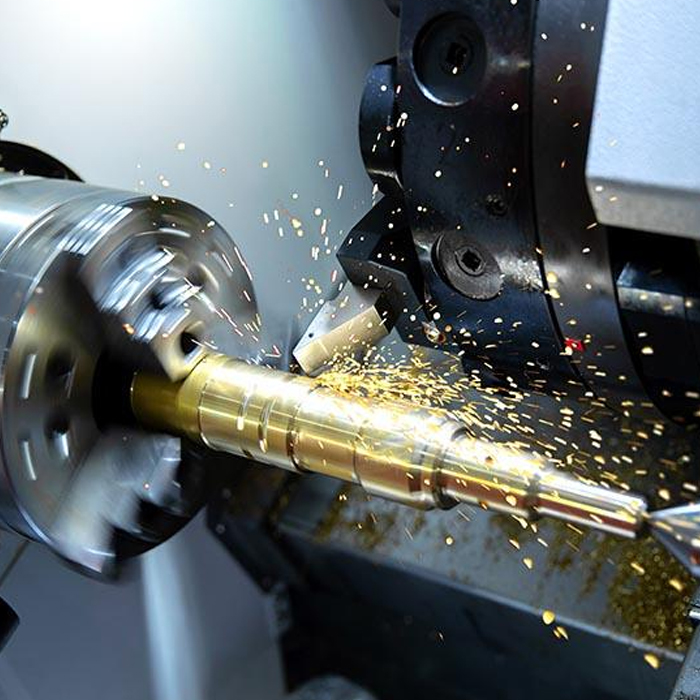
These machines are used in industries where output, repeatability, and stable dimensions directly influence production cost. Automotive suppliers use them for brackets, transmission components, engine parts, and aluminum housings. Aerospace manufacturers need controlled machining of aluminum alloys, titanium, and high-strength steels, often with strict inspection records. Communication and consumer electronics factories may require short cycle times for hundreds or thousands of small housings. Agricultural machinery, chemical equipment, minerals processing, petroleum, water conservancy, and geological exploration operations use CNC lathes and machining centers for shafts, connectors, valves, pipe threads, and heavy components. For instance, a CNC oilfield lathe may be a better choice than a compact mill when the workpiece is a long pipe or a large threaded connection. MAKCNC publishes examples such as its CNC pipe lathing to Brazil project, which illustrates why machine selection must follow the part and process.
CNC Machining Cycle Time and Throughput
CNC machining cycle time includes every timed activity needed to complete one part. Cutting time is only one part of the equation. The complete calculation may include rapid positioning, tool changes, probing, spindle acceleration, pallet exchange, part loading, unloading, deburring, inspection, and occasional chip removal. A practical formula is: total cycle time = cutting time + non-cutting motion time + tool change time + work handling time + inspection time. Suppose a part requires 6.5 minutes of cutting, 1.2 minutes for tool changes and positioning, and 2.3 minutes for loading and inspection. The practical cycle is 10 minutes, not 6.5 minutes. At 85 percent planned utilization, an eight-hour shift provides 408 productive minutes. Expected output is 40.8 parts before scrap and downtime. If a new machine reduces the cycle to 7.5 minutes, the same shift can produce about 54 parts. That gap is where an ROI calculation begins.
How Does a High Speed CNC Machine Reduce Cycle Time
How does a high speed CNC machine reduce cycle time? It can shorten several stages of the process at the same time. Higher feed rates reduce cutting time in suitable materials, while faster acceleration cuts empty travel between features. A larger tool magazine can eliminate manual tool replacement during a batch. A responsive control processes dense three-dimensional toolpaths with fewer pauses, and a rigid machine can support heavier cuts with fewer finishing passes. Through-spindle coolant may improve chip evacuation and tool life, reducing unplanned interruptions. Multi-face machining in a single setup can also remove repeated clamping and alignment work. The true saving should be tested with the same part program, material, tools, workholding, and quality requirements. A machine that cuts 30 percent faster but needs frequent tool changes or produces more rejected parts may not lower total production cost.
How to Calculate High Speed CNC Machining Productivity
How to calculate high speed CNC machining productivity depends on whether the factory tracks machine hours, good parts, or profitable output. A useful formula is: good parts per available hour = 60 ÷ cycle time in minutes × utilization rate × first-pass yield. For a 10-minute cycle, 80 percent utilization, and 98 percent first-pass yield, the result is 4.70 good parts per hour. If the cycle falls to 7.5 minutes while utilization rises to 85 percent and yield remains 98 percent, output increases to 6.66 good parts per hour. That is a gain of about 41.7 percent. Managers should gather at least four weeks of baseline data before comparing equipment. Track actual spindle time, operator attendance, tool changes, alarms, material loading, inspection delays, scrap, and rework. This avoids an overly optimistic estimate based only on the fastest cutting test.
Labor Efficiency and Capacity Gains
CNC machine productivity rises when the same workforce can manage more output without losing control of the process. A shorter cycle may allow one operator to supervise two machines instead of one, although this depends on loading time, part weight, gauging requirements, and the distance between machines. Automation can extend that advantage. Bar feeders, pallet changers, robotic loading, and truss manipulators reduce idle time between parts. MAKCNC provides examples including the application of truss manipulator in bearing production. Labor savings should be calculated with care. If an operator costs 18 dollars per hour and a new cell reduces direct labor from 0.20 hours to 0.12 hours per part, the direct saving is 1.44 dollars per part. That saving becomes meaningful only after programming, maintenance, fixtures, training, and annual production volume are included.
High Speed CNC Machine Price and ROI Factors
The purchase price varies by machine size, spindle speed, travel, control system, tool magazine capacity, rotary tables, coolant equipment, probing, automation, and installation requirements. A small vertical machine for aluminum parts may cost far less than a large horizontal center or oilfield lathe with a long bed, high-torque spindle, and heavy chuck. Compare price with total installed cost, not the machine invoice alone. Include freight, foundation work, electrical changes, tooling, fixtures, software, operator training, insurance, and spare parts. A simple annual benefit calculation is: annual benefit = additional contribution margin from good parts + labor savings + avoided outsourcing cost − additional annual operating cost. Payback period equals total investment divided by annual benefit. A machine costing 160,000 dollars with 80,000 dollars of annual net benefit has a two-year payback. That figure matters only when the factory has enough orders and dependable staffing to use the added capacity.
What Is the ROI of a High Speed CNC Machine
What is the ROI of a high speed CNC machine? It is the financial return created by additional good output, lower unit cost, and improved capacity compared with the total investment. The standard formula is ROI percentage = (annual net gain ÷ total investment) × 100. Consider a baseline of 12,000 parts per year at a contribution margin of 9 dollars per part. If a new machine produces 16,000 good parts, the additional contribution is 36,000 dollars. Suppose labor and outsourcing savings add 24,000 dollars, while maintenance, tooling, energy, and finance costs add 18,000 dollars. Annual net gain is 42,000 dollars. On a 140,000-dollar installed investment, first-year ROI is 30 percent and simple payback is 3.33 years. Use conservative assumptions for utilization, scrap, overtime, and sales demand. A sensitivity table covering low, expected, and high production cases provides a better decision framework than one headline number.
User Guide for High Speed CNC Machine Operation
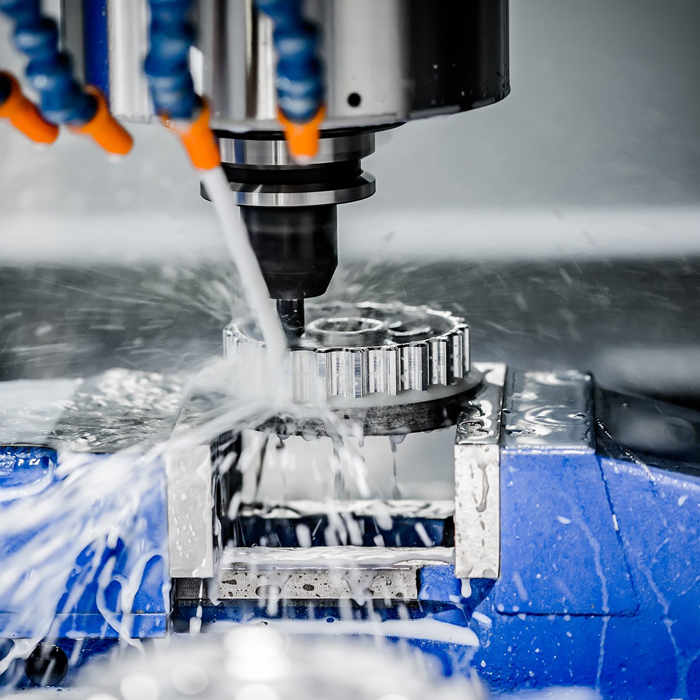
Before production starts, confirm foundation requirements, power capacity, compressed-air quality, coolant type, lubrication settings, and ambient temperature. Level the machine according to the supplier’s instructions, then verify axis travel, spindle runout, tool clamping, and emergency functions. Use cutting data recommended for the actual material and tool grade rather than increasing feeds and speeds without testing. Balance tools used at high RPM, set accurate work offsets, and check tool length measurements before the first batch. Run a dry cycle at reduced feed to confirm clearance around clamps and fixtures. During production, monitor spindle load, vibration, coolant flow, tool wear, chip shape, and dimensional drift. Keep records of alarms and stoppages. A small issue that occurs every 20 cycles can remove more capacity than a one-time setup delay. Preventive maintenance and clean chip management protect the expected cycle-time advantage.
Choosing the Right Machine Configuration
Buyers should start with a part family and a measurable production target. List the material, maximum dimensions, weight, tolerance, surface finish, number of setups, annual volume, and current cycle time. Then compare spindle torque, spindle speed, axis travel, table size, tool capacity, workholding, control functions, and automation options. A vertical machining center may be the right fit for plates and housings, while a horizontal machine can reduce setup time on multi-face components. A CNC inclined bed lathe can support efficient chip flow and convenient access for turning work. For larger or specialized requirements, review MAKCNC’s customized CNC machines and machining centers from MAKCNC. Request a sample cycle test using your drawing, material, tools, and quality standard. It offers a far more reliable comparison than spindle speed alone.
MAKCNC High Speed CNC Machine Supplier
MAKCNC supplies CNC Lathing Machines, CNC Machining Centers, and CNC Machines for manufacturers, distributors, and industrial buyers. Its product lines include vertical machining center series, horizontal machining center series, gantry processing series, heavy-duty cutting lathe series, CNC oilfield lathe series, and CNC lathe series. Recommended products include machining centers, CNC oilfield lathes, and manual oilfield lathes for communication, consumer electronics, automotive, aerospace, minerals, agricultural machinery, chemical, petroleum, water conservancy, and geological exploration applications. Buyers can review the global CNC machinery cases of MAKCNC and discuss workpiece data, output targets, tooling, installation, and service needs with the team. If you are looking for a high speed CNC machine supplier, contact MAKCNC for the latest quotation and a production-focused recommendation.
FAQ of High Speed CNC Machine
How does a high speed CNC machine reduce cycle time?
It reduces cycle time through faster cutting, shorter non-cutting movements, quicker tool changes, fewer setups, and more stable unattended operation. The actual result depends on material, tool diameter, tool coating, spindle torque, programmed feed rate, workholding, and part geometry. For a fair test, compare the same part on both machines and include loading, inspection, tool changes, and scrap. A machine may reduce cutting time by 20 percent but deliver a smaller total saving if loading takes half of the complete cycle. Multi-face machining, probing, pallet changes, and automatic tool measurement can provide major gains because they remove repeated manual tasks. Always measure good parts per shift, not only the time shown beside the cutting program.
What is the ROI of a high speed CNC machine?
ROI is the annual net financial gain divided by the complete installed investment. Calculate extra contribution margin from additional good parts, labor savings, reduced outsourcing, lower scrap, and avoided overtime. Subtract tooling, energy, maintenance, financing, software, and training expenses. Then divide the result by the machine, delivery, installation, fixture, and commissioning cost. For example, 50,000 dollars of annual net gain on a 125,000-dollar investment equals 40 percent simple annual ROI. Check demand before accepting the estimate. If the machine has no scheduled work for 30 percent of available hours, its theoretical capacity will not become revenue. A three-case model using conservative, expected, and high utilization makes the purchase review more realistic.
How to calculate high speed CNC machining productivity?
Use good parts per available hour as the primary measure. Divide 60 by the complete cycle time in minutes, then multiply by planned utilization and first-pass yield. For example, a 7.5-minute cycle, 85 percent utilization, and 98 percent yield produces 6.66 good parts per hour. Multiply that figure by scheduled operating hours to estimate daily or annual output. Record actual values for setup, loading, alarms, tool changes, inspection, and maintenance. If a second shift is planned, include operator availability and material replenishment. Productivity can also be expressed as contribution margin per spindle hour, which helps compare parts with different selling prices and material costs. Review the calculation monthly after installation and update it with real shop-floor data.
Is a high speed CNC mill suitable for steel production?
A high speed CNC mill can machine steel, but maximum spindle speed is not the only selection factor. Steel often requires sufficient spindle torque, machine rigidity, suitable carbide tools, controlled cutting parameters, coolant delivery, and effective chip evacuation. A lower-speed, high-torque spindle may outperform a very high-speed spindle when using large cutters or removing heavy stock. For hardened steel, mold work, or long continuous cuts, thermal stability and vibration control are especially important. Ask the supplier to recommend spindle power and torque across the operating range. A production trial should check tool life, surface finish, dimensional stability, spindle load, and complete cycle time. The correct machine is the one that produces acceptable parts at a sustainable cost.
Conclusion and Quotation Request
A high speed CNC machine creates value when its speed translates into more good parts, fewer labor minutes, lower scrap, and better use of factory capacity. Evaluate the complete CNC machining cycle time, calculate productivity using utilization and yield, and build ROI from actual production data. MAKCNC can help compare vertical and horizontal machining centers, CNC lathing machines, oilfield lathes, gantry processing equipment, and customized machine solutions. If you are looking for a reliable CNC machine supplier, contact MAKCNC with your drawing, material, annual volume, and current cycle time to receive the latest product quotation.