How Do High Speed CNC Turning Machines Prevent Chatter During Thin-Wall and Long-Shaft Work
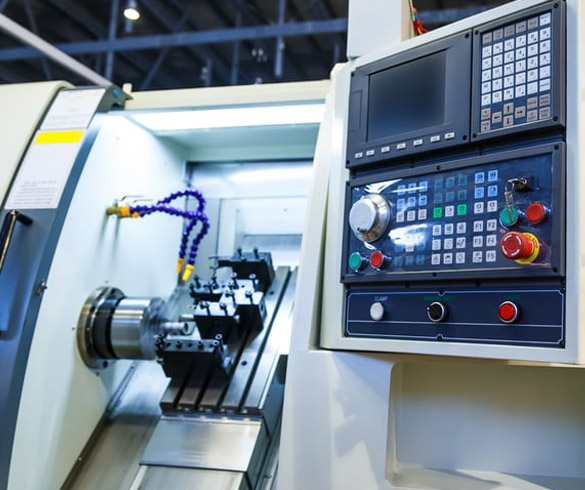
A High Speed CNC Turning Machine is a lathe built to run at elevated spindle RPM and feed rates while holding tolerance on parts that would otherwise vibrate under load. The core question engineers ask before specifying one is simple: at what point does speed stop helping and start causing chatter? This matters most on thin-wall sleeves, long shafts, and slender bar work, where the margin between smooth cutting and tool bounce can be a few hundred RPM or a few millimeters of tool overhang. This article breaks down the actual thresholds — not general theory — so you can size a machine and toolpath before committing to a purchase order.
What Causes Chatter in High Speed CNC Turning
Chatter is self-excited vibration between the cutting tool and the workpiece. It starts small — a slight deflection from the previous cutting pass — then feeds back into the current pass, growing louder and rougher until you see chatter marks (regenerative waviness) on the surface. In high speed CNC lathe operations, three variables interact to trigger it: spindle speed relative to the system's natural frequency, tool overhang length, and workpiece stiffness. Push any one of these past its safe zone and the cut destabilizes, even if the other two are fine. This is why a machine that runs perfectly on a 40mm steel shaft can start howling on a 15mm stainless tube at the same RPM.
Boundary Analysis Speed Tool Overhang and Workpiece Rigidity Thresholds
There is no single RPM number that causes chatter across all setups — the failure point moves depending on overhang and part stiffness. Below is a practical boundary breakdown based on common turning scenarios, useful for early-stage machine and tooling selection.
| Parameter | Safe Zone | Warning Zone | What Happens If Exceeded |
|---|---|---|---|
| Spindle speed vs. natural frequency | Below 60% of system's first critical speed | 60-85% of critical speed | Regenerative chatter builds within seconds; surface shows visible waviness |
| Tool overhang (turning tool from holder) | Under 2x tool shank height | 2-3x shank height | Tool tip deflects under cutting force, amplifying vibration each pass |
| Workpiece L/D ratio (unsupported length to diameter) | Under 6:1 | 6:1 to 10:1 | Part whips at mid-span; tailstock or steady rest becomes mandatory |
| Wall thickness (thin-wall parts) | Above 3mm with rigid fixturing | 1.5-3mm | Part flexes away from tool, causing chatter marks and dimension drift |
What this means in practice: if you are turning a long shaft with an L/D ratio above 10:1, no amount of spindle rigidity from the machine itself will save the cut — you need a steady rest or a follow rest physically supporting the part. Conversely, if overhang exceeds 3x the tool shank height, even a low-speed cut can chatter because the tool itself is the weak link, not the workpiece. Engineers often blame the machine for chatter when the real issue is a tool sticking too far out of the holder.
How Spindle Rigidity Affects CNC Turning Stability
Spindle rigidity determines how much the spindle shaft deflects under radial cutting force. A stiffer spindle bearing arrangement and larger spindle bore resist that deflection, which raises the RPM at which chatter starts to appear. This is why turning machine rigidity is treated as a core spec, not a secondary feature — it directly sets your usable speed range.
- Bearing preload — higher preload increases stiffness but generates more heat; matched preload is chosen for the expected duty cycle, not maximum theoretical rigidity.
- Spindle bore diameter — a larger bore reduces overhang for bar work but can lower torque at low RPM if not paired correctly with the drive motor.
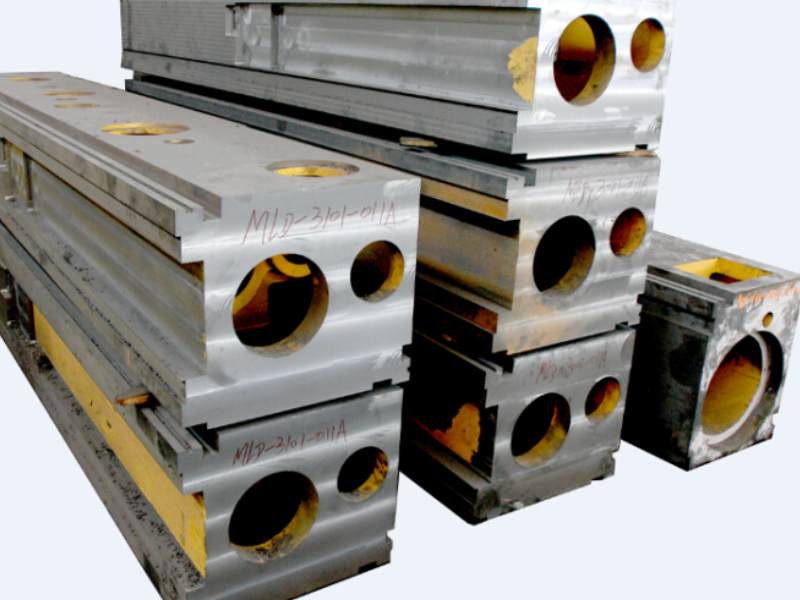
- Bed and base rigidity — high-strength cast iron beds, aged through stress-relief treatment, hold dimensional stability under repeated cutting loads over years of use, not just on day one.
- Ballscrew and guideway quality — precision components (commonly Taiwanese or German-made in mid-to-high spec machines) reduce backlash that otherwise compounds vibration during direction changes.
None of these factors work in isolation. A rigid bed with a worn spindle bearing still chatters. This is why professional CNC lathing machine manufacturers specify these components as a matched system rather than selling them as independent upgrades.
How to Prevent Chatter on a CNC Lathe — Step-by-Step Checks
Before blaming the machine, run through this sequence. Most chatter complaints trace back to one of these five points.
- Check tool overhang first. Measure it against shank height. If it's above 2x, shorten it or switch to a stiffer boring bar / turning tool.
- Verify workpiece support. For L/D ratios above 6:1, add a center support, steady rest, or reduce unsupported span.
- Reduce spindle speed by 15-20% as a test. If chatter disappears, you were near the critical speed band — stay below it or change tooling geometry to shift the resonance point.
- Check chuck jaw condition and clamping force. Worn jaws reduce grip stiffness on thin-wall parts, letting the part vibrate inside the chuck itself.
- Inspect insert geometry. A positive rake insert with a sharp edge cuts with lower radial force, which reduces the tendency to excite chatter compared to a worn or negative-rake insert.
- Confirm feed rate isn't too low. Counterintuitively, very light cuts can chatter more than moderate ones because the tool rubs instead of shearing cleanly.
Common Mistakes That Cause Chatter on High-Speed Lathes
- Running maximum RPM on every job regardless of part geometry — speed should match rigidity, not machine capability alone.
- Using a general-purpose boring bar for deep bores instead of an anti-vibration damped bar.
- Skipping a steady rest on long shafts to save setup time, then fighting chatter marks for the whole batch.
- Ignoring insert wear — a dull edge increases cutting force and pushes the system toward its rigidity limit faster than expected.
- Assuming a higher-spec spindle alone solves chatter, without checking tool overhang or fixturing.
Where High Speed Turning Fits — and Where It Doesn't
High-speed turning suits short, rigid, well-supported parts — bushings, flanges, short shafts under 6:1 L/D, and thick-wall sleeves. It does not suit long slender shafts without support, or thin-wall parts under 1.5mm without special fixturing. In those cases, a slower, more controlled cut with a rigid setup outperforms raw speed. If your part mix includes both types, a machine with adjustable spindle programming and available tailstock or steady rest options — such as the CNC inclined bed lathe — gives more flexibility than a machine tuned only for maximum RPM.
For shops running mixed families of parts including box-shaped or multi-face components, a professional CNC machining center solution may complement turning operations, particularly where one-setup, multi-face machining reduces repositioning error on mold components prone to over-cut marks and quadrant protrusions.
MAKCNC as a High Speed CNC Turning Machine Supplier
MAKCNC has manufactured CNC lathes and machining centers since 2016, operating multiple production lines with demo machines kept in stock for evaluation. Machine beds are built from high-strength cast iron, commonly resin-sand cast and aged through stress-relief treatment to hold long-term precision and rigidity. Core transmission components — ballscrews and linear guideways — are typically sourced from established Taiwanese or German brands, integrated as a matched system rather than mixed at random. For mold-industry customers dealing with over-cut marks, quadrant protrusions, and chatter lines, our control systems apply intelligent feed-forward and quadrant-jump compensation, and support one-setup multi-face machining for small-batch, multi-variety production. Machines are ISO9001:2015 certified in manufacturing, with standard delivery of 1 to 6 months depending on configuration. There is no fixed minimum order — single units are available, though bulk orders receive better commercial terms on price, lead time, or after-sales support. Standard warranty runs 12 months after acceptance, with paid lifetime service afterward; some tender projects qualify for extended terms such as 3-year free warranty. Our service network targets an 8-hour response and 48-hour on-site resolution for reported faults.
You can review customized CNC machines and machining centers from MAKCNC or browse global CNC machinery cases to see configuration examples across different part types, including vertical CNC machining center MV1380 and horizontal CNC machining center options for shops running both turning and milling operations.
FAQ on High Speed CNC Turning Machine Chatter Control
What causes chatter in high speed CNC turning?
Chatter comes from regenerative vibration between tool and part, triggered when spindle speed approaches the system's critical frequency, tool overhang is too long, or the workpiece lacks rigidity — usually a combination of two or more of these factors at once.
How does spindle rigidity affect CNC turning?
Spindle rigidity limits how much the spindle deflects under cutting force. Higher rigidity — from bearing preload, bore size, and matched drive components — raises the RPM ceiling before vibration starts, directly expanding your usable speed range on the same part.
How to prevent chatter on a CNC lathe?
Shorten tool overhang, add support for long or thin parts, test a 15-20% speed reduction, check insert sharpness, and confirm chuck clamping force. Address these five points in order before assuming the machine itself is undersized for the job. Reference materials on machining vibration theory can help engineers understand the underlying regenerative-chatter mechanics in more depth.
If you're evaluating a High Speed CNC Turning Machine for thin-wall or long-shaft parts, feel free to contact us with your part drawings and target tolerances — we can advise on the right spindle, tooling, and fixturing configuration and provide a current quote.